Nice one. Have you heard their latest? It's really good
EDIT: posting that made me realize I added them as a dupe artist... should probably go and fix that...
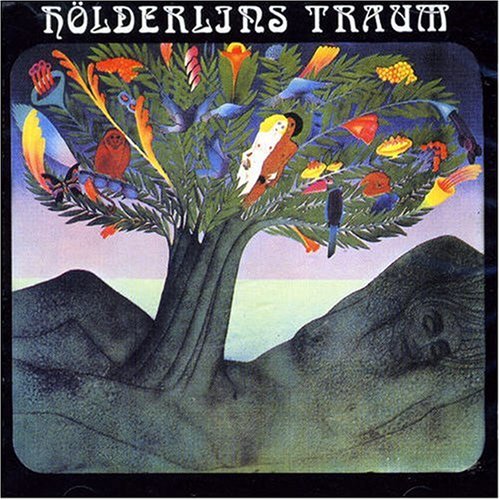
Holderlins Traum by Holderlin
"This absolutely delightful record is an incredibly successful mix of medieval ambiances, stunning 60's folk rock, slight Indian music influences, the whole thing sprinkled with a tad of hippy idealism and great progressive arrangements including the odd Mellotron. From the opening Waren Wir to the closing Traum (dream), the album is invitation fly out of our realm and head for Nirvana, paradise, Eden, Babylon, with flaunts of flutes, loads of Hamonds, Trons of Mello, guitars strings by the dozens and superb vocals both male and female. If you cannot find a suitable album to get comfy and shag the partner, try this one and do not forget to put the repeat (the album is fairly short), and the trick is half-done. To name a highlight would be quite difficult, as you'd be doing injustice to the other non-mentioned tracks. Not a weak note on this album. Nanny de Ruyg's voice is right up with the cannons of the genre and the German lyrics are simply heavenly music for the mind." (progarchives.com)
Thumbnail. Click to enlarge.
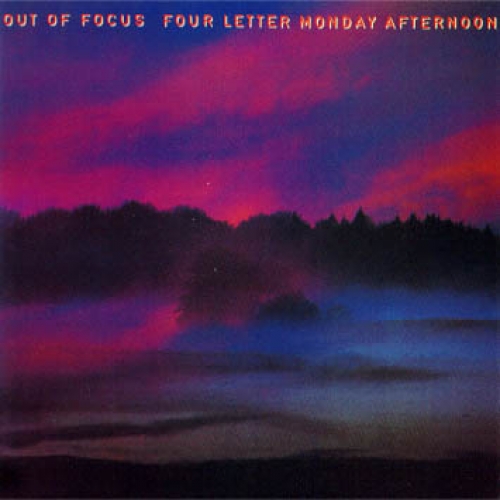
Four Letter Monday Afternoon by Out Of Focus
""Four Letter Monday' was the third album by "OUT OF FOCUS" and in sharp contrast to their previous two, expanded to an 11-piece group, adding an extra guitarist as well as a full brass section. This double album features the 2 side long epic track Huchen 55 (parts a, b and c) which is an amazing track and worth the admission alone. The rest of the album plays out covering quite a range (at times I hear early CHICAGO and sounds of BLOOD SWEAT & TEARS). This wild album really hits all the right buttons for me and covers quite a nice large geography. from psychedelic moods to all out krautrock instrumental excursions to Canterbury jazz rock to dark minimalism. The band sound very progressive and this is a highly experimental album full of great guitar, drum , bass and organ with a wild mix of brass thrown in. This album is somewhere in the SOFT MACHINE - NUCLEUS - CARAVAN - COLLOSEUM school of prog rock, but stands out for me as a great album." (progarchives)
Thumbnail. Click to enlarge.
2nd by Agitation Free
"Agitation Free's 2nd stands as one of Germany's finest instrumental rock albums of the 1970s and a classic for fans of progressive rock and Krautrock. Despite the fact that the group had problems keeping its cohesion at the time, these troubles never affect the music. 2nd presented a daring blend of Krautrock-type extended jams, laid-back attitude, and experimentation. The music remains very psychedelic in nature, more early Can than Faust. The presence of acoustic guitars and bouzouki emphasizes the easygoing nature of the music, along with Stefan Diez's elegant guitar soloing, while occasional free-form passages keep things on the edge. The opener, "First Communication," is pure Krautrock and the hardest-driving tune. It belongs on every anthology of German rock. Michael Hoenig's synthesizer experiment "Dialogue and Random" provides an interlude before the two-part "Laila" kicks in. The latter juxtaposes prog rock and fusion jazz sections with beautiful audacity. Side B of the original LP is a lot quieter. Birds chirp at the beginning of "In the Silence of the Morning Sunrise" and the pastoral mood carries over to the nine-minute "A Quiet Walk." "Haunted Island" ends with a midtempo rock number featuring a recitation of Edgar Allan Poe's "Dreamland." Filled with Mellotron and guitar jamming, it has often been hailed as a highlight by prog rock fans who had a hard time digesting the less immediate material, but it's actually weaker than what came before it -- without lessening the appeal of this album." (allmusic) _________________ "And can’t you see you’re in on it?
You were born though you need not
And is that not some cause
For worship, being born among these trees?"
meccaleccaVoice of ReasonProfile The Land of Enchantment
Nice one. Have you heard their latest? It's really good
EDIT: posting that made me realize I added them as a dupe artist... should probably go and fix that...
Listened to it once, one of the tracks was extraordinarily good. Second or third one I assume. I remember it having 4 tracks, right?
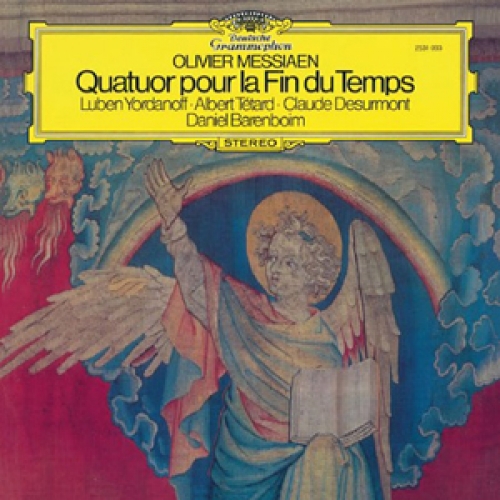
The classical world of the 20th century was such a different universe from any earlier period of classical composition. All over the place you had passionately forward thinking composers who were more than happy to say “fuck all” to the rules, and either rewrite or just completely abandon the idea of “rules”. Olivier Messiaen was not one of these rule abandoning composers, not because he wasn’t a forward thinking composer, but because the idea of “rules” for how music is to be composed was foreign to him from the start. Messiaen had no rules to abandon because he never had any concept of “rules” to begin with. All he had was his own intuition. All he had was a natural affinity for sounds and makeshift structures. All he had was his own ideas to work upon, and that was all he ever needed, and it easily placed him above even the most progressive of the era’s composers. As for Messiaen’s aforementioned musical intuition and “natural affinity for sounds and makeshift structures”, well, these are the traits that were to define Messiaen as, well, as indefinable. Structure-wise, one Messiaen piece could be the counter-opposite of another. It wasn’t so much the specific structure or dynamics that made a piece recognizable as “a Messiaen piece”, but rather the nature in which the piece was composed. No matter how specific the scoring may be for a piece, there has always been a sort of raw humanity, a sense of freedom and varying degrees of unpredictability to many (if not most) of his pieces. Olivier Messiaen was a composer who always saw the beauty of the inherently imperfect. The “ugliest” or most chaotic moments in a Messiaen piece are also quite frequently the most moving. Of all of his many masterpieces, I don’t believe selecting any single one does any sort of justice to his vast career, but were I left to choose, I suppose the stunningly beautiful and wildly ambitious "Quatuor Pour La Fin Du Temps" ("Quartet For The End of Time") gets the nod. Quatuor Pour La Fin Du Temps, in addition to exhibiting the bits of deliberate chaos and consequent beauty that we have come to expect from this composer, also succeeds in creating its own unique atmosphere, pulling the listener into a world of bent ideas, of a vast sense of timelessness, of infinite space. It is a piece that feels alive, responding to its own actions the way any living creature would. When it tears into space with raw tension, a moment of bliss is found at its climax, just it collapses in on itself, slowly regaining breath and pulsating new life into its being, creating something entirely new (with entirely new behaviors) from the entity that proceeded it, but no less awe-inspiring than its predecessor.
And it is, in my opinion, the finest music ever composed.
(Practically any professional performance of this piece is bound to be worthwhile. The specific recording which I have on my chart has changed before and is likely (well... not that likely at this point) to change again. Right now it's between this one and this one: http://www.besteveralbums.com/thechart.php?a=42846. Both are remarkable takes on the piece, and I highly recommend each)
Nominally, Joni Mitchell is Folk. This is really only true insofar as it indicates where she began as a songwriter. Mitchell's career quickly evolved into something far greater, and progressively harder to define. The Hissing of Summer Lawns is not only the greatest example of Joni Mitchell's creative individuality as a musician, but is also arguably the point at which all of the disparate pieces that comprise the woman who is "Joni Mitchell" came together in perfect harmony. Her impeccable skill as a songwriter, her unique guitar style, her jazz influence; on the Hissing of Summer Lawns, all of these pieces come together into a whole that is far greater than its individual parts. These “parts” have all been around Joni Mitchell at various points in her career; her songwriting and guitar skill were there from the start, but even from her beginnings of a masterful folk storyteller, she was to go in a slightly different direction with each coming album; toying with and sometimes fully implementing, at various points in her career, everything from pop-melodicism to African rhythmic structures. But the most important influence that hovered around Mitchell’s work, (and which had been since the early 70s) was that of jazz. By the time her massive commercial breakthrough came 1974’s “Court and Spark”, her folk origins were all but absent. In their place stood melodic and thoughtful pop-influenced ballads of the kind of self-expression that we had seen in her confessional masterpiece “Blue”. It would appear that no matter what kind of music Mitchell is delving into at any given time, her songwriting skill (which, by the way, easily matches if not trumps the likes of fellow lyrical geniuses Bob Dylan and Neil Young) is always present, but with every new album, there is always a twist in the way with which her words are displayed. Mitchell’s lyrical prowess, along with her mature vision of pop song construction, may have taken the forefront of Court and Spark, what is often overlooked is what may have been the beginning of what was to define Joni Mitchell’s most ambitious and most artistically rewording period as a musician, and that is that “Court and Spark”, behind it’s romantic orchestration, actually exhibited a substantial jazz influence. Of course, that did nothing to prepare Mitchell’s fan base for what was to come. In 1975, Joni Mitchell releases “The Hissing of Summer Lawns”, an album where the jazz that was hinted at in its predecessor takes full form, just as the folk that defined her early career makes a reappearance, and fuses itself with her love for the likes of Charles Mingus and Jaco Pastorius into an album that can only be loosely defined as “Jazz-folk”, but that contains a degree of ambition and sheer unexpectedness far greater than such a narrow genre pigeonholing would suggest. In the end, The Hissing of Summer Lawns exists outside of the realm of normal classification or judgment. Further description would do this album no justice. Joni has crafted a world that is entirely her own, and to which no parallels can or should be drawn.
Bricolage opens pretty simply. A neatly arranged slowly paced track based around a smooth as fuck jazz baseline. The neat and laid-back nature of stoney-street lets you know that Tobin is into jazz, and that he's just as happy to make use of cool-jazz and smooth jazz as he is to implement the intensity of bop and post-bop, but this hardly prepares you for what is to come. I guess this get classified as drum'n'bass with heavy influences from elsewehre, but with that influence coming from everywhere from nu-jazz to hip-hop to classical, Bricolage doesn't really function as a masterwork of melding together different genres so much as it does as a piece of music with its foundation laid in a plethora of genres but that amounts to something entirely unique form (and far greater than)any of the individual cogs from which it is composed. Easily sliding from a hypnotic cool-jazz melody to an erratic onrush of perfectly placed beats and noises, Bricolage seems to run across the mind of the listener, ravaging every synapse and almost immediately recreating the mental apparatus into something greater, just in time for it to repeat the process with an entirely different approach, and with and entirely different end result on the listener (though with the same lasting impact) as each previous time. At times, relaxing, romantic, energetic, smooth, frantic, organic, distorted, blah blah blah Bricolage is a symphony of paradoxes that not only flow into each perfectly, and with remarkable ease (defying whatever I used to think logic was). But as I said, this isn't an album made singular just for it's ability to make the juxtaposition of what one would think to be harshly opposing or just entirely unrelated elements seem completely natural, but for it's ability to take each of those individual elements and derive from them something peerless; something to which no accurate parallels can be drawn, and in the end, something that is just massive fun to listen to.
You cannot post new topics in this forum You cannot reply to topics in this forum You cannot edit your posts in this forum You cannot delete your posts in this forum You cannot vote in polls in this forum



 Boogn1sh


 NickVolos


 meccalecca