this particular recording can be a tad hard to find, so hmu if you need a copy (and a brief ramble on the historical context of the piece and recording and on how I love it to death)
IDK why my formatting is all jacked... also still would be interested in an alternate recording to compare and contrast cause that's always fun.
I assume you mean totally different performance/recording... not that I listened to the wrong thing.
Anyway, here's my unintelligible response!
I'd love to hear more what you think about the piece since it might be something you like to listen to regularly.
[quote="sethmadsen"][quote="dividesbyzero"]
alrighty idk what that one guy is on about (gorguts are cool I guess) so ima ignore him and yeah Seth here you can listen to this:
[img:500:500]http://albumart.besteveralbums.com/albumart/album_large_92391_5695cdb2a08f9.jpg[/img]
[url=http://www.besteveralbums.com/thechart.php?a=92391]Arnold Schoenberg: Pierrot Lunaire, Op. 21; Trio For Violin, Viola And Cello, Op. 45 by Arnold Schoenberg & Various Artists [/url]
this particular recording can be a tad hard to find, so hmu if you need a copy (and a brief ramble on the historical context of the piece and recording and on how I love it to death)[/quote]
Cool thanks! Looking forward to it.
Also it looks like it is opus 21 and 45, so I think this recording suffices?
[url]https://open.spotify.com/album/6FwBvhY6LtshtI8TfB9TPe[/url][/quote]
[b][u][size=18]Opus 21[/size][/u][/b]
Ok, so I immediately knew the music would be over my head (just being honest, I'm not a fan of atonal music... it's discoveries are really important and fantastic, but I've yet to really connect with it) from the stuff I have heard from Schoenberg.
I've had conversations with my brother (who eats this stuff up) about why he likes it, and for him it is more or less intellectual (meaning, he gets giddy about the music theory of it... I know Guido and very simple Jazz music theory, meaning if someone says play in this key, I can usually pull it off since the bass walking around usually isn't that complex within the key)... anyway, so instead of dismissing Opus 21 immediately as something difficult to connect with, I decided to read up on it first and to pull up the text. I was a German Literature major... so that aspect was probably more up my ally.
Before I get into that though, I will comment on the music itself. As I listen to this type of music, and as someone heavily influenced by typical western music (my ears search for a tonic, a basic rhythm, etc.), this particular piece feels difficult to connect with. I have heard some atonal music that I like (it almost didn't even sound like it), and this wasn't something I'd come back to for more, but totally worth learning more about because I absolutely love the text.
This style of Sprechgesang (the way it almost always has a odd counterpoint) musically doesn't intrigue me or speak to my aesthetic as much as say the way die Dreigroschenoper did (although the Mackie Messer song is usually sang in a style that is a little annoying, it isn't as annoying as this constant counterpoint).
The music does, however, [b][i]sometimes [/i][/b]match the text well, and helps paint that darker vision of the text.
Ok so instead of just dismissing it because it doesn't appeal to my aesthetic, I read more about the piece here: [url]https://en.wikipedia.org/wiki/Pierrot_Lunaire[/url]
And the text from here: [url]http://theater.ulm.de/archiv/spielzeit-06-07/documents/einblicke-texte/nachtstuecke/pierrot_lunaire_text.pdf[/url]
As I wasn't crazy about this translation. For example the first line is translated as:
[url]http://www.lunanova.org/pierrot/text.html[/url]
Den Wein, den man mit Augen trinkt, The wine that one drinks with the eyes
Gießt Nachts der Mond in Wogen nieder, The moon spills nights into the waves,
Und eine Springflut überschwemmt And a Springflood overflows
Den stillen Horizont. The silent horizon.
The English makes it sound like different sentences almost, whereas in German it is all one flowing sentence and you get this surreal vision...
Here's my effort with that translation: The type of wine which is drunk with eyes, pours the moonlit night onto the waves, as the tides of spring flows over the silent horizon.
Text is originally from Albert Giraud's Pierrot lunaire (Moonstruck Pierrot (pantomime)), translated by Otto Erich Hartleben as [i]Dreimal sieben Gedichte aus Albert Girauds »Pierrot lunaire«[/i] op. 21
This text is what I fell in love with... it is absolutely beautiful. I'll say a little something about each (although I pooped out at the end):
1. This emotionally reminds me of those times you look at the stars and are drunk on their beauty... it also touches on what Kant said is the root of all beautiful art: Nature. "Der Dichter, den die Andacht treibt, Berauchst sich an dem heiligen Tranke - meaning the artist (this case poet) is drunk on this stuff (nature/humanity).
2. This reminds me of possibly why we are all here on this site... we search for that beautiful July evening and a white rose that we can pluck to "ease anxious suffering".
3. The last stanza is what interested me... with what shall I put on? The light of the moon. I suppose the other imagery was the fancy crystal flask... Was he drinking alone under the moonlight?
4. I feel there is another meaning here, but the imagery of a woman cleaning clothes the old fashioned way in moonlight caught my attention more than any other. This is the vision of those drunk on humanity (a lady washing clothes in the moon light is memorizing and is maybe a small example of getting lost in the aesthetic of "nature").
5. Here is an interesting interpretation of the atonal: just like a drop of blood colors the lips of a the sick, so also rests the tone of this music a morbid soul-destructive charm.
6. This beautifully reminds me of when I watched Saving Private Ryan for the first time... this movie attempted to portray warfare as it gruesomely is... and yet we "turn away" from such sorrows (if something is too painful for us to bare, we turn away, leaving the sorrowful even more fraught). I realize this was the death of Jesus and it probably was a religious reference that they turned him away, but I was thinking of the trauma/tragedy of death.
7. This is the first time I'm starting to understand the color of moon and color of death are synonymous and makes me rethink everything I've heard/read so far. Is this an anthem of death? I'm leaning towards this is the only one dealing with death and all of them have to do with the moon (moonlight is involved with all (death, laundry, sex, drinking, etc.)
8. This appears to be about how "moths" have killed all that is beautiful. Moths typically deal with decay and the such. "Auf die Menschenherzen nieder (down onto the hearts of the people (an old translation might say hearts of men)) speaks to the decay of humanity in our modern society.
9. Have you ever forgotten to laugh... yeah me too. That's why I turn to good comedy like Louis CK to lighten my load.
10. Not sure what to make of grave robbing... but there's some symbolizing of red rubies and blood... so it might actually be related to "stealing" life through murder (war or other forms of murder).
11. This reminds me of older people in Germany I'd talk to about how the catholic priests would bless both sides' weapons (French and German) in both WWI and WWII... curious if this is a reference to that, or the bloody past of religion in Europe in general.
12. The murder of a john from a prostitute. Lots of "long skinny" symbolism.
13. The mime gets beheaded. That statement isn't in the spirit of drinking in humanity as the poem does much better, but basically this describes the mime Pierrot being beheaded in the moonlight, and all the fear that comes to one before they are beaded.
14. The sacrifices of a poet. The verses sometimes are painful to speak so honest and true. Humanity isn't always a joy to talk about... haahaha.
15. It's funny how thoughts of home are often always pleasant. It's more common for one to think of home (not necessarily home of origin, but what you now call home when you go on a trip or something). "It's good to be home" is the common phrase, even though all of life has it's pro-con reality. But we drink up the good when longing for home.
16. I don't know anything about Cassander, so this one is lost on me, but basically the mime is putting tobacco in his empty skull (and some how this is a mean trick).
17. I didn't get this one either... basically an old lady is knitting- thinking of her love for Pierrot in anguish... but in the moon, so it fits... idk, probably more to it.
18. Dude is totally tweaking... thinks he has a white fleck of the moon permanently on his coat, he rubs and rubs to wipe it off and it won't come off!!!!!! I think this is comedic? Maybe the moon is stuck with him symbolically? Or maybe it is a joke that his white makup is on his black coat and won't come off. dunno. Leaning towards the moon stuck with him symbolically, but couldn't help think of a tweaker! haha. Actually that's not funny. Most tweak to hide from their pain and isn't that fitting for this piece. Dude goes out for an adventurous stroll and his past haunts him?
19. Remember Cassander, well apparently he's become a viola and Pierrot is playing his bones as such.
20. Pierrot heads home to Bergamo, by moonlight of course.
21. An ode to myths. Mythology in German culture was a big deal... check this book out ([url]http://press.uchicago.edu/ucp/books/book/chicago/L/bo3627309.html[/url])
Interesting fact: "Schoenberg, who was fascinated by numerology, also makes great use of seven-note motifs throughout the work, while the ensemble (with conductor) comprises seven people. The piece is his opus 21, contains 21 poems, and was begun on March 12, 1912. Other key numbers in the work are three and 13: each poem consists of 13 lines (two four-line verses followed by a five-line verse), while the first line of each poem occurs three times (being repeated as lines seven and 13)." (wiki article)
His fascination (if not obsession... these facts aren't... oooh numbers are cool, but it seems very concerted/obsessive) totally makes his 12 tone music make WAY more sense (although this piece wasn't 12 tone).
[b][u][size=18]Opus 45[/size][/u][/b]
Before I start writing about this one... I have to state that listening to any "classical" music live far surpasses my enjoyment of any home recording. I get sucked into it way more. I find this too with "pop" music... if I have my head phones on and close my eyes, I hear things and understand things I never did before if I just had it playing while driving (even if loud) or doing another task like cleaning house/going for a walk/rides on a train, etc.
In other words, before writing about it, I wish I saw it live. Other more experimental music I enjoyed live more than I have with recordings. You don't get sucked in as well and the emotion of the performers is pretty key (to me).
Part 2 Bar 133, it started to play with more "musical" concepts that connect better with me. Overall, this is much more, whereas most of Part 1 (as well as episode 1) it sounded more like musical experiments rather than music... to my ignorant ears of course. Part 2 and Episode two had more sonic and rhythmic references that I could associate with more (I felt less isolated from the music). Episode 2 at about 50 seconds had a REALLY cool run/slide, a few others were interesting, that was quite amazing. Part 3 ended and I didn't even notice it should have... I guess that's the point.
[b][u]Overall assessment:[/u][/b]
As a piece of something that should be respected as "great" art, this totally makes the list. Not only is the text fantastically surreal and paints images in my mind beyond anything I've read in a long time (I truely felt this got into my psyche more and I'm curious if it is because of the atonal music... more on that later).
I think it fantastic that such music exists and am glad people still appreciate it. I don't consider myself an expert in any possible way, but what have heard about it, is this is the foundation of experimental music/art (finishing Opus 21 in 1912).
I also found this quote interesting about how the music really attempted to make the words more of a focus (meaning atonal music plays a great role in doing what it isn't... meaning music traditionally is there to provide some kind of catchy melody to remember... yet his purpose was this: [b][u]"If they were musical, not a single one would give a damn about the words. Instead, they would go away whistling the tunes"[/u][/b] (from the wiki article).
Having said this... I probably won't purposely listen to this ever again... not because it isn't good in of itself. I just suck as a human being.
Last edited by RoundTheBend on 07/17/2016 22:22; edited 3 times in total
Even as a big fan of noise rock and no wave-related acts I really didn’t really like this one all too much, unfortunately. I can deal with disjointed, improvisational noise efforts but none of the ideas here are all too interesting or dynamic in the first place. I liked only a small handful of experiments on this album with the majority of it sounding bland and forgettable forays into noise expressionism. I had high hopes when I read the genre tags but ended up being disappointed by the end.
Charlie — bro, you know that’s not how this thread works.
Quote:
sethmadsen
I think you were the last to review/listen, so you're next.
Charlie — bro, you know that’s not how this thread works.
nah actually he's on the money, he just asked if I was next in one post and when I confirmed he gave me the rec in a second post after Seth had already posted. Confusion ensued
RoundTheBendI miss the comfort in being sadProfile Ground Control
I'll be honest though... I spent 3 hours on that review for there to be no dialogue about it kinda bummed me out, but eh, it was still worth it for me to learn more about the piece, Pierrot and the cultural use the figure has had throughout time. Ran across this: 'I'm Pierrot. I'm Everyman. What I'm doing is theatre, and only theatre. All this business about me being able to raise 7000 of my, troops at the Empire Pool by raising one hand is a load of rubbish. In the first place the audience is British, and since when will the Brits stand for that? What you see on stage isn't sinister. It's pure clown. I'm using myself as a canvas and trying to paint the truth of our time on it. The white face, the baggy pants - they're Pierrot, the eternal clown putting over the great sadness of 1976.' He asks if I remember him as Ziggy Stardust. Who could forget him in high heels, a scarlet bottle-brush hair-do, one chandelier ear-ring, and more Max Factor than Marilyn Monroe?
First, this is probably the furthest from my aesthetic as possible...
So thanks for the rec and I think we are all mature enough to know that tastes are different so this shouldn't offend you... but hey, most people send a rec in hopes that it will join them in the bonds of rec giving and love of music.
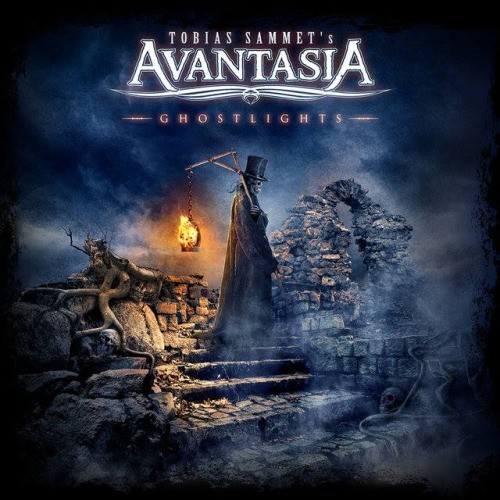
I like metal, but more the punk metal type and less the hair metal type (probably using all the wrong terms, but that's maybe saying I like more the master of puppets and sounds a little more punk metal in my opinion) and this is more the hair metal type. PM me a bombastic pulsating punk metal album if you so wish. Also like that they are German. Read up a bit on them as a super group?
This reminds me of when my mom used to make me listen to and then go see in concert Trans-Siberian Orchestra. Or Meatloaf. I mean nothing really wrong with that stuff, it just doesn't interest me.
I will admit that it started out slow for me (not tempo, but interest) and I was like WTF, but then it wore on me and I started to see why someone would like it. The Haunting and Seduction of Decay were probably the best tracks (IMO). The Haunting had the most interesting vocal/lyric because it wasn't your typical hair metal style.
Also this is very vocal/guitar focused and the rhythm section is barely there to just give support to the 754975498 minute guitar solos (of course I'm joking)... so that might by why it is a turn off to me. There's not really an interesting drum part or bass part in of itself. Of course there's the gratuitous double bass drum fill, but I'm talking about drums/bass that are a unique voice.
I only pay attention to lyrics probably 20% of the time (somehow they really get my attention and other times they are just part of the melody to me and the words themselves don't matter). So if this has a really interesting message, I didn't catch it.
IDK... Even though this is amazing musicianship, I am not crazy about this aesthetic. Some how it really bores me and I immediately am prejudiced with anything that sounds like hair metal and it reminds me of this guy:
This album was fine. Didn't exactly blow me away, but it wasn't bad. Sonically, it feels like an album with Chris Martin writing songs for Jeff Buckley to sing and The Edge to play guitar on. I think the album can be a little melodramatic at times, but I give them credit for trying to be a little experimental at times. It strikes a decent balance between the experimental and the melodramatic. Not a bad album, but not necessarily one I think I'll come back to frequently.
You cannot post new topics in this forum You cannot reply to topics in this forum You cannot edit your posts in this forum You cannot delete your posts in this forum You cannot vote in polls in this forum

 Applerill

 RoundTheBend

 mickilennial


 RockyRaccoon