BTW this is really cool, keep it up. I won't give any input until you hit the 18th century, but what you've posted so far has been informative.
Thanks for the encouragement mate! And I look forward to your feedback in the 18th century/if you are interested and have any specific recs - PM me em and I'll make sure to listen. No need to do a comprehensive list unless you really want to - just a few you really love (either the piece or the recording or both).
RoundTheBendI miss the comfort in being sadProfile Ground Control
Genre: Mostly Chant written by women 700 to 1300
Score: 80/100 (can't really rate much higher without a real listen)
Why this recording: While I had a few albums previous including women, this was encompassing samples of more.
Thoughts:
Really wish I could listen to more than just 30 second samples of this album. I really like the eastern influence on much of this, similar to Kassiani. Another release of these same recordings is called "fallen women". Not sure what to make of that.
Much of the samples had that "noble" woman tone to it - you know like Galadriel in Lord of the Rings. Anyway... that's that for now unless I can find a better source for the recording (saw it on Amazon and thought I could get it that way, but only samples).
Genre: Choral Music (1300s in German - English translation says 13th century, so 1200s)
Score: 80/100
Why this recording: I think this is a legit officiating of full mass circa 1300 - an interpretation of it at least.
Thoughts:
While beautiful and sacred, and likely a historical peak into what sitting mass would have felt like during the period, it somehow fell a bit flat for me. It was nice to have organum chant along with an organ/variable instrumentation throughout. Some of the melismatic singing was really annoying (for the first time)... the amen on Gloria was literally nearly 3 minutes long... one word. Impressively annoying. (Yes, get on with it! Is that a Monty Python thing or Princes Bride... I forget).
Not sure what the brass instrument (maybe winds?) was, but interesting to hear. Some really cool stuff on this and then some of it was a bit too much for me (a nearly 3 minute melismatic run of the A on Amen).
It also features a piece from de Vitry which was kind of hard to find and I'm glad I stuck out to listen to that. You can hear the advancement towards Renaissance music.
Text to the well known hymn:
Section 1:
Glória in excélsis Deo
et in terra pax homínibus bonæ voluntátis.
Laudámus te,
benedícimus te,
adorámus te,
glorificámus te,
grátias ágimus tibi propter magnam glóriam tuam,
Dómine Deus, Rex cæléstis,
Deus Pater omnípotens.
Section 2:
Dómine Fili unigénite, Jesu Christe,
Dómine Deus, Agnus Dei, Fílius Patris,
qui tollis peccáta mundi, miserére nobis;
qui tollis peccáta mundi, súscipe deprecatiónem nostram.
Qui sedes ad déxteram Patris, miserére nobis.
Section 3:
Quóniam tu solus Sanctus, tu solus Dóminus, tu solus Altíssimus,
Jesu Christe, cum Sancto Spíritu: in glória Dei Patris. Amen.
Hi Seth, this is not really German Choral music but Flemish/french polyphonic choral music (Tournai is a Belgian town and the music was originally performed in the local cathedral) but the choir is german; it dates from a bit after the 1300s so that would make it the 14th century.
Believe it or not but was the kind of church music I had to put up with in Latin masses in my youth including the prolongued Amens.
That’s why I still hate that music a bit.
RoundTheBendI miss the comfort in being sadProfile Ground Control
Hi Seth, this is not really German Choral music but Flemish/french polyphonic choral music (Tournai is a Belgian town and the music was originally performed in the local cathedral) but the choir is german; it dates from a bit after the 1300s so that would make it the 14th century.
Believe it or not but was the kind of church music I had to put up with in Latin masses in my youth including the prolongued Amens.
That’s why I still hate that music a bit.
RE: Tournai
Cool! I didn't know. This actually is really helpful because a big part of what I'm "studying" is understanding the Flemish vs French polyphonic stuff and things. haha.
RE: Um 1300
Um in German means around... so I was 99% certain it was 1300s, but wanted to point out the fact that the recording in Google Play says 13th century (which is obviously wrong). Thanks for confirming. Probably an idiot American doing a poor job at data entry.
RE: growing up listening to 3 minutes of Amen
I'm sorry 😄
I'm starting to appreciate being Mormon in my youth even if that had it's own bag of annoyances 🤣
I couldn't drink and you had to sit through 3 minutes of the word Amen 🤣🤣🤣🤣
Totally comparable, right? 🤣
RoundTheBendI miss the comfort in being sadProfile Ground Control
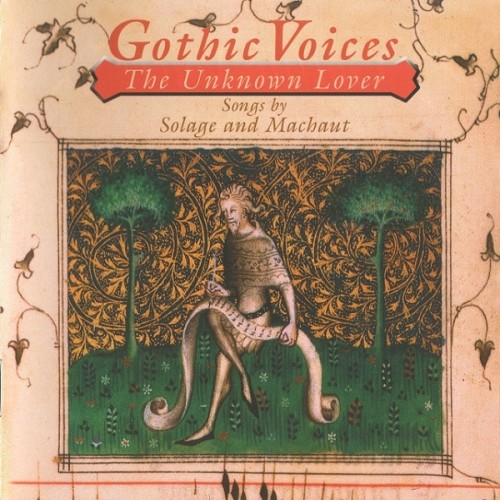
Genre: Ars nova and Ars subtilior (beginnings of mannerism)
Score: 82
Why this recording: Tap recommendation, to be honest. Thanks Tap - that was intriguing!
Thoughts:
I couldn't tell which was which, so I found this list which I can only hope is true. From what I can tell is that Solage really is the precursor to such mind blowing works we'll get in the early baroque from the likes of Bach, yet over a hundred years before.
Also, The Ars Subtilior is a bit of the avant-garde of the time. Not only did they write the music much more complex tonally, but also even on paper - in the shapes of hearts or what's called Eye Music. The beginnings of Mannerism (compositions that are asymmetrical or unnaturally elegant). For example in one of Solage's pieces he writes for like 3 basses and a tenor.
I'll be honest, this made my head hurt a bit. It's pretty intense (especially that from Solage). Absolutely beautiful and complex. I can see why Tap relates/likes it, even if this is one of the more accessible recommendations for me (it's me, not you 🤣 ). At the same time, this type of writing is very prominent in Bach, and very impressive to hear it in comparison to the contemporaries. Even more so than Machaut, it seems at least, when he's supposed to be the hot shot of the era. I'm seeing some parallels in music tonight - experimental music and love songs in an era so long ago, yet in essence is much the same. It's a stretch, but it's like Eye Music is the original tape loop (not it's not). It's beautiful to see humans push the boundaries.
1. Le Basile (Solage) - Mentally I'm quite blown away - at least 3 distinct melodies at the same time
2. Mors sui, se je ne vous voy (Machuat) - A legit bassline (instead of drone) dancing with a tenor, resolving.
3. En l'amoureux vergier (Solage)- Quite busy and tantalizing
4. Quant je sui mis au retour (Machaut)- seems to start as a Minnesang - solo voice, yet depth
5. Tres gentil cuer (Solage)- 4 distinct voices, 2 of which sound like a doublestop (could be wrong)- first SATB?
6. Fumeux fume par fumee (Solage)- This is the unique one with like 3 basses and a tenor. VERY COOL
7. Joieux de cuer (Solage)- Dancing of a high tenor with what later would be considered a soprano (more)
8. Dame se vous m'estes lonteinne (Machaut)- I have nothing to say - it was nice 😄
9. Adieu vous di (Solage) - I really liked the runs on this one in the lower registers (lower registers don't belt well... proving more so that the Ars subtilior was meant as the "musicians music" and not the masses).
10. Plus dure que un dyamant (Machaut) - Ooh - I like the tenor on this - it cuts through, yet rides the "mix"
11. Corps feminine (Solage)- Interesting to have both male and female voices on this one
12. S'aincy estoit (Solage)- The run starting at 1:10 and underlying bass/tenor is impressive.
13. Pluseurs gens (Solage)- Starting to have some of that tonic type resolution or 4th or 5ths.
14. Douce dame, tant com vivray (Machaut) -Somehow I made the connection that the Cello is the closest to the human voice - the tenor in this sounded nearly just like a Cello. It was impressive.
15. Le mont Aön de Trace (Solage) - Interesting play with 5ths. A small bit like country bass or other 5th parties
16. Se je souspir parfondement (Machaut) - A beautiful female soprano solo
17. Calextone, qui fut dame (Solage)- Again with multiple low registers.
18. Dieus, Biaute, Douceur, Nature (Machuat)- I feel like while a solo voice, the power is in word choice/meter
19. Helas! je voy mon cuer (Solage)- The noble beauty of the single female voice is quite beautiful here.
So here's the really cool thing with multiple low register voices. It's really rare when you can make low registers work well together. The frequencies get muddled. Sometimes you can have alike an oboe and an organ together, but often they are doing the same voice - they just add extra tone/textures having the same note have different textures represented there. With multiple melodic voices in a low register, they often get muddy and lost. When was the last time you saw two bassists in the same band for example? Anyway, it's quite impressive that multiple arrangements beautifully and clearly orchestrated into clear different melodies. Perhaps the human voice doesn't go low enough to really get muddy, and that's the key. Still impressive.
My french sucks and so does Google Translate: but it does seem very similar to Minnesang.
Quant je sui mis au retour
De veoir ma dame,
Il n'est peinne ne dolour
Que j'aie, par m'ame.
Diex! c'est drois que je l'aim, sans blame,
De loial amour.
Sa biauté, sa grant douçour
D'amoureuse flame,
Par souvenir, nuit et jour
M'esprent et enflame.
Diex! c'est drois que je l'aim, sans blasme,
De loial amour.
Et quant sa haute valour
Mon fin cuer entame,
Servir la vueil sans folour
Penser ne diffame.
Diex! c'est drois que je l'aim, sans blame,
De loial amour.
Corps Feminin:
The female body, by Nature's gift,
Is perfectly planned, designed and fashioned,
As nobly indeed as your face,
Peerlessly humble, surpassing the flowers in beauty;
Just as sweet and pleasing is
The loving glance of your smiling eye
Which makes me, through sweet memory,
Remain happy and joyous in its snare.
Hi Seth, this is not really German Choral music but Flemish/french polyphonic choral music (Tournai is a Belgian town and the music was originally performed in the local cathedral) but the choir is german; it dates from a bit after the 1300s so that would make it the 14th century.
Believe it or not but was the kind of church music I had to put up with in Latin masses in my youth including the prolongued Amens.
That’s why I still hate that music a bit.
RE: Tournai
Cool! I didn't know. This actually is really helpful because a big part of what I'm "studying" is understanding the Flemish vs French polyphonic stuff and things. haha.
RE: Um 1300
Um in German means around... so I was 99% certain it was 1300s, but wanted to point out the fact that the recording in Google Play says 13th century (which is obviously wrong). Thanks for confirming. Probably an idiot American doing a poor job at data entry.
RE: growing up listening to 3 minutes of Amen
I'm sorry 😄
I'm starting to appreciate being Mormon in my youth even if that had it's own bag of annoyances 🤣
I couldn't drink and you had to sit through 3 minutes of the word Amen 🤣🤣🤣🤣
Totally comparable, right? :lol:
I've listened back to that Gloria you were referring to and in fact it's fairly interesting because they are modulation on the Amen theme: it even sounds a bit like what Philippe Glass is doing on Koyaanisquatsi.
The choir I had to listen to didn't modulate they just prolongued the Amens but maybe not in my youth (when you have to listen to it always seems longer).
Anyway when I remember your stories about your mormon upbringing I don't think the influence religion had on my youth was not remotely as bad as on your youth 😉
RoundTheBendI miss the comfort in being sadProfile Ground Control
Hi Seth, this is not really German Choral music but Flemish/french polyphonic choral music (Tournai is a Belgian town and the music was originally performed in the local cathedral) but the choir is german; it dates from a bit after the 1300s so that would make it the 14th century.
Believe it or not but was the kind of church music I had to put up with in Latin masses in my youth including the prolongued Amens.
That’s why I still hate that music a bit.
RE: Tournai
Cool! I didn't know. This actually is really helpful because a big part of what I'm "studying" is understanding the Flemish vs French polyphonic stuff and things. haha.
RE: Um 1300
Um in German means around... so I was 99% certain it was 1300s, but wanted to point out the fact that the recording in Google Play says 13th century (which is obviously wrong). Thanks for confirming. Probably an idiot American doing a poor job at data entry.
RE: growing up listening to 3 minutes of Amen
I'm sorry 😄
I'm starting to appreciate being Mormon in my youth even if that had it's own bag of annoyances 🤣
I couldn't drink and you had to sit through 3 minutes of the word Amen 🤣🤣🤣🤣
Totally comparable, right? :lol:
I've listened back to that Gloria you were referring to and in fact it's fairly interesting because they are modulation on the Amen theme: it even sounds a bit like what Philippe Glass is doing on Koyaanisquatsi.
The choir I had to listen to didn't modulate they just prolongued the Amens but maybe not in my youth (when you have to listen to it always seems longer).
Anyway when I remember your stories about your mormon upbringing I don't think the influence religion had on my youth was not remotely as bad as on your youth ;)
Musically it was interesting in a way. melismatic singing - not on a word, rather a single vowel for 3 minutes was just a bit to much for me. Somehow I'm thinking to myself of a comedy skit, where someone is like, hey guys, I got this new song. It has a single vowel for 3 minutes straight, want me to show it to you? 🤣 I haven't heard Koyaanisquatsi (actually I think I've heard once all of them - I think it's like a 3 or 4 part series), but Powaqqatsi (I've heard multiple times) has nothing that "boring" in it.
RE: youth... idk man, I never had to sit through 3 minutes of Amen until I listened to this. 🤣
RoundTheBendI miss the comfort in being sadProfile Ground Control
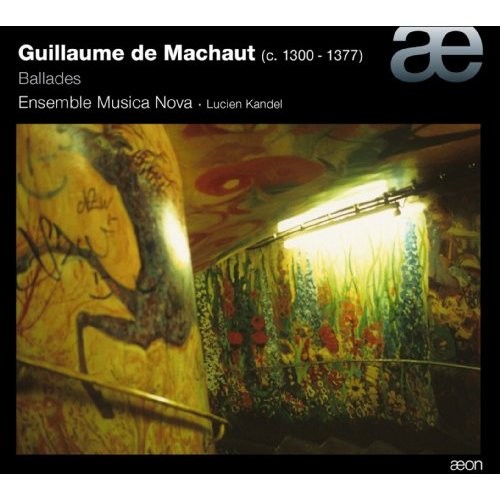
Genre: Ars nova (1300s)
Score: 82
Why this recording: I picked a few different Machaut recordings, this focusing on Ballades (not to be confused with Ballads)
Thoughts:
I think I'm understanding a little more now why Machaut is the shit. Sure Solage wrote way more complex - THE GREATEST EVER MUSIC - but it appears Machaut is the bridge between Medieval and Renaissance music. And somehow more of his music is preserved (perhaps Solage did the same, but more or less just the subtilior carried on? I don't know. But that's what it's feeling like so far on this journey. It feels like so much of his style/musical ideas are then regurgitated in the years to come. This is the first time (imo) when "classical music" starts sounding like what you'd "expect".
RoundTheBendI miss the comfort in being sadProfile Ground Control
Genre: Ars nova (1300s)
Score: 81
Why this recording: I picked a few different Machaut recordings, this focusing on Motets
Thoughts:
From the Wiki:
The late 13th-century theorist Johannes de Grocheo believed that the motet was "not to be celebrated in the presence of common people, because they do not notice its subtlety, nor are they delighted in hearing it, but in the presence of the educated and of those who are seeking out subtleties in the arts"
Only cool people listen to motets. hehe... well back then at least. Probably dad rock fans or perhaps acid rap? Okay took the joke too far.
Here's some explanations of what musically is going on
About Motets:
Basically a form of polyphonic singing, mostly unaccompanied, but often this had an accompaniment. Accompaniment was to allow the different voices to breathe better - being in different registers and tones than human voice. A motet typically typically has a Cantus Firmus (the bass line) with a tenor or discant sung over it. That discant created an Isorhythm with it's counterpoint.
About Isorhythm:
(from the Greek for "the same rhythm") is a musical technique using a repeating rhythmic pattern, called a talea, in at least one voice part throughout a composition. Taleae are typically applied to one or more melodic patterns of pitches or colores, which may be of the same or a different length than the talea."
Furthermore - any percussionists know anything about percussion from this time. At times I hear percussion in these recordings and I'd like to know more.
You cannot post new topics in this forum You cannot reply to topics in this forum You cannot edit your posts in this forum You cannot delete your posts in this forum You cannot vote in polls in this forum
 Tha1ChiefRocka

 RoundTheBend

 dihansse