I'm interested in ancient Greek music, like for their plays. Is it available on spotify? (I only have amazon prime, because I only bother listening to hits.)
RoundTheBendI miss the comfort in being sadProfile Ground Control
I'm interested in ancient Greek music, like for their plays. Is it available on spotify? (I only have amazon prime, because I only bother listening to hits.)
Ancient Greek music - that's cool. When I read that plainchant basically was the most common musical form for the Romans as well, I just considered a few albums of plainchant would be fine. I suppose I was using the more commonly studied western music outlined here (which oddly does ignore Greek and Roman music).
I've spent a little time digging into this and found a couple things - most music is in fragments, so harder to perform (but didn't stop other artists still recording the Worcester Fragments, for example.
The other thing I found difficult was the authenticity of it being "ancient" greek music. You know, you'd find a lyre recording artist - but I wasn't certain the music he was playing was actually written by someone living in ancient Greece.
Here's a piece claimed to be the chorus of Euripdes' Orestes, circa 408 BCE (which seems really cool):
Also Wikipedia has a decent article on it, but it too is a bit scarce. I'm thinking if you look hard enough you'll find something - but it's authenticity could be questionable. It seems the music of ancient Greece is talked a lot about, but the tradition/written music is pretty scarce - even if it totally does exist. It might also be a thing of opportunity- musicians in our era simply haven't been terribly prolific in recreating ancient Greek music.
Dunno. Conjecture.
RoundTheBendI miss the comfort in being sadProfile Ground Control
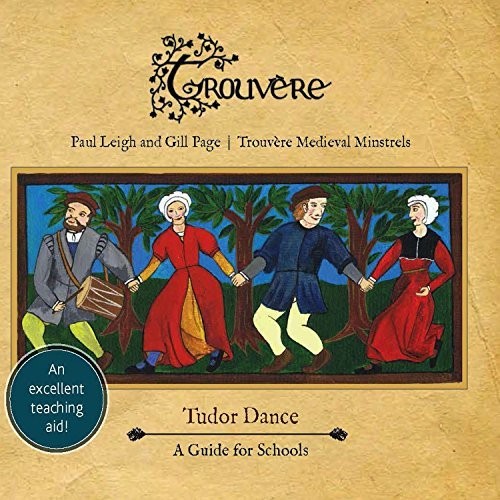
Genre: Trouvère/Troubadour stuff with things
Score: 81
Why this recording: I picked a few different Machaut recordings, this focusing on Motets
Thoughts:
I liked this because of the diversity of sound. Pipes, lute, flute, song, percussion etc. Early pop music if you will.
Blow Thy Horn Hunter sounds like something a hipster band would do to be ironic. A nicer way to say that, is it actually sounds pretty modern (melody, rhythm, etc. doesn't sound too far off from where we are now).
It also sounds like this is quite the hodgepodge of styles and cultures... even if the album is considered Tudor. Could be wrong... dunno.
RoundTheBendI miss the comfort in being sadProfile Ground Control
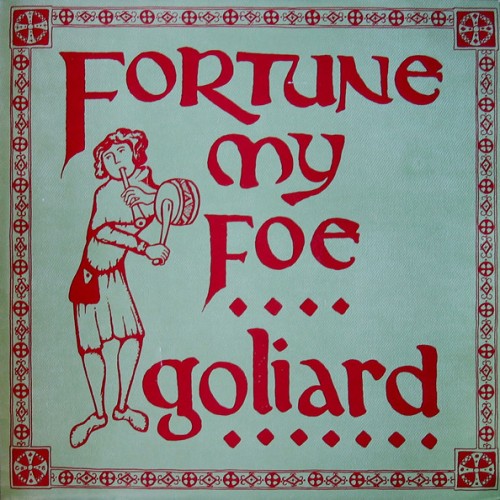
Genre: Goliard
Score: 82
Why this recording: It fit the genre, even if I could only find bits of it
Thoughts:
From Wikipedia:
The goliards were a group of generally young clergy in Europe who wrote satirical Latin poetry in the 12th and 13th centuries of the Middle Ages. They were chiefly clerics who served at or had studied at the universities of France, Germany, Spain, Italy, and England, who protested the growing contradictions within the church through song, poetry and performance. Disaffected and not called to the religious life, they often presented such protests within a structured setting associated with carnival, such as the Feast of Fools, or church liturgy.
Lyrics from Fortune My Foe
Fortune, my foe, why dost thou frown on me?
And will thy favors never lighter be?
Wilt thou, I say, forever breed my pain?
And wilt thou not restore my joys again?
In vain I sigh, in vain I wail and weep,
In vain my eyes refrain from quiet sleep;
In vain I she'd my tears both night and day;
In vain my love my sorrows do bewray.
Then will I leave my love in Fortune's hands,
My dearest love, in most unconstant bands,
And only serve the sorrows due to me:
Sorrow, hereafter, thou shalt my Mistress be.
Ah, silly Soul art thou so sore afraid?
Mourn not, my dear, nor be not so dismayed.
Fortune cannot, with all her power and skill,
Enforce my heart to think thee any ill.
Live thou in bliss, and banish death to Hell;
All careful thoughts see thou from thee expel:
As thou dost wish, thy love agrees to be.
For proof thereof, behold, I come to thee.
Die not in fear, not live in discontent;
Be thou not slain where blood was never meant;
Revive again: to faint thou hast no need.
The less afraid, the better thou shalt speed.
So based on this and my memory of learning in this time period in the humanities, these types of lyrics talking about fortune (famously in O Fortuna - written around the same time, but not put to music until 1900s), were often trying to synthesize the difference between new found faith and the pagan belief in fortune/fate.
It almost has some interesting hints into a common theme of the time of Liebestod as well.
Genre: Motet-Chanson
Score: 81
Why this recording: Franco-Flemish composer - Ockeghem on one track. Getting into other Motet writers.
Thoughts:
I honestly can't tell the difference between a motet-chanson and motet. Chanson I can cause it sounds a bit more like a "pop" song from the time. I bet the difference is the content?
Anyway, I actually liked Du Fay's motet's better than Machaut. Maybe because they were written later? Idk - they seem more mature and less forced if that makes any sense. The more complex voices don't feel as forced or mathematical and more beautiful and human. Maybe that's just the mood I was in today as I listened to this.
RoundTheBendI miss the comfort in being sadProfile Ground Control
I just found this resource and really am wishing I found it earlier... takes a lot of the research time out (which in of itself is fun to learn via wikipedia, etc.), but more or less has a lot of the same recordings I found, but also a treasure trove of many more.
Genre: Polyphonic Mass (1365)
Score: 80
Why this recording: Seemed like a legit full mass recording of Machaut's
Thoughts:
I wasn't nearly as annoyed with the Amen's in this one. It's interesting - sometimes the melismatic singing is actually really cool (Hildegard's outstretched hand)... and sometimes I'd rather hear styrofoam rubbed together.
This recording wasn't particularly interesting or not interesting. I have always really liked the musical style of the run on the tonic and then the "holy" resolution at the end of the prayers/statements, etc. It's uniquely styled and somehow musically I like that.
From wiki:
Messe de Nostre Dame (Mass of Our Lady) is a polyphonic mass composed before 1365 by French poet and composer Guillaume de Machaut (c. 1300–1377). Widely regarded as one of the masterpieces of medieval music and of all religious music, it is historically notable as the earliest complete setting of the Ordinary of the Mass attributable to a single composer (in contrast to earlier compilations such as the Tournai Mass).
(Tournai is what I posted earlier... I enjoyed the interludes and the instrumentation more in this version)
RoundTheBendI miss the comfort in being sadProfile Ground Control
Genre: Italian Ars Nova or Trecento (c. 1325 or 1335 – September 2, 1397)
Score: 82
Why this recording: Landini was easily the most revered in the Trecento and greatest Italian composer of the era
Thoughts:
I really liked this (the diversity of musical styles, etc.). I also heard an almost foreshadow into opera - something I didn't get from other Ars Nova sounds.
Last edited by RoundTheBend on 03/01/2018 03:51; edited 1 time in total
RoundTheBendI miss the comfort in being sadProfile Ground Control
Genre: Italian Madrigals
Score: 81
Why this recording: Landini was easily the most revered in the Trecento and greatest Italian composer of the era
Thoughts:
I like hearing the keys being pressed on a flute as they transition and such.
From wiki about madrigals:
Unlike many strophic forms of the time, most madrigals were through-composed. In the madrigal, the composer attempted to express the emotion contained in each line, and sometimes individual words, of a celebrated poem.
Also learned it was influenced by the Chanson.
A good review by Uncle Dave Lewis on AllMusic:
Jacopo da Bologna is one of the earliest polyphonic composers about whom we sort of know something. We have his portrait in the form of a miniature, which reveals he was not a man of the cloth like the average fourteenth century musician, but a layman, and that suits the music Jacopo left us, almost none of which is sacred. We know of some of his professional engagements and it is postulated that he was teacher to Francesco Landini, the leading light of the Italian trecento. We can read a treatise Jacopo wrote on music and note that he was the only composer to set a Petrarch sonnet to music whilst Petrarch himself still lived. In spite of all this, it is difficult to appreciate what is important about Jacopo's music just by virtue of listening to it; it sounds primitive, and as it is most often anthologized it invariably suffers in the company of the music of his contemporaries, particularly Landini.
However, it is not time to write off Jacopo just yet, as La Reverdie appears to have found the key to assessing his great strengths as a figure in the trecento. Jacopo left about 40 works -- including keyboard intabulations that were like arrangements likely made by others -- and just about half of them are heard on Arcana's Jacopo da Bologna: Madrigali e Cacce. This project takes a varied approach to realizing Jacopo's limited contrapuntal resources -- which never exceed three voices -- through judicious use of instruments and sometimes adding fifths to the tenor or drones in places where Jacopo's original is a little naked. The fuller harmonic profile exposes several features not fully understood before in Jacopo's music; for example, the "under third" or "Landini cadence" makes an appearance in the madrigal In verde prato and many other aspects of the connectedness between Jacopo and Landini are made clear. Likewise, La Reverdie's dogged detective work manages to extract links to other musicians within his circle -- such as Magister Piero and Giovanni de Cascia -- by decoding the acrostics within his texts, which likewise lead outward to notable persons in the courts where he worked.
All of this informs La Reverdie's music-making, which is consummately professional, scrupulously rehearsed, and yet spirited and spontaneous. Arcana's recording is spacious, yet present, and the programming leads very sensibly from one performance to the next. Arcana's Jacopo da Bologna: Madrigali e Cacce is a superb exposition on a composer who has heretofore remained a mystery to most; Landini himself might have been envious of the quality of this recital.
RoundTheBendI miss the comfort in being sadProfile Ground Control
Genre: Branle/etc. (1400-1500)
Score: 83.5
Why this recording: Trying to find things in the Trouvère/Troubadour box.
Thoughts:
I've listened to this a lot in past few days. It's incredibly fascinating. I'm imagining myself around some campfire late at night in the 1400s with the charm of the fire, the beauty of the night sky, and if I'm lucky, some great company.
I particularly liked Pastime with Good Company and the two versions of Branle de l'official (which I thought incredibly familiar, and sure enough its a Christmas carol).
There's something human about this music. Typically I don't think of "dance" music as great, but somehow this really speaks to my humanity. Instead of you must dance to this, it really actually makes my soul dance.
You cannot post new topics in this forum You cannot reply to topics in this forum You cannot edit your posts in this forum You cannot delete your posts in this forum You cannot vote in polls in this forum
 RoundTheBend