Well, with the three Bs all accounted for, it should be no surprise that Mozart shows up at #4
4. Mozart, Symphony #40 in G Minor, K.550.
1. Mozart's penultimate symphony is generally considered ever so slightly a notch behind his great last "Jupiter: symphony. But there are those who put this one at the top. There is no doubting that those last two together, though, mark one of the high points in any artist's ouvre. They are also, according to Jim Svejda, "the pinnacle of eighteenth-century symphonic though.... the Classical symphony reached its final stage of perfection." And I agree.
2. No questions here. Everything that can be documented about this monumental work,has.
3. This is another Szell recording and IMO, he handles the unique qualities of this symphony to absolute perfection. The sound is also crisp and really makes listening to this piece a superb experience.
4. Mozart didn't often write in a minor key. His symphonies, while not at all light in compositional brilliance or majorly meaningful musical statement, were generally rather light in attitude, focusing more on balance and symmetry than gut-wrenching emotion. This is an exception. There is so much raw pathos here that it almost isn't Mozart... except that that marvelous balance and symmetry is still present, making for a symphony unique in the annals of classical music. That rare combination from such a perfect musical mind is why this is my favorite.
5. Cleveland gets a bad rap. To quote comedian Yakov Smirnoff, "Every country has city they make fun of. In America, you make fun of Cleveland. In Russia, we make fun of.... Cleveland."
But Cleveland had the Cleveland Orchestra under the direction of George Szell. That alone could make it a place with a high quality of life if you could get season tickets.
6. Nothing more to add.
FischmanRockMonster, JazzMeister, Bluesboy,ClassicalMasterProfile Land of Enchantment
5. Haydn; String Quartet Op 76, No. 4 in B Flat Major
1. It is pretty much impossible to overstate the historical significance of the amazing body of work known as the Haydn string quartets. Generally considered the godfather of the form, Haydn brought it from its infancy to full maturity and did so almost singlehandedly managing the entire evolution of the form throughout the Classical period. Of all the great individual and groups of Haydn Quartets, the group of 6 that make up Op. 76 are from end to end the best of the bunch. Although #4 isn't generally cited as the best of the six, it's easily my personal fave.
2. Similar question to choices 1 and 3... why isn't this at the top of the heap?
3. The production of this disc is perfect.
4. The alternation of the smooth, lyrical legato phrases and the rapid fire bits makes for a delightfully interesting first movement. They second movement is positively serene; almost painfully lyrical yeat so sublime as to put the listener in a most peaceful mood. The minuet is a model of most expressive Classical delicacy and the finale reintroduces just enough tension to bring the listener back to reality before coming to a perfectly satisfying close. Magnificent.
5. The Takacs quartet is easily my favorite interpreter of the late Haydn quartets.
6. As I said earlier, I often claim Haydn as my favorite overall composer, often alternating with Beethoven. While this entry is all the way down at #5, his entire body of work sits above for me. He was so prolific; 104 symphonies, all of which have something interesting to say, nearly as many quartets, the significance of which I already described above, and enough excellent cats and dogs to make him my fave.
Haydn always astonishes me by resolving the ultimate musical paradox. There is this magnificent mathematical precision in everything he does. Yet at the same time, his music is always full of charm and wit.
How he perfectly melds those two seemingly disparate but musically equal qualities is something I may never fully comprehend.
There is no day so dark, no situation so dire, that a Haydn symphony or quartet couldn't make it appreciably better just for the listening. Bravo, Papa Haydn!
One other interesting note: Haydn had a composer brother, Michael, who also wrote some delightful symphonies in the early Classical style.
FischmanRockMonster, JazzMeister, Bluesboy,ClassicalMasterProfile Land of Enchantment
1. Dvorak's ninth gets all the love, especially from casual fans, and pros often cite the 8th if not the 9th, and I pretty much love all of the last three equally. It's a near impossible choice, but I generally go with the 7th. Dvorak was very cosmopolitan, but he was also very Czech, and I love Czech musical inflection, and this is the most "Czech" sounding of all his great symphonies. Anybody looking to visit the heights of what Czech music can be should start right here.
2. No questions about this one. I've got a perfectly good grip on it.
3. The production and presentation here are absolutely spot on.
4. As noted before, this is a magnificent piece of Czech-ness. The just ever-so-slightly-odd-to-the-western-ear melodies and rhythmic inflections are just strong enough to identify this as Czech, give it just a touch of the exotic, yet keep it beautifully romantic and almost universally expressive and appealing. As I noted earlier, I could have picked any of the last three symphonies... or the great American Quartet, String Quintet, or any of the big three concertos (Cello, Violin, or Piano), but this Symphony is the one that brings together all that this great composer had to offer.
6. Dvorak was my introduction to Czech composers, but just the tip of the iceberg. Quota-wise, Czechs make up an inordinately large proportion of my classical collection (not as voluminous as the Germans/Austrians, but relative to the total out there, a disproportionately large amount)
Interestingly, this is my third piece in D Minor. Seems I have a fetish for that key!
Last edited by Fischman on 02/17/2019 04:44; edited 1 time in total
FischmanRockMonster, JazzMeister, Bluesboy,ClassicalMasterProfile Land of Enchantment
i'll have something for you eventually. I'm going to re listen to some stuff and not really think about what the greatest is, but what I like right now.
Although, I probably do have a number 1, so I'll drop it here.
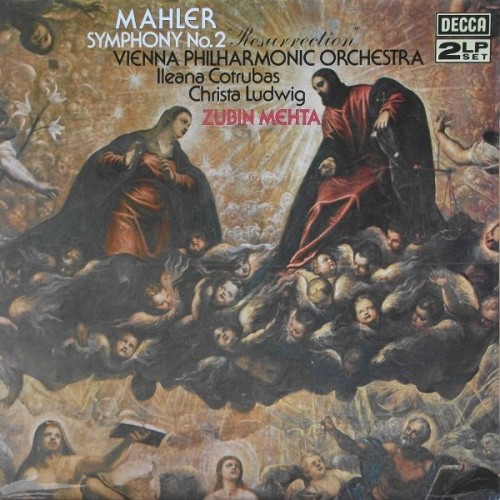
I think the best quality of Classical music is its timelessness. Rock and pop trends can come and go and sound dated after a couple of decades, but a monstrous emotional rollercoaster like this piece of music will stand the test of time. And it probably would be something I'd like to listen to if my time was running out. Whether it's a nuclear holocaust or a terminal disease, I hope some part of my brain will be playing this in the background as I pass on; the hope that the ending of my corporeal existence will be met with a spiritual resurrection.
Wow,
You better hope you don't die suddenly!
FischmanRockMonster, JazzMeister, Bluesboy,ClassicalMasterProfile Land of Enchantment
Okay, so my first six entries were by composers pretty much in line with what one would expect, even if the specific works chosen weren't.
Here's where I really start to go off the reservation.
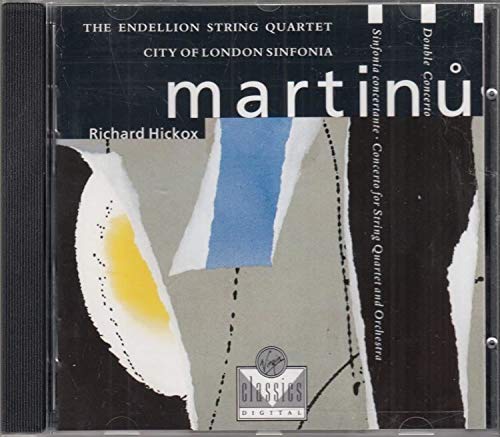
7. Martinu - Concerto for Two String Orchestras, Piano and Timpani
1. Martinu in general has some significance as a second tier composer of moderate import. Personally he's a solid #7 in my book. He'll never break the top six already presented, but he'll never drop lower for me. As i said solid. Not many would put him above the likes of Stravinsky, Wagner, Schubert, and many others, but I love the dude.
2. I always marvel at how Martunu brings together so much for me. He was the first 20th Century composer i fell in love with. He's also decidedly Czech. How does he do it? What exactly are the musical qualities he brings to the fore that captivate me so? Every time I seek to answer those questions, I end up just listening and going "wow!"
3. Martinu doesn't tend to have the many recordings, even of this, his most famous work, that the above mentions do. As such, I have little to compare this to. The sound seems to be a bit thick, but it still works with these works. I'll take it.
4. In addition to being decidedly Czech, Martinu in general, and this piece in particular, bring forth enough dissonance to be squarely post-romantic/20th Century, but is still accessible and not overly challenging. It's yet another great example of striking an almost impossible balance and the music becoming greater as a result. The instrumentation of this concerto is also very original and even quite bold. It makes for a powerful musical statement.
5. Martinu was a great lover of Dvorak, so I suspect that's how he kept the beauty and balance in his obviously 20th century work.
6. As I said, I LOVE Martinu. I could have just as easily picked any number of his other works. In particular I would like to call out his 3rd Symphony for its edgy melodies and dramatic power, his first piano concerto for its tunefulness, his first violin concerto for its bohemian fiddle influences, or his Concerto for String Quartet and Orchestra as yet another great innovation in instrumentation.
Last edited by Fischman on 02/17/2019 05:15; edited 1 time in total
i'll have something for you eventually. I'm going to re listen to some stuff and not really think about what the greatest is, but what I like right now.
Although, I probably do have a number 1, so I'll drop it here.
I think the best quality of Classical music is its timelessness. Rock and pop trends can come and go and sound dated after a couple of decades, but a monstrous emotional rollercoaster like this piece of music will stand the test of time. And it probably would be something I'd like to listen to if my time was running out. Whether it's a nuclear holocaust or a terminal disease, I hope some part of my brain will be playing this in the background as I pass on; the hope that the ending of my corporeal existence will be met with a spiritual resurrection.
Wow,
You better hope you don't die suddenly!
Haha, as long as I can see the blast coming from a couple miles a way, I'm sure a few notes will be able to pop up. 😁
FischmanRockMonster, JazzMeister, Bluesboy,ClassicalMasterProfile Land of Enchantment
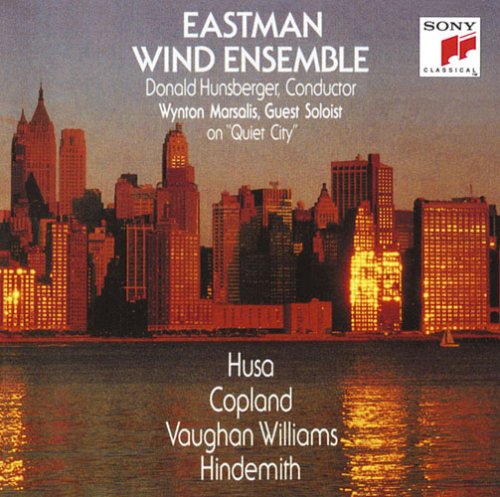
1. Karel Husa is considered to be the top Czech composer since Martinu. If Music for Prague 1968 was the only piece of music he had ever written, he would probably still hold that same level of esteem. This musical reflection of the brutal Soviet invasion of Czechoslovakia carries tremendous historical and cultural significance, especially among those who lived behind the Iron Curtain during the Cold War.
2. No questions here. I have studied and grasped a great deal with this fantastic music.
3. This is an excellent recording. The sound quality and presentation are top notch.
4. Even more than his countryman Martinu, Husa is aggressively modern, but at the time has enough of a conservative streak to keep his music from scaring away anyone not already immersed in the avant garde. This idiom is perfect for musically documenting the tragic events that engulfed Czechoslovakia and its capital city in 1968. There is so much power and overwhelming pathos here, you'd have to be dead to not feel the tragedy, tension, and intensity here. Few modern masterworks this side of the Rite of Spring can compete with the likes of this.
5. Husa won the 1969 Pulitzer Prize for Music for his equally brilliant String Quartet #3.
6. I lived in southern Ohio for a year and bought season passes to the Dayton Symphony Orchestra for the '03-'04 season. One program included Music for Prague 1968. I believe it was the most powerful musical performance I have ever seen in any genre in any venue. The Dayton Symphony isn't exactly among the world's elite, but they sure pegged the hell out of that one! Mr. Husa was on schedule to make an appearance himself, but backed out at the last minute due to health reasons (he was already on the high side of 90). I would have loved to have seen, or even met the man. Nevertheless, the performance alone made that one of the greatest nights of my life. I believe I have heard every recording of this music as I have sought out whatever could recreate for me the power and majesty of that night. Alas, all have fallen short; sometimes only live will do.
FischmanRockMonster, JazzMeister, Bluesboy,ClassicalMasterProfile Land of Enchantment
Like I said, I'm a full blown Czechophile, musically speaking. Here's my fourth Czech choice in a row.
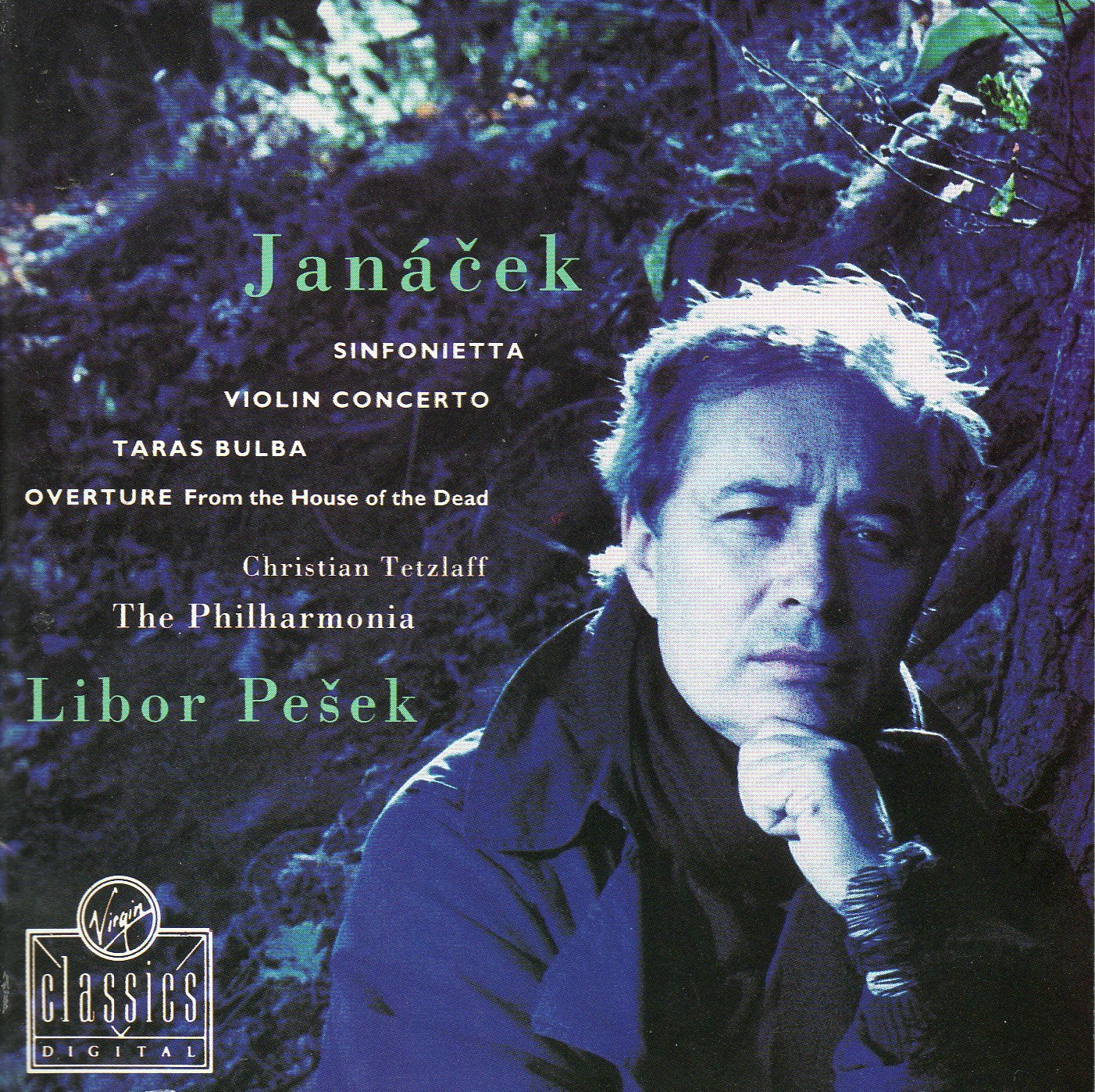
9. Janacek - Sinfonietta
1. Janacek is probably the most popular/well known of 20th Century Czech composers, and the Sinfonietta is his most popular work. So while my putting Janacek into my top 10 isn't exactly standard, picking the Sinfonietta is my favorite work of his is.
2. No questions here, this piece and its history are pretty straightforward
3. The Sinfonietta, being a rather popular work, has received many quality recordings. How this one stacks up, I don't really know. It sounds very good to me. I really picked this one because the disc also includes the awesome overture to Janacek's opera, From the House of the Dead, easily my favorite overture from any era.
4. The Sinfonietta is, in a word, 'Heroic.' It starts with a wonderful trumpet fanfare. Think Copland's Fanfare for the Common Man, but Czech... what could be better than that? As the piece progresses, it engages increasingly complex rhythms and harmonies, but retains its heroic nature. The result is yet another of those far too rare listening experiences that satisfy both intellectually and emotionally.
5. Janacek was also a folklorist, and like Dvorak, he tapped into the very rich tapestry of Czech music for inspiration, but rather than reflecting it in classical style, made something decidedly more modern with it.
6. While listening to WCRB one evening, they presented a live concert (the ensemble/conductor whom I no longer remember) of all Czech music. It included Dvorak's 9th, Martinu's Concerto listed above at #7, Smetena's Moldau, and Janacek's From the House of the Dead Overture. Being blown away by the Janacek piece, I decided to look further into him and that's how I discovered the Sinfonietta.
Geeze Dmtri, lighten up won't ya? But seriously, this is just pure sorrow, grief, frustration, anxiety, and anger in musical form. Whereas "The Resurrection" makes me hopeful for what life will bring, this is the piece that makes me want to crawl under my bed and hide. That 2nd movement is one of the most ominous and frantic pieces of music that I have ever heard. It's like when you're being chased by something endlessly in a dream, or some other futile and desperate attempt to survive, like drowning.
FischmanRockMonster, JazzMeister, Bluesboy,ClassicalMasterProfile Land of Enchantment
1. Piston's Symphony #2 was the piece of music that got him recognized as a major voice in American music. The piece is epic in scope, grand in presentation, and completely American in sound and attitude.
2. No questions here.
3. I love the sound of this disc. It brings out the music with great clarity and enthusiasm.
4. This symphony is in just three movements rather than the traditional classical four. The first movement, moderato, is a glorious alternation of rising tension and a second more lighthearted, almost whimsical theme. The second slow movement drips with lush melody and feels more like a concerto with lovely solos from both clarinet and flute. The last movement, allegro, brings more upbeat excitement back to the party and finishes with a perfectly rousing close.
5. While Piston is American and this piece is American through and through, he borne of Italian immigrant, his grandfather changing his name from Pistone when setting up a new life for his family in the United States.
You cannot post new topics in this forum You cannot reply to topics in this forum You cannot edit your posts in this forum You cannot delete your posts in this forum You cannot vote in polls in this forum
 Fischman


 Tha1ChiefRocka