Wow - thanks for the feedback and your analysis on this stuff! I also appreciate your takes.
I think your right, somehow I let the end result get in the way of the quality of stuff.
Another thing I haven't mentioned is part of why I choose the recordings I do is because they often have that gem of a single track. "Overtures" without actually being part of anything else (a standalone overture) is becoming more and more common, so it's slightly akin to doing a post per song... ain't nobody got time for that... so my data is all screwed up because my current list is an attempt to combine stuff - sometimes I'm happy with my choices, sometimes I'm really wanting a better recording. In otherwords I'm mixing my methodologies up and it's confusing and sometimes demotivating me! haha
But I really should just chill the freak out and enjoy the journey like I've done so far. I really have liked listening to works in mostly chronological order (akin to NoisyBeasts thing, I believe a bit in that concept of horizons of expectation (see the corresponding wikipedia article) as I rate music - saying it simply, sometimes I rate hip-hop against each other instead of against everything for the same reason - it's like this is the best hip-hop and I love it. Really insert anything into hip-hop in that sentence... but you have to have something to compare it against. The romantic period is so vast in so many different ways it's kind of hard to compare things against each other and then also there's the fact that nothing really fits in a perfect box, early romantic vs early modern vs late romantic vs classical style during the romantic period, etc... anyway, I'm rambling.
There's a chance I'll start this whole thing over perhaps with my original methodology which was to talk a bit about the works, but really my post was the album (not the individual works) and when albums combined works, I tried my best to talk about the key aspects of each. It will take a bit for me to re-work my chart/data and shiz... and in the meantime I'm already listened to quite a bit... haha... it's a hot mess...
RoundTheBendI miss the comfort in being sadProfile Ground Control
Arthur Rubinstein's recordings are a joy to listen to nearly regardless of the work itself. Waltzes themselves aren't incredibly interesting to me, but this recording is. Op. 34 for example is both reserved and jubilant. Enjoyed the whole record and will return.
Waltz for piano No. 1 in E flat major, Op. 18, CT. 207 (Grande valse brillante)
Quote:
Frédéric Chopin's published waltzes (actually valses -- a subtle but significant stylistic distinction) fall into two distinct categories: sparkling, highly ornamented jewels suitable, to at least some degree, for actual ballroom use; and more introspective, often rather melancholy, miniatures that are far removed from the fashionable Viennese waltzes of Joseph Lanner or Johann Strauss I. The earliest of the published waltzes (actually fifth in order of composition), the Grande Valse brillante in E flat major, Op.18, is an example of the former.
This aristocratic work presents its young composer in a particularly extroverted mood; surely the main theme of the work, introduced after a lively four-bar fanfare, is one of Chopin's most famous. The composer toys with a secondary, repeated-note gesture (marked leggieramente) before making a happily-chosen move to D flat major; the chromatic figure in parallel thirds that runs throughout a good part of this central section provides a good taste of the composer's more mature style. An extended version of the opening fanfare ushers in the reprise of the initial tune, which, upon reiteration some forty bars later, is broken up by the unexpected intrusion of two bar-long grand pauses.
While some, including the famous musicologist Huneker, have felt the (perhaps overly) effervescent quality of the Opus 18 Waltz to be vulgar, others see a kind of sly humor in the work's irrepressibly joyous tone. Whatever the Waltz's true sentiment is, Chopin, having visited Vienna and found the Viennese waltz to be entirely foreign to his nature (declaring, upon his return to Paris, that "I am still unable to play valses), seems wholly determined to reinvent the form in his own image. - AllMusic
The Minute Waltz is the most famous of Chopin's waltzes and ranks among the best-loved pieces in the entire classical repertoire. Its sprightly mood and kinetic energy belie the composer's personal situation at the time of composition: his health was in serious decline and his relationship with novelist Aurore Dupin Dudevant, who wrote under the pseudonym of George Sand, was falling apart.
The theme of this waltz is its best-known feature. It begins as though hurriedly winding itself up; then, with the left hand anxiously maintaining the waltz rhythm, the right hand slithers elegantly upward and downward, finally resolving in quivering swirls of notes that ascend as they peak, then descend at the final climactic moment. The whole is held together by a little melodic cell and seems to shimmer in the hearing and before the eyes. This effervescent theme is perhaps indescribable, but that has not deterred the nickname-makers who have attached programmatic significance to the works of this determinedly abstract composer; the work is also known as the "Dog Waltz" because for some it suggests the image of a dog chasing its tail. (Legend has it that the waltz was inspired by Chopin's own pet.) The stately, singing middle section is more conventional, which is not to suggest that it is stale or hackneyed. Its nonchalance and relaxed manner provides the perfect contrast to the bustling energy of the opening theme. The piece closes with a restatement of its joyous and memorable initial creation.
Some of the work's popularity is due to its comparative technical simplicity; unlike much of Chopin's output, it is within reach of ambitious amateurs. Despite its nickname, the Minute Waltz lasts closer to two minutes in performance. - AllMusic
Era: Romantic
Year: 1830
Form: Satan worshiping psychedelia, I mean a Program Symphony.
Score: 85
I'm really glad I chose this recording. It's final track talks about the work in details by none other than Leonard Bernstein. I actually love the way he talks about music. And for the second time I hear him talk about The Beatles - I guess they were popular and it could draw comparisons... either that or they really are much more to our culture than the Scaruffi's of the world give credit to them for... that's ok there's a sea of musicians/musicologists who disagree with him, but that's besides the point. We are talking about Berlioz psychedelia, not Beatles. Anyway, I guess in the program of this Symphony, Berlioz let's the audience know what kind of ride they are going to be in for - a opium induced unrequited love heartbreak hotel. And that indeed is what he delivers. I can't say that I love this piece, which usually means I have some kind of Cathartic connection to it... rather I like it because of what it does musically and the "Standards" it breaks.
Quote:
Berlioz composed this work in 1830 and conducted the first performance in Paris on December 5 of that same year. He revised it in 1832 and added two cornets to the instrumentation in 1845.
Berlioz the composer was a full-blown Romantic, whose infatuation-at-first-sight with a pretty British ingénue named Harriet Smithson influenced his Fantastic Symphony. Miss Smithson came to Paris to play Shakespeare, Berlioz's hero (along with Virgil, Goethe, Gluck, Beethoven, Lord Byron, and Victor Hugo). Harriet was "The Beloved" of his programme fantastique. "A young musician of morbid sensibility...in a paroxysm of lovesick despair" attempts suicide, but takes only enough laudanum to induce hallucinations, in which his Beloved appears as a recurring melody with several personalities, finally as a bacchante at a satanic ritual. Despite the lurid scenario, Berlioz's five-movement structure owes more to Beethoven's Pastoral Symphony than anyone seems to have noticed at the time, or, for that matter, since. Where Beethoven whipped up a storm, Berlioz created a mob scene that concludes with the protagonist's death: his decapitated head bounces into a waiting basket pizzicato. In the finale, Berlioz went far beyond Beethoven's merrymaking peasants; he created a witches' sabbath, without precedent in music before 1830. Along with liberating orchestral color, he overthrew the tyranny of bar-lines, downbeat accents, and academic dogma.
"Dreams, Passions" begins with the hero's despair, a Largo introduction in C minor that leads to the main body of the movement in C (and later G) major, marked Agitato ed appassionato assai. The Beloved's signature melody is the main theme of a sonata structure with exposition repeat; she returns in the development, in the recap, and in a grand coda of notable length and contrapuntal éclat.
"A Ball" (Allegro non troppo, A major) is the waltz without a trio, although a contrasting section in F major has unison flute and oboe playing the Beloved's theme.
"Scene in the Fields" is an Adagio that begins and concludes with an antiphonal shepherds' duet on oboe and English horn. Near the end of a free-form central section, the Beloved appears. Four timpanists playing very softly -- a Berlioz signature -- imitate a distant storm before the two shepherds lead their flocks homeward.
The G minor "March to the Scaffold" recreates a scene from the Revolution, Allegretto non troppo, with a repeat usually ignored in twentieth century performances. The protagonist dreams he's been condemned to die for killing his Beloved, who appears briefly as a clarinet, and he is guillotined as the crowd shouts approval.
"Dream of the Witches' Sabbath" features a four-part structure after an eerie introduction in E flat. The Beloved's melody is the main theme of Part I, now, however, distorted and vulgarized by clarinets. Distant bells introduce Part II, in which bassoons and tuba play the Gregorian Dies irae. Part III is the Witches' Dance, a fugue that Berlioz called a ronde. Part IV combines the Dies irae and Witches' Dance until the latter triumphs, electrifyingly. - Roger Dettmer, AllMusic
Berlioz's own descriptive rogramme note from 1845 on the Symphonie fantastique
(English translation by Michael Austin):
The composer's intention has been to develop various episodes in the life of an artist, in so far as they lend themselves to musical treatment. As the work cannot rely on the assistance of speech, the plan of the instrumental drama needs to be set out in advance. The following programme* must therefore be considered as the spoken text of an opera, which serves to introduce musical movements and to motivate their character and expression.
*This programme should be distributed to the audience at concerts where this symphony is included, as it is indispensable for a complete understanding of the dramatic plan of the work. [HB]
Part one
Daydreams, passions
The author imagines that a young musician, afflicted by the sickness of spirit which a famous writer has called the vagueness of passions (le vague des passions), sees for the first time a woman who unites all the charms of the ideal person his imagination was dreaming of, and falls desperately in love with her. By a strange anomaly, the beloved image never presents itself to the artist's mind without being associated with a musical idea, in which he recognises a certain quality of passion, but endowed with the nobility and shyness which he credits to the object of his love.
This melodic image and its model keep haunting him ceaselessly like a double idée fixe. This explains the constant recurrence in all the movements of the symphony of the melody which launches the first allegro. The transitions from this state of dreamy melancholy, interrupted by occasional upsurges of aimless joy, to delirious passion, with its outbursts of fury and jealousy, its returns of tenderness, its tears, its religious consolations -- all this forms the subject of the first movement.
Part two
A ball
The artist finds himself in the most diverse situations in life, in the tumult of a festive party, in the peaceful contemplation of the beautiful sights of nature, yet everywhere, whether in town or in the countryside, the beloved image keeps haunting him and throws his spirit into confusion.
Part three
Scene in the countryside
One evening in the countryside he hears two shepherds in the distance dialoguing with their 'ranz des vaches'; this pastoral duet, the setting, the gentle rustling of the trees in the wind, some causes for hope that he has recently conceived, all conspire to restore to his heart an unaccustomed feeling of calm and to give to his thoughts a happier colouring. He broods on his loneliness, and hopes that soon he will no longer be on his own... But what if she betrayed him!... This mingled hope and fear, these ideas of happiness, disturbed by dark premonitions, form the subject of the adagio. At the end one of the shepherds resumes his 'ranz des vaches'; the other one no longer answers. Distant sound of thunder... solitude... silence...
Part four
March to the scaffold
Convinced that his love is spurned, the artist poisons himself with opium. The dose of narcotic, while too weak to cause his death, plunges him into a heavy sleep accompanied by the strangest of visions. He dreams that he has killed his beloved, that he is condemned, led to the scaffold and is witnessing his own execution. The procession advances to the sound of a march that is sometimes sombre and wild, and sometimes brilliant and solemn, in which a dull sound of heavy footsteps follows without transition the loudest outbursts. At the end of the march, the first four bars of the idée fixe reappear like a final thought of love interrupted by the fatal blow.
Part five
Dream of a witches' sabbath
He sees himself at a witches' sabbath, in the midst of a hideous gathering of shades, sorcerers and monsters of every kind who have come together for his funeral. Strange sounds, groans, outbursts of laughter; distant shouts which seem to be answered by more shouts. The beloved melody appears once more, but has now lost its noble and shy character; it is now no more than a vulgar dance tune, trivial and grotesque: it is she who is coming to the sabbath... Roar of delight at her arrival... She joins the diabolical orgy... The funeral knell tolls, burlesque parody of the Dies irae,** the dance of the witches. The dance of the witches combined with the Dies irae.
**A hymn sung in funeral ceremonies in the Catholic Church. [HB]
RoundTheBendI miss the comfort in being sadProfile Ground Control
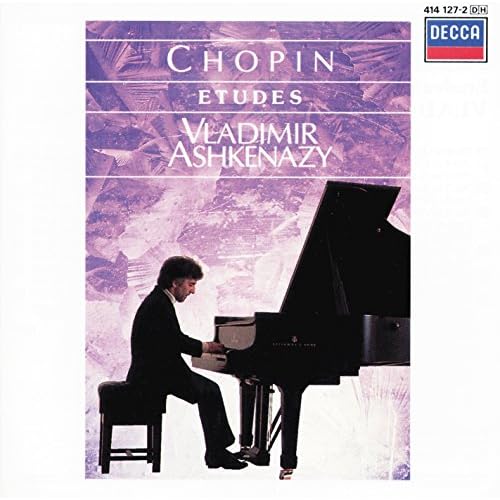
I found a better recording than what's on my list. Anyway, great piano arrangements. I didn't fall in love with anything here, but it was a pleasant listen. There's the famous "Black Keys" Étude that I recognized immediately - it's shimmering sound cleans my ears every time. Of course this whole thing is full of beautiful piano music though. Revolutionary is another I recognized through it's rapidly sweeping rhythm, and then the panging melody.
I just wanted to say some of this I really liked and really is some of the greatest piano music ever made, and some of it kind of fell flat.
1834 - Fantasie Impromptu in C-sharp minor, Op. 66
Quote:
Chopin wrote four impromptus -- a French word suggesting improvisation -- but affixed the word "fantaisie" (fantasy) only to the last one, perhaps implying a clearer form for the first three and a more rhapsodic nature for the last. In fact, though, it's in a fairly straightforward ABA pattern, with an unexpected twist in the coda. Chopin asked that this work, along with several others, be destroyed after his death (obviously his executors ignored him); it's speculated that he felt the piece was too derivative of the Op. 89 impromptu of Ignaz Moscheles. Chopin's manuscript carries the French inscription "Composed for the Baroness d'Este," which some people, notably pianist Artur Rubinstein, have interpreted to mean that the baroness commissioned the work for her exclusive use.
Following a dour, imposing opening note, the piece begins with fast, rippling figures in both hands. A second section, moving to D flat over left-hand triplets, offers a broad, lyrical melody with just a few touches of filigree near the ends of phrases. It serves as the basis of a couple of short quasi-variations, never straying far from the original theme. This melody, incidentally, was used about a century after its composition as the tune of the pop song "I'm Always Chasing Rainbows." The perpetual-motion opening section returns for what seems will be a fleet finale, but just before the end the music devolves into a swirling figure from which emerges a firm bass restatement of the second section's romantic theme, and the Fantaisie-Impromptu ends with a gentle arpeggio and a quiet chord.
The headnote and dating of this work may seem a bit confusing until one understands the background of this piece. In the winter of 1830-1831, while in Vienna, Chopin wrote the Grand Polonaise for piano and orchestra, affixing to it the opus number of 22. Later he composed the Andante spianato and grafted it onto the Grand Polonaise to serve as an introduction, thereby forging a new, expanded work, also designated Op. 22. In the process he fashioned versions of the work for both piano solo and for piano and orchestra. This effort, incidentally, marked the last time that Chopin composed anything for orchestra.
The solo version begins with a lovely theme in the upper register, clearly of a Romantic bent. Like many of the composer's creations, there is something sad in its beauty, which to some will always represent the exiled Chopin's homesickness for his country and family. A consoling, mellow theme is next heard and after recalling some of the main material, this section ends quietly. The unusual (for music) word "spianato" means "level" or "smoothed," and these concepts give an idea of the music's tone.
The Grand Polonaise begins with a fanfare and then launches into one of the composer's more attractive dance themes. It is light and delicate, joyful and aristocratic, and full of the color and subtlety one associates with so many of Chopin's polonaises. Upon restatement, the theme is given more ornamentation and glitter. In its middle section the mood turns playful at the outset, but then becomes more intimate and subdued while retaining its dance-like character. Some passages here resemble parts of the first movement of the composer's Piano Concerto No. 1 (1830). The main theme returns and the piece concludes with a brilliant coda, parts of which, once again, look back to the First Concerto, this time to its magical last-movement coda.
In the piano-orchestral version the piece begins the same way; the introduction, in fact, remains strictly for piano solo. The differences are noticed when the polonaise section starts, for here the orchestra delivers the introductory music, after which the piano takes up the dance theme. There is minimal accompaniment from the orchestra here and throughout, but some may prefer this version precisely because of Chopin's sparing use of the various instrumental sections.
The ending in the orchestral version is more brilliant and dramatic, but many will favor the piano solo rendition for its greater fluidity and less extroverted nature. One might observe that in the orchestral version the pianist is freed up to impart a greater sense of keyboard color; and indeed, its mood is a bit more playful. Essentially, however, one hears much the same music, since the piano is so utterly dominant throughout the orchestral version.
Both renditions are the same in duration, about 15 minutes each in a typical performance, with the Andante spianato section comprising about one third of the overall length.
The polonaise is a couple dance in moderate triple meter that originated in Poland. During the early Baroque era, pieces called Polish dances or (in French) "polonaises" were written by numerous composers. By the eighteenth century, the polonaise became an instrumental work independent of its dance origins, and exhibited the following characteristics: triple meter, moderate tempo, lack of upbeats, and repetition of rhythmic figures. In the Classical era, polonaises came to possess broader, more expressive melodies and sometimes included a trio section (as in a minuet) or were set in rondo form.
By the time Chopin composed his first polonaises, then, the dance had been known throughout Europe for two centuries and had taken on a conventional character. Even Chopin's first essays in the genre were not especially Polish in style or reference. Probably because of Chopin's later separation from his homeland, his expansive and majestic mature polonaises would become symbols of Polish nationalism for both the composer and, especially, other Poles. The works were received as defiant outbursts in the struggle of an oppressed and partitioned nation. Some were associated with specific historical events: Op. 40, No. 1 was perceived as evoking the battle of the Hussards of Subieski and Op. 44, the battle of Grochów. In 1840, the Polonaise in A major was coupled with the Polonaise in C minor (composed in 1839), and the pair was published in Paris as Op. 40. Chopin dedicated the pieces to Julian Fontana, one of the composer's Warsaw friends.
Among Chopin's mature polonaises, this A major piece is the most "traditional," preserving the melodic and rhythmic aspects, as well as the da capo format, of the older dances. Nevertheless, Chopin infuses the piece with the strength and heroism we find in other polonaises. From the very beginning of the piece, Chopin's writing for the keyboard is so powerful that the overall sonority is nearly orchestral in effect. This is evident in the very first measure, where aggressively detached chords accompany a rapid stepwise rise in the uppermost voice. Such sharply articulated gestures prompted the piece's nickname, "Military." In the first theme, a brief ornamental excursion into the lower register occurs at the end of the second and fourth measures. The same gesture appears in the contrasting secondary theme, but at smaller intervals. As we might expect, the first theme sounds twice and the single appearance of the contrasting theme is followed by a literal return of the first.
In the D major central section, we find a good example of Chopin's whole-tone harmonic sequences. After a cadence on the dominant we hear a sequence of closes in B flat, C and D--a stepwise return to the tonic of the middle section. The whole passage is really an instance of keyextension; there is no modulation. A non-thematic exploration of the registral contrasts of the first section provides the contrasting material of the central section, which otherwise is more melodic than the first. Chopin's return to the opening material is literal, but he eliminates the repeats, bringing the piece to an abrupt and surprising close.
This polonaise, nicknamed the "Heroic," is one of Chopin's most popular works. It was written during a happy period in his life: his love affair with writer George Sand (Aurore Dupin Dudevant) was in full bloom, and the unpredictable tuberculosis which nearly killed him in early 1839 was temporarily behaving less lethally.
After a dramatic introduction, where the music immediately heightens the listener's expectations, the main theme of this polonaise is given, a defiant and heroic creation whose first several notes repeat emphatically before resolving in triumphant chords, which are usually arpeggiated by pianists owing to their wide span. The melody varies the second time around, providing a resolution of descending chords whose downward trajectory gives no hint of defeat or acquiescence. Indeed, the music remains optimistic and imparts a feeling of triumph even in the brief and defiant second subject.
The middle section offers a buildup in which the right hand's racing rhythmic figure, related to the main theme's repeating notes, prods the militaristic right hand onto further glories. A subdued, lyrical section of mysterious character follows, after which the main theme returns. The piece ends with an ecstatic, colorful rendition of the theme. Performances of the A flat major Polonaise typically last around seven minutes.
Quote:
https://www.youtube.com/watch?v=4P63s3Nw3iM
RoundTheBendI miss the comfort in being sadProfile Ground Control
Very pleasant works. It feels like the bread and butter... like it's no Chopin with the fluff, rather the simple, yet refined works that sometimes I like more than the fluff. I mean these aren't just bland melodies either - it's great stuff, it's just not 4 octaves of runs all the time. Barenboim is a fantastic performer and interpreter.
I'm remembering someone really loving these on this site, but forgetting who now...
wikipedia:
Quote:
The eight volumes of Songs Without Words, each consisting of six "songs" (Lieder), were written at various points throughout Mendelssohn's life, and were published separately. The piano became increasingly popular in Europe during the early nineteenth century, when it became a standard item in many middle-class households. The pieces are within the grasp of pianists of various abilities and this undoubtedly contributed to their popularity. This great popularity has caused many critics to under-rate their musical value...
Mendelssohn himself resisted attempts to interpret the Songs too literally, and objected when his friend Marc-André Souchay sought to put words to them to make them literal songs:
What the music I love expresses to me, is not thought too indefinite to put into words, but on the contrary, too definite. (Mendelssohn's own italics)[2]
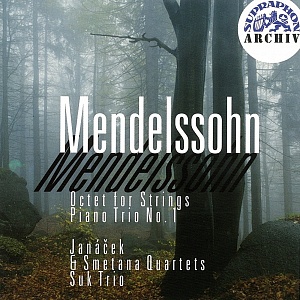
I really like this piece. It's lively and amazingly weaves the 8 voices.
Quote:
In 1825, when Mendelssohn completed his Octet, Op. 20, he had already produced his first numbered symphony a year earlier, but the octet is more sophisticated and may safely be considered a full blown symphony, even though written for only eight string players. Mendelssohn's own words, written on the autograph score in his own hand, are proof of this: "The Octet must be played in the style of a symphony in all parts; the pianos and fortes must be precisely differentiated and be more sharply accentuated than is ordinarily done in pieces of this type."
Not merely a doubled quartet, the piece is a true octet in which counterpoint, texturing, and harmonic complexity are every bit as sophisticated as in any symphony. In four movements, the work unfolds like a symphony, with a brilliant first movement allegro giving way to a marvelously dreamy second movement andante. A third movement scherzo is chamber-like in its texture and transparency but, again, symphonic in scope and size. It in fact develops a near-diabolical complexity due to Mendelssohn's brilliant use of eight voices instead of four or even fewer. The presto finale opens with outright bizarre chuffing from the cellos, but explodes immediately into a vigorous romp which plunges ahead, barely taking a breath, to a large, truly symphonic finale.
The piece is particularly significant in Mendelssohn's career as it was one of two singularly brilliant works considered to be a signpost of his genius in his teenage years. (The other work thus identified is the equally brilliant Overture to A Midsummer Night's Dream.) It was also the first string octet to be written as a true eight-part work and to this day remains the finest work in that form extant. It bridges the gap between Mendelssohn the chamber composer and Mendelssohn the symphonist in a particularly effective way.
The third movement scherzo was subsequently scored for full orchestra by the composer and presented to the London Philharmonic Society in 1829 as a separate, complete work.
The Octet is one of the pieces that drew me to Mendelssohn in the first place. As much as I appreciate his orchestral music, the Octet is still probably my favorite piece from him.
I mean, really, I love string quartets, and what could be better than a string quartet than two string quartets together 😉 ?
RoundTheBendI miss the comfort in being sadProfile Ground Control
Era: Romantic
Year: 1837
Form: Requiem Mass
Score: 86.5
I'm hesitant to give this a higher score, even though I think maybe it's deserving. It most definitely is a unique piece and incredibly powerful. I felt oddly transformed upon listening to it... like I was in death's waiting room. The tenor solo piercing through was absolutely beautiful. It's amongst Die Schöpfung or other powerful works like this for sure.
AllMusic:
Quote:
The instrumental forces alone demand that we step back and look at Hector Berlioz Grand Messe des morts, Op. 5 (Requiem) a little differently than we might look at another composition -- even another large-scale, theatrical composition -- from the 1830s: in addition to the usual large orchestra and chorus, Berlioz calls for no fewer than 16 timpani and four extra brass choirs! When the French ministry of the interior commissioned a requiem mass from Berlioz in 1837 and decreed that the conservative conductor Francois-Antoine Habeneck would lead the December 5 first performance of the work, they can hardly have had such a thing in mind (nobody had yet ever even conceived of an instrumentation like that before, certainly not for indoor use); but Berlioz, through all his many ups and downs as a composer, was never one to suppress his fiery sense of the dramatic (as fiery as his bright red hair, so the stories go), and, in the end, even Habeneck -- who, according to a not impartial Berlioz, tried his best to ruin the Requiem's premiere -- had to admire the spark of genius and the sheer spunk that it took to put that thing on paper. Today the Requiem is Berlioz's second-most famous work, behind the Symphony Fantastique, though, as one might imagine from its performance requirements, it is not his second-most frequent visitor to the concerthall (or the cathedral, as the case might be).
Berlioz's Grand Messe des morts, scored for orchestra, tenor soloist, and SSTTBB chorus plus the extra forces listed above, is in ten sections and runs in excess of an hour and a quarter. Not all of its music is massive (the extra forces explode onto the scene in the Tuba mirum portion of the Dies irae sequence in No. 2 and then disappear), and indeed much of it is quite intimate -- for example the slender No. 3 Quid sum miser, which immediately follows the outburst in No. 2, or the opening of No. 9 Sanctus, which features the solo tenor. And the Requiem ends in absolute tenderness, the Lamb of God (No. 10 Agnus Dei) having taken away the sins of the world and accepted the dead into a new world, of which we mortals can hear only vague echoes -- timpani strokes left over from the explosive Last Judgment held earlier in the mass, now distant and gentle.
You cannot post new topics in this forum You cannot reply to topics in this forum You cannot edit your posts in this forum You cannot delete your posts in this forum You cannot vote in polls in this forum
 RoundTheBend


 Fischman