I don't generally go for jazz covers of Beatle tunes, but this had some interesting moments. I do like Ramsey's work, but his backing feels a little stilted to me.
I really like his version of Blackbird, and Everybody's Got Something To Hide Except Me and My Monkey is pretty interesting.
The selection is a little unexpected. Surprised he didn't include Revolution. Personally I'd have liked to see what he would have done with the two lesser known George tunes, Savoy Truffle and Piggies.
FischmanRockMonster, JazzMeister, Bluesboy,ClassicalMasterProfile Land of Enchantment
Grant Green – Idle Moments Year: 1965
Style or Subgenre: Soul Jazz, Hard Bop
Thumbnail. Click to enlarge.
Although an excellent guitarist, Grant Green isn't one of those supervirtuoso shredders; his strength lies in a more soulful expression. I remember my guitar instructor telling me it's actually more difficult to construct a quality solo in a slow song than in a fast one. This may seem counterintuitive at first, but there's a lot of merit to that statement. When slowly moving through a melody or a lick, each note becomes so important.... both in terms of note selection as well as note expression. Any flaw in technique will be made glaringly obvious. Attack, sustain, tone, vibrato, bend... all are fully exposed for the world to hear. And if the melody itself isn't perfect, that'll show as well.
So while Green never relied on fretboard acrobatics, he takes his ability to play well at a relaxed pace to a whole new level on this album. Despite all the open space, Green's playing is never stilted, but always fluid and flowing. Unless you've just slammed a double espresso, the opening title cut will set you right into a meditative state as Green and the rest of his ensemble, including an equally expressive contribution by Bobby Hutcherson on vibes, put you right into the zone.
Don't worry, this isn't 40 minutes of relaxation. The group picks up the pace on the second cut, "Jean de Fleur," where Green's playing is as lively as you're likely to hear from him anywhere. As if the joy wasn't enough from Green himself, when tenor Joe Henderson busts in, it's time for some wonderfully bouncy soloing. His conversation with pianist Duke Pearson's comping is really something special. The album version of "Django" is abridged to accommodate LP limitations, but the full version can be heard on CD reissues. The closer, "Nomad" is maybe the best overall composition on the album and proves to be another highlight with a lively and enticing head from Pearson followed by an extended solo from Henderson that demonstrates his ability to hold interest over a lengthy improvisation. Follow ons by Hutcherson and Green are no less impressive; in fact, Green drops some of his coolest licks ever in here. Strong finish!
I really love Born to Be Blue and Matador, but this may be Green's most essential release as it is not only solid, creative and expressive quality throughout, but it also best displays the range of Green's formidable capability.
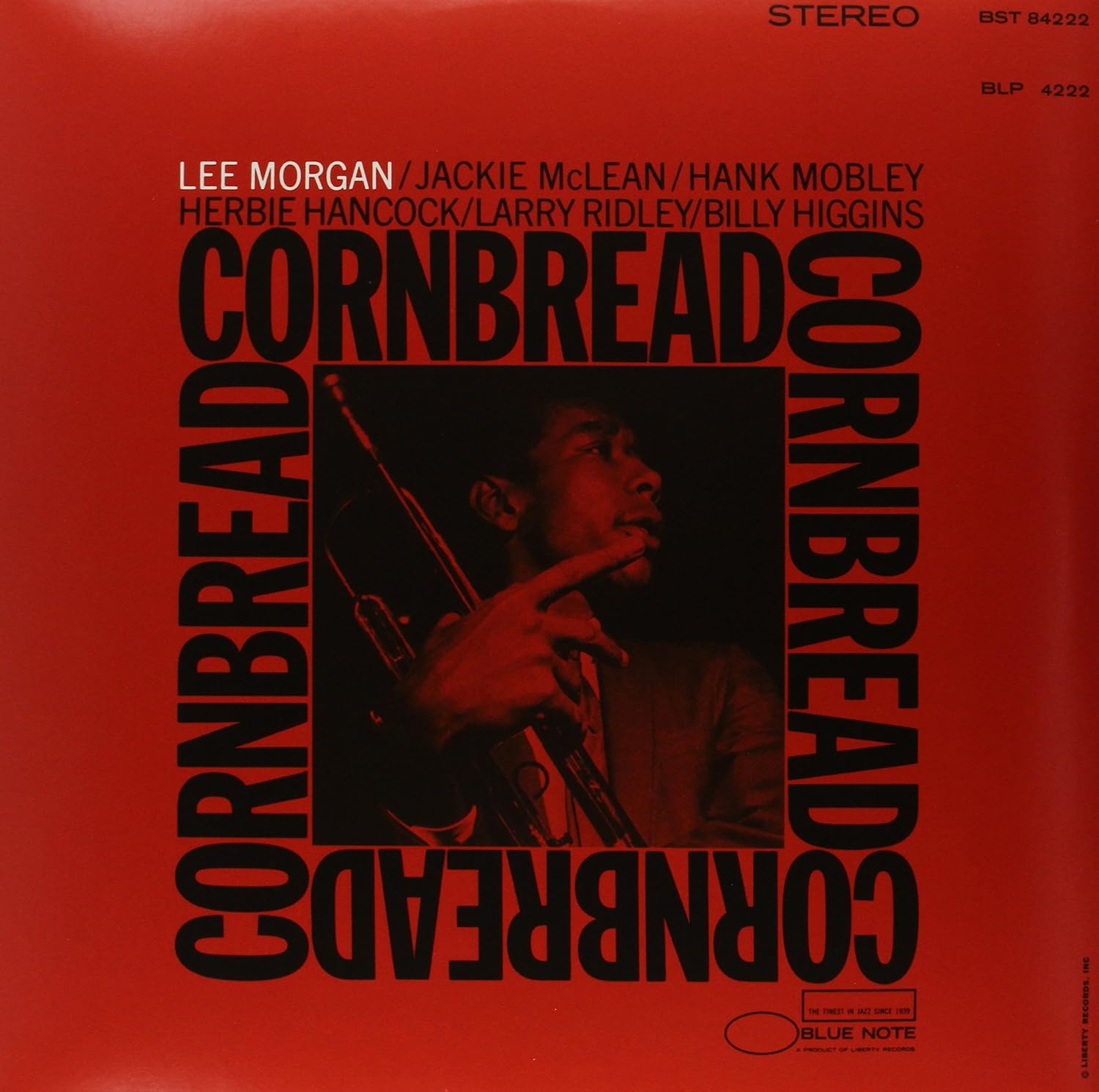
Lee Morgan – Cornbread Recording Date: 1965
Release Date: 1967
Style or Subgenre: Hard Bop, Soul Jazz
Thumbnail. Click to enlarge.
On "Cornbread," Lee Morgan takes the straight hard bop of "The Sidewinder" and adds a healthy dose of soul. The result is something very special, and something that can resonate with a broad spectrum of listeners.
There is one little quirk for me on this album however. As a child of an age to start watching TV in the late '60s, some of my first TV exposure was to game shows. The head of the title track makes me think... just a little... that it could have been a theme song from one of those game shows. Fortunately, that little quirk passes quickly as this song has fantastic levels of both soul and swing, and it's not long before it hits my brain right in it's happy place and carries me off to delightful thoughts. When Morgan launches into his first solo, it's easy to think this may rival his best work on the aforementioned "The Sidewinder," something one would expect to never be duplicated. And if that's not enough, Herbie Hancock then drops some of his liveliest, most intriguing, and most entertaining music ever. Easily one of my all time favorite songs... even if I do expect Wink Martindale or Bob Eubanks to come boppin' out from behind the nearest doorway!
While Morgan does his usual stellar job on "Our Man Higgins," this is where he gives his saxes, Altoist Jackie McLean and tenor Hank Mobley the spotlight, which they use well. Aside from the solos though, what really keeps this song groovin' along is the stellar snare and cymbal work of drummer Billy Higgins, whose creative rhythms make this one almost as special as the opener. The ballad "Ceora" is often cited as the most memorable song on the album, and while I prefer the livelier pieces, I can't argue otherwise. The smooth Latin beat and Hancock's creative piano work kick it off before the horns enter with a swaying, hummable melody that is lively enough to keep the mood of the album, but soft and smooth enough to coax the listener along, nice and easy like. Interestingly, the album then sequences the even more mellow "Ill Wind," which sounds a lot more pleasant than the title would indicate. As would be expected, the album then closes with another lively one, "Most Like Lee." Wile this one is named for the headliner, it's another one where he turns a lot over to the saxes, and Mobley in particular makes the most of his time in the spotlight.
This is an absolutely marvelous album that will always have a prized place in my collection.
The Wynton Kelly Trio with Wes Montgomery – Smokin' at the Half Note Year: 1965
Style or Subgenre: Hard Bop, Guitar Jazz
Thumbnail. Click to enlarge.
Since I began delving into jazz, I've heard more than a few people say that Wynton Kelly never made a bad album. Now, he engages in a collaboration with the most beloved of jazz guitarists, Wes Montgomery. This is rightfully considered one of the greatest meeting of musical minds in history. "Unit 7" is ranked by many as one of the greatest guitar solos of all time, any genre, any time period. None other than Pat Metheny said that the guitar solo on "If You Could See Me Now" is his personal all time favorite. "Four on Six" is also often cited as a favorite.
The way these two brilliant artists blend together is beyond amazing. Words fail me. I could gush on an on about this album. Awww, hell with it...y'know what?... I'm not even gonna' try and review this one.... I'll just gonna let Mr. Metheny sum it up for us: Smokin' at the Half Note is...... "'the absolute greatest jazz guitar album ever made."
...and from a Q&A on his web page
Q: Name one jazz record that "says it all" for you and why?
A: i would pick "smokin' at the half note". wes montgomery and the wynton kelly trio live in nyc at a club called the half note. everything about it attracts me. the melodies, the feel, the ingenuity of all the players, the interaction, the sound. everything.
... lastly, from his web page:
"I think Wes Montgomery & Wynton Kelly's album "Smokin' at the Half Note" is the gold standard of what is possible to achieve in music."
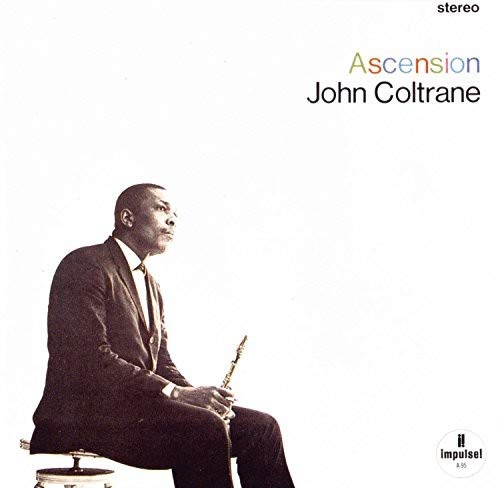
John Coltrane – Ascension Recording Date: 1965
Release Date: 1966
Style or Subgenre: Avant Garde, Free Jazz
The first time I heard this, nobody had warned me, let alone prepared me for the seemingly random array of cacophonous sounds that would emanate from this supposedly supremely talented ensemble. Did I just wander into the first day of a grammar school music class where ten year olds were blowing into instruments for the first time, reveling in the sounds they can make individually? Is this some extended version of an orchestra warming up and attempting to tune all at the same time?
In his Sputnik Music Review, Tristan Jones says "... fans of this piece of music can be organized into two categories: those who claim to understand it, and those who admit they can't."
Okay... I feel better now.
This is where free jazz goes really, really free. Coltrane was also abandoning the typical quartet and loaded up this ensemble oddly, with three tenors, two altos, two trumpets, Two basses, piano and drums. What a swarm they are! Rhythm? Nope. Swing? Surely you jest! Unconventional and improvised with no regard for tradition? You bet!
After a few listens, it may still sound random and unstructured, but it becomes apparent this isn't just a bunch of kids wanking their newfound instruments for the first time. We know going in, that each member is highly skilled, and a few listens will lend the idea that they're doing exactly what their doing, albeit not scripted and going with whatever strikes them at the moment. In this most recent listen, I wanted to see if I could detect the element that makes other free jazz I've heard and liked, interesting and likable; that being a sense that the musicians are playing off of, or conversing with each other. Yes, I definitely hear that in Ascension... most of the time. There are still moments that sound like individual free for alls.... and who knows, maybe that was the intent and part of what we're supposed to get out of this. Huge kudos to drummer Elvin Jones for providing some kind of a foundation for this only marginally contained lunacy. And God love Freddie Hubbard for occasionally forcing his clear, sharp tone into the middle of the proceedings, providing a respite from all the goose honking sounds of five simultaneous saxes flying free!
Ascension is presented as a single, uninterrupted piece. Interestingly, Ascension was recorded twice with one "edition" released, then pulled and another edition released shortly thereafter. The "why" of this seems to be lost. Now a multi-disc set can get you both editions together. They start off similarly, but as you can imagine, while wandering in a similar direction, that much freedom will result in significant differences, although the overall sound and impact remain much the same. Running time of the two editions is within a couple minutes of each other, sitting just on opposite sides of the 40 minute mark.
In the end, I'm still not likely to proclaim this as some supreme example of jazz, or music of any kind, but I'm also not going to disparage it either. Free Jazz tends to divide as wide as current American politics, but just as in the latter, I am perfectly comfortable proclaiming some middle ground here. I'm not suddenly going to side with the self-appointed musical elites who like to set themselves apart by saying only they get this and the rest of us don't. Nor will I simply dismiss this as nonsense, claiming it to be the unlistenable ramblings of so-called musicians too full of themselves. It is not something I listen to often, but it is something I will listen to regularly. My personal purpose in doing so is to try to get "inside" the mind of the ensemble and hear the art in their conversation. It is there much of the time, even if it is not apparent; even brutally difficult to try to find. But finding it is indeed rewarding, if only for a brief moment before the frenzied melee returns!
There are moments where it all starts to make sense (especially when pianist McCoy Tyner asserts himself).
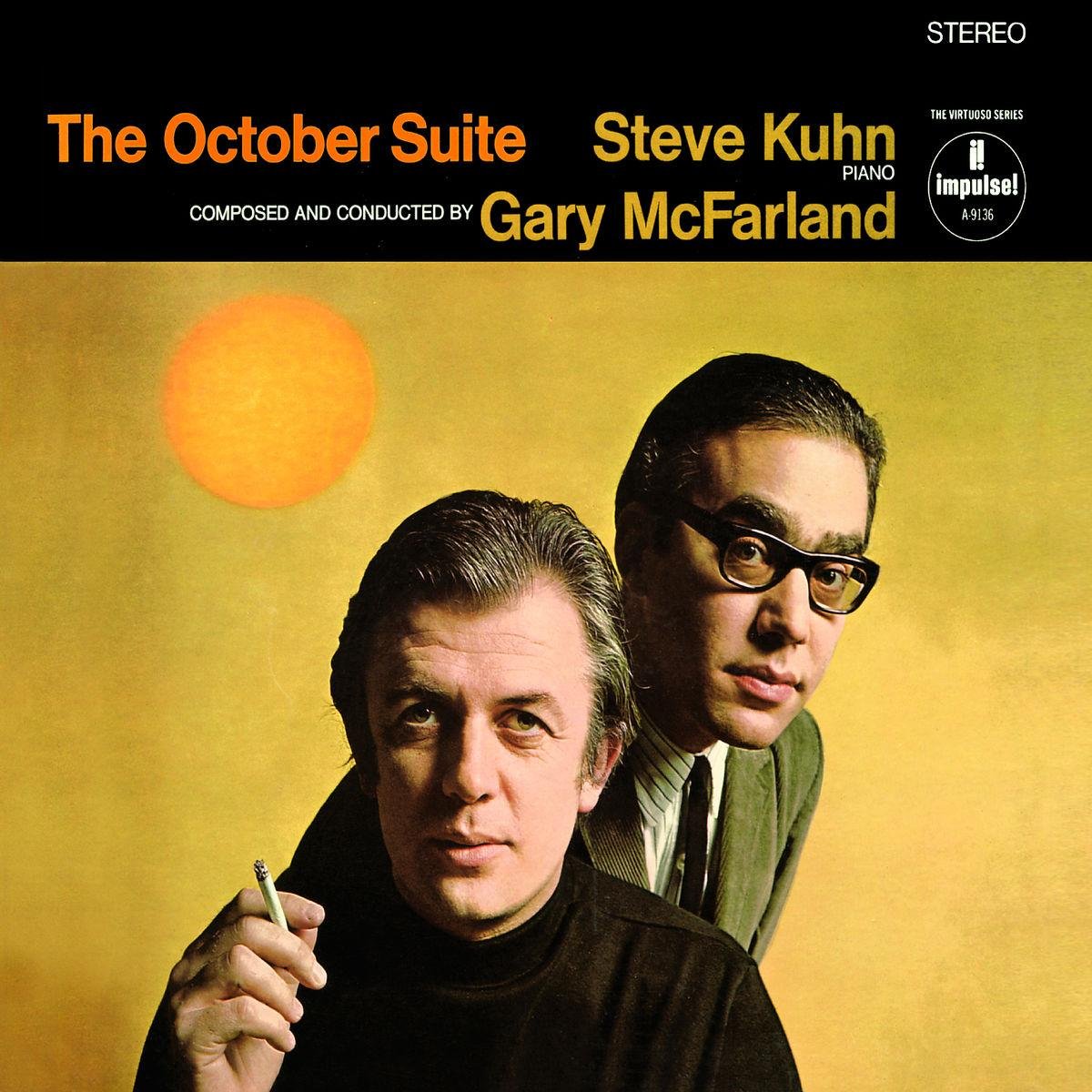
Steve Kuhn/Gary McFarland – The October Suite Recording Date: 1966
Release Date: 1967
Style or Subgenre: Third Stream, Post Bop
Thumbnail. Click to enlarge.
I first encountered this album not long ago as a result of participating in ChiefRocka's "Get to Know a Top 10" thread. It was entirely new to me, and as I said in the thread, I was stunned. Now, it's time to revisit this great discovery and ferret out the why of what makes it so great.
When I went into checking out this record with no previous knowledge or expectations, I had no ideas of what all it had going against it. Gary McFarland was first known as a film score composer, not a jazz composer. As such, his classical leanings were often prominent, even as he often scored for medium sized ensembles. Meanwhile, Steve Kuhn was a jazz guy from the beginning, and worked specifically in jazz idioms one would not first think compatible with classical music. Also, this was released on the Ipmulse! label which was, at the time, focusing increasingly on free jazz and improvisation while this record is far more composed. While McFarland was also an accomplished instrumentalist himself, he plays not a note on this album, serving only as composer, and leaving the playing to Kuhn and the unusual ensemble brought together for this rather odd hybrid. Kuhn's piano anchors the record, but his accompaniment is not typical of jazz, including woodwinds, a string quartet (tracks 1-3), and of all things, a harp (tracks 4-6)!
On paper, this should have been a disaster.
But in execution, is is a remarkable achievement, full of atmosphere, mood, captivating melody, creative harmony, and inventive rhythms, all brought together to great effect.
Each of the six cuts starts with a 20th Century classical sound not surprisingly reminiscent of soundtrack music. But when Kuhn brings in the piano, the jazz nature of the alum becomes apparent. This sense is grounded and maintained by the rhythm section of core jazz bassist Ron Carter and drummer Marty Morell who don't necessarily swing, but rather shuffle in a most sympathetic way. For his part, on side one, Kuhn tends to be delicate with the keys, letting the music grow organically and allowing the attentive listener to absorb the music and settle in at his own pace; a marvelous effect. On side two however, he tends to be more forceful, bringing a more direct and demanding attack, which works well, especially on the first cut, "Traffic Patterns."
In a way, these songs seem to follow the traditional there part A-B-A jazz pattern of head-solos-head, but in this case whey morph stylistically from classical to jazz and back to classical to close. Again, this shouldn't work, but somehow it does. I find every piece on this album to be either deeply moving or quite exciting.... sometimes both.
In the end though, it seems that the things we would normally think make this kind of record impossible have been as strong as the fact that it was not only possible, but a genuine success. In his album notes, Nat Hentoff wrote:
"The approach—letting the classical instruments function on their own terms simultaneously with jazz men following their own idiom—may well stimulate other composers and performers from both fields to explore different combinations of equals."
Now to be accurate, this was not the first time such fusion had been recorded as composers like Stan Kenton and Duke Ellington had enjoyed some success as much as a decade or two earlier. Indeed, the term "Third Stream" had already been coined to describe Jazz/Classical fusion. But it may have been the first time it had been composed and executed in such a manner. Sadly, it seems his prediction has not come to pass, at least on the scale a record like this would lead me to hope.
Bobby Hutcherson – Dialogue Year: 1965
Style or Subgenre: Hard Bop, Post Bop
Thumbnail. Click to enlarge.
Bobby Hutcherson – Components Recording Date: 1965
Release Date: 1966
Style or Subgenre: Hard Bop, Post Bop
Thumbnail. Click to enlarge.
I started my Bobby Hutcherson journey, as most do, with his most acclaimed album, "Components," but for my most recent listen, I decided to start with his first album as leader, "Components," recorded two months earlier. While "Components" will always remain his most revered, and likely my favorite, I've decided "Dialogue" is only a hair behind. The really cool thing about "Dialogue," in addition to the sense that the album is aptly titled as the musicians converse with each other... and with the listener... is that Hutcherson puts a new twist on standard genres. For instance, the opener, "Catta" is clearly presented in Latin form, but is clearly something else entirely new. The following "Idle While" has the core of a hard bop ballad, but is delivered with a bit of post bop pioneering. "Les Noirs Marchant" sound a traditional march, the most structured of all musical forms, at the beginning, but then morphs into free jazz explorations. Sam Rivers' sax make a great match for the more exploratory of these pieces while Freddie Hubbard's trumpet provides the more familiar side; again, this record shines by means of yet another contrast, with Andrew Hill's (who provided four of the six compositions on the album; bassist Paul Chambers providing the other two) being the thread that ties it all together.
The title cut proves to be a real highlight, being both the most fully realized composition on the album as well as the one where Hutcherson himself really shines. On "Ghetto Lights," Hutcherson & Co. do with the blues what they did with other forms in previous cuts; twist it into his intriguing new musical vision while keeping enough of the original form for it to still be recognizable. And get a load of Hubbard's muted solo! Soulful stuff.
Components, rather than exploring many styles one song at a time, is rather divided into two halves with their own coherence. The first half is exploratory and harmonically advanced hard bop while the second half wanders more fully into the free jazz idiom. Both are excellent, and it all ends up feeling like witnessing musical evolution itself, complete with a sudden but peaceful changing of the guard, making the album as a whole more than the sum of its parts. Also making "Components" just a little more special than "Dialogue" is the very welcome event of Hutcherson himself taking a little more solo time, and the album benefits from how his modern but gorgeous playing creates and carries mood throughout. While moving from Sam Rivers to the lesser known James Spaulding on sax could be considered a step back, especially given the former's skill at evolution into the avant garde, it actually ends up being a sort of improvement as Spaulding also brings his free flowing flute into the mix.
After a solid self titled opener, the album moves on to "Tranquility," which could not be more appropriately named. If there is a more tranquil, but still musically meaningful, song out there (in any genre), I have yet to hear it. Side two kicks off with "Movement," announcing that you have now moved into the free side of the album. Hubbard's trumpet and Spaulding's flute dance about Ron Carter's bass, Joe Chambers' drums, and now Herbie Hancock's piano with movement which is at once both angular and graceful. The dance becomes even more graceful on the following "Juba Dance."
From form to freedom, "Components" skillful demonstrates multiple personalities emerging from a single, coherent and focused musical mind.
Freddie Hubbard – Blue Spirits Recording Date: 1965
Release Date: 1966
Style or Subgenre: Hard Bop, Soul Jazz
When I first purchased this album, completely unheard, I was thrilled upon my first listen. I just enjoyed it without any wondering as to why. I already had a good Hubbard collection starting with his early Blue Note releases like "Open Sesame" and "Ready for Freddie" and his later famed CTI releases like "Red Clay" and "First Light" but this was different. So for this most recent listen, I decided to pin down what makes this album unique and whether or not whatever that is influences my appreciation for it.
With that in mind, it turned out that the question about uniqueness was easily answered in two parts. The first can be easily discerned merely by looking at the personnel. Freddie employs multiple different ensembles ranging from sextet to octet with different personnel in each. Piano may come from Harold Maybern, Herbie Hancock, or McCoy Tyner. Tenor may be from either Hank Mobley or Joe Henderson (plus alto from James Spaulding). What's more, it's not one group for half the album and the other for the other half, but rather they are mixed throughout. This gives the album a nice feeling of variety but without losing any sense of coherence. Quite an accomplishment really.
Even more important though, to that uniqueness is the musical direction Hubbard takes; he uses his foundation of straight classic Blue Note hard bop, but infuses it with a little blues and an extra dose of soul to produce a most interesting and entertaining sound and vibe. It's almost as if this is a sort of transitional album between linking his early hard bop albums with his later more soul oriented ones. All too often, transitional albums are praised for their evolutionary significance, but at the expense of acknowledging them on their own merit, independent of any historical significance. I suspect this is just such a case. Transitional or not, this is a fantastic album. Had one never heard what came before or after, it would still be a superb listen independent of any other context. It stands on its own quite nicely thank you very much.
And in the end, that is what I think I love so much about this album; that it is a testament unto itself, borne of a creative musical vision, executed by stellar personnel at once both bringing their best and mixing it up.
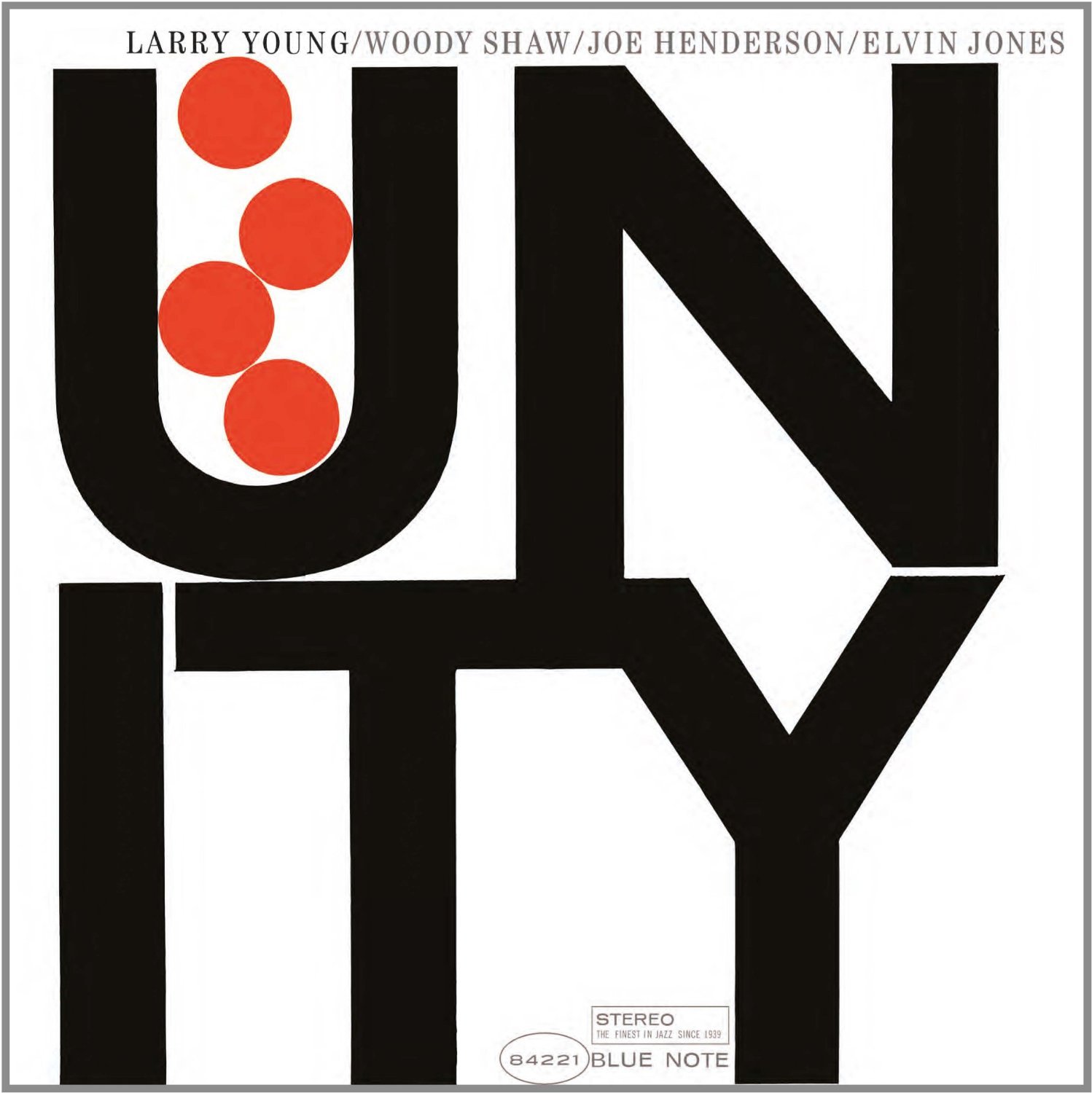
Larry Young – Unity Recording Date: 1965
Release Date: 1966
Style or Subgenre: Hard Bop, Post Bop, Soul Jazz, Proto-fusion
Thumbnail. Click to enlarge.
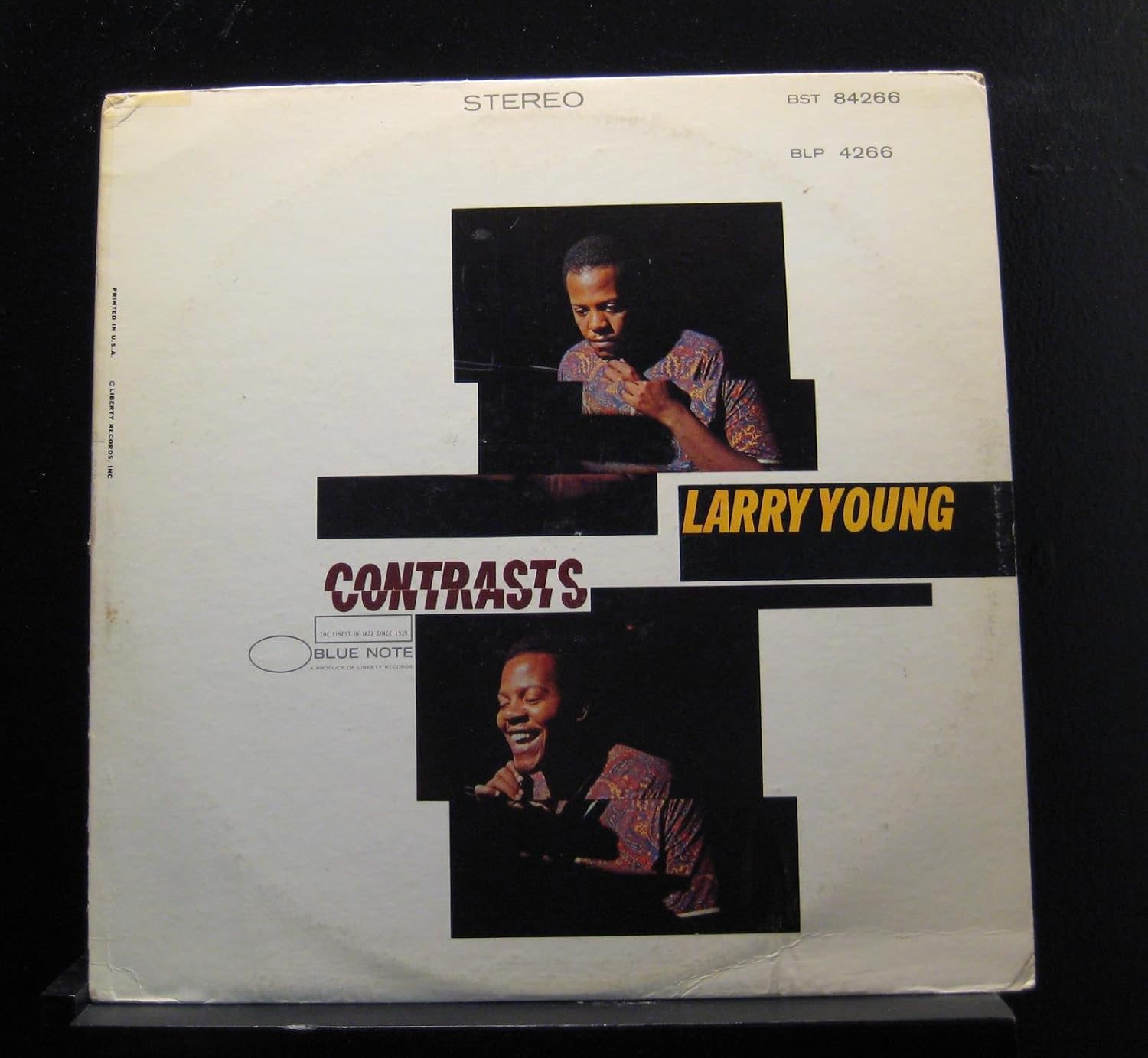
Larry Young – Contrasts Recording Date: 1967
Release Date: 1968
Style or Subgenre: Soul Jazz, Fusion, Avant Garde
Thumbnail. Click to enlarge.
Larry Young was one of those names that kept popping up on my radar, but took me a while to get around to checking out. If I had known he was an organist, I'd probably have delved in a little sooner. Just as hearing Milt Jackson caused me to fall in love with vibes and want to seek out other vibists, so did Jimmy Smith with the organ. After running through some Larry Young, I'm delighted on a number of levels.
I started with what is generally Young's most acclaimed album, Unity. This is another genre-blending and -bending album that sounds fresh when it could so easily sound dated. There are a number of reasons for this. First is that genre progression as the album has a hard bop core blended with soul jazz, but also showing early hints of jazz rock fusion. Yes, it's acoustic, but it has a bit of an electric attitude. Given that this was recorded in '65, it's quite a remarkable step forward, preceding even Miles' transitional albums by a couple years. Second is the skill of the ensemble. Drummer Elvin Jones was always a forward thinker, looking to push the envelope. Tenor Joe Henderson would go on to master soul jazz fusion like no other. In particular, though, I was struck by trumpeter Woody Shaw, another forward thinker whose playing always sounds timeless. His tone and phrasing are just so classic, but without ever sounding generic and his forward progressions never seem locked into the era from whence they came. He was undoubtedly the perfect selection for this ensemble at this time with this musical vision to bring forward. Young himself is bursting with his unique personality throughout this record, employing all manner of unusual techniques to move the music forward and keep it fresh, both while comping and providing structure, as well as when taking solo time (his best solo coming in the finale, "Beyond All Limits").
On the following release, Young and his ensemble of lesser known names (Hank White on flugelhorn, Herbert Morgan and Tyrone Washington on tenor, Eddie Wright on guitar, Eddie Gladden on drums, Stacey Edwards on congas, and Althea Young on vocals for one track), announce right in the first track "Majestic Soul," that they have completed the leap to fusion! This song grooves hard, maxes out the soul scale, and thanks to Wright's guitar, rocks as well. When the horns come screaming in on top of Wright's solo with all that percussion groovin' along, it sounds as if all hell's going to break loose, but in a very good way. It don't get any funkier than this! The rest of the album never again quite matches this level of intensity, but then maybe that's a good thing. In any case, there's no dogs or weak spots and the whole thing makes for a fine listen. "Means Happiness" drops the jazz-rock fusion attitude and somehow manages to fuse the soul-jazz side with the avant garde, making for a unique and interesting cut, and quite a contrast from other songs on the album. Sitting in between is the one vocal track, the exceedingly slow ballad "Wild as the Wind," with just enough soft and shimmering instrumental support to fully enhance Althea Young's ethereal, haunting vocal.
I may just have to add Larry Young to my already too-long list of artists with whom I need to explore the rest of their extensive catalogs. So much music... so little time!
Joe Henderson – Inner Urge Recording Date: 1964
Release Date: 1966
Style or Subgenre: Hard Bop, Post Bop, Modal Jazz
Thumbnail. Click to enlarge.
Joe Henderson – Mode for Joe Year: 1966
Style or Subgenre: Hard Bop
Thumbnail. Click to enlarge.
Having enjoyed Joe Henderson's work as a side man so much, it was time to dig into his work as a leader beyond just the debut, "Page One." I had picked up "Inner Urge" and "Mode for Joe" in a bargain bin and began moving forward with Joe.
"Inner Urge" was a great way to proceed immersing myself in the world of Joe. Not only is Henderson a clear leader here, he composed three of the five songs, and this being a basic quartet (with piano, drum, and bass), he is the only front line soloist. That all adds up to a whole lot o' Joe! I generally prefer other instruments, like a trumpet or guitar, come along for the ride, but I had become so appreciative of Henderson's sax playing, that I was fully open to this going in. And I was not disappointed. While "Page One" was perfect for what it was and I would never question it's lofty stature among jazz purists, on "Inner Urge," Henderson takes his music well beyond standard hard bop and opens the aperture with both rhythmic creativity and melodic and harmonic adventurousness, but without eschewing tonality. The result is an engaging listen throughout. Henderson delivers what I think may be his most compelling solos to date here. Of course he doesn't do this alone. I can't imagine a more suited pianist than McCoy Tyner for this effort. He seamlessly swings between deftly supporting Henderson's expositions and jumping into equally intense and inventive solos of his own. The interplay between Tyner and Henderson is truly special. And all the while, drummer Elvin Jones is himself bringing the heat, perfeclty matching the mood and intensity of his soloists. The title cut, and the following "Isotope" are understandably acclaimed as among Henderson's best as they put all that intensity, instrumental prowess, and especially near-psychic link between performers on full display. Henderson then really mixes up the sound and attitude at the onset of the third cut, "El Barrio," evoking a deep, slightly dark, utterly compelling, and nearly overwhelming mood. The quality remains high on the last two cuts, the sweet, sensuous ballad "You Know I Care," and "Night and Day," the most swinging cut on the album.
Many critics will call "Page One" Joe's most essential album while others will point to the later "Mode for Joe" as his opus magnum. Yet there is also a school of thought that says this, "Inner Urge," is hot only his best album, but one of the very best of the entire era. Henderson has enough truly great albums that I'm not ready to name a "best" from his catalog, but I'm definitely in the camp that places "Inner Urge" in the upper echelon of its time. Fantastic album. Big time.
On "Mode for Joe," Henderson expands the ensemble to a septet, adding trumpet (my fave, Freddie Hubbard), trombone (another fave, Curtis Fuller) and vibes (the spectacular Bobby Hutcherson). Having been recorded a couple years after "Inner Urge," one might expect "Mode for Joe" to reach further beyond hard bop into the post bop world. It doesn't. What it does though, is assemble a larger than usual ensemble of not only exceedingly talented but also fully mature and expressive artists, and engage them in the creation of what the best of what the genre has to offer, with maybe a minor twist here or there.
Strange thing though, while I generally like the larger ensembles with broader instrumentation, especially when it contains the likes of Hubbard and Fuller (both of whom are fantastic here, as is pianist Cedar Walton), I kinda' missed having a little more Joe. His contribution is expectedly diluted, and this is a killer hard bop album, but after "Inner Urge," it didn't feel like it stood out among its contemporaries the way "Inner Urge" did. That said, the title cut, one of three penned by Henderson for the album, is a very special song, and it's clear he put his heart and soul into it, both the composition and the delivery. It's definitely a standout. Cedar Walton's opener, "A Shade of Jade" is as perfect a straight ahead late hard bop tune as you're likely to fine as is "Black," the other song he contributed to the date. Anyone drawn to the rhythms of the south seas should be thrilled with the firey "Caribbean Fire Dance." Personally, I found Henderson's "Granted" to be a joyful spot, with a rather momentous solo from Fuller's trombone nicely supported by Joe Chambers' swingin' cymbal & snare work. The ensemble also does fine justice to Lee Morgan's "Free Wheelin'." Hubbard playing Morgan - How cool is that? Really a fun album overall. Once I was able to shift gears, I was able to fully appreciate it.
Between the two, my impression is that the latter shades a little more on the fun, swinging side without being lightweight while the former shades a little deeper and darker, but without losing spirit. Very much a six one way/half dozen the other kind of comparison. Urge or Mode? It all depends on mood! But either way, both are essential.
You cannot post new topics in this forum You cannot reply to topics in this forum You cannot edit your posts in this forum You cannot delete your posts in this forum You cannot vote in polls in this forum
 Fischman