Some passing thoughts on a couple modern architects...
More works added for Ricardo Bofill, with more coming (see his page above), who as I am re-evaluating his works (and viewing some new ones to me) a bit more closely and thoroughly I am starting to wonder if he might be the greatest architect of the last 100 years (possibly above Wright, Gehry, Niemeyer, etc).
Not only have I possibly rated what I already have listed still a touch too low as it is (and have more excellent works to add yet), the sheer number of his projects (something like 1000) all over the world, and the amazing diversity of them (just look at the 3 best works I've chosen so far -- yes, those are from the same architect!?!?), lends this further credence, to say nothing of the impressive consistency of quality.
There is a really strong case for him being the greatest architectural composer for that (rough) period of the last 100 years -- again, accounting for both the brilliance of his compositions/building designs (both beautifully composed and very inventive), and the sheer diversity.
I have also been tempted to upgrade all 3 of Gehry's 7.5s (see his page), but I am hesitant. In terms of sheer impact, there is no question they could rank higher (so long as one gets what he is going for). But I have some hesitancy in regards depth, if they're too "novel" (over content) for their own good, this sort of thing. He is winning me over the more I return to him which is almost always a positive sign in the direction of upgrades though... Also... Fwiw, having all 3 at 7.5 at the moment, and bunched together in consecutive rank, is more a "place holder" than a true attempt at accuracy -- the 7.5 is a "rough avg" while I am still thinking about, reconsidering, re-evaluating them.
As always, for those interested: recommendations, your own selections, discussion, always welcome
I'm backtracking a bit since you've moved from architecture to painting, but I absolutely love your evaluation of Bofill. He's one of my favorite architects and inspires me in my daily work, whether it's related to architecture or not. He sadly died at 82 years old a few years ago, due to covid I believe, and he was still active when he passed. One thing I think is incredible about his work is that his urban planning is as important as his architecture. You mentioned Gehry's "form over function" and while some of Bofill's buildings look playful or colorful as if they may be similar, their function is typically incredible. Bofill designed many low-income and subsidized housing projects, but the difference between his "projects" and those of architects like Le Corbusier, Oscar Niemeyer, or Minoru Yamasaki is that Bofill's projects actually seem to work. Residents genuinely seem to enjoy living in places like Walden 7 (outside Barcelona, immediately next to La Fabrica which you mentioned), and the projects have led to additional investment into urban development or renewal in their local areas. Time will tell, because obviously the buildings need good management and maintenance to continue to succeed, but it's amazing that Bofill and those who work with him have been able to create such positive social outcomes in addition to beautiful buildings.
It's amazing to see someone else hold him in such high regard, thank you for your thoughts! _________________ 51 Washington, D.C. albums!
Some passing thoughts on a couple modern architects...
More works added for Ricardo Bofill, with more coming (see his page above), who as I am re-evaluating his works (and viewing some new ones to me) a bit more closely and thoroughly I am starting to wonder if he might be the greatest architect of the last 100 years (possibly above Wright, Gehry, Niemeyer, etc).
Not only have I possibly rated what I already have listed still a touch too low as it is (and have more excellent works to add yet), the sheer number of his projects (something like 1000) all over the world, and the amazing diversity of them (just look at the 3 best works I've chosen so far -- yes, those are from the same architect!?!?), lends this further credence, to say nothing of the impressive consistency of quality.
There is a really strong case for him being the greatest architectural composer for that (rough) period of the last 100 years -- again, accounting for both the brilliance of his compositions/building designs (both beautifully composed and very inventive), and the sheer diversity.
I have also been tempted to upgrade all 3 of Gehry's 7.5s (see his page), but I am hesitant. In terms of sheer impact, there is no question they could rank higher (so long as one gets what he is going for). But I have some hesitancy in regards depth, if they're too "novel" (over content) for their own good, this sort of thing. He is winning me over the more I return to him which is almost always a positive sign in the direction of upgrades though... Also... Fwiw, having all 3 at 7.5 at the moment, and bunched together in consecutive rank, is more a "place holder" than a true attempt at accuracy -- the 7.5 is a "rough avg" while I am still thinking about, reconsidering, re-evaluating them.
As always, for those interested: recommendations, your own selections, discussion, always welcome
I'm backtracking a bit since you've moved from architecture to painting, but I absolutely love your evaluation of Bofill. He's one of my favorite architects and inspires me in my daily work, whether it's related to architecture or not. He sadly died at 82 years old a few years ago, due to covid I believe, and he was still active when he passed. One thing I think is incredible about his work is that his urban planning is as important as his architecture. You mentioned Gehry's "form over function" and while some of Bofill's buildings look playful or colorful as if they may be similar, their function is typically incredible. Bofill designed many low-income and subsidized housing projects, but the difference between his "projects" and those of architects like Le Corbusier, Oscar Niemeyer, or Minoru Yamasaki is that Bofill's projects actually seem to work. Residents genuinely seem to enjoy living in places like Walden 7 (outside Barcelona, immediately next to La Fabrica which you mentioned), and the projects have led to additional investment into urban development or renewal in their local areas. Time will tell, because obviously the buildings need good management and maintenance to continue to succeed, but it's amazing that Bofill and those who work with him have been able to create such positive social outcomes in addition to beautiful buildings.
It's amazing to see someone else hold him in such high regard, thank you for your thoughts!
Thank you EKF! Agreed, agreed and... agreed -- all great points, appreciate your thoughts.
Love that you're also big on Bofill, I'm surprised he doesn't get more mention among the greats.
I'm bouncing between paintings, sculpture and architecture right now, so it's a free for all on each, regardless of which I'm updating in that specific moment or most recent post! (the title of the list itself has also been updated to incorporate all "officially" now)
Still would love to see your own top picks for architecture -- even ranked if possible? (unless that's impossible and I'm just living a fool's errand??? 🤣🤣🤣 ) _________________ Best Classical Best Films Best Paintings
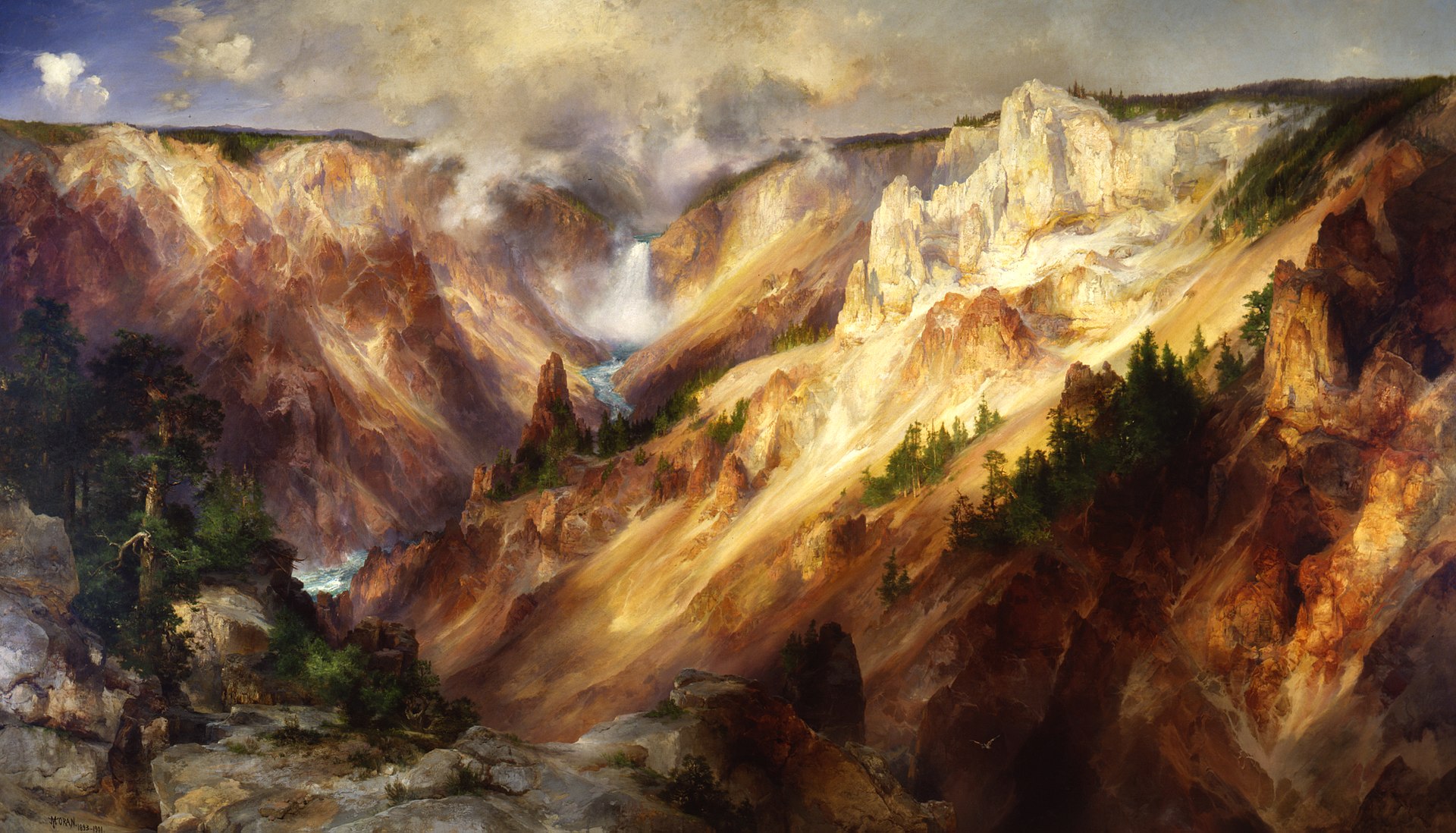
Best Works: 6.7/10:Grand Canyon of the Yellowstone (1872) [Painting] 6.3/10:The Chasm of Colorado (1873 - 1874) [Painting] 6.9/10:Grand Canyon of the Yellowstone (1893 - 1901) [Painting]
Grand Canyon of the Yellowstone - Thomas Moran (1872) / Department of the Interior Museum, United States Capitol, Washington, D.C., USA [Painting]
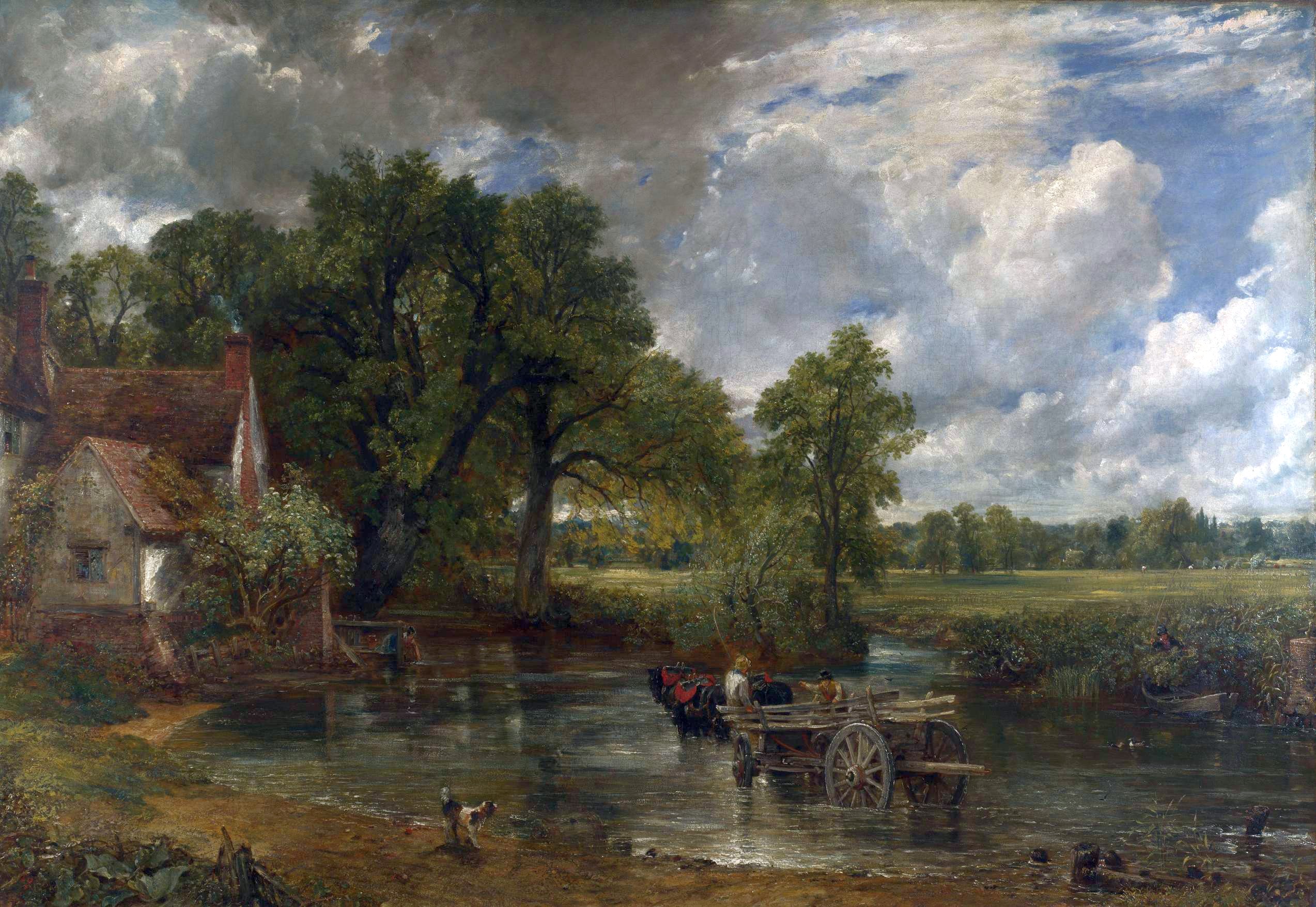
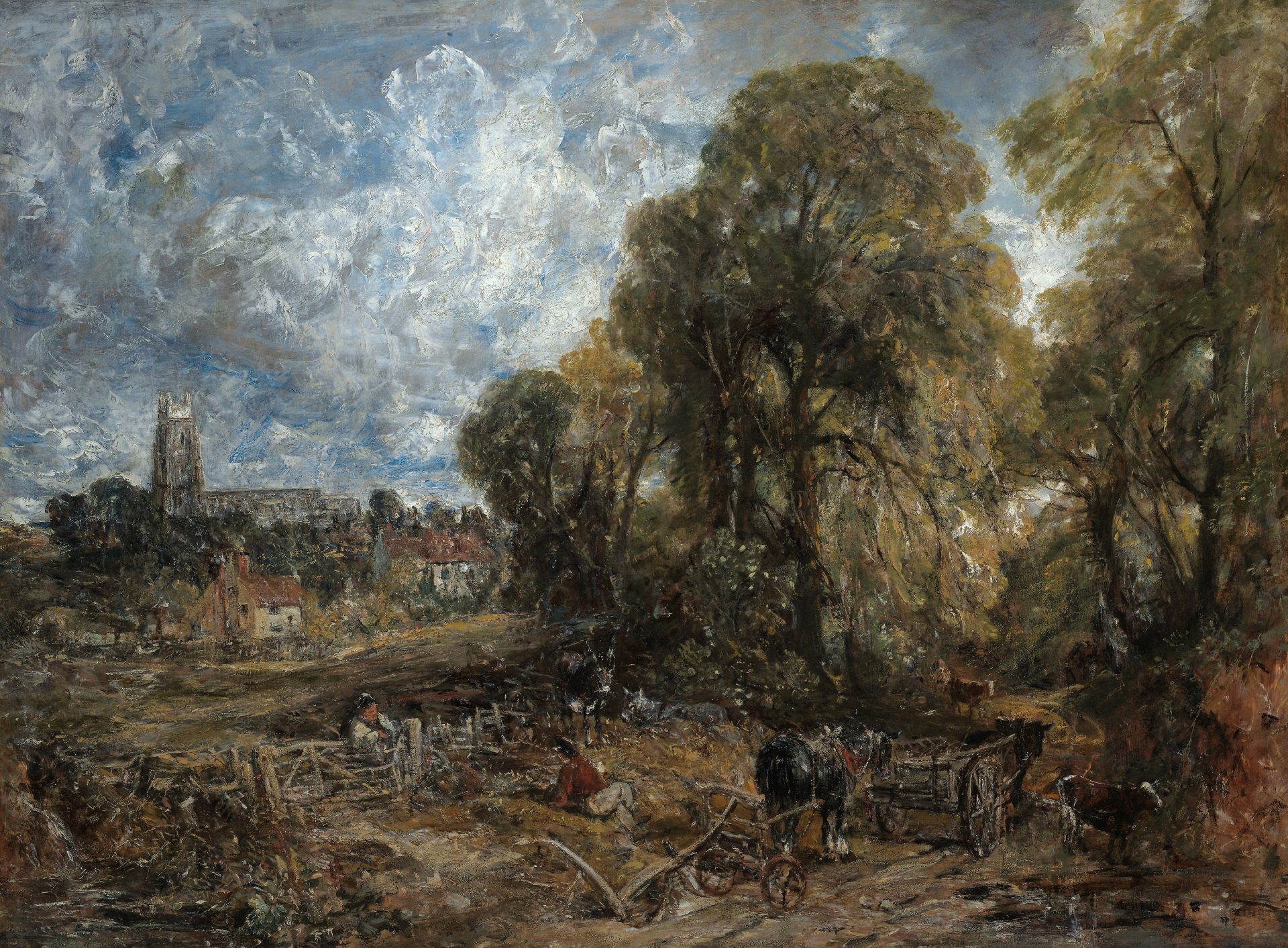
-Beginning of his "six footers" series, focusing on his old home of childhood, finding his own as an artist, and that will change landscape painting, alluding to future movements of impressionism and even post-impressionism, where the painting is not just of a landscape but the technique is also a immersion into it, capturing the feeling in its thickness and application, of it (it is "physical", it looks and feels wet, it is both beautiful and depicts the landscape, but also the feeling, the tactility, how rough, muddy, rustic, etc)
-Constable's attempt, through painting, to "steward" the land he loved so dearly and immersively stay close to it as he wants it to remain, nostalgically tied to his childhood
-In this "stewardship" all the housing and people in the painting are overtaken by over-growths of nature, foliage, water, blended emotively in and amongst, one to the next, with only the most needed delineation (but otherwise one and the same), which Constable has expressedly painted in strong, impasto and loose textures onto the canvas to "keep" it there and present the scene as that of nature naturally taking its rightful place in and around its own surroundings, not to be interrupted by man, his work, but to be a natural part of it, amongst it, steeped within it, without removing or ruining it
-Constable demonstrates his miraculous unity with paint (something of pre-cursor to both Impressionism, and a touch of allusion to what Van Gogh would end up doing in regards his "thick" spirit of "immersiveness" into the nature of his scenes), wherein he treats nature with thick and loose brush (among other tools), as full of its own ever-changing chiaroscuro (its fluctuation of light and color and shade across its bushes, trees, etc); the chiaroscuro is no longer "still" as in many old masters paintings. But because of the texture, the lack of "focus" of his figures, objects, nature, the painting never stops "moving", the light and form never stops "fluctuating", the blend of color never seems fixed. The picture is caught in a state of movement, of the fluctuation (not permanence), of the the transcience of nature as opposed a single unchanging picture of a scene (at the same time: poetic, nostalgic, a capturing of strong feelings to it, not "rushed" or haphazard. The technique is rather "rough" (and seems almost haphazard up close), however the more one inspects the more one realizes just how exact and precise, how much contemplation and decisiveness is there in choosing the exact color, the exact stroke, for representation, for an instant sense, impression (approaching "impressionism" in spirit) to grasp that figure, object, nature, sky, element of the scene that appears also at some distance to be much more accurate than up close (proof of how successful he was at conveying such in the most efficient way possible, caught between fixed representation and realism and the fleeting impression or moment congruent to "movement").
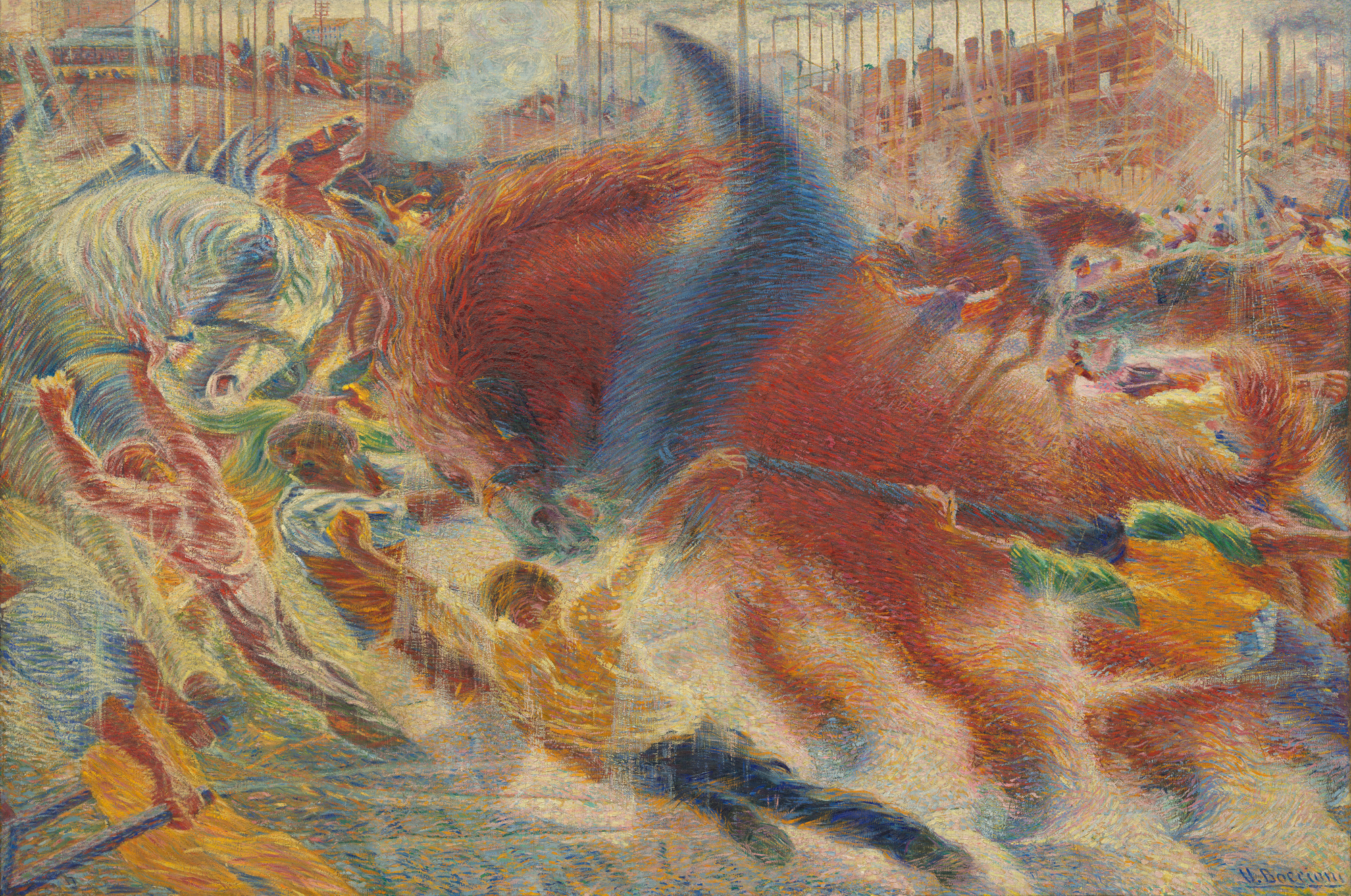
Best Works: 7.3/10: The City Rises (1910) [Painting] 6.7/10: States of Mind Trilogy: Part I: The Farewells; Part II: Those Who Go; Part III: Those Who Stay (1911) [Painting]
The City Rises - Umberto Boccioni (1910) / Museum of Modern Art, New York, USA [Painting]
States of Mind Trilogy: Part I: The Farewells; Part II: Those Who Go; Part III: Those Who Stay - Umberto Boccioni (1911) / Museum of Modern Art, New York, USA [Painting]
You cannot post new topics in this forum You cannot reply to topics in this forum You cannot edit your posts in this forum You cannot delete your posts in this forum You cannot vote in polls in this forum
 AfterHours





 EyeKanFly