Thanks for the recs, Norman and mecca! Looks like I have some work ahead of me.
Since purple (AKA blahblahblah) requested more analysis, I'll put down some thoughts about the project so far. It's difficult to analyze the late '60s without the context provided by later years, so this will have to be a rewind. Also, there's no way I could cover all of it in one sitting, so I'll have to do it bit by bit as I find time. Anyone should feel free to add their thoughts/recs/disagreements about what follows.
Delta Blues
The delta blues were a foundational influence on just about every major genre of popular music, including jazz, rock, country, and R&B. Its practitioners were African Americans based around the Mississippi River delta and it usually consisted of a single vocalist accompanying themselves on a guitar. Its beginnings are very cloudy, but it ran at least from 1900-1950, with electric blues gradually taking over in the late '40s and early '50s.
But honestly, you could wiki that, and why should you care? Well, in my experience, there are two types of people when it comes to the blues: those that immediately get it and love it (e.g., Cymro) and those that simply don't understand why something this simple would be appealing. Before I started the project, I was in the latter category, but consider the following:
Think back to a time when life was stressful and perhaps a bit overwhelming/bleak. I'm not talking about the deepest depression here, just a time when you felt small and unimportant and life wasn't giving you any breaks. You want to express this frustration, but not with some elaborate soliloquy or poem that most people wouldn't get. You want to share it with a simple language that anyone could understand. This is how I see the blues. It's not something to be picked apart or analyzed in detail, nor is it purely ambient. It's a simple form of musical expression that unifies and lifts up the downtrodden. Feeling the blues is like nodding your head in agreement to a perfect argument.
And it's this simplicity that made the blues so powerful. Early pioneers combined the blues with just about every type of music imaginable, usually with success. Here are some of my favorite compilations to get you started, but bear in mind that this is really just the tip of the iceberg.
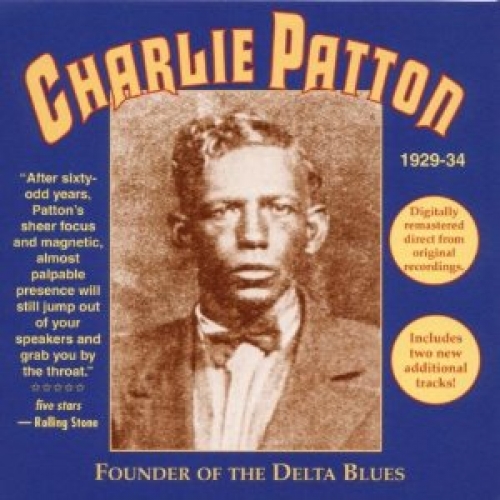
Possibly the most important of all Delta blues musicians (and one of my personal favorites), Charley Patton was a jack-of-all-trades bluesman, whose showmanship was legendary. It is said he influenced all of the subsequent delta blues musicians and some count him among the most important musicians of the 20th century.
The music itself, recorded in the late '20s and early '30s is fairly straightforward and provides a great introduction to the blues. The recordings are not great, but Patton's gravelly vocals and stylized guitar playing come through clearly. I find his brand of crooning particularly hypnotic and often use his recordings to lull myself to sleep.
It is fortunate that Robert Johnson, sometimes called the "King of the Delta Blues," was recorded as much as he was because he certainly wasn't famous in his lifetime. The sessions that led to this collection took place in 1936 and 1937. By the following year, Johnson had died of unknown causes.
The tracks, which employ a now-conventional 12-bar blues structure, may sound repetitive and monotonous, but listen carefully to the innovative guitar riffs, syncopated rhythms, and heavily microtonal vocals -- this isn't just another guy strumming his guitar on the porch. What's more, Johnson's songwriting skills were highly developed and he has been covered by many famous rock acts, including but not limited to the Rolling Stones, Eric Clapton, and Fleetwood Mac. Every fan of rock and roll should listen to Robert Johnson at least once.
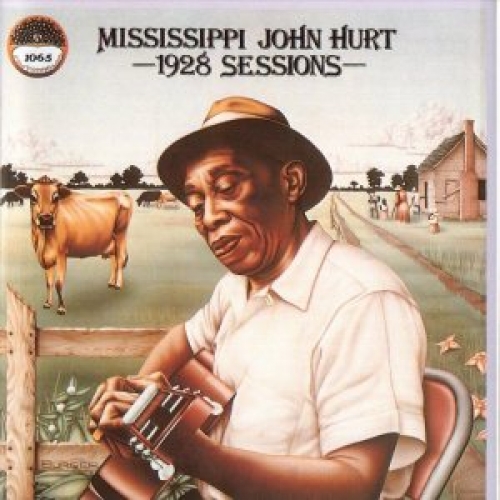
Mississippi John Hurt may not be the most important figure to inspire American folk music revival of the '50s and '60s, but I think he is the most pleasant to listen to. His music is in a similar vein to the early blues singers, like Robert Johnson and Willie McTell, but with a gentler sound and a greater emphasis on folklore.
After he completed these 1928 recordings, he spent most of the rest of his life as a farmer. The sessions were largely ignored until his inclusion on the Anthology of American Folk Music in 1952 and even then it was another 12 years until they would drag him into the recording studio again for the Library of Congress.
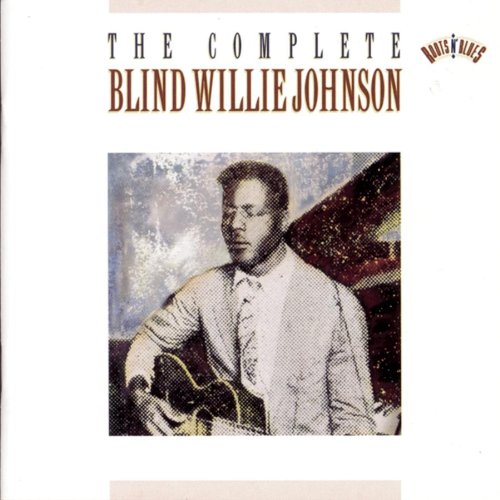
Blind Willie Johnson experienced little but adversity in his 48 years of life. When he was a child, he was blinded by an angry stepmother who had just been beaten by his father. His death was no less tragic -- he contracted malarial fever after his house burned down and he was forced to sleep among the ashes.
This anguish, along with a passionate devotion to religion, is delivered spectacularly in this collection of recordings from 1927 to 1930. His false-bass voice has no modern analog and he stands apart of other blues singers for his strong ties to gospel music. In many respects, he is a predecessor to musicians like Little Richard and James Brown.
Leadbelly was the original guitar-playing badass, being imprisoned multiple times in his life, including once for murder. The early recordings are of particularly low quality, but his booming voice and signature 12-string guitar still carry the songs with grace. The arrangements are also quite sophisticated, providing for a more diverse listening experience than you would normally expect from a delta blues musician.
This area of popular music is left virtually untouched on the BEA forums, so it seemed worth doing a quick write-up on my explorations. Crudely speaking, Early jazz (or Dixieland) is the bastard child of marching bands and the New Orleans blues. It spawned in New Orleans around ~1910 and was the dominant style of jazz until the rise of bebop in the '40s. Here is the first jazz record that was ever released to the public:
Yes, it's silly, and yes, it's a bunch of white guys. In fact, the vast majority of the jazz that was popular during the "roaring '20s" was just novelty music that would be of little interest to the modern listener. Few in the mainstream viewed jazz as anything more than an amusing diversion until Louis Armstrong came along:
I made reference to these recordings earlier in the thread. Louis Armstrong's innovative improvisations and superb technical skills on the trumpet and cornet basically set the standard for jazz in the 1920s and 1930s. The technical skill of the accompanying musicians is mediocre in the earliest recordings, but the later ones, like "Fireworks," feature impressive soloing from the backing musicians. His signature gravelly voice is also featured prominently in many tracks, including "Heebie Jeebies," where he essentially invents the technique of scat singing.
What is particularly fascinating about early jazz is that it is polyphonic. Well, technically, anything with a melody and an independent bass line is polyphonic, but early jazz is arranged in such a way that no single melody line is meant to dominate. While this structure is rare in modern music it was actually the standard compositional style in early classical music (Bach is probably the most famous example). Almost everything since the mid-18th century has emphasized harmony (i.e., chords) as a foundation for composition. Polyphony can take some getting used to for modern ears, but it's well worth the effort.
Here are two other Early jazz recordings that I enjoyed:
This album was made well after the Dixieland era, but it stands as one of the best recordings from George Lewis, one of the original Dixieland masters. The album's title refers to a New Orleans tradition where they would include jazz as part of a funeral ceremony. Traditionally, the funeral would open with a somber march, where the band would play a series of dirges. At the end, however, after the members of the procession have said their goodbyes, the mood does a 180 degree turn as friends and family dance themselves into a frenzy to up-tempo jazz numbers.
Unfortunately, the album doesn't directly simulate the jazz funeral ceremony, but it still provides a nice representative sample of the music you would hear. If you're listening digitally, you might even consider reordering the tunes yourself. Tracks like "Just a Closer Walk with Thee" and "Down by the Riverside" were probably appropriate for the initial march, while "Ice Cream" and "When the Saints Go Marching In" were undoubtedly meant for the raucous ending.
While it's true that most of the best Early jazz bands were African American, it's fortunate for posterity's sake that this wasn't true across the board, since white musicians could generally afford to make better recordings. The New Orleans Rhythm kings were a Chicago-based jazz ensemble that, despite being short-lived, was one of the few white jazz bands devoted to making music that transcended dimestore novelty kitsch. This set of recordings is especially notable for including piano performances by Jelly Roll Morton, the self-proclaimed inventor of jazz. His boasting is given little credence by modern historians, but he was unquestionably one of the best early practitioners of the genre.
More analysis coming soon. Here are my picks for 1971:
Rock
------
Imagine (John Lennon) - widely acclaimed, second post-Beatles work
Surf's Up (Beach Boys) - Rolling Stone top 500 albums , title track based on Smile sessions song
If I Could Only Remember My Name (David Crosby) - listed as #2 pop album of all time by Vatican
Hard Rock
------------
Led Zeppelin IV - widely acclaimed
Who's Next (The Who) - widely acclaimed
Sticky Fingers (The Rolling Stones) - part of Stones hot streak
Love It to Death (Alice Cooper) - Rolling Stone top 500 albums , breakthrough album
Teenage Head (Flamin Groovies) - return to classic blues/rock n' roll
Heavy Metal
--------------
Master of Reality (Black Sabbath) - Rolling Stone top 500 albums , pioneered doom, stoner, and sludge metal
Folk Rock
-----------
Hunky Dory (David Bowie) - widely acclaimed, transitional between folk and glam
Blue (Joni Mitchell) - widely acclaimed
Roots Rock
-------------
Every Picture Tells a Story (Rod Stewart) - widely acclaimed, combines hard rock, folk, and blues
Glam Rock
-------------
Electric Warrior (T. Rex) - widely acclaimed, glam landmark and change in band style from folk
Krautrock
-----------
Tago Mago (Can) - landmark krautrock, highly influential
Faust - Influential krautrock, Scaruffi's third best all-time
French Rock
--------------
Histoire de Melody Nelson (Serge Gainsbourg) - widely acclaimed French concept album
Progressive Rock
--------------------
Aqualung (Jethro Tull) - Rolling Stone top 500 albums , prog rock concept album, themes of faith and religion
Meddle (Pink Floyd) - Pitchfork top 100 albums of the '70s
Fragile (Yes) - international breakthrough for notable prog artist
Blues Rock
-------------
L.A. Woman (Doors) - Rolling Stone top 500 albums , return to blues, last with Morrison
Pearl (Janis Joplin) - widely acclaimed, released posthumously, second solo album
At Fillmore East (Allman Brothers) - widely acclaimed live double album, band breakthrough
Latin Rock
-------------
Santana III - Billboard #1 album #last until 1999, last album with original lineup and before change in direction
Folk
-----
Tapestry (Carole King) - widely acclaimed, second solo album, one of best-selling albums ever, Grammy Album of the Year 1972
Songs of Love and Hate (Leonard Cohen) - Rolling Stone top 500 albums , highly personal
John Prine - Rolling Stone top 500 albums , folk songwriting milestone
Progressive Folk
-------------------
Stormcock (Roy Harper) - most acclaimed work of influential English folk songwriter
Christian Rock
-----------------
Born Twice (Randy Stonehill) - pioneering album in genre
Country
---------
Coat of Many Colors (Dolly Parton) - Rolling Stone top 500 albums
Jazz Fusion
-------------
The Inner Mounting Flame (Mahavishnu Orchestra) - acclaimed jazz fusion with many imitators
A Tribute to Jack Johnson (Miles Davis) - Pitchfork top 100 albums of the '70s , davis does jazz-rock
Live - Evil #Miles Davis - acclaimed live album during Davis electronic period
Mwandishi (Herbie Hancock) - Hancock's first major experiment outside traditional jazz
Soul
-----
What's Going On (Marvin Gaye) - widely acclaimed
Piece of a Man (Gil Scot) - Heron - influential soul/pre-rap
Funk
-----
There's a Riot Goin' On (Sly and the Family Stone) - widely acclaimed, darker than Stand!
Maggot Brain (Funkadelic) - Rolling Stone top 500 albums , elements of psychedelic rock, gospel, and soul
Shaft (Isaac Hayes ) - obvs
Baroque Pop
---------------
Nilsson Schmilsson (Harry Nilsson) - Pitchfork top 100 albums of the '70s , baroque pop
More analysis coming soon. Here are my picks for 1971:
Rock
------
Imagine (John Lennon) - widely acclaimed, second post-Beatles work
Surf's Up (Beach Boys) - Rolling Stone top 500 albums , title track based on Smile sessions song
If I Could Only Remember My Name (David Crosby) - listed as #2 pop album of all time by Vatican
Hard Rock
------------
Led Zeppelin IV - widely acclaimed
Who's Next (The Who) - widely acclaimed
Sticky Fingers (The Rolling Stones) - part of Stones hot streak
Love It to Death (Alice Cooper) - Rolling Stone top 500 albums , breakthrough album
Teenage Head (Flamin Groovies) - return to classic blues/rock n' roll
Heavy Metal
--------------
Master of Reality (Black Sabbath) - Rolling Stone top 500 albums , pioneered doom, stoner, and sludge metal
Folk Rock
-----------
Hunky Dory (David Bowie) - widely acclaimed, transitional between folk and glam
Blue (Joni Mitchell) - widely acclaimed
Roots Rock
-------------
Every Picture Tells a Story (Rod Stewart) - widely acclaimed, combines hard rock, folk, and blues
Glam Rock
-------------
Electric Warrior (T. Rex) - widely acclaimed, glam landmark and change in band style from folk
Krautrock
-----------
Tago Mago (Can) - landmark krautrock, highly influential
Faust - Influential krautrock, Scaruffi's third best all-time
French Rock
--------------
Histoire de Melody Nelson (Serge Gainsbourg) - widely acclaimed French concept album
Progressive Rock
--------------------
Aqualung (Jethro Tull) - Rolling Stone top 500 albums , prog rock concept album, themes of faith and religion
Meddle (Pink Floyd) - Pitchfork top 100 albums of the '70s
Fragile (Yes) - international breakthrough for notable prog artist
Blues Rock
-------------
L.A. Woman (Doors) - Rolling Stone top 500 albums , return to blues, last with Morrison
Pearl (Janis Joplin) - widely acclaimed, released posthumously, second solo album
At Fillmore East (Allman Brothers) - widely acclaimed live double album, band breakthrough
Latin Rock
-------------
Santana III - Billboard #1 album #last until 1999, last album with original lineup and before change in direction
Folk
-----
Tapestry (Carole King) - widely acclaimed, second solo album, one of best-selling albums ever, Grammy Album of the Year 1972
Songs of Love and Hate (Leonard Cohen) - Rolling Stone top 500 albums , highly personal
John Prine - Rolling Stone top 500 albums , folk songwriting milestone
Progressive Folk
-------------------
Stormcock (Roy Harper) - most acclaimed work of influential English folk songwriter
Christian Rock
-----------------
Born Twice (Randy Stonehill) - pioneering album in genre
Country
---------
Coat of Many Colors (Dolly Parton) - Rolling Stone top 500 albums
Jazz Fusion
-------------
The Inner Mounting Flame (Mahavishnu Orchestra) - acclaimed jazz fusion with many imitators
A Tribute to Jack Johnson (Miles Davis) - Pitchfork top 100 albums of the '70s , davis does jazz-rock
Live - Evil #Miles Davis - acclaimed live album during Davis electronic period
Mwandishi (Herbie Hancock) - Hancock's first major experiment outside traditional jazz
Soul
-----
What's Going On (Marvin Gaye) - widely acclaimed
Piece of a Man (Gil Scot) - Heron - influential soul/pre-rap
Funk
-----
There's a Riot Goin' On (Sly and the Family Stone) - widely acclaimed, darker than Stand!
Maggot Brain (Funkadelic) - Rolling Stone top 500 albums , elements of psychedelic rock, gospel, and soul
Shaft (Isaac Hayes ) - obvs
Baroque Pop
---------------
Nilsson Schmilsson (Harry Nilsson) - Pitchfork top 100 albums of the '70s , baroque pop
Yeah, I was on the fence about that one. Solo Beatles work tends to get overrated (IMO), even when gauging influence, but it can't hurt to give it a listen. I think I heard it once when I was a kid, but I don't remember what I thought...
Yeah, I was on the fence about that one. Solo Beatles work tends to get overrated (IMO), even when gauging influence, but it can't hurt to give it a listen. I think I heard it once when I was a kid, but I don't remember what I thought...
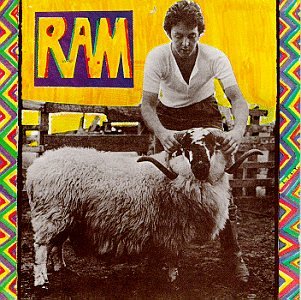
This and Memory Almost Full are my favorite two from Paul post-beatles (I'm not counting wings, but then this would place 3rd of his). I'd say this is the 3rd best solo project from a Beatle after the Beatles. It's worth a listen, at least, if you'll be listening to Harrison and Lennon anyways ... _________________
You cannot post new topics in this forum You cannot reply to topics in this forum You cannot edit your posts in this forum You cannot delete your posts in this forum You cannot vote in polls in this forum
 Norman Bates









 meccalecca








 benpaco