DOC & RICHARD WATSON
THIRD GENERATION BLUES
1999 – SUGAR HILL
Produced By DOC WATSON & T. MICHAEL COLEMAN
1. Honey Please Don’t Go
2. If I Were A Carpenter
3. House Of The Rising Sun
4. Gypsy Davey
5. St. James Infirmary
6. Uncloudy Day
7. South Coast
8. Milk Cow Blues
9. Train Whistle Blues
10. Moody River
11. Columbus Stockade Blues
12. Walk On Boy
13. Summertime
14. Precious Lord Take My Hand
Doc Watson is simply a legend. Blind since before the age of one, he put together a career that spanned seven different decades as a guitarist, banjoist, singer and master of country, folk, blues and gospel music…everything he touched was magical. He was a giant in the folk world of the sixties, but when that went away, he started playing with his son Merle and bassist T. Michael Coleman, which worked for 20 years and a dozen albums until Merle was killed in a farming accident in 1985. After that, Watson just played and lived his life as a legend. In 1999, the 76 year old Doc made Third Generation Blues with Coleman and Merle’s son, Richard, who was 33 at the time. How much Richard contributes to the recording is not known…he is credited with only guitar, but he did play regularly at MerleFest with his father until 2012. (Richard died in 2015, Doc in 2012.)
As for Third Generation Blues, it’s a fine album. Nothing groundbreaking here, that’s for sure. Most likely it’s simply an album of songs that the pair liked to play together. The songs are all covers, and range from blues classics to folk classics to country staples, and everything in between. The best tracks here are “House Of The Rising Sun” and “St. James Infirmary”, both long standing traditional tunes that the pair had probably played for years. Doc Watson was still sounding amazing here, as always, and there isn’t a single moment when this sounds in any way wrong as a recording. And great for the Watson family. The reality here is that this is a flawless recording of some legendary and great songs by a legendary and great artist and his grandson. Nothing more, nothing less. There’s not a thing wrong with this album, but it also won’t blow your doors off.
Link _________________ I'm leaning on the threshold
Of her mystery
And crashing through the walls
Of dying history
RADIOHEAD
COM LAG (2PLUS2ISFIVE)
2004 – TOSHIBA-EMI
Produced By NIGEL GODRICH & RADIOHEAD
1. 2 + 2 = 5 (Live)
2. Remyxomatosis (Cristian Vogel RMX)
3. I Will (Los Angeles Version)
4. Paperbag Writer
5. I Am A Wicked Child
6. I Am Citizen Insane
7. Skttrbrain (Four Tet RMX)
8. Gagging Order
9. Fog (Again) (Live)
10. Where Bluebirds Fly
Sometimes, even the biggest bands release something that takes you by surprise. Radiohead had released their sixth album, Hail To The Thief, in 2003, and were getting ready to go on hiatus. Com Lag was a surprise…it was intended (as shown on the album cover) to be released in Japan. It’s classified as an EP, probably to keep it from being linked to the rest of the band’s studio albums. Is it really an EP? It runs 10 tracks and over 36 minutes…you be the judge. What it is not is an album of new music from Radiohead. It’s actually a compilation of B-sides from 2003 singles, a pair of remixes, a pair of live tracks (including their hit “2 + 2 = 5”), and one alternate version (“I Will”). What it lacks is the cohesiveness of a true Radiohead album, and the excitement that hearing new work from the band can bring.
Because Radiohead isn’t a band that puts out a lot of live albums, the two concert tracks here are a nice touch. And if you’re a fan of Hail To The Thief, then consider this to be a nice compliment with alternate versions, remixes and single B-sides. There’s nothing bad here at all…there’s just nothing groundbreaking, which is what we’ve come to expect from this band. Is Com Lag simply a space filler from a group that was at the beginning of a four year silence? The fact is that it’s good but not great, satisfying but not very stimulating, and a surprisingly lateral move from a band known for giant leaps forward. It’s disappointing because of who it is, a band that we have come to expect bigger and better things from. And they usually deliver. But not here. Com Lag sounds good, but it’s not very important, and not very original at all.
Link _________________ I'm leaning on the threshold
Of her mystery
And crashing through the walls
Of dying history
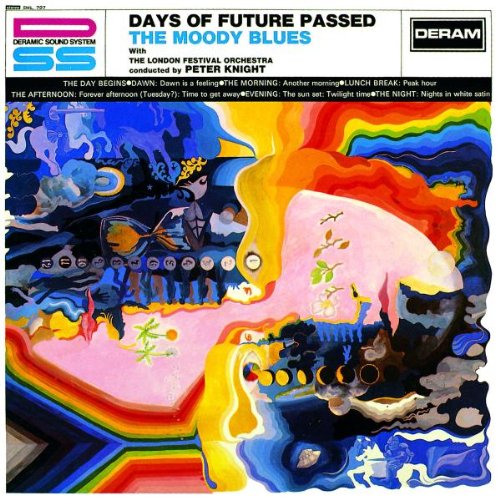
THE MOODY BLUES
DAYS OF FUTURE PASSED
1967 – DERAM
Produced By TONY CLARKE & MICHAEL DACRE-BARCLAY
1. The Day Begins
2. Dawn: Dawn Is A Feeling
3. The Morning: Another Morning
4. Lunch Break: Peak Hour
5. The Afternoon: Forever Afternoon (Tuesday?) / (Time To Get Away
6. Evening: The Sun Set / Twilight Time
7. The Night: Nights In White Satin
In 1967, The Moody Blues were almost finished as a band. They had recorded one album (The Magnificent Moodies) as a blues rock band, and then their frontman, guitarist and main songwriter, Denny Laine (later of Wings), left the band. They replaced him with Justin Hayward, but they were broke and falling apart. Deram Records wanted to try an experiment mixing rock and orchestral music, and they approached the Moodies, who jumped at the chance just to make a record. The album is a concept piece about a day in the life of an ordinary man, and features songs played by the band and separately recorded interludes by the London Festival Orchestra. The Moody Blues and the orchestra are actually heard together only briefly, at the end of the final track. But the album became a huge success and paved the way for progressive rock for years to come.
Tossing aside their blues beginnings, the band would build a highly successful career that was very big through the early 70’s, and then later when they came back. They are fine players, and they have some good hooks…the two hit songs on this album show that in spades. “Forever Afternoon” (better known as “Tuesday Afternoon”) and, especially, “Nights In White Satin” gave the Moodies a new life…and showed their strengths quite well. And their weaknesses. The first warning sign from the band is at the very end of the first and last tracks, as Mike Pinder drones on with an overly dramatic poem (“Late Lament”) that foreshadows the band’s worst trait…that they end up taking themselves far too seriously. Days Of Future Passed is, after all of the huge selling albums that came later, still their best work. And the closest they ever got to a really well done and consistently good album, even though most of it won’t stay in your head for long at all. In other words…the Moodies were well on their way to being prog rock’s greatest singles band.
Link _________________ I'm leaning on the threshold
Of her mystery
And crashing through the walls
Of dying history
FischmanRockMonster, JazzMeister, Bluesboy,ClassicalMasterProfile Land of Enchantment
THE MOODY BLUES
DAYS OF FUTURE PASSED
1967 – DERAM
Produced By TONY CLARKE & MICHAEL DACRE-BARCLAY
1. The Day Begins
2. Dawn: Dawn Is A Feeling
3. The Morning: Another Morning
4. Lunch Break: Peak Hour
5. The Afternoon: Forever Afternoon (Tuesday?) / (Time To Get Away
6. Evening: The Sun Set / Twilight Time
7. The Night: Nights In White Satin
In 1967, The Moody Blues were almost finished as a band. They had recorded one album (The Magnificent Moodies) as a blues rock band, and then their frontman, guitarist and main songwriter, Denny Laine (later of Wings), left the band. They replaced him with Justin Hayward, but they were broke and falling apart. Deram Records wanted to try an experiment mixing rock and orchestral music, and they approached the Moodies, who jumped at the chance just to make a record. The album is a concept piece about a day in the life of an ordinary man, and features songs played by the band and separately recorded interludes by the London Festival Orchestra. The Moody Blues and the orchestra are actually heard together only briefly, at the end of the final track. But the album became a huge success and paved the way for progressive rock for years to come.
Tossing aside their blues beginnings, the band would build a highly successful career that was very big through the early 70’s, and then later when they came back. They are fine players, and they have some good hooks…the two hit songs on this album show that in spades. “Forever Afternoon” (better known as “Tuesday Afternoon”) and, especially, “Nights In White Satin” gave the Moodies a new life…and showed their strengths quite well. And their weaknesses. The first warning sign from the band is at the very end of the first and last tracks, as Mike Pinder drones on with an overly dramatic poem (“Late Lament”) that foreshadows the band’s worst trait…that they end up taking themselves far too seriously. Days Of Future Passed is, after all of the huge selling albums that came later, still their best work. And the closest they ever got to a really well done and consistently good album, even though most of it won’t stay in your head for long at all. In other words…the Moodies were well on their way to being prog rock’s greatest singles band.
My #1 of '67 and a constant all time top 5.
I even love the "weaknesses." This is for me one of music's greatest achievements, from first note to last.
THE MOODY BLUES
DAYS OF FUTURE PASSED
1967 – DERAM
Produced By TONY CLARKE & MICHAEL DACRE-BARCLAY
1. The Day Begins
2. Dawn: Dawn Is A Feeling
3. The Morning: Another Morning
4. Lunch Break: Peak Hour
5. The Afternoon: Forever Afternoon (Tuesday?) / (Time To Get Away
6. Evening: The Sun Set / Twilight Time
7. The Night: Nights In White Satin
In 1967, The Moody Blues were almost finished as a band. They had recorded one album (The Magnificent Moodies) as a blues rock band, and then their frontman, guitarist and main songwriter, Denny Laine (later of Wings), left the band. They replaced him with Justin Hayward, but they were broke and falling apart. Deram Records wanted to try an experiment mixing rock and orchestral music, and they approached the Moodies, who jumped at the chance just to make a record. The album is a concept piece about a day in the life of an ordinary man, and features songs played by the band and separately recorded interludes by the London Festival Orchestra. The Moody Blues and the orchestra are actually heard together only briefly, at the end of the final track. But the album became a huge success and paved the way for progressive rock for years to come.
Tossing aside their blues beginnings, the band would build a highly successful career that was very big through the early 70’s, and then later when they came back. They are fine players, and they have some good hooks…the two hit songs on this album show that in spades. “Forever Afternoon” (better known as “Tuesday Afternoon”) and, especially, “Nights In White Satin” gave the Moodies a new life…and showed their strengths quite well. And their weaknesses. The first warning sign from the band is at the very end of the first and last tracks, as Mike Pinder drones on with an overly dramatic poem (“Late Lament”) that foreshadows the band’s worst trait…that they end up taking themselves far too seriously. Days Of Future Passed is, after all of the huge selling albums that came later, still their best work. And the closest they ever got to a really well done and consistently good album, even though most of it won’t stay in your head for long at all. In other words…the Moodies were well on their way to being prog rock’s greatest singles band.
My #1 of '67 and a constant all time top 5.
I even love the "weaknesses." This is for me one of music's greatest achievements, from first note to last.
This is one of the bands that I've always had a hard time with...but I've been able to appreciate them more as time goes on. Their musicianship is definitely superb. _________________ I'm leaning on the threshold
Of her mystery
And crashing through the walls
Of dying history
DAN TYMINSKI
WHEELS
2008 – ROUNDER
Produced By DAN TYMINSKI
1. Wheels
2. Whose Shoulder Will You Cry On
3. Making Hay
4. Who Showed Who
5. It All Comes Down To You
6. How Long Is This Train
7. I Ain’t Taking You Back No More
8. Heads You Win Tails I Lose
9. How Many Times
10. The One You Lean On
11. Knock Knock!
12. Some Early Morning
If you are not quite sure who Dan Tyminski is, pull out that DVD you have of “O Brother Where Art Thou”. Which you probably need to watch again anyway. When George Clooney sings into the can at the radio station the soon to be big hit “I Am A Man Of Constant Sorrow”, the voice you hear is Dan Tyminski’s. Not only is he the voice of The Soggy Bottom Boys, he has also been a member of the Lonesome River Band, has been the guitarist and mandolin player for Alison Krauss & Union Station since 1992, and he has released four solo albums to date. Wheels is his third, and most successful solo venture. It reached number one on the Bluegrass charts, and it stands as continuous proof that Tyminski is more than just Alison’s hired hand and the voice that made Clooney sound like a music star. In short…Wheels is a pretty terrific album of bluegrass and cool country tunes.
You do pretty much know what you’re going to get with Dan Tyminski. The sound of Wheels is the same sound you get from him on the tracks he sings on the Union Station albums…his band here features three members of that unit. It’s upbeat, pleasant sounding bluegrass music with plenty of hooks, exactly what Tyminski does best. The centerpiece of the album is the excellent “Heads You Win, Tails I Lose”, a hit song if there ever was one. The band shows its bluegrass pedigree throughout, but especially on the instrumental “Knock Knock!”. And “Some Early Morning” is a fine closer that leaves you wanting more. Wheels was named Album Of The Year by the International Bluegrass awards and was nominated for a Grammy for good reason…this is a well written and well performed album by a guy who probably spends too much of his time just outside of the spotlight. Well worth checking out, Wheels is a very good album.
Link _________________ I'm leaning on the threshold
Of her mystery
And crashing through the walls
Of dying history
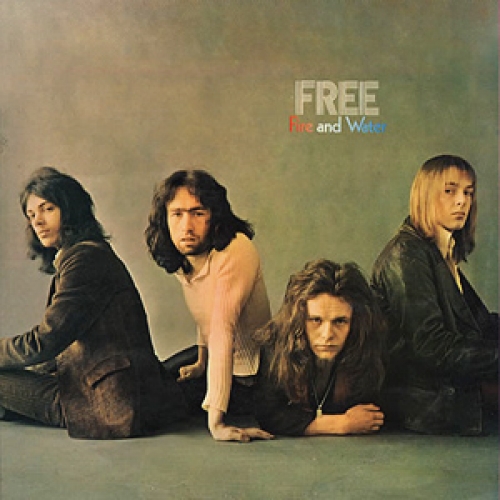
FREE
FIRE AND WATER
1970 – A&M
Produced By FREE, ROY THOMAS BAKER & JOHN KELLY
1. Fire And Water
2. Oh I Wept
3. Remember
4. Heavy Load
5. Mr. Big
6. Don’t Say You Love Me
7. All Right Now
There are still people to this day who believe that “All Right Now” is a Bad Company song. You can’t blame them…same singer (Paul Rodgers), same drummer (Simon Kirke), and the same style as the recording that was actually made by Free in 1970. Free was a band that boasted some fine musicians in Rodgers, Kirke, guitarist Paul Kossoff and bassist Andy Fraser, but also a band that was going nowhere fast. Their first two albums sold very poorly, but it was the sudden success of “All Right Now” that made people notice them, and opened the doors for Rodgers and Kirke to later form Bad Company. Fire And Water, on the strength of that hard rocking and still excellent single, took off and has been praised as Free’s big breakthrough, which it was. But it was also a bit overrated as a whole…a good album, but not by any means a great one.
Nothing else here is as immediate, or as heavy, as “All Right Now”. The title track and “Mr. Big” (later covered by Gov’t Mule) are the brightest spots, but show no indication that they would have been hits for the band. And while these guys really could play very well, most of the songs here are pretty ordinary. What carries the album, simply, is Rodgers. Maybe the most soulful singer to come out of the UK blues scene of the 60’s, Rodgers alone makes this album worthwhile. Free was never able to build on this album, which could have been a stepping stone to bigger and better things. Kossoff had a growing drug problem that split the band for good by 1973, and he died in 1976 at age 25. Rodgers and Kirke formed Bad Company, which sounded a lot like “All Right Now” and not much else of what Free played on Fire And Water. Still, this is a good listen…Rodgers is always great to hear, and Paul Kossoff was an up and coming guitarist, gone before his time.
Link _________________ I'm leaning on the threshold
Of her mystery
And crashing through the walls
Of dying history
JOHN PRINE
IN PERSON & ON STAGE
2010 – OH BOY
Produced By AL BUNETTA
1. Spanish Pipedream
2. She Is My Everything
3. In Spite Of Ourselves (Feat. Iris Dement)
4. Long Monday
5. The Late John Garfield Blues (Feat. Sara Watkins)
6. The Bottomless Lake
7. Bear Creek Blues
8. Saddle In The Rain
9. Angel From Montgomery (Feat. Emmylou Harris)
10 Your Flag Decal Won’t Get You Into Heaven Anymore
11. Mexican Home (Feat. Josh Ritter)
12. Unwed Fathers (Feat. Iris Dement)
13. Glory Of True Love
14. Paradise (Feat. Kieran Kane, Kevin Welch & Fats Kaplin)
I would love to have seen John Prine in concert. So a live John Prine album is the next best thing. Live And In Person is the third of his five live albums, and it’s got some pretty special performances. Stripped down to just Prine, guitarist Jason Wilber and bassist Dave Jacques, this is the way you want to hear him, with his voice and his humor and his songs up front and personal. Oh, and with plenty of guest stars. Prine has always been great with duets, from back in the day when he and Bonnie Raitt recorded the definitive version of “Angel From Montgomery”. On this album, he’s joined on that song by Emmylou Harris, and it’s great. He’s also joined by Sara Watkins (“The Late John Garfield Blues”), Josh Ritter (“Mexican Home”), and best of all, he and Iris Dement give a classic reading of “In Spite Of Ourselves”.
He’s also joined by Kane, Welch & Kaplan on the finale, a wonderful version of “Paradise”. And his short snippets of story between songs are, as always, worthwhile. Even on record, Prine has a way of making you feel at home with him. A couple of the songs just don’t work…the opener, his classic “Spanish Pipedream”, is way too fast and a mess. And “Saddle In The Rain” feels forced and lacks the groove of the studio version. But you sure can forgive a couple of missteps for as good as the rest of this is. Prine was well into his sixties when this was made, and it sounds like he just doesn’t give a damn about that. What he does give adman about, clearly, is sharing his songs with you. And that is a fine, fine thing. Not sure exactly when or where this show was…the album notes don’t mention the time or place. But it feels like it’s right there in your own living room…and that’s what’s important.
Link _________________ I'm leaning on the threshold
Of her mystery
And crashing through the walls
Of dying history
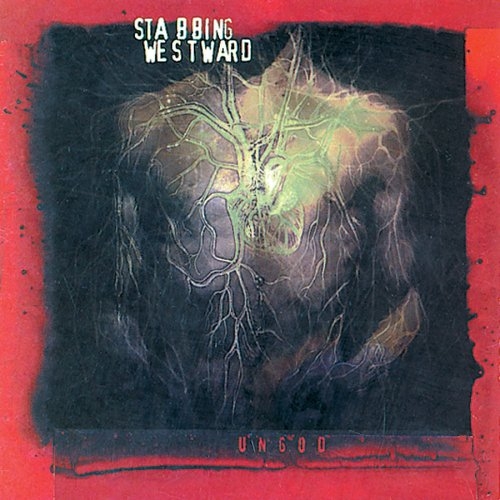
STABBING WESTWARD
UNGOD
1994 – COLUMBIA
Produced By JOHN FRYER
1. Lost
2. Control
3. Nothing
4. ACF
5. Lies
6. Ungod
7. Throw
8. Violent Mood Swings
9. Red On White
10. Can’t Happen Here
Sometimes, you just have to take a chance on an album and a band you’re not familiar with. That’s how I discovered Stabbing Westward, an industrial metal band from Macomb, Illinois, former home of the St. Louis Rams summer training facilities, and the home of Western Illinois University, where Stabbing Westward was formed. The band lasted until 2002, when they unceremoniously broke up after their fourth album failed to outsell their mediocre third album. They had a bit of success with their second album, Wither Blister Burn & Peel, which had a pair of moderate hits. Ungod, their debut album, came before that small bit of success. It shows a heavy band that could definitely play, but that also had some rather serious challenges ahead of them as far as songwriting. There were a few signs of hope on this album: a version of “Violent Mood Swings” made it onto the soundtrack of the film “Clerks”. But not much else.
“Lies” and “Nothing” were released as singles, but were not successful. The lack of success of this album was not taken too seriously, as they were seen as a band that needed room to grow. This patience ran out after their third album, Darkest Days, failed to build on what they had done earlier. Ultimately, they ended up right where Ungod had shown they were in the first place…a band without great songwriting, trying to distance themselves from the grunge of the day. It’s a fairly cool sounding album, but nothing here will stick in your head, and by the middle of track number two, you realize that this is really nothing more than well played heavy background music. Nine Inch Nails and Ministry did this much better, leaving Stabbing Westward not much more than a curiosity of the 90’s. Stabbing Westward reunited and has been playing again since 2016, not surprisingly with very little new material.
Link _________________ I'm leaning on the threshold
Of her mystery
And crashing through the walls
Of dying history
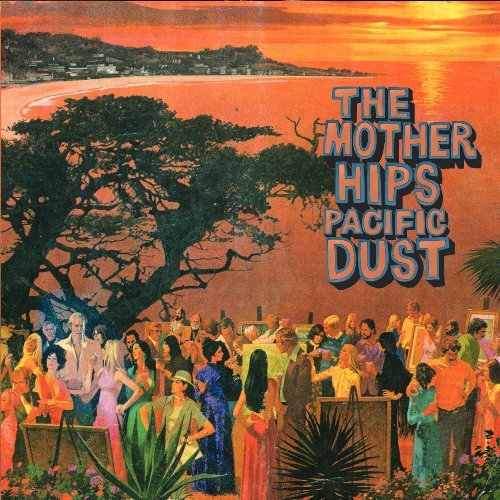
THE MOTHER HIPS
PACIFIC DUST
2009 – CAMERA
Produced By DAVID SIMON-BAKER & THE MOTHER HIPS
1. White Falcon Fuzz
2. Third Floor Story
3. Jess Oxox
4. Lion And The Bull
5. One Way Out
6. All In Favor
7. Pacific Dust
8. Young Charles Ives
9. Are You Free
10. Bandit Boy
11. Cheer Up Champ
The Mother Hips were kind of indirectly discovered by The Black Crowes, which explains why I always heard more about them from my then circle of Crowes fanatics than I ever heard of their music. I finally decided to take a listen and see what all of the small fuss was about. As it turns out, this band from Northern California is actually pretty good, although their road has been kind of bumpy and long. They have been together since the dawn of the nineties, and have released so far eleven barely noticed albums. Pacific Dust is the seventh of those, and it might just be their best work. They had a major label deal once (thanks to the Crowes), but low sales after three albums ended that. They also went on hiatus between 2001 and 2007. And outside of a few video game tracks, they have had little success. But Pacific Dust is good enough that even though they are not well known, they at least deserve to be heard.
The best track here is the wildly catchy “Third Floor Story”, which is a should have been hit for sure. Many more of the tracks here (“Jess Xoxo” and “Bandit Boy”) probably could have been radio hits…at another time. What the Hips have proven to be over all of these years is a band that just misses the mark, and does so consistently. By that I mean that the songs on Pacific Dust seem to be great for another period in time…but not so much for the one they were released in. That doesn’t make the music worth anything less…what they have done here is short of greatness, but still very, very good…it just means that this may simply be a band with poor timing. Pacific Dust should have been a high water mark for the Hips, but it was not. They still soldier on, and if you find some of their recordings, they are definitely worth checking out.
Link _________________ I'm leaning on the threshold
Of her mystery
And crashing through the walls
Of dying history
You cannot post new topics in this forum You cannot reply to topics in this forum You cannot edit your posts in this forum You cannot delete your posts in this forum You cannot vote in polls in this forum
 Romanelli


 Fischman