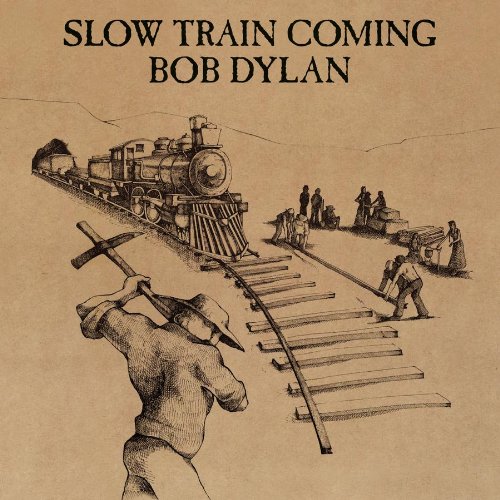
This was the beginning of a rough period for Bob Dylan.
In late 1978, Dylan was a year removed from his divorce, he had just received horrible reviews for his film Renaldo and Clara, and his most recent studio album, “Street Legal”, had bombed (though personally I think it’s a pretty solid album).
Needless to say, Dylan was in a rough spot, and amid all of that, he converted to Christianity (in part because, he claimed, Jesus appeared to him).
Unfortunately the brand of Christianity that Dylan ended up embracing leaned real hard on the “fire and brimstone” message, which served to generally alienate a whole lot of his fanbase.
“Slow Train Coming” was the start of all that, his first album following his conversion, and while it’s far from his best, it’s still a pretty cool album.
You get some great tunes, including “Gotta Serve Somebody,” which ended up being a classic, as well as the title track and “I Believe in You”, all of which are great.
And even better, Dylan called in Mark Knopfler to play guitar on this album after attending a Dire Straits concert and seeing Knopfler play. Theres plenty if great Mark Knopfler guitar work all over this album, which makes it even more fun to listen to.
Again, this isn’t Dylan’s best, far from it, but considering the pretty rough run that Dylan’s Christian period led to (specifically “Saved” and “Shot of Love” which aren’t terrible but are pretty uneven), “Slow Train Coming” stands as a pretty enjoyable album.
I actually LOVE his Christian period! Especially this album. I think it's really underrated. Knopfler is awesome on it!!! I'm currently obsessing over his basement-tapes era. I just discovered that the Dylan's basement-tapes era stuff was a huge influence on the Byrds!
RockyRaccoonIs it solipsistic in here or is it just me?ModeratorProfile Maryland
I actually LOVE his Christian period! Especially this album. I think it's really underrated. Knopfler is awesome on it!!! I'm currently obsessing over his basement-tapes era. I just discovered that the Dylan's basement-tapes era stuff was a huge influence on the Byrds!
Yeah, I would say that Dylan's Christian era isn't his best stuff but I also think it gets more hate than it deserves. "Saved" certainly has a few decent tracks on it, as does "Shot of Love" (both "Lenny Bruce" and "Property of Jesus" are very solid songs). _________________ Progressive Rock
I consider “A Farewell to Kings” to be right smack in the middle of prime Rush. While obviously some of their biggest hits came later with “Moving Pictures,” I’ve always loved the proggier-side of the band (“2112” is my favorite album of theirs) and this is the band at the height of their powers.
The title track kicks off the album and serves as a great mini version of what makes this album work so well: Rush is constantly shifting between delicate and bombastic without ever losing their identity.
And then we have “Xanadu,” one of Rush’s best epics clocking in at 11 minutes and five seconds of glistening guitar, synth textures, thunderous drumming, and all kinds of different shifting sections. It’s a song that manages to feel epic without feeling overly long and self-indulgent.
Of course there’s also “Closer to the Heart,” one of Rush’s biggest hits and one of the best songs they’ve ever written, and the closer, “Cygnus X-1 Book 1: The Voyage,” another epic clocking in over 10 minutes long and showcasing Rush at perhaps their most theatrical. It builds this ominous cosmic journey, it’s ambitious, maybe a little ridiculous (in the best way), and it works beautifully.
If “2112” was Rush discovering how far they could push themselves into writing more prog-focused tunes, “A Farewell to Kings” is the band pushing themselves even farther, focusing an entire album (rather than just one side) on that feeling. It’s one of their best and one of my favorites of theirs. _________________ Progressive Rock
The prog rock genre is littered with concept albums, but there are concept albums and then there’s “Jeff Wayne’s Musical Version of The War of the Worlds,” an album so fully committed to its premise that it’s perhaps more accurate to call it an “album musical.”
On paper, the basic idea sounds ridiculous. Take a Victorian-era science fiction novel, turn it into a double album with over 90 minutes of music, have Richard Burton narrate the story, hire a collection of rock musicians and vocalists, incorporate a full orchestra, and build the thing around a series of elaborate musical themes.
Oh yeah, and do it all in 1978 amid the rise of punk rock when the general public had basically said they were tired of the pretentiousness of the prog rock dinosaurs.
And yet, it works magnificently. Within minutes, you’re entirely immersed in the album.
Wayne’s music has a distinctly late-70s prog rock sensibility, but it never sounds like he’s just trying to make another prog record. The synths, the orchestra, the electric guitars (including a killer talkbox effect later in the album) are all being used to create a cinematic world. When the Martian arrive, it’s not just Burton telling you they’re here, Wayne is using the music to make you hear their arrival.
Speaking of Burton, his performance is central to the album. His measured delivery gives a gravity that helps anchor the music and allows the more theatrical elements to become believable instead of campy.
And let me tell you, this album could’ve been really campy, but instead it’s remarkably sincere. The guest musicians, including Justin Hayward of The Moody Blues, Phil Lynott of Thin Lizzy, Chris Thompson of Manfred Mann’s Earth Band, David Essex, and Julie Covington are all fantastic and theatrical without ever overdoing it.
This is an incredibly ambitious record, but it’s unlike anything else in rock music. Truly an impressive work of art. _________________ Progressive Rock
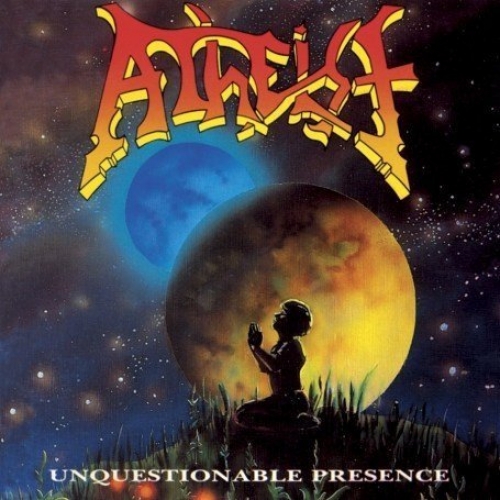
If you’re like me, sometimes you enjoy hearing guitar players absolutely shred. Show off their chops, just absolutely rip solo after solo after solo, doesn’t matter if it’s ostentatious or over the top, I love it. And sometimes you get an album where not only do you get to hear some incredible guitar work, but the songs are actually pretty well done too, and “Unquestionable Presence” is one of those albums.
When this album came out in 1991, death metal was still in the process of establishing its vocabulary, and Atheist decided that simply making it heavier wasn’t enough. They wanted to make it faster, more intricate, more harmonically adventurous, and maybe most importantly, more musical. What resulted was this album, one of the greatest death metal albums ever recorded.
What makes “Unquestionable Presence” so remarkable is that its technical sophistication never comes at the expense of visceral impact. Atheist isn’t just showing off their guitar chops here, they’re using their extraordinary musicianship to create something genuinely exciting.
I mean, just take the opening seconds of “Mother Man” where the song launches into a dizzying barrage of riffs, time-signature changes, and rapid-fire drumming, all while maintaining a groove underneath all the chaos.
While Rand Burkey’s lead guitar work is front and center on this album, it’s important to recognize Steve Flynn’s drumming. It’s extraordinarily precise yet never sounds mechanical. He moves between blast beats, intricate fills, and jazz-influenced patterns the whole album.
And of course, there’s Burkey and Kelly Shaefer, who unload riff after riff and incredible solo after solo on this album. Truly in the world of best albums to listen to just for the guitar work, “Unquestionable Presence” stands right around the top as a masterpiece. _________________ Progressive Rock
The prog rock genre is littered with concept albums, but there are concept albums and then there’s “Jeff Wayne’s Musical Version of The War of the Worlds,” an album so fully committed to its premise that it’s perhaps more accurate to call it an “album musical.”
On paper, the basic idea sounds ridiculous. Take a Victorian-era science fiction novel, turn it into a double album with over 90 minutes of music, have Richard Burton narrate the story, hire a collection of rock musicians and vocalists, incorporate a full orchestra, and build the thing around a series of elaborate musical themes.
Oh yeah, and do it all in 1978 amid the rise of punk rock when the general public had basically said they were tired of the pretentiousness of the prog rock dinosaurs.
And yet, it works magnificently. Within minutes, you’re entirely immersed in the album.
Wayne’s music has a distinctly late-70s prog rock sensibility, but it never sounds like he’s just trying to make another prog record. The synths, the orchestra, the electric guitars (including a killer talkbox effect later in the album) are all being used to create a cinematic world. When the Martian arrive, it’s not just Burton telling you they’re here, Wayne is using the music to make you hear their arrival.
Speaking of Burton, his performance is central to the album. His measured delivery gives a gravity that helps anchor the music and allows the more theatrical elements to become believable instead of campy.
And let me tell you, this album could’ve been really campy, but instead it’s remarkably sincere. The guest musicians, including Justin Hayward of The Moody Blues, Phil Lynott of Thin Lizzy, Chris Thompson of Manfred Mann’s Earth Band, David Essex, and Julie Covington are all fantastic and theatrical without ever overdoing it.
This is an incredibly ambitious record, but it’s unlike anything else in rock music. Truly an impressive work of art.
Got to gree with your thoughts on this album. It really does stand the test of time as well.
RockyRaccoonIs it solipsistic in here or is it just me?ModeratorProfile Maryland
Badfinger is one of those bands that’s equally remembered for their music as they are for the mythology surrounding the band.
The first band signed to The Beatles’ Apple Records and named after the original title for “With a Little Help From My Friends” (which was “Bad Finger Boogie”), Badfinger’s debut under their new name was this album, “Magic Christian Music.”
And it features some of their greatest tunes. You, of course, have “Come and Get It,” which was written and produced by Paul McCartney and remains one of Badfinger’s best-known songs. It’s almost an absurdly perfect pop song: instantly memorable, super catch, tightly constructed, it’s not only a showcase for how tight Badfinger was as a band but how ridiculously talented Paul McCartney is/was at writing a pop song.
While “Come and Get It” is probably the most famous song on the album, there are other songs that very much deserve recognition, including “Carry On Till Tomorrow,” which shows just how strong of a songwriter Pete Ham was, and “Rock of All Ages,” which features a bit of a tougher, more aggressive sound that foreshadows the band’s later work.
Unfortunately, Badfinger got wrapped up in the drama surrounding the end of The Beatles. By 1970 when this album came out, The Beatles were falling apart, and while Badfinger had a string of hits, Apple Records eventually folded in 1973.
And if that wasn’t chaotic enough, Badfinger’s manager, Stan Polley, defrauded the band out of its money, which led to years and years of legal battles as Badfinger tried to get their royalty payments. Pete Ham eventually hung himself at just 27 years old (specifically calling out Polley in his note when he did), as did Tom Evans years later at 36 years old.
But while the tragedy of Badfinger often envelops the band’s music, it shouldn’t, because albums like “Magic Christian Music” and the band’s later music show that the songwriting duo of Ham and Evans was a special one, and that Badfinger deserves a lot more credit than they get. _________________ Progressive Rock
Released 54 years ago today, “Foxtrot” represents a real turning point for Genesis, an album where they really started to sound like the progressive rock titans they eventually became.
They’d shown flashes of their brilliance on “Trespass” and “Nursery Cryme,” both of which are excellent albums, but “Foxtrot” is when Genesis really came into their own. It’s theatrical without being ridiculous, intricate without losing its sense of melody, and full of the eccentricity that would become central to the band’s identity.
You’ve got some of Genesis’ best early work on this album. “Watcher of the Skies” is an incredible opener, with Tony Banks’ ominous Mellotron immediately creating this otherworldly atmosphere before the rest of the band crashes in.
And of course there’s “Supper’s Ready,” one of the most impressive pieces ever released in progressive rock. At 23 minutes, “Supper’s Ready” could have easily become an exercise in prog excess, but Genesis impressively make the whole thing work. It moves through multiple sections and moods, from pastoral folk-rock to eerie psychedelia to full-blown symphonic grandeur. It also features some other-worldly drumming from Phil Collins (never let anyone tell you Collins was more a singer than a drummer).
“Foxtrot” serves as a foreshadowing of Genesis’ later masterpieces in “The Lamb Lies Down on Broadway” and “Selling England by the Pound.” It’s a landmark of early prog rock and the album that established the blueprint for the classic era of one of the genre’s all-time greats. _________________ Progressive Rock
You cannot post new topics in this forum You cannot reply to topics in this forum You cannot edit your posts in this forum You cannot delete your posts in this forum You cannot vote in polls in this forum
 Repo
Repo


 RockyRaccoon