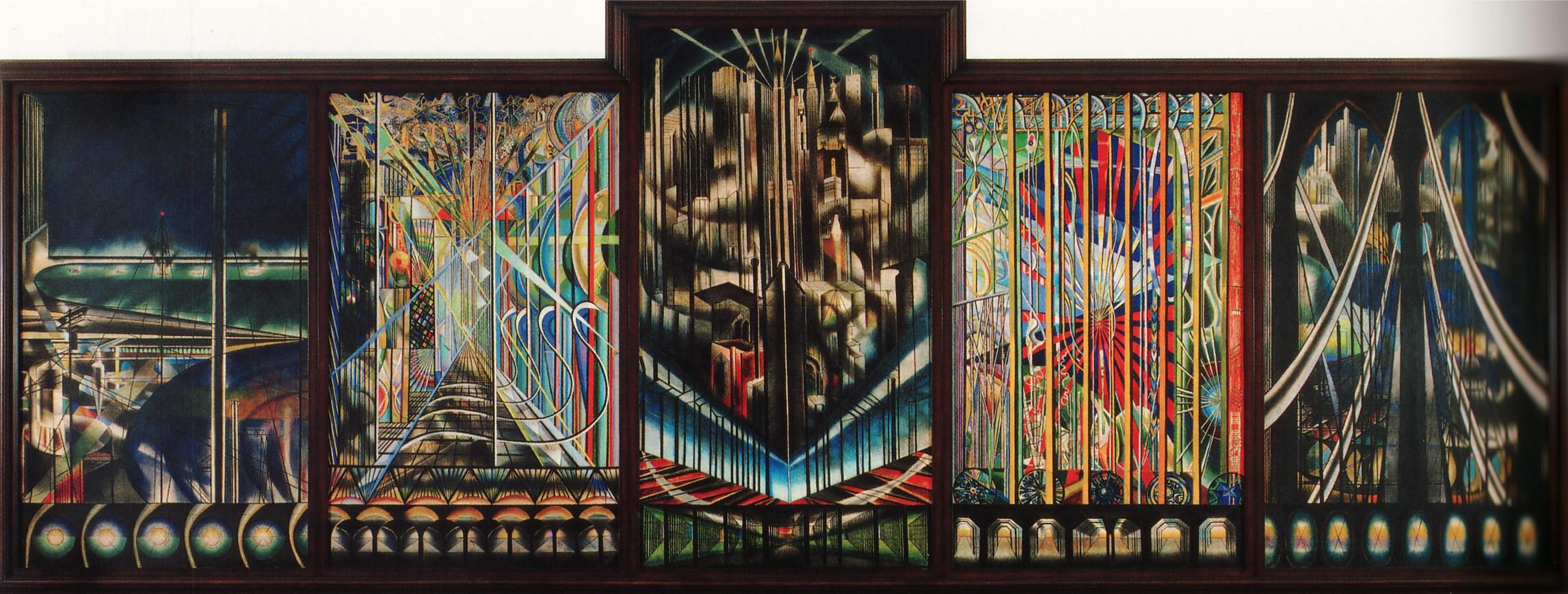
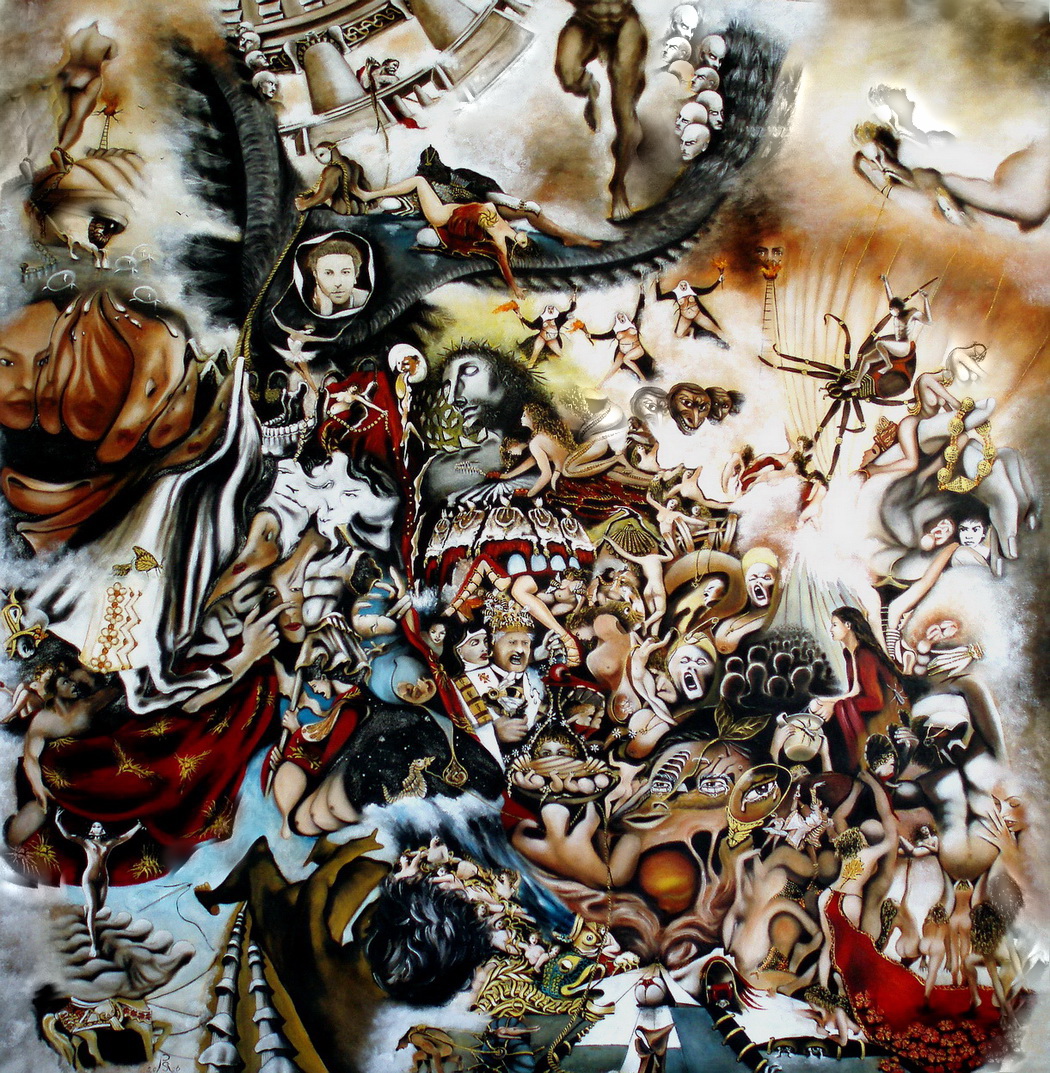
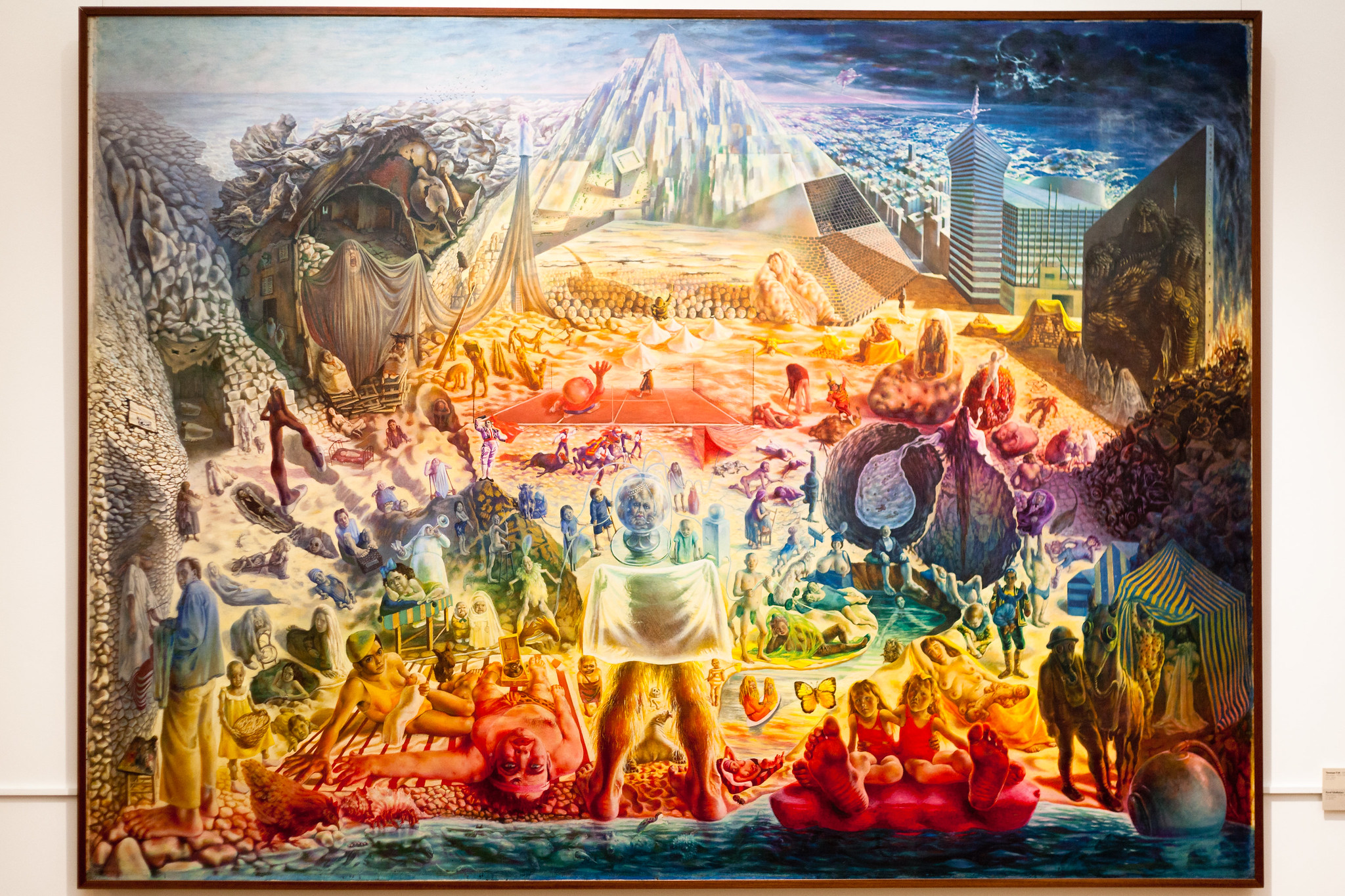
-The shy or muted way he handles paint despite such strong and expressive colors (compare to Van Gogh who uses similarly expressive colors but the technique is much more volatile, frantic, expressive and "gesticular").
His technique imbues the whole painting and its characters with this muted, contemplative, isolation and shyness.
The lighting, darkness and composition was at the vanguard of film noir cinematography.
He composes the work so that the point of view is voyeuristic, as if the viewer is crossing the street towards the diner. Hopper often used windows as a direct and voyeuristic POV into the isolated, oblivious, moments of people's lives.
However, Hopper removes any door way into the diner (or intentionally doesn't feature it as part of the view/composition, outside if its view).
This increases the isolation and suggests entrapment of the characters inside who all look lost, paused, isolated in their own spaces, even the man and woman beside each other; they're both there and sitting close, but disassociated. Hopper's wife modeled the red haired female and one is left to wonder if the painting is a further reflection of their marriage (which, apparently, was not a very pleasant marriage).
Outside the diner is darkness all around the back drop and left side, and no sign of life (all building lights off, no street lights, no other people in the scene), increasing the isolation and the feeling of loneliness and entrapment of the diner and those inside.
The painting followed on the heels of the massacre of Pearl Harbor and reflects and is imbued by a similar aftermath of national feelings of being encroached upon by a haunting darkness, and hemmed in and separated by loneliness and isolation that a pervading fear of death and pending threat can cause among individuals, a group, a nation. But perhaps even more so, Hopper's painting method imbues all of it with this sense of uncertainty and lost confidence. Strong colors, strong forms/lines/angles, strong composition, but the painting itself (the brush strokes inside all this) shows each of these faltered by an expressed fading certainty and fading of confidence, of identities once strong or confident but now fading towards lost identity. _________________ Best Classical Best Films Best Paintings
OLD SELECTIONS THAT NEED TO BE REVISITED AND RE-RATED (Virtually all ratings/rankings in this post are no longer accurate)
These are varying sets of selections (from different times) that used to be on my “Greatest Paintings” list in its earlier stages/incarnations. Many of the links may no longer work. These will be updated upon the work being re-added to one of my current paintings lists. I moved all of these here (for the time being) because it was greatly contributing to “slow down” while in edit-mode on my “Great Paintings - Extended List”. Eventually, the plan is to revisit these and, as I go, remove them from this post once they are re-added to my current lists, or removed entirely if the latest rating proves too low.
7.6/10
Le Diabolo - Jacques Resch
Hoellensturz in Vietnam - Willi Sitte (1966)
The Blinding of Samson - Rembrandt van Rijn (1636)
The Temptation of St. Anthony - Max Ernst (1945)
Bogomil's Court - Otto Rapp (1976)
Gloria - Petre Velicu (1997)
The Suitors - Gustave Moreau (1897) [aka, "The Pretenders"] http://uploads5.wikiart.org/images/gustave-moreau/the-suitors.jpg
Seherezade - Petre Velicu (2011)
Outskirts of Necropolis - Otto Rapp
Resurrection of the Flesh - Salvador Dali (1945)
Jeremiah Predicting the Destruction of Jerusalem - Rembrandt van Rijn (1630)
Paperolles - Jacques Resch
Apotheosis of Saint Ignatius - Andrea Pozzo (circa 1685–1694)
The Grand Forest - Max Ernst (1927)
Media Bacchanalia - Masami Teraoka (1995)
Daddy Longlegs of the Evening... Hope! - Salvador Dali (1940)
Santa Semana/Cloister's Workout - Masami Teraoka (2004)
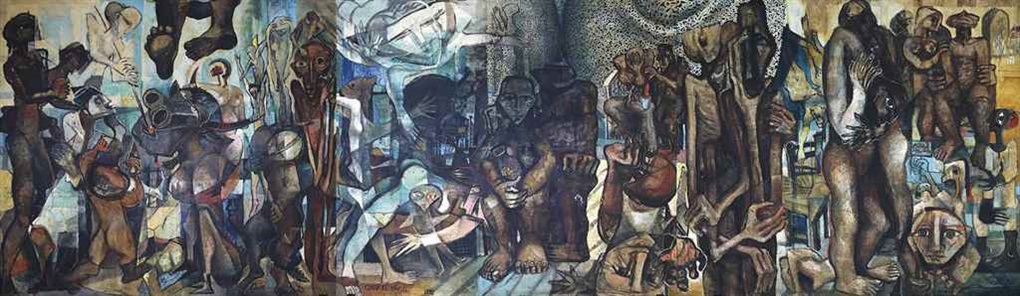
Portrait of the Bourgeoisie - David Siqueiros (1939)
The Last Supper [May be incorrect title] - Roland Rafael Repczuk (2001)
Rainy Season, Opium for Parched Earth [May be incorrect title] - Roland Rafael Repczuk (1998)
Machtspiele [May be incorrect title] - Roland Rafael Repczuk (2000)
Miraflores Altarpiece - Rogier van der Weyden (1455)
The War Triptych - Otto Dix (1932) http://uploads5.wikiart.org/images/otto-dix/war-1932.jpg
Let the Power Fall - John Brophy (2011)
Valkyrie - John Brophy (2012) http://38.media.tumblr.com/tumblr_mahg4mBa1I1qiq1iko1_r1_1280.jpg
Opus Dei - Roland Rafael Repczuk (2007) http://www.roland-rafael-repczuk.de/bilder/opusdei.jpg
Social Darwinism [May be incorrect title] - Roland Rafael Repczuk (1996) http://www.roland-rafael-repczuk.de/bilder/sozialdarvinismus.jpg
The Temptation of St Anthony - Salvador Dali (1946)
St. John Altarpiece - Hans Memling (1490)
Condolence - Patrick Devonas
Adorazione dei Magi - Domenico Ghirlandaio (1487)
Poisson-avion - Jacques Resch
Megalopolis - Petre Velicu
Prager Strasse - Otto Dix (1920) http://uploads6.wikiart.org/images/otto-dix/pragerstrasse-1920.jpg
Die Grosse Kuppel - Michael Lassel
War With Germany - Pavel Filonov (1915)
Title??? - Ettore Aldo Del Vigo
Title??? - Ernst Fuchs
L'oeuf dogmatique - Petre Velicu (2012)
Ayahuasca Dream - Robert Venosa (2007)
Formula of the Petrograd Proletariat - Pavel Filonov (1921) https://andamoxie.files.wordpress.com/2012/08/p1000511.jpg
Athanor - Anselm Kiefer (2007)
Science, conscience et patience du Vitreur - Matta (1944) http://33.media.tumblr.com/tumblr_lgifb77ymh1qgzdzfo1_1280.jpg
Scenes from the Passion of Christ - Hans Memling (1470)
SCENE INSTRUCTIONS: http://dame-licorne.pagesperso-orange.fr/IMAGES/memling%202.jpg
Germany: A Winter's Tale - George Grosz (1919)
7.5/10
Assumpta Corpuscularia Lapislazulina - Salvador Dali (1952)
Ka Mystique - Jacques Resch
Land Admiral Lefebvre's Fleet Makes Sail in the New World - Rob Sato (2008)
The Paul Juraszek Monolith - Marcus Wills (2006)
FULL VIEW: https://c1.staticflickr.com/5/4150/5432463267_8baa86d9b1_b.jpg
Salome Dancing Before Herod - Gustave Moreau (1876)
DETAIL: http://latimesblogs.latimes.com/.a/6a00d8341c630a53ef014e88180821970d-pi
Jupiter and Semele - Gustave Moreau (1895)
L'Angelus Architectonique de Millet - Salvador Dali (1933)
The Cannon - Otto Dix (1914) http://cp12.nevsepic.com.ua/83/1350252063-0129447-www.nevsepic.com.ua.jpg
Agony in the Garden - El Greco (1595)
Virtual Inquisition/Reclining Eve - Masami Teraoka (1997)
Burqa Woman/Uplift - Masami Teraoka (2003)
Table of the Seven Deadly Sins - Hieronymus Bosch (circa 1500)
Starry Night Over Rhone-Vincent Van Gogh
Self-Portrait at Age of 63 - Rembrandt (1669)
Christ Carrying the Cross (Ghent) - Hieronymus Bosch (1516)
BW David - Otto Rapp (circa 1975) [VERY rare]
Echo of a Scream - David Siqueiros (1937)
Tete morte - Jacques Resch
Self Portrait as Mars - Otto Dix (1915) http://uploads0.wikiart.org/images/otto-dix/self-portrait-as-mars.jpg
Saint Columbia Altarpiece - Rogier van der Weyden (1455)
FULL VIEW: http://www.wga.hu/art/w/weyden/rogier/11columb/0columb.jpg
The Last Judgement (Winged Altar) - Fra Angelico (circa 1450)
Polittico della Misericordia - Piero della Francesca (1462)
FULL VIEW: http://upload.wikimedia.org/wikipedia/commons/b/b3/Misericorde.jpg
The Daughters of Thespius - Gustave Moreau (1853)
Nativita - Piero della Francesca (1470)
Adorazione dei Magi - Filippino Lippi (1496)
Seven Joys of Maria - Hans Memling (1480)
Battle of Lepanto - Andrea Vicentino (1603)
The Temptation of St. Anthony - Ivan Albright (1945) http://i.imgur.com/spA6X.jpg
Crucifixion - Renata Guttuso (1941)
The Sex Murderer (Self Portrait) - Otto Dix (1920) http://foolishhuman.files.wordpress.com/2012/07/img_2231.jpg?w=812
Die Sieben Schalen Des Zorns - Heinrich Vogeler (1918)
Bourgeois in a Carriage - Pavel Filonov (1913)
The Fountain of Grace - Jan van Eyck (1429)
The Agitator - George Grosz (1928)
Absence of God - Raqib Shaw (2008) (Series of )
The Apocalypse Chapel (St Egid Church) - Ernst Fuchs (2010)
IMAGE: http://www.ernstfuchs-zentrum.com/html/arch/winterkir1.jpg
IMAGE: http://www.lcaruana.com/webmedia/klag/klag5.470x680.jpg
Paradise Lost - Raqib Shaw (2011) [Includes several works in a series]
Adorazione dei Magi - Sandro Boticelli (1470) [London]
Adorazione dei Magi - Sandro Boticelli (1475) [Washington]
Fifth Seal of the Apocalypse-El Greco (1614)
Christ Driving Traders from the Temple-El Greco (1600)
Birth of a Galaxy-Ernst (1969)
Totem & Tabu-Ernst (1941)
Celebes-Ernst (1921)
Pretty Boy-Matta
L'Ange du Foyer-Ernst (1937)
Apparat und Hand-Dali (1927)
The First Days of Spring-Dali (1929)
Epic of American Civilization-Orozco (1933)
Sacra Allegoria-Bellini (1500)
Title???-Arnold Meshes (????) ...VERY hard to find. No further info... Painting here --> http://images.search.yahoo.com/images/view;_ylt=AwrTcXwUnadSWYEAxCqJzbkF...
The Adoration of the Magi-Bosch (1510)
The Great Paranoiac-Dali (1936)
Geopoliticus Child-Dali (1943)
Becoming Geological-Dali (1933)
Christ in Majesty-Rublev
Zeus Gave Birth to the Sun-Severini
One Second Before Awakening from a Dream Caused by the Flight of a Bee Around a Pomegranate-Dali (1944)
Hell and the Flood-Bosch (1504)
Marlene-Ernst (1941)
Napoleon in the Desert-Ernst (1941)
Episoden aus dem eremitischen Leben-Uccello (1460)
Hannibal-Siqueiros
Melancholy-Dali (1945)
Birth of Zoomorph Couple-Ernst (1933)
La Cene-Dali (1955)
Echo of the Nymph-Ernst (1936)
Pan American Unity-Rivera (1940)
Detroit Institute of Art (North & South Murals)-Rivera (1933)
The Disasters of Mysticism-Matta
Adoration of the Shepherds-El Greco (1610)
Mele Moments-Debuffet
Fifty Abstract Paintings Which as Seen from Two Yards Change into Three Lenins Masquerading as Chinese and as Seen from Six Yards Appear as the Head of a Royal Bengal-Dali (1963)
Rest on the Flight to Egypt-Altdorfer (1510)
Pala di San Giobbe-Bellini (1487)
Solitary Confinement-Siqueiros (1961)
Armored Train in Action-Severini (1915)
The Hospital Train (aka, Train of the Wounded)-Severini (1912)
The Archeological Reminescence-Dali (1935)
Visage of War-Dali (1940)
The Robing of the Bride-Ernst (1940)
Maestà-Martini
Assumption of the Virgin 1-Correggio
Crucifixion-Cimabue (circa 1280)
La Crucifixion-Mantegna (1457)
Rien Ne Va Plus-Ernst (1973)
A Moment of Calm-Ernst (1939)
Joy of Living-Ernst (1937)
Femme a Tete de Roses-Dali (1935)
Adoration of the Child with the Saints Joseph, Jerome, Magdalena and Hilarion-Lippi (1460-65)
Adoration of the Child with Saints-Lippi (1463)
Coronation of the Virgin-Lippi
Virgin of Mercy-Boninsegna
Ubu Imperator-Ernst (1923)
Sleep-Dali (1937)
St John the Baptist-Rublev
NOTE: HIGH QUALITY, LARGE IMAGE DOES NOT SEEM TO BE AVAILABLE ON THE INTERNET. The best I've found is if you go to Amazon to the book Henry Darger by Klaus Biesenbach, you can choose the "Look Inside" option by clicking on the picture of it. Go here: http://www.amazon.com/Henry-Darger-Klaus-Biesenbach/dp/3791349198 ... From there, scroll through the book and you will find a pretty good quality image of the work that you can zoom into. Note that not all the pages in the book are view-able at once so their "Look Inside" function sometimes gives you random or different pages. Therefore, you may not see The Battle of Calverhine each and every time. Please note that the photograph of the page in this book, while the best that I've found on the internet, does not truly do the work justice. Even zooming into it, several details are difficult to see. What I really recommend is viewing the work in the actual book. The Battle of Calverhine is spread out across two pages. The left side of it is on page 42 and the right side is page 43.
Here is a great description of The Battle of Calverhine from the New York Times, 5 Jan 2007, "Art in Review": "...an enormous panoramic collage on cardboard, heavily varnished and nearly 10 feet across, known as ''The Battle of Calverhine.''
This work is a rarity for Darger because it can be dated: a newspaper from 1929 is varnished to its back. Dark and congested, it also doesn't quite look like Darger's work, thanks partly to the varnish, which he would dispense with later, just as he would replace cardboard with paper and evolve an elaborate process of copying and photographically enlarging images from coloring books. Two other large panoramas show him moving in this direction.
In ''The Battle of Calverhine,'' Darger simply knit hundreds of hand-cut magazine photographs and photogravures into an uninterrupted expanse of mayhem that he carefully hand-tinted in lurid colors. The battle is punctuated by explosions, dark clouds, fighting soldiers and distant regiments of marching soldiers that are mostly tinted magenta. The space of this horrific scene closes up and opens inward in disorienting waves. It is a staggering work, leathery and reliclike, with most of Pop Art embedded in its fragile surfaces."
You cannot post new topics in this forum You cannot reply to topics in this forum You cannot edit your posts in this forum You cannot delete your posts in this forum You cannot vote in polls in this forum
 AfterHours