Yo this changes things cause like a lot of the stuff I really love has not had any real impact on the genre in the long run and like social/cultural outside of musical someone like Mackelmore caused more mainstream impact than like Big L so here's a like starter set of 10 real important ones that I still like guess:
1. Paid in Full - Eric B and Rakim
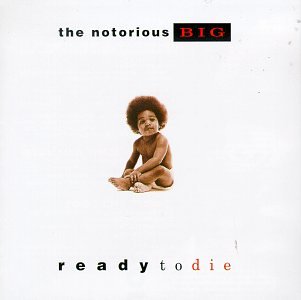
2. Ready to Die - Notorious B.I.G.
3. Illmatic - Nas
4. The Low End Theory - A Tribe Called Quest
5. All Eyez On Me - Tupac
6. Stankonia - Outkast
7. The College Dropout - Kanye
8. The Chronic - Dr. Dre
9. Madvillainy - Madvillain
10. To Pimp a Butterfly - Kendrick Lamar
But if I was just going off what I think of as the hip hop albums I like to listen to the most
1. Madvillainy - Madvillain
2. RawHyde - Jeremiah Jae and Oliver the 2nd
3. Things That Happen At Day//Things That Happen at Night - milo
4. Square - Buck 65
5. To Pimp a Butterfly - Kendrick Lamar
6. Mos Def and Talib Kweli are Black Star - Black Star
7. The Low End Theory - A Tribe Called Quest
8. Stankonia - Outkast
9. Black on Both Sides - Mos Def
10. Tetsuo & Youth - Lupe Fiasco
I don't mean to stir the objective/subjective pot but like giving a friend recommendations on "yo here's stuff you might like" is very different than "I don't know much about hip-hop, what are some really important albums to check out?" _________________
That was a prompt for discussion about the albums, not an instruction for how to compile your top 10. Use the list of what you like most. _________________ Join us in the canon game :) / Add me on RYM
An album I added a little while ago. One of the only Triple Albums that I know of. It's 60 tracks long, but the separate albums are all 20 tracks, so it's easier to digest than it sounds.
Anyone care to expound on why they love their choices?
I'd love to expound on why I like the albums that I chose, but I really don't know the reason why I prefer them over most hip hop albums that I've heard, which I find unbelievably tiresome. I guess they're just the opposite of tiresome, whatever the opposite of tiresome is. Most of the ones I chose are from the period which several people in this thread have described as a kind of classic or golden era. Most of the ones I chose are also in the genre that they used to call abstract or experimental hip-hop. I'm not too sure what they're calling it nowadays, but there was a huge flood of them in the 90s and early 2000s that a lot of people consider classics of that style. And I do too. Most of the good ones were very distinctive, and this probably helps them stand out. For me, anyway. All the ones I chose I just find to be endlessly listenable and enjoyable and musically interesting.
RoundTheBendI miss the comfort in being sadProfile Ground Control
I'd love to expound on why I like the albums that I chose, but I really don't know the reason why I prefer them over most hip hop albums that I've heard, which I find unbelievably tiresome. I guess they're just the opposite of tiresome, whatever the opposite of tiresome is. Most of the ones I chose are from the period which several people in this thread have described as a kind of classic or golden era. Most of the ones I chose are also in the genre that they used to call abstract or experimental hip-hop. I'm not too sure what they're calling it nowadays, but there was a huge flood of them in the 90s and early 2000s that a lot of people consider classics of that style. And I do too. Most of the good ones were very distinctive, and this probably helps them stand out. For me, anyway. All the ones I chose I just find to be endlessly listenable and enjoyable and musically interesting.
How come you haven't done a new tally in a long time? It's really changed since the last time you did one. Some of the ones I picked have got a lot more points now, much to my surprise. I'd love to see the new tally. I would do it myself except I'm really bad at math.
RoundTheBendI miss the comfort in being sadProfile Ground Control
How come you haven't done a new tally in a long time? It's really changed since the last time you did one. Some of the ones I picked have got a lot more points now, much to my surprise. I'd love to see the new tally. I would do it myself except I'm really bad at math.
🤣
No worries... I've been lazy is the honest answer... I should get to it. I'd like to say tonight, but the mrs wants some other things.
1. Raekwon - Only Built 4 Cuban Linx... (1995)
2. Ghostface Killah - Supreme Clientele (2000)
3. DJ Quik - Rhythm-al-ism (1998)
4. Jay-Z - Reasonable Doubt (1996)
5. A Tribe Called Quest - Midnight Marauders (1993)
6. Outkast - Aquemini (1998)
7. Mobb Deep - The Infamous (1995)
8. Clipse - Lord Willin' (2002)
9. UGK - Super Tight (1994)
10. Nas - Illmatic (1994)
A boring list full of great music. Interesting that everything here was released in the ten years from 1993-2002, I guess. _________________ 2021 in full effect. Come drop me some recs. Y'all know what I like.
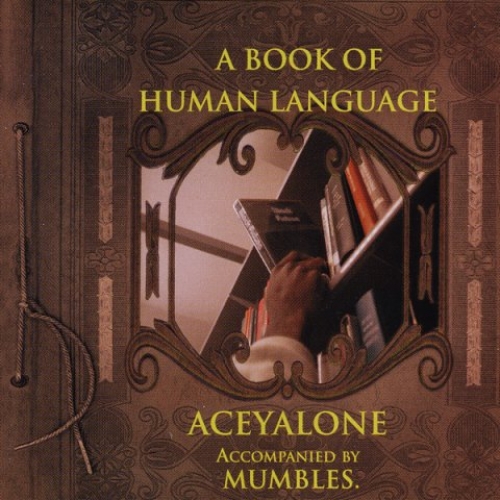
I don't know why that Aceyalone album is not more well-known. A lot people like Freestyle Fellowship, so why does his solo efforts not get as much attention. I have always liked to get on rapreviews.com to read their thoughts on albums, and I think they say it better than I can. This album needs to be listened to desperately.
Here is the review in full:
Drop the press kits. Forget about that other wack shit I got in the mail. I'll be right back, I'ma just grab me something to drink - hold up - this is a "Back to the Lab" review?" Nah... Of all the records to sleep on, this couldn't possibly be one. I mean, could it? Ears have opinions, too, and Lefty's telling me to track down Steve 'Flash' Juon for answers. Righty's telling me it's okay; that "Human Language" is an album beyond reviewing; that no one even bothered to save themselves from the hassle. Shut up guys This is bullshit. There's just no way this hasn't been covered yet.
Wait...
Sure there is. As lauded as Aceyalone certainly is in the RapReviews archives, it's but another testament to his sophomoric masterpiece's criminal overlooking that it's taken eight good years for its inclusion. If there were ever such a bitter contradiction: that which I've always considered hip-hop's crowning achievement hardly blips on the radars of even established heads. And Ace-One knows a thing or two about establishment. I won't go in depth, but he's kind of a big deal; he helped put "smart" left-coast hip-hop on the map, was an integral member of the legendary Freestyle Fellowship, and oh yeah, there's that handful of classic albums. The first of which, "All Balls Don't Bounce," is a landmark hailed by J5 fanboys and rock critics alike, often referred to along with Pharcyde's early work as the roots of conscious western rap.
Yet, during the prime of his career, when the man could have rapped about cement drying and kept your interest, he was... ignored? Now that makes no sense. But for all these years, none of that mattered to me, and it still doesn't. Aceyalone's second LP made me not care. About what? School? Check. Girls? Sure. God's great interstellar galaxy? All but the headphones - that, too. It's not like he invents the metaphor, nor do punch lines have you whooping "OHH" 8 Mile-style all alone in your bedroom. He creates an atmosphere it seems nobody else would or could visit even if they wanted to.
The concept is frighteningly brilliant, yet elementary enough to seem childlike. There are, of course, a handful of musicians, outside and in hip-hop, who have also gone with the storybook approach, each track representing a chapter and such trimmings. Only in this case actual "chapters" are never mentioned or even alluded to; by way of each song's grandiosity, it is assumed. And even within Ace's tales, he scarcely reflects the famed "story" raps of yore (Big's "Warning;" Common's "I Used To Love H.E.R."). Each song is a gorgeously abstract take on life, death and their composing elements. "The Balance" dissects the ancient yin-yang theory ever so finely, seeming to create its very own center of energy: "Check your balance beam with a feather and rock, yo whether or not you find the answer it's really not the plot/see it's like love and hate - the same emotion, different weight/people love to hate, so I know you know just how this all relate."
Ace asks you to "consider him part of the dust" in "The Guidelines," implying that he and all of human life are ultimately insignificant. On "The Grandfather Clock" he cautions just how explosive the element of time is, literally taking a word from it: "I control how long you stay alive - I'mma tap you on your shoulder at 11:55 when the time's arrived." "The Walls And Windows" would seem a fantastical journey through the surreal, and it is, but it's also Ace's standing on unfavorable judgement and the paranoia surrounding it: "see my windowpane got so much pain the glass is bustin' out the frame/so let the candle kindle in the window as a symbol/I leave my window open hopin' I might get a breeze, but when the wind comes in, the eyes come in, and the eyes don't seem to wanna leave." He notes the unfair advantage of personal appearance on "The Faces," and stares his taker in the face on "The Thief In The Night:" "I hear it moves swiftly, underneath the nose/'til one day you come face to face, you gonna cross the line, you're lost for time." Ace's phrasing more closely resembles classic poetry than the rhyming of KRS-One, giving the album the storybook feel for which it's known.
"A Book of Human Language" would be comparable to Lewis Carroll's Alice In Wonderland even without Ace's rendition of "The Jabberwocky." A stirring nonsense poem about a mythical creature, it reads like something he probably could have conjured up himself, and is just ridiculous enough to make for one of the album's many highlights. At this point the pace is already set; only before, turning back might have been an option.
With "Human Language" cinematic as is, of course producer Mumbles is deserving of much credit. His beats are dark, fitting the mood like a warm mitten; somber 50's jazz playing as prominent a role as sampled clock ticks and earthy growls. Nearly every sound is bleak and just slightly off kilter, but each beat is melodious and, unlike most avant garde rap, even induces head nodding. Throbbing horns and a thumping break give "The March" a lively pulse, and hectic riding cymbals and upright bass turn the title track into a bustling, bumpy ride. Mumbles' work on "Human Language" may not be THE best of all time, but never has a beatmaker surrounded his emcee with a more appropriate selection. Furthermore, the emcee and his maestro achieve a level of chemistry unmatched by even the greatest of duos; from Premier and Guru to Madlib and Doom.
In the annals of RapReviews.com, there are but few perfect "10's," all of which have been carefully and seldom awarded. It might be because of our rating system that there aren't even fewer; perhaps on a scale of 0 to 1,000, some of our "10's" might have been "995's." Who knows? I do know there is only one album I deem perfect. Flood my inbox with the hate of a pubescent Anakin Skywalker, but it isn't "36 Chambers." It's not "Ready To Die," it isn't even "Illmatic." It's the furthest thing from the streets hip-hop could get, yet it's a flight of stairs from the stoop. It has nothing to do with your life at the same instance it is wholly and most certainly applicable. You may put it in your walkman, but it's hardly even a CD. It's "A Book of Human Language."
Music Vibes: 10 of 10 Lyric Vibes: 10 of 10 TOTAL Vibes: 10 of 10
You cannot post new topics in this forum You cannot reply to topics in this forum You cannot edit your posts in this forum You cannot delete your posts in this forum You cannot vote in polls in this forum
 benpaco

 baystateoftheart
 Tha1ChiefRocka



 RoundTheBend
 bobbyb5
 Skinny