47 Ronin is admittedly a piece of propaganda, promoting the code of honour as the be-all and end-all, self-sacrifice as the ultimate goal. Mizoguchi was forced to do it, but made the best out of it anyway. Avoiding action scenes and going for a more "intellectual" version of the story was a deliberate choice, as he didn't want to further embrace that message. If anything, he wanted to draw attention away from it and focus on the aesthetic aspects instead. The sets, the costumes, the atmosphere, and above all the camera work (long takes, crane shots, every frame is an exercise in harmony and elegance) are outstanding. It's a bit too heavy for me, but its greatness can't be overstated. That being said, I think it's the worst possible entry point for someone not familiar with Mizoguchi or samurai films.
Speaking of heavy, Women of the Night signifies an important step in feminist-oriented filmmaking, while capturing the bleak social and moral landscape of post-war Japan and the devastating effect it had on people's lives, and especially women's. It does so in a relentlessly brutal way, which on the one hand is its greatest strength, but on the other hand makes it a film I doubt I'd be able to watch again. Not saying I didn't like it, it's just one of those "once is enough" cases.
I'm a big fan of Flame of My Love. It chronicles the Liberal party's ascent to power in the 1880's and the fight of women to get included in this progressive reform. A firmly political firm, though there is also a romance that moves alongside the political developments. The main character, portrayed by the always excellent Kinuyo Tanaka, is truly inspiring. Even though Mizoguchi is busy shooting interiors - a reflection of women being unable to escape the deeply rooted patriarchal structures - for a large part of the film, he chooses interesting angles and there is still room for some spectacular shots, for example a riot that is impressively filmed. It's worth noting that, just like Women of the Night, it features some "difficult", really graphic scenes.
However, my favourite '40s Mizoguchi film is Five Women Around Utamaro - and dare I say it's not even close. I viewed it as a fascinating autobiographical self-portrait, a profound meditation on the nature of art and the role of the artist. The similarities between Utamaro and Mizoguchi are obvious: the feminist dimension of their work, the fact that they were innovative artists that defied the social and artistic conventions of their time and had to deal with adversity, censorship, etc. Visually, it is a display of poetic beauty in typical Mizoguchi fashion. There are numerous examples, though one has to look no further than the opening parade. Compared to an average film of his, it is lighter in tone, subtler in its themes and messages, its atmosphere isn't as gloomy and somehow it all works a treat.
Olli wrote:
also China has a wonderful post-war film: Spring in a small Town from 1948.
Yes, that's a great shout. It stands out compared to the other post-war films we've been discussing due to its more intimate nature. The story is a metaphor for the state of post-war China, but the socio-political elements take a backseat to the family drama. _________________ Bob Dylan Charles Mingus
True that Japanese cinema segued from one body of censorship to another. The US was keeping a close eye on things during occupation. However, I got the sense that Kurosawa believed in the anti-fascist message of No Regrets of Our Youth without having to do any extra research. It simply landed well, even though, as you say, it was secondary to the main character's arc. Thus, No Regrets had two distinct layers that both work, and reinforce each other. I think it's a great film. And it was Ozu-esque, especially in the third act when she leaves the city to work her on in-laws' farm, which is interesting.
I liked your comparison of One Wonderful Sunday to It's a Wonderful Life. Not to go on a tangent but It's a Wonderful Life, despite its very cheerful and uplifting ending, was a bit of a dark, bleak film for its time, for its themes of ruthless capitalism, abandoning one's hopes and dreams, suicide, etc. One Wonderful Sunday had a different set of downbeat themes, but something the two films share is its main characters feel hopelessly trapped where they are, and are under intense financial difficulty. Another thing the two films share is the message that no matter how broke you are and how crappy life can be at times, life can still be wonderful if you have love, and eventually things will get better.
I hadn't considered that Mizoguchi avoided showing action in The 47 Ronin as a way to oppose the war-time mode of glorifying fights/combat. I stand by my statement that I think it would have flowed better if the long dialogue scenes were broken up once or twice with even just a few seconds of swordplay. But ok, I understand why Mizoguchi didn't. Nevertheless the camerawork, production design, and editing were excellent. And yes, I will echo your statement that if there's anyone out there reading this who has never seen a samurai film nor a Mizoguchi film, DO NOT start with The 47 Ronin (not this 1941 version anyway). It's a good movie, yes, but it is not at all exemplary of either.
Again, I haven't seen Flame of My Love, nor a handful of other Mizoguchi films of the 40s. It's odd to me Criterion Channel has nearly every Ozu and Kurosawa, but missing several Mizoguchis. I just found YouTube has a low-res stream of Flame of My Love, which maybe I'll catch in the next day or two. Then again, low-res isn't ideal. Utamaro is an interesting choice as a 40s favourite. It is fairly easy to digest. Still, I found the subplots were taking too much screen time away from the titular character. Wasn't he the one we're supposed to focus on? However, I missed the autobiographical parallels, and I can see why Mizoguchi didn't want to make that obvious.
kokkinos wrote:
In my book, Late Spring narrowly edges 47 Ronin as the greatest Japanese film of the decade.
Hmm, those are two very different films. I'm not sure where I'd rank them, or where they might appear on my overall 1940s list. I've definitely enjoyed my binge of 1940s Japanese cinema for this poll, yet my overall conclusion is the 40s were not their strongest years. Rather, I find the 1940s were setting the table for the greatest 5-year stretch of Japanese cinema in history. 1950-54, wow. If I were to make a list of my all-time Top 20 Japanese Films, I think roughly a third of that list would come from those years by the gents named Ozu, Mizoguchi, and Kurosawa. Whereas maybe one would come from the 1940s. But as we've covered, the 40s were a very challenging time for Japanese cinema. But they were a time when the three head honchos were honing their skills and doing what they could, given the historical context. Once they had more creative freedom, fewer distractions, and better resources, they were all able to enter their prime at the same time. We just didn't see the full fruits of it until the following decade.
Utamaro is an interesting choice as a 40s favourite. It is fairly easy to digest. Still, I found the subplots were taking too much screen time away from the titular character. Wasn't he the one we're supposed to focus on?
Utamaro is presented as a lonely figure that is barely involved in any of the dramatic sub-plots. The more basic interpretation would be that he is consumed by his art, which requires full-time dedication and allows no such distractions. At the same time, I'd say there's more to it. Mizoguchi is critical/self-critical of this attitude, implying that the artist can become detached from his social surroundings. And that's reflected on his relationship with women. He doesn't succumb to the temptation of lust, like the other men in the film do, but can't really help them either. He simply exploits them in a different way, using them as a source of artistic inspiration. The film's most famous scene shows Utamaro painting the back of a woman, a beautiful yet ironic metaphor for Utamaro - and Mizoguchi - succeeding on the back of women. There are other visual clues to the "strong women suffering at the hands of weak men" concept. For example, there is a scene where women are standing, but are positioned in the background, while men are sitting on the tatami, but are placed in the foreground.
On the other hand, Mizoguchi truly believes in the power of art and thinks it can do what men can't. Art is not a mere observer of reality, neither is it restricted to commenting on it after the fact, it has the power to shape it. For instance, Tanaka's character says that Utamaro's drawing of her made her realise she must live life in an uncompromising way and inspired her to ... (it's a key part of the plot, so I'm keeping it spoiler-free for anyone who hasn't seen it and intends to).
CA Dreamin wrote:
Hmm, those are two very different films. I'm not sure where I'd rank them, or where they might appear on my overall 1940s list. I've definitely enjoyed my binge of 1940s Japanese cinema for this poll, yet my overall conclusion is the 40s were not their strongest years. Rather, I find the 1940s were setting the table for the greatest 5-year stretch of Japanese cinema in history. 1950-54, wow. If I were to make a list of my all-time Top 20 Japanese Films, I think roughly a third of that list would come from those years by the gents named Ozu, Mizoguchi, and Kurosawa. Whereas maybe one would come from the 1940s. But as we've covered, the 40s were a very challenging time for Japanese cinema. But they were a time when the three head honchos were honing their skills and doing what they could, given the historical context. Once they had more creative freedom, fewer distractions, and better resources, they were all able to enter their prime at the same time. We just didn't see the full fruits of it until the following decade.
Well, my list - assuming I make one in time - will be fully biased and the ranking will have nothing to do with how great I consider a film to be, so they'll be pretty low on mine, too. I want to have a personal connection with the picks I'll nominate, so I'll simply go with my favourites.
It's cool that this thread gave you the excuse to dive deeper in '40s Japanese cinema. Unfortunately, I had to rely on my memory and my -admittedly pretty extensive- personal notes, but I'm keen on revisiting a few of them at some point, especially Ozu's, as I usually don't vibe with his work to the same degree I do with the other two - and that applies to his overall body of work, not just the '40s.
They definitely had a phenomenal run in the '50s, but it's worth adding that Mizoguchi and Ozu had some great moments in the '30s as well. Maybe we'll have the chance to talk about them in a future '30s poll. _________________ Bob Dylan Charles Mingus
Repo's '40s Film Rankings
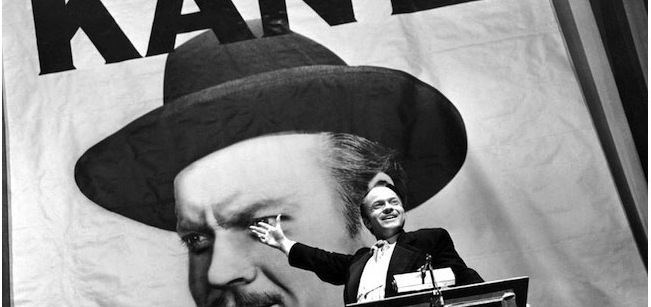
Citizen Kane (1941)
Suspicion (1941)
Rebecca (1940)
Ossessione (1943)
Out Of The Past (1947)
Casablanca (1942)
The Maltese Falcon (1941)
The Uninvited (1944)
The Spiral Staircase (1946)
The Curse of the Cat People (1944)
Pinocchio (1940)
Dumbo (1941)
Cat People (1942)
Double Indemnity (1944)
His Girl Friday (1940)
Ghost Breakers (1940)
Laura (1944)
Gaslight (1944)
The Unseen (1945)
The Philadelphia Story (1940)
Little Shop Around The Corner (1940)
The Killers (1946)
The Devil-Bat (1940)
Stranger on the Third Floor (1940)
The Suspect (1944)
King of the Zombies (1941)
Son of Dracula (1943)
Sorry I’ve been out of touch for quite awhile. Glad I caught this. Could make a top 40. Many classics not seen to my shame
1940s films:
The Life and Death of Colonel Blimp
Brief Encounter
The Red Shoes
It’s a Wonderful Life
A Matter of Life and Death
Double Indemnity
The Treasure of the Sierra Madre
Casablanca
Black Narcissus
The Philadelphia Story
Letter from an Unknown Woman
Citizen Kane
The Third Man
The Shop Around the Corner
Fantasia
The Children of Paradise
Beauty and the Beast
Bicycle Thieves
The Big Sleep
The Maltese Falcon
Meet Me In St. Louis
Rome, Open City
Germany Year Zero
The Best Years of Our Lives
The Great Dictator
Late Spring
His Girl Friday
Day of Wrath
Pinocchio
Drunken Angel
Stray Dog
Bambi
Miracle on 34th Street
A Canterbury Tale
The Grapes of Wrath
The Lost Weekend
A Day in the Country
Paisan
Arsenic and Old Lace
The 49th Parallel
I adore Powell & Pressburger in the 40s. Colonel Blimo is in the (very) short list of my all time faves. _________________ -Ryan
I also have a fair amount of films from the 40s that I probably should've seen by now, but just haven't... I mean, Grapes of Wrath, Shadow of A Doubt, High Sierra, Adam's Rib, Philadelphia Story... 🤐 — I'll get to them one day—
Sidenote, watched Hellzapoppin' yesterday, and it's immediately landing my list. Maybe even top 30. Baffled I'd never even heard of it until recently— _________________ Doubles & Conch
Utamaro is presented as a lonely figure that is barely involved in any of the dramatic sub-plots. The more basic interpretation would be that he is consumed by his art, which requires full-time dedication and allows no such distractions. At the same time, I'd say there's more to it. Mizoguchi is critical/self-critical of this attitude, implying that the artist can become detached from his social surroundings. And that's reflected on his relationship with women. He doesn't succumb to the temptation of lust, like the other men in the film do, but can't really help them either. He simply exploits them in a different way, using them as a source of artistic inspiration. The film's most famous scene shows Utamaro painting the back of a woman, a beautiful yet ironic metaphor for Utamaro - and Mizoguchi - succeeding on the back of women. There are other visual clues to the "strong women suffering at the hands of weak men" concept. For example, there is a scene where women are standing, but are positioned in the background, while men are sitting on the tatami, but are placed in the foreground.
On the other hand, Mizoguchi truly believes in the power of art and thinks it can do what men can't. Art is not a mere observer of reality, neither is it restricted to commenting on it after the fact, it has the power to shape it. For instance, Tanaka's character says that Utamaro's drawing of her made her realise she must live life in an uncompromising way and inspired her to ... (it's a key part of the plot, so I'm keeping it spoiler-free for anyone who hasn't seen it and intends to).
You've defended Utamaro quite well. It isn't my type of movie, and I clearly glanced over the Utamaro-Mizoguchi connections. Maybe need to give it another go some day.
kokkinos wrote:
Well, my list - assuming I make one in time - will be fully biased and the ranking will have nothing to do with how great I consider a film to be, so they'll be pretty low on mine, too. I want to have a personal connection with the picks I'll nominate, so I'll simply go with my favourites.
It's cool that this thread gave you the excuse to dive deeper in '40s Japanese cinema. Unfortunately, I had to rely on my memory and my -admittedly pretty extensive- personal notes, but I'm keen on revisiting a few of them at some point, especially Ozu's, as I usually don't vibe with his work to the same degree I do with the other two - and that applies to his overall body of work, not just the '40s.
They definitely had a phenomenal run in the '50s, but it's worth adding that Mizoguchi and Ozu had some great moments in the '30s as well. Maybe we'll have the chance to talk about them in a future '30s poll.
What do you mean "assuming you make one in time"? Haha, you've come this far, I think Hayden expects one from you at this point. I'm also a bigger fan of Mozoguchi and Kurosawa than Ozu. On the 50s thread, I wrote something along the lines of 'Ozu's filmography feels like he churns out multiple iterations of the same 5-6 films. The cast, the camerawork, the set designs, the plot-lines, even the titles...all feel so similar, I get his movies mixed up at times.' I'm not saying I dislike Ozu, I just like the other two much more, and appreciate their broader variety. And yes, Osaka Elegy and Sisters of the Gion are two my favorites of the 1930s, but saving further comment until the next decade project.
Mercury wrote:
Sorry I’ve been out of touch for quite awhile. Glad I caught this. Could make a top 40.
Mercury! Where've you been, bro?
@Hayden, I have a list on LB but I'm not sure if I'm finished tinkering with it. _________________ on such a winter's day
You cannot post new topics in this forum You cannot reply to topics in this forum You cannot edit your posts in this forum You cannot delete your posts in this forum You cannot vote in polls in this forum
 CA Dreamin

 Repo
Repo
 Hayden

 Mercury