Top 13 Music Albums of 1960
by kokkinos 
- Chart updated: 01/12/2022 22:15
- (Created: 05/29/2021 18:59).
- Chart size: 13 albums.
There are 0 comments for this chart from BestEverAlbums.com members and this chart has not been rated yet. Please log in or register to leave a comment or assign a rating.
View the complete list of 59,000 charts on BestEverAlbums.com from The Charts page.


Another record I’m familiar with, but this one I like much more. Drums Of Passion succeeds in what In The 7th Moon… only partially got right, namely it creates an extremely powerful communal feeling, it’s as if this tradition runs in your blood. It’s great when you listen to it on your own, yet it’s even better when you are hanging with the homies, I’ve had tons of fun with it – actually, I knew a couple of guys that would organise a party that would play exactly this type of music pretty much every week, those were good times, I wonder if that’s still a thing. It’s a clear case of infinite replay value, no matter how many times you listen to it, it simply won’t age. Percussion-oriented albums are far from what I’m usually looking for in music, but Olatunji is one of the few exceptions, he really gets you in the groove. Nothing against the vocals as well, they add an extra flavour. A clear #1 so far.

One has to begin with Etta James, the undeniable star of the album. She covers a wide spectrum of emotional states and musical styles without any kind of trouble whatsoever. Her powerful, graceful yet vulnerable performance gets you involved in the most relatable way. She has a maturity that doesn't come often in debut albums – though you could argue she had already kinda made a name for herself, as she had had a successful single five years earlier. As it is well known by now, she had a traumatic childhood and in general so many struggles in her personal life to overcome. So, it should be a safe assumption that these painful experiences left their mark on her and influenced her artistic identity as well and could partially explain the aforementioned somewhat premature mental growth – stars shine brightest in the darkest of night.
The instrumentation and the songwriting may not be spectacular by themselves, weren’t it for Etta it would be rather standard pop music of its time - but pop back then had a different meaning than it has now, so it's not too bad anyway and it complements her to an adequate degree giving her plenty of room to shine.
Examining the individual songs a little closer, the self titled track, an iconic and timeless - they don't make them like this anymore - love song is clearly the highlight, but there's more to it, pretty much every song has something to offer – and even if it doesn’t, Etta can squeeze water out of stone. Opening the album, the unapologetically sentimental ballad Anything To Say You're Mine, where she captivates you from the very first ooh and you immediately find yourself mourning her lost love. The next couple of tracks My Dearest Darling and Trust in Me form a nice contrast between the rough and uncompromising vocals and the fragility displayed in the lyrics. Then comes a Sunday kind of Love with its breezy and jazzy atmosphere where the vocals soften up to make room for a desperate confession of loneliness. Tough Mary provides a welcome change of pace through a little and lovely lighthearted rock and roll tune. I Just Want To Make Love To You is a classic that feels like it was written for Etta on the first place, irresistible and shamelessly dirty blues. All I Could Do Was Cry is a deeply touching moment, as she unreservedly opens up her soul – sorry for the awful pun. Stormy Weather is one of the highlights, moving once again towards a jazzier end.
It’s a shame she never got to realise her full potential – and for all the wrong reasons - , but we should be grateful for what we got, a joy to behold. [First added to this chart: 01/12/2022]
The instrumentation and the songwriting may not be spectacular by themselves, weren’t it for Etta it would be rather standard pop music of its time - but pop back then had a different meaning than it has now, so it's not too bad anyway and it complements her to an adequate degree giving her plenty of room to shine.
Examining the individual songs a little closer, the self titled track, an iconic and timeless - they don't make them like this anymore - love song is clearly the highlight, but there's more to it, pretty much every song has something to offer – and even if it doesn’t, Etta can squeeze water out of stone. Opening the album, the unapologetically sentimental ballad Anything To Say You're Mine, where she captivates you from the very first ooh and you immediately find yourself mourning her lost love. The next couple of tracks My Dearest Darling and Trust in Me form a nice contrast between the rough and uncompromising vocals and the fragility displayed in the lyrics. Then comes a Sunday kind of Love with its breezy and jazzy atmosphere where the vocals soften up to make room for a desperate confession of loneliness. Tough Mary provides a welcome change of pace through a little and lovely lighthearted rock and roll tune. I Just Want To Make Love To You is a classic that feels like it was written for Etta on the first place, irresistible and shamelessly dirty blues. All I Could Do Was Cry is a deeply touching moment, as she unreservedly opens up her soul – sorry for the awful pun. Stormy Weather is one of the highlights, moving once again towards a jazzier end.
It’s a shame she never got to realise her full potential – and for all the wrong reasons - , but we should be grateful for what we got, a joy to behold. [First added to this chart: 01/12/2022]
Year of Release:
1960
Appears in:
Rank Score:
1,171
Rank in 1960:
Rank in 1960s:
Overall Rank:
Average Rating:
Comments:


Oh yeah, it’s story time. Spoken word is tricky to get right, but this is an exemplary attempt. His voice has so much character, all the subtle messages he adds, he means much more than he says, plus everything is so real and so effortless, you can feel he’s sitting right beside you as he reads you to sleep, but you try your best not to fall asleep because you don’t wanna miss out on the next thing he’s going to say. It's like those distant, slightly enigmatic relatives that visit you once in a blue moon, nobody knows what exactly they do for a living, but they sure have tons of cool stuff to talk about, you could hear them for hours, days even. And it all flows so smoothly together.
[First added to this chart: 01/12/2022]
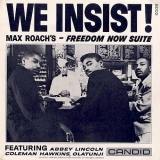
"Freedom Day, it's Freedom Day. Throw those shackle n' chains away
Everybody that I see says it's really true, we're free
Freedom Day, it's Freedom Day. Free to vote and earn my pay
Dim my path and hide the way. But we've made it Freedom Day"
Even though jazz may not be the most obvious genre to associate with political messages - or any messages for that matter - given the lack of lyrics, it's had its fair share of those and this must comfortably sit near the very top - if not right at it - in any such list. Back then, this was an integral part of the civil rights movement. So, how sad is it that this album is just as relevant today as it was sixty years ago? The best thing about it is that it doesn't glorify anything, it captures all the elements of the struggle in a realistic manner, the uncertainty of the outcome, the agony of failure, the oppression and injustice reaching their highest points, the running out of patience leading to an urgency to make a rapid - and sometimes reckless - move, the intimate sense of belonging to a community and fighting for a greater cause and, above all, the inextinguishable desire for freedom. Anyway, here one can witness one of those rare occasions where the artistic vision matches the social and cultural impact, as all of the above find a way to be expressed through music - the main focus is percussion and vocals, but there's so much going on here that I couldn't possibly do it justice - ambition and passion are the two sides of the same coin and each one is equally represented achieving a fine balance - neither surpasses the other, think of a yin yang dualism. [First added to this chart: 01/12/2022]
Everybody that I see says it's really true, we're free
Freedom Day, it's Freedom Day. Free to vote and earn my pay
Dim my path and hide the way. But we've made it Freedom Day"
Even though jazz may not be the most obvious genre to associate with political messages - or any messages for that matter - given the lack of lyrics, it's had its fair share of those and this must comfortably sit near the very top - if not right at it - in any such list. Back then, this was an integral part of the civil rights movement. So, how sad is it that this album is just as relevant today as it was sixty years ago? The best thing about it is that it doesn't glorify anything, it captures all the elements of the struggle in a realistic manner, the uncertainty of the outcome, the agony of failure, the oppression and injustice reaching their highest points, the running out of patience leading to an urgency to make a rapid - and sometimes reckless - move, the intimate sense of belonging to a community and fighting for a greater cause and, above all, the inextinguishable desire for freedom. Anyway, here one can witness one of those rare occasions where the artistic vision matches the social and cultural impact, as all of the above find a way to be expressed through music - the main focus is percussion and vocals, but there's so much going on here that I couldn't possibly do it justice - ambition and passion are the two sides of the same coin and each one is equally represented achieving a fine balance - neither surpasses the other, think of a yin yang dualism. [First added to this chart: 01/12/2022]
Year of Release:
1960
Appears in:
Rank Score:
351
Rank in 1960:
Rank in 1960s:
Overall Rank:
Average Rating:
Comments:

The title is a pretty accurate description of what you are about to listen . One of the most important albums of the so called Arabic Jazz sub-genre, not that I'm well versed in this style, but those who are seem to hold it in extremely high regard and I can see why, it has all the qualities we tend to associate with this kind of music: an exotic, mystifying aura that arouses your senses in an irresistible, hypnotising manner. It's very "Arabic" so to speak but very jazzy at the same time - though it's the former that makes this album really stand out. It's been argued that some points are monotonous, but this contributes to the build up of the atmosphere, an exemplary demonstration of the power of repetition, the Arabic version of psychedelia if you will. When it comes to instrumentation, I’d say the violin is the most central piece in terms of serving the evocative purpose of this album, also worth adding that a variety of instruments such as oud (string instrument), qanun/kanoon (the same) and darabuka (percussion) are employed. Just as with Yusef Lateef's The Centaur and The Phoenix, I would include this one in the "cinematic" category of albums as well. But there's a difference: this one paints more vivid images, you aren't a mere part of the audience, restricted to a reactive role, you are the star. You can easily picture yourself travelling across the scorching desert in a caravan, struggling to find a passable route through the inhospitable landscape, calculating the optimal use of your supplies, while keeping an eye out for aspiring bandits. Where even nature itself seems to have given up, the man has to keep going. And when the sun goes to rest, one thousand and one nights are waiting for you - in that spirit, I would pick El Lail (The Night) as the standout track. Ok, I could keep this going for quite a while, but I think I took it way too far already - maybe it was a Hollywood production, lol - , you get the point.
[First added to this chart: 01/12/2022]


Ok, this was wild. Out of all the albums I’ve listened to so far in this diary, the obvious comparison would be Irving Joseph - Murder, Inc. Bombastic horns, manic percussion, there are some serious moments every now and then, when the album moves closer to classical music, but it rapidly comes to its senses and takes another cartoonish twist. The occasional vocals are inexpressibly hilarious, you have to listen to them to understand what I mean - a great example would be Johnson Rag.
[First added to this chart: 01/12/2022]

For real, is there a more charismatic artist than Judy? I highly doubt it. The songs are ok, don’t get me wrong, but it’s all about her, she elevates them to a whole new level. And she doesn’t do anything spectacular, it’s just her doing her thing in an inimitable manner, if anyone else tried something similar he/she would fail miserably. People seriously compared her to Elvis? That's absurd if you ask me, she is one of a kind and beyond any comparisons. To put into perspective how unique I think she is, if I had to name an artist who's made of the same stardust, I would really stretch it and go with - prepare yourselves for the most random comparison ever - ODB, in the sense of being a in league of his/her own.
[First added to this chart: 01/12/2022]

It’s all about the percussion, but not in the typical show off or overly technical sense, it’s very catchy and creates an atmosphere based on vivid imagery. You are lost in the middle of the jungle, but you have no time to admire the landscape or the wildlife, the adventure begins immediately. The shamans are dancing around the fire, the music dramatically intensifies, the ritual is reaching its climax, their spirits escape their bodies as they enter a fully ecstatic state of consciousness. Ok, you get the point.
[First added to this chart: 01/12/2022]
Year of Release:
1960
Appears in:
Rank Score:
2
Rank in 1960:
Rank in 1960s:
Average Rating:
Comments:

forward thinking yet very accessible album, even if you aren't that much into jazz. We've all heard the usual complaints more times than we'd have liked when we dare to suggest a jazz artist or album, there isn't enough stuff going on to keep our attention, it's the old and predictable sequence of head, solo, solo, head, solo, solo etc., that all sounds the same. I think this album would be a safe choice even for people of that mentality - which I have nothing againist, don't get me wrong, to each their own, not to mention there's a part of jazz I find boring as well depending on my mood - and it wouldn't receive such criticism. It is so rich and colourful - after all, the band consists of 9 members - , it never wastes a moment. Despite the complexity of the compositions, it never takes itself too seriously which accords with the overall approach that is rather atypical for a jazz record. All the above hint at a very obvious comparison that has been done a myriad times already, but you can’t ignore it, of course I'm talking about Charles Mingus. In general, there are two sides in this album. The first is full of the aforementioned qualities and exemplifies what we could call a bluesy attitude to jazz, based on show-stealing horns that lead to borderline insanity, everything hanging by a thread - those would be for instance tracks 1,2 and 4. The other side offers the much needed balance when it is finally time to calm down, the main attraction being the flute (yesterday I was pointing out how much I like its sound and this one is even greater) /oboe/arghul played by the man himself, plus the bassoon, which is an excellent addition, though I 'd like to hear some more of it. Also, this side is clearly influenced by classical music, creating a cinematic - in the old fashioned way - atmosphere. Track 6 and especially track 3 embodies these attributes and forms a piece of otherworldly beauty, my pick for the highlight of the album. It's worth mentioning it that it's not all black or white, e.g. track 5 combines a bit of both worlds.
[First added to this chart: 01/12/2022]
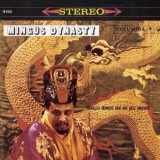
People have been calling it an “unlucky” album”, because it’s something like part II of Mingus Ah Um. I can’t say the general view is that far off, these two are based on the same attitude. As a result, this tends to be overlooked in favour of the latter, which obviously made the bigger impression as it came out first – and let’s admit it, it’s a bit better as an album all things considered, absolutely no shame in that. Getting over the - fair or unfair depending on your perspective- comparisons and trying to find what differentiates this album from its predecessor, the most obvious element is that this features a bigger band and consequently a bigger sound, some of those tunes were actually intended for the big screen – and I’m speaking 100% literally here, it’s not a figure of speech, lol. Another noteworthy aspect is how the Duke Ellington influences go even deeper than usual, apart from the evident and pretty much self-explanatory Moon Indigo – a legendary piece by the way- , there’s also Things Ain’t What They Used to Be, which is written by Mercer Ellington, who is – ok, you probably guessed it- Duke’s son. If I had to pick a highlight, I’d probably go with Far Wells, Mill Valley, not the most obvious choice but it’s definitely a stand-out track, it’s usually considered either the best or the worst with the latter being the case more often than not, but I lean towards the former, it’s exotically grandiose in a way that I find simply impossible to resist. Of course, this comment wouldn't be complete without a reference to that album cover, I've always had a soft spot for Chinese/Far East cultural tradition - the album title is another tod towards the same direction as well - so you can easily imagine how close to home this one hits.
[First added to this chart: 01/12/2022]
Total albums: 13. Page 1 of 2
Don't agree with this chart? Create your own from the My Charts page!
Top 13 Music Albums of 1960 composition
| Artist | Albums | % | |
|---|---|---|---|
|
|
|||
| Charles Mingus | 1 | 8% | |
| Miles Davis | 1 | 8% | |
| Olatunji | 1 | 8% | |
| Don Ralke Orchestra | 1 | 8% | |
| Etta James | 1 | 8% | |
| Sonny Terry & Brownie McGhee | 1 | 8% | |
| Dirk Bogarde | 1 | 8% | |
| Show all | |||
Top 13 Music Albums of 1960 chart changes
| Biggest fallers |
|---|
| Down 1 from 1st to 2ndAt Last! by Etta James |
| Down 1 from 2nd to 3rdLyrics For Lovers by Dirk Bogarde |
| Down 1 from 3rd to 4thWe Insist! Max Roach's Freedom Now Suite by Max Roach |
| New entries |
|---|
| Drums Of Passion by Olatunji |
Top 13 Music Albums of 1960 similarity to your chart(s)
Not a member? Registering is quick, easy and FREE!
Why register?
- Join a passionate community of over 50,000 music fans.
- Create & share your own charts.
- Have your say in the overall rankings.
- Post comments in the forums and vote on polls.
- Comment on or rate any album, artist, track or chart.
- Discover new music & improve your music collection.
- Customise the overall chart using a variety of different filters & metrics.
- Create a wishlist of albums.
- Gain access to a Dark Mode theme.
- Help maintain the BEA database.
- Earn member points and gain access to increasing levels of functionality!
- ... And lots more!
Register now - it only takes a moment!
Top 13 Music Albums of 1960 ratings
Not enough data Average Rating = (n ÷ (n + m)) × av + (m ÷ (n + m)) × AVwhere:
av = trimmed mean average rating an item has currently received.
n = number of ratings an item has currently received.
m = minimum number of ratings required for an item to appear in a 'top-rated' chart (currently 10).
AV = the site mean average rating.
Top 13 Music Albums of 1960 favourites
Top 13 Music Albums of 1960 comments
Be the first to add a comment for this Chart - add your comment!
Your feedback for Top 13 Music Albums of 1960

Let us know what you think of this chart by adding a comment or assigning a rating below!
If you enjoy our site, please consider supporting us by sparing a few seconds to disable your ad blocker.
A lot of hard work happens in the background to keep BEA running, and it's especially difficult to do this when we can't pay our hosting fees :(
We work very hard to ensure our site is as fast (and FREE!) as possible, and we respect your privacy.
A lot of hard work happens in the background to keep BEA running, and it's especially difficult to do this when we can't pay our hosting fees :(
We work very hard to ensure our site is as fast (and FREE!) as possible, and we respect your privacy.