Overall Chart
Listed below are the overall rankings for the best albums in history as determined by their aggregate positions in over 59,000 different greatest album charts on BestEverAlbums.com! (Chart last updated: 4 hours ago).
You can customise how this chart is generated, browse the individual charts constituting the overall rankings from The Charts page, or submit your own chart from the My Charts page!

"Rolling Stones bassist Bill Wyman said of Saturation in 1993, "Urge Overkill, a band made up of some very smart boys acting dumb, had a ambivalent year, cursed, you might say, by the granting of all their wishes. The band had a good record company enthused about promoting a good record, and good ..." [+] Reply
-  buzzdainer | Helpful? (Log in to vote) | 0 votes (0 helpful | 0 unhelpful)
A maximum of 5 top-voted qualifying comments are selected for each album. To provide the best experience for visitors, comments are excluded if they refer to data corrections, contain excessive profanity, are written in all caps, are non-English, are too short, consist of conversations between users, or contain lists of best tracks etc.
buzzdainer | Helpful? (Log in to vote) | 0 votes (0 helpful | 0 unhelpful)
A maximum of 5 top-voted qualifying comments are selected for each album. To provide the best experience for visitors, comments are excluded if they refer to data corrections, contain excessive profanity, are written in all caps, are non-English, are too short, consist of conversations between users, or contain lists of best tracks etc.

"Hopefully this will go down as a classic, this is Converge's best work since Jane Doe." Reply
-  TheHolyKiwi | Helpful? (Log in to vote) | +2 votes (2 helpful | 0 unhelpful)
A maximum of 5 top-voted qualifying comments are selected for each album. To provide the best experience for visitors, comments are excluded if they refer to data corrections, contain excessive profanity, are written in all caps, are non-English, are too short, consist of conversations between users, or contain lists of best tracks etc.
TheHolyKiwi | Helpful? (Log in to vote) | +2 votes (2 helpful | 0 unhelpful)
A maximum of 5 top-voted qualifying comments are selected for each album. To provide the best experience for visitors, comments are excluded if they refer to data corrections, contain excessive profanity, are written in all caps, are non-English, are too short, consist of conversations between users, or contain lists of best tracks etc.

"Feeling meh about this album. This felt quite repetitive for me to listen and sometimes I feel like I've heard something like this before. All I just feel is just meh. I'm sure if you're a major fan you would like it, but someone else I don't know..." Reply
Year of Release:
2016
Appears in:
Rank Score:
359
Rank in 2016:
Rank in 2010s:
Overall Rank:
Average Rating:
Comments:
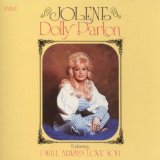
"Fantastic country album. Don't know why this is so low rated. All good songs and 'Jolene' and 'I will always love you'. The latter so much better than the Whitney Houston version. A must have!" Reply

"This is the first album that I truely fell in love with as a 13 y/o teenager." Reply
-  givensisa | Helpful? (Log in to vote) | +1 votes (1 helpful | 0 unhelpful)
A maximum of 5 top-voted qualifying comments are selected for each album. To provide the best experience for visitors, comments are excluded if they refer to data corrections, contain excessive profanity, are written in all caps, are non-English, are too short, consist of conversations between users, or contain lists of best tracks etc.
givensisa | Helpful? (Log in to vote) | +1 votes (1 helpful | 0 unhelpful)
A maximum of 5 top-voted qualifying comments are selected for each album. To provide the best experience for visitors, comments are excluded if they refer to data corrections, contain excessive profanity, are written in all caps, are non-English, are too short, consist of conversations between users, or contain lists of best tracks etc.

"Interesting but not very musically. I really enjoy the storytelling, but the voice can get tedious and the stories dull towards the end of the album. It just becomes not as interesting as you go on, but in general its a fun listen." Reply
-  seb7 | Helpful? (Log in to vote) | 0 votes (0 helpful | 0 unhelpful)
A maximum of 5 top-voted qualifying comments are selected for each album. To provide the best experience for visitors, comments are excluded if they refer to data corrections, contain excessive profanity, are written in all caps, are non-English, are too short, consist of conversations between users, or contain lists of best tracks etc.
seb7 | Helpful? (Log in to vote) | 0 votes (0 helpful | 0 unhelpful)
A maximum of 5 top-voted qualifying comments are selected for each album. To provide the best experience for visitors, comments are excluded if they refer to data corrections, contain excessive profanity, are written in all caps, are non-English, are too short, consist of conversations between users, or contain lists of best tracks etc.


"Not as good as any of Bjork's previous albums, but "Earth Intruders" is a pretty great song." Reply
Year of Release:
2007
Appears in:
Rank Score:
358
Rank in 2007:
Rank in 2000s:
Overall Rank:
Average Rating:
Comments:
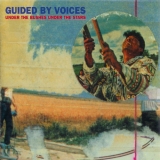
"I bought this on cassette when it came out and was hooked. I listened to it several times in a row without stopping and haven't stopped listening to it for 20 years. In the span of albums from "Box" through "Under the Stars," Robert Pollard draws inspiration from the entire history of rock after ..." [+] Reply

"Recorded live at The Warfield Theatre, December 1980. Three Tenor of the Guitarists!" Reply

"The people who dismiss the Monkees without ever having listened to them, and who refer to them derisively as a "band" (never without quotation marks), can never really be convinced of their merits. I don't have ill feelings toward these people because they had the whole media telling a story abou..." [+] Reply
Year of Release:
1967
Appears in:
Rank Score:
358
Rank in 1967:
Rank in 1960s:
Overall Rank:
Average Rating:
Comments:
Total albums: 10,000. Page 407 of 1,000
Overall Chart composition
| Decade | Albums | % | |
|---|---|---|---|
| 1930s | 2 | 0% | |
| 1940s | 34 | 0% | |
| 1950s | 302 | 3% | |
| 1960s | 709 | 7% | |
| 1970s | 1,424 | 14% | |
| 1980s | 1,415 | 14% | |
| 1990s | 1,601 | 16% | |
| 2000s | 1,725 | 17% | |
| 2010s | 1,964 | 20% | |
| 2020s | 824 | 8% |
| Artist | Albums | % | |
|---|---|---|---|
|
|
|||
| Bob Dylan | 37 | 0% | |
| The Rolling Stones | 35 | 0% | |
| David Bowie | 32 | 0% | |
| The Beatles | 29 | 0% | |
| Miles Davis | 27 | 0% | |
| Neil Young | 26 | 0% | |
| Various Artists | 25 | 0% | |
| Show all | |||
| Country | Albums | % | |
|---|---|---|---|
|
|
|||
 |
5,002 | 50% | |
 |
2,654 | 27% | |
 |
431 | 4% | |
 |
336 | 3% | |
 |
221 | 2% | |
 |
157 | 2% | |
 |
134 | 1% | |
| Show all | |||