Listed below are the best albums of the 1960s as calculated from their overall rankings in over 58,000 greatest album charts. (Chart last updated: 6 hours ago).
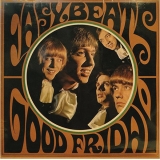
"I meant they were like the equivalent of The Beatles in Australia for a short time, which is a compliment. They were obviously influenced by them (just look at how they dressed), but of course they did their own thing."Reply
"Wow! As soon as the needle drops into the groove, psychedelia fills the room. Harpsichord, organ, vibes, Mellotronesque flute drenched in reverb, psychedelic guitar, it's all here. And this is just the first track! Production is excellent on the vinyl re-issue. Recommended for lovers of psychedelia."Reply
"Canned Heat in that time was invited to Monterey, Woodstock, Stamping Ground and many others festivals cause their unique psychedelic blues rock style made an impact in his generation and boogie was the best example of his music."Reply
"Hubbard's first album as leader is a real gem. The compositions are excellent as are the solos, and Hubbard is very ably supported by a young but tasteful and empathetic McCoy Tyner on piano."Reply
"Listening to this was one of the most eye-popping moments in recent memory. For me I mean. I always had a very specific idea of Ochs. I thought of him as the poor man's Dylan - protest songs, some sweet melodies and sad ones too, and some nice acoustic guitar. As a matter of fact it got to the po...""Listening to this was one of the most eye-popping moments in recent memory. For me I mean. I always had a very specific idea of Ochs. I thought of him as the poor man's Dylan - protest songs, some sweet melodies and sad ones too, and some nice acoustic guitar. As a matter of fact it got to the point where I just mentally glossed over his work when anyone would mention it or when it would come up on lists. That must be true, cuz looking at the RYM lists of 1960s singer/songwriter albums would feature Ochs albums, foremost this one here and I never noticed. I remained ignorant.
Then I saw this album as a big album released in '67. I heard it was "really different" and "totally essential" and I said "alright alright! I'll give it a listen."
Well, I finished listening to it and I was slack-jawed. I couldn't believe what I had just heard ona PHIL OCHS RECORD! My only previous experience with him was his first 2 albums, and I liked them well enough. Oh and I had listened to "Rehearsals For Retirement" which I recall really liking. So there. That is it.
So, in brief, what was this album to me? Like Long Form-"Odessey & Oracle", with the occluded social commentary of "Another Side of Bob Dylan" with a healthy dose of "Imperial Bedroom"-era Elvis Costello in its biting wit and observations of the sad and asinine aspects of the world around the narrator. I mean the songs here are GORGEOUS. They are lush, intensely complex arrangements. There are full classical/symphonic parts, and the musicians here are all so damn top notch. And in the middle of this maelstrom of overwhelming beauty and creatively, is the plain yet endearing vocals of Phil Ochs. His lyrics here are layered and meticulous, they are incredibly observant, and engrossing throughout.
Picking the most intensely triumphant song here is near impossible. No song sticks out as being out of place. At the same time there is no doubt this thing is dense and scattered all at once. There is such a massive amount of musical ideas here. The opener "Cross My Heart" is very nice, intensely beautiful and touching and gives one a good idea of the space of this album. But Then the next 2 songs build on that high mark. Each song is a "WTF" moment for me, where I am not sure I am, again, listening to a Phil Ochs album.
Then the last song "The Crucifixion" manages to peak the whole album in terms of innovation, with its incredibly disconcerting and somewhat discordant strings laying the groundwork for Phil to come in with an epic 8 minute poem which takes us through the whole history of man, with all its attendant betrayals of Nature and God. I am not sure there is a better way to put a cherry on top of one of the most mind boggling listens I've had in quite awhile. This is just a truly awe-inspiring achievement of an album.
"The Spanish bulls are beaten; the crowd is soon beguiled,
The matador is beautiful, a symphony of style
Excitement is ecstatic, passion places bets
Gracefully he bows to ovations that he gets
But the hands that are applauding are slippery with sweat
And saliva is falling from their smiles" - "Crucifixion"
Grade: 9.7/10 "[+]Reply
"Along with “Sweetheart of the Rodeo” this album is the most country-influeced album in the Byrds catalogue. But whereas “Sweetheart” tends to lean on classical country, “Ballad of Easy Rider” shows a much broader approach. This greater variety in styles, plus overall stronger material, makes this...""Along with “Sweetheart of the Rodeo” this album is the most country-influeced album in the Byrds catalogue. But whereas “Sweetheart” tends to lean on classical country, “Ballad of Easy Rider” shows a much broader approach. This greater variety in styles, plus overall stronger material, makes this much more satisfying album than it´s much-acclaimed predecessor, which I honestly speaking find somewhat over-rated.
There is a mature and releaxed feeling in these recordings, and though there is a mellow mood in many of the lyrics, it is somehow quite an uplifting experience to listen to the album.
The playing is great, with brilliant guitar work from McGuinn and in particular Clarence White. The vocals and especially the harmonies are of the same high standards that characterize all Byrds albums; great that Clarence White was finally given a lead vocal. His gritty nasal vocals on “Oil in My Lamp” help making the track one of many highlights on the album. In fact, this may be the first album where White really shines as an equal partner to McGuinn, who was now the only original member of the band.
McGuinn was never a very productive songwriter for the Byrds, and here he only contributes one new song, but on the other hand an outstanding one, “Ballad of Easy Rider”.
All member have lead vocals, and though neither John York not Gene Parsons are great lead-singers, their contributions come out quite convincingly.
Highlights, though, are songs songs with McGuinn in front. “Tulsa County” is a fine song with great vocals and fine harmonies. Even more breath-taking is their new version slower version of Dylan´s “It´s All Over Now, Baby Blue”, and McGuinn´s treatment of Woody Guthrie´s “Deportee” is just beautiful.
Among the seven bonus-tracks you´ll find some real gems. Especially Jackson Browne´s “Mae Jean Goes to Hollywood” and considering the short playing-time of the original album, it´s a big mystery why this fine recording was left out. Along with the title track song is probably the closest they come to early Byrds-sound ( Younger than Yesterday ).
“Way Beyond the Sun” is a nice country-blues song, which may not be among the most memorable Byrds-recordings, but still as good as couple of the weaker original-tracks. The alternate versions are all fine; especially the longer version of “Ballad of Easy Rider”.
https://www.angelfire.com/nv/Badfinger/BANDbyrds.html"[+]Reply
""Evolution" was the first of two Hollies albums released in 1967. The band did a lot of experimenting in those years, both in songwriting and arrangements. Some of it worked, some of it didn't. "Butterfly" is often hailed as their finest and most consistent, whereas "Evolution" suffers from being..."""Evolution" was the first of two Hollies albums released in 1967. The band did a lot of experimenting in those years, both in songwriting and arrangements. Some of it worked, some of it didn't. "Butterfly" is often hailed as their finest and most consistent, whereas "Evolution" suffers from being anything but consistent. The songwriting is more or less on par with "Butterfly", but some arrangements in various degrees ruin the songs.
Worst is the "underwater" effect put on Graham Nash's voice on "Lullaby to Tim". It could have been a great track, but as it is, it's almost unlistenable. I have often wondered if a version with unruined vocals exists.
The distorted guitars put on the opening track "The the Heartaches Begin" and "Have You Ever Loved Somebody", give a forced feeling that does not help the songs, which are really good Hollies songs. The Searchers proved that "Have You Ever Loved Somebody" even had hit-potentials.
Enough negative words said, because there are plenty of succesful tracks that make the album quite enjoyable after all.
Like on the previous album all songs were written by Clarke, Hicks and Nash and Allan Clarke and Graham Nash more or less share the lead vocals with Tony Hicks joining in on choruses etc.
"Stop Right There" is a nice quiet Graham Nash ballad; fine violin solo. Nash also takes the lead vocals on one of the big highlights on the album "When Your Lights Turned On"; classic up-beat Hollies with great guitars and harmonies.
The nostalgic "Ye Olde Toffee Shop" featuring harpsichord is quite charming, but no more.
On "Games We Play" Clarke and Nash share the lead vocals. Incredible that this song was not released as a single. Extremely catchy with funny ( naive ) teenage lyrics.
Allan Clarke demonstrates his powerful vocals on several tracks such as "You Need Love" and "Leave Me".
"Water on the Brain" is another example; a song which also features a charming trombone solo.
So all in all you could call it a hit and miss album, mostly hits!
By the way, this review refers to the British version of the album.
"[+]Reply


 Fischman | Helpful? (Log in to vote) | +1 votes (1 helpful | 0 unhelpful)
A maximum of 5 top-voted qualifying comments are selected for each album. To provide the best experience for visitors, comments are excluded if they refer to data corrections, contain excessive profanity, are written in all caps, are non-English, are too short, consist of conversations between users, or contain lists of best tracks etc.
Fischman | Helpful? (Log in to vote) | +1 votes (1 helpful | 0 unhelpful)
A maximum of 5 top-voted qualifying comments are selected for each album. To provide the best experience for visitors, comments are excluded if they refer to data corrections, contain excessive profanity, are written in all caps, are non-English, are too short, consist of conversations between users, or contain lists of best tracks etc.

 Mercury | Helpful? (Log in to vote) | +3 votes (3 helpful | 0 unhelpful)
A maximum of 5 top-voted qualifying comments are selected for each album. To provide the best experience for visitors, comments are excluded if they refer to data corrections, contain excessive profanity, are written in all caps, are non-English, are too short, consist of conversations between users, or contain lists of best tracks etc.
Mercury | Helpful? (Log in to vote) | +3 votes (3 helpful | 0 unhelpful)
A maximum of 5 top-voted qualifying comments are selected for each album. To provide the best experience for visitors, comments are excluded if they refer to data corrections, contain excessive profanity, are written in all caps, are non-English, are too short, consist of conversations between users, or contain lists of best tracks etc.