Rock Bottom
by Robert Wyatt
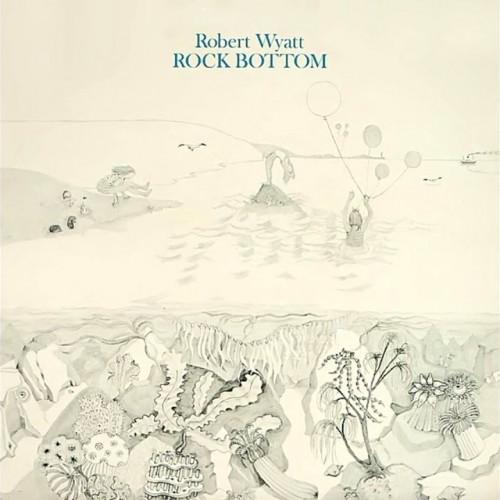

Listen & Collect
Complete your collection or upgrade your listening experience.
Robert Wyatt bestography
Rock Bottom is ranked as the best album by Robert Wyatt.
(N.B. Bestographies include all albums by an artist (and their variations), but do not include albums ranked outside the top 100,000).
Listen to Rock Bottom on YouTube
Rock Bottom track list
The tracks on this album have an average rating of 82 out of 100 (all tracks have been rated).
Rock Bottom rankings
Calculated from aggregate positions across 60,000 charts (2 million album rankings). Click to see how the rankings are calculated (Last updated: 4 hours ago)
| Year | Source | Chart | Rank | Rank Score |
|---|---|---|---|---|
| 2026 | Elauqsapid | Top 100 Music Albums of the 1970s | 21/100 | 15 |
| 2026 |  Patman360 Patman360 | Top 97 Music Albums of 1974 | 95/97 | 0 |
| 2026 |  bertrandu bertrandu | Top 100 Music Albums of the 1970s | 35/100 | 13 |
| 2026 |  Tamthebam Tamthebam | Best of The 70s Pt.2 (101-200) | 77/100 | - |
| 2026 |  AfterHours AfterHours | Top 100 Greatest Music Albums | 1/100 | 98 |
| 2026 |  Glitterboiii Glitterboiii | Top 50 Music Albums of 1974 | 26/50 | 3 |
| 2026 |  AAL2014 AAL2014 | Top 100 Music Albums of the 1970s | 44/100 | 11 |
| 2026 | Untitled | Top 31 Music Albums of 1974 | 8/31 | 4 |
| 2026 |  DommeDamian DommeDamian | Top 78 Music Albums of the 1970s | 15/78 | 16 |
| 2026 | TitoVampir | Top 40 Greatest Music Albums | 20/40 | 52 |
| Total Charts: The total number of charts that this album has appeared in. | 451 | |||
| Total Rank Score: The total rank score. | 3,613 | |||
Rock Bottom collection
Showing latest 20 members who have this album in their collection | Show all 173 members


Rock Bottom ratings
Average Rating = (n ÷ (n + m)) × av + (m ÷ (n + m)) × AVwhere:
av = trimmed mean average rating an item has currently received.
n = number of ratings an item has currently received.
m = minimum number of ratings required for an item to appear in a 'top-rated' chart (currently 10).
AV = the site mean average rating.
Showing latest 3 ratings for this album. | Show all 565 ratings for this album.
| Rating | Date updated | Member | Album ratings | Avg. album rating |
|---|---|---|---|---|
| ! | 10/08/2026 20:05 |  Milhaud Milhaud | 2,171 | 71/100 |
| ! | 09/30/2026 07:31 | Siromynian | 1,789 | 74/100 |
| ! | 08/17/2026 06:55 | TitoVampir | 197 | 76/100 |
Rating metrics:
Outliers can be removed when calculating a mean average to dampen the effects of ratings outside the normal distribution. This figure is provided as the trimmed mean. A high standard deviation can be legitimate, but can sometimes indicate 'gaming' is occurring. Consider a simplified example* of an item receiving ratings of 100, 50, & 0. The mean average rating would be 50. However, ratings of 55, 50 & 45 could also result in the same average. The second average might be more trusted because there is more consensus around a particular rating (a lower deviation).
(*In practice, some albums can have several thousand ratings)
This album is rated in the top 2% of all albums on BestEverAlbums.com. This album has a Bayesian average rating of 78.3/100, a mean average of 76.7/100, and a trimmed mean (excluding outliers) of 78.4/100. The standard deviation for this album is 19.3.
Rock Bottom favourites
Showing latest 10 members who have added this album as a favourite | Show all 86 members

Rock Bottom forum mentions
 BestEverAlbums 10/02/2026 08:18 in Monthly overall chart movements - September 2026
View latest topic →
BestEverAlbums 09/28/2026 20:00 in Album of the day (#7506): Rock Bottom by Robert WyattView latest topic →
BestEverAlbums 09/11/2026 08:00 in Chart of the day (#5432): By joannajewsomView latest topic →
View all forum mentions
Rock Bottom comments
Top Comments First | Newest First | Positive Sentiment First | Longest Comments First
(Showing comments with any number of votes. Manage Profile)
AfterHours 12/23/2008 09:21 | #2253 | TOP COMMENT
Vote up your preferred comments and the comments with the most votes will be flagged.
Here's an updated review I just posted on www.listology.com (another great site)..."Arranged as a complete bout of stream-of-consciousness, cast from a holy scripting of instrumental brotherhood, comes a deep exhale of "oneness" steeped in universal tragedy and spearheaded by a trance of destiny through an enigmatic malaise, Wyatt assumes an improbable plethora of emotional identities, each magnified by an impossible sense of self awareness and clarity that, en masse, forces into existence an otherwise impenetrable subjectivity of the greatest integrity, character and conviction. In a communal mustering of the affinities of the universe: elemental, spiritual, physical and natural, the work progresses as a prodigal event. A happening. Not just a recording of an event, but a miracle unfolding. As a single entity where each aspect is interconnected to a greater whole, a single thrust, a single emotion that encapsulates within it, all emotions, all expressions, all viewpoints and beingness. A spiritual ascension that, incredibly, becomes increasingly disoriented, flummoxed and senseless the more awareness it acquires, the more profundity it emotes; thus mired in an ultimate dichotomy, blossoming from a gradually upending kaleidescope of succumbing emotional episodes. Sea Song, fraught with a narcotic, otherworldly milieu and contemplated by a profound, painfully heavy impression of sorrow, is a funeral march on a despairing search for answers. It magically erupts into a submerged, overwhelmed choir and then into the passionate, lost grief of Wyatt's lone, plaintive and confused cries as the keyboards strike repeating chords, haunting and ominous. A Last Straw floats oceanic, ascending and descending in eternal swim. It moves in an unorthodox, cyclic, rhythmic pulse as Wyatt calls out like a dying, drowning mammal, in between flexibly patterned, elastic percussion before the bottom drops out in a series of descending, increasingly dreadful, low notes. Little Red Riding Hood Hit the Road explodes in a sensational, vibrant show, a coalescing influx of multi-faceted liberation, the unfurling of states of being; of mind over matter; Buddhi. It is a confused, colliding series of transformations, infusing Wyatt into and out of existence. His words carry in and out of the brilliant, frenzied strobe light vacuum, slowing down, speeding up, and dramatically reversing direction into inverse semantics and back again. Alifib/Alife opens as a dramatic rebirth, an ode to his loved one, a naked solitude at the beginning of the universe. Wyatt casts tears of regret into constellations of sparkling love beneath a calm and drifting sea, and sinking ever so slowly he gradually drowns away, farther and farther from her. Beneath his lonely keyboard strokes, his voice calls out over and over in a sacred whisper of paralyzed and comatose cardiac arrest. He is praying for her from the brink of death, trying to bring himself back, trying to postulate their togetherness back into reality. Simultaneously he sings a hymn from the edge of birth, mourning their distance and failures in an aching poem of clumsy baby talk, thus dying for her and living for her, now reborn in a heartbreaking show of eternal dependency; as with a newborn to his mother. Drowning further, a gradual rise of calamity, confusion and suspense ensues. Wyatt repeats his words in a less formulated, dying stupor as narcoleptic fits take hold. Clarinet and sax figures contort and spit and squeal and squirm, anxiously contriving a strange, brewing storm of pent up intensity, before spewing out a wrenching, overflowing spastic attack of uncontrolled, unmitigated abandon, bursting and then calming into a striking and damning retort from his loved one while a haunting sense of eternal damnation seems to swell before them. Little Red Robin Hood Hit the Road explodes in a relentless storm of manic, increasingly frantic percussion and instrumental fireworks while Wyatt repeats a mantra of prayers behind the screaming call of his keyboard play, before passing out and drowning into a heavenly backdrop of dreamy viola where an awkward stupor of unintelligible vocals drift about, hypnotized and stuck indefinitely in a void and godless world."
AfterHours 02/08/2007 17:51 | #260 | TOP COMMENT
Vote up your preferred comments and the comments with the most votes will be flagged.
Unsettling, oddly alluring, and unthinkably profound, Robert Wyatt's Rock Bottom is a true miracle. It is a monument to what can be accomplished in the rock medium and may forever stand as the greatest album in rock history. As an uncanny, cerebral, gradually developing tidal wave of dense, multi-layered emotional outpouring, it unfolds through a series of structurally dynamic religious hymns, deeply affecting in its poetic beauty, enigmatic and explosive as a fertile wonderland of astoundingly moving stream-of-consciousness set to an endlessly flowering prayer that blossoms majestically towards bursting seams of exhausting and intellectually stimulating emotional heights. Rock Bottom is as shattering, as powerful and as subjective and personal as music ever gets. It is one of the very few musical works that heals, that washes away social circuitry and conformist adherence to the status quo, and can propel one on a course towards more vitality, empowering a sense of wonder and creativity and dynamic purpose, a wealth of spiritual unity and an affluence towards heightened awareness and depth, emotional honesty and balance. It is so profound it can actually change one's life. I will never, ever forget the first time I fully cognited on its immense power, such was the clarity, the personal sense of achievement, the rippling effect it had, and continues to have on my very being. If there is but a small handful of works of art I am eternally grateful for, Rock Bottom is one of them, because once its merits fully come to fruition, its power astounds to such degree that its existence, and the fact someone was brilliant enough to actually conceive such a courageous, flat-out, supreme masterpiece, seems all but completely and utterly impossible.
Here is the story of the increasing fluctuation of Wyatt's soul, at once shattered and built by undying passion and love for a woman he would eventually marry--a woman for whom he sees a reflection of nature, the sea and the tides, reflections of happiness, dependancy, relief and faith. This is a perplexing, mysterious and provocative look at the intricate nature and complicated landscapes love treads, the strange idiosynchrocies of devotion, confusion, heartbreak and passion, evoking unlikely simularities between profound, matured spirituality and the naive esprit and childish emotional honesty in longing for the care and affection of one's mother.
Here is a virtual reinvention of both rock and jazz music, sharing a compositional unity that is fascinating, complex and lyrically illustrative in the vein of Lewis Carrol. Wyatt uses the foundations of folk music to support a dense structure of weaving styles and sounds, creating a richly textured and dynamic haven for his fascinating portrayal of his own life-changing journey, reflections and considerations on his intimate relationship with wife Alfreda Benge.
The first half acts as a fluid and gradient entry way into Wyatt's strangely metaphysical and evocative universe. Opener Sea Song is a masterpiece of eerie, luminous folk voiced patiently in the touching melancholia of Wyatt, before lifting into a cognitive and overtaken scat performance, the singer drowns out within his own overwhelming whirlwind of previously suppressed emotions. The patted drumming and perfectly timed keyboard chords are key to the sense of defied gravity, a lunar element presented here and sustained throughout much of the album. A Last Straw is a gateway, moving forward with a unique rhythm, an unorthodox series of angular patterns parallel descending then ascending vocal rises and collapses. All the songs have an immediacy to them, they appear creations of a magician, of God's hand. They are effortlessly suspended in space, growing their own universes, each instrumental or vocal phrase and effect a brushstroke to a magnificant painting. Little Red Riding Hood Hit The Road opens a wormhole of constantly changing, wildly pounding bongo drums filling the seams of persistent streams of jazzy instruments set to swimming, magnetic vocals. It is an absolute masterpiece of textures and depth, and a milestone achievement in the conception of scoring "rock" to jazz music. It features some impressive moments of elasticity and jaw-dropping ingenuity when Wyatt's singing gets pulled back into the vaccuum, changing pace and reversing backwards with the vocals and lyrics.
Side two is among the most uniquely moving portions of music ever created. Alifib, probably rock's ultimate love song, is one of the most personal, beautiful and singular musical works ever scored. Has Wyatt been born again? Has he embodied another life form? The first half of the song paints a level of sensitivity and deft keyboard mastery rarely achieved by even the great giants of classical music, throughout an intensely dedicated Wyatt continuously whispers the name of his lover, as if lost in a dreamy reverie, helpless and alone in a coma. The second half of Alifib is intoxicatingly melodious, a mantra of religious sacrifice and healing. Here Wyatt erects a prayer of deeply passionate and sacred heights, as he engages in a monologue of baby talk, somehow managing a merger between keen insight and unabashed immaturity. Wyatt's prayers are that of a child locked in the arms of his mother, at least metaphorically. In truth he is asserting his own feelings that he is on the verge of losing her and this is the denouncement of his previous ways, the ultimate sacrifice of self for the coming transformation towards the embodiment of a new man, and facing potential death he is at once magically reborn. He lies there, repeating between passages of mostly nonsensical verbs, that she is his ultimate source of life, that he depends on her above all else, "Alifie my larder, Alifie my larder." And further, "I cannot forsake you. I cannot forsqueak you." It is in this astonishingly personal rendering that we begin to acknowledge the true depths of his character, the dedication and the synergy from Wyatt to his wife, Alfreda. Everything up to this point has been a search and unveiling. Here Robert Wyatt lays himself completely, utterly bare.
If Alifib marks the foundation, the birth and beginning of Wyatt's newfound immaturity/maturity, the incredible Alife is its more chaotic twin brother, rising hesitantly then spastically, into a daunting level of visceral freedom, and eventual implosion. In its conclusion breathes a wrestling, spewing saxophone, erupting fountains of emotional turmoil. During its introduction, Wyatt is hesitant and tired as he pronounces a stumbling but verbatim recollection of Alifib. At its close, his wife finally responds as the song boils in a juxtaposition of steaming vigor, denouncing his prayer in a startling nursery rhyme that is both ironically understanding in a sympathetic motherly persona as well as slightly disgusted and decisively dismissive. The closer Little Red Robin Hood Hit The Road, is among the most pressing, emphatic and enigmatic stews in rock history. Here Wyatt reaches multiple levels of finality, as sweeping, smashing bursts of cymbal crashes rush towards the coda, backed by a pummeling group of instruments before a magical metamorphosis bleeds out into a heavenly backdrop. This last portion of the song is one of tremendous insight. Wyatt (using Ivan Cutler on vocals) presents a series of scenes voiced in an intentionally unintelligible manner, yet insinuate a haunting, unearthed childish tendency towards violence, while the music in the background and the basic melody upon which the voice sings are both caught in a sea of floating, see-sawing, harmonic beauty. This draws a starkly contrasting, yet parallel view to what began with Sea Song. As rock historian Piero Scaruffi has accurately noted, it bridges the apparent gap between an intense religious hymn and a childish nursery rhyme, thus offering them as one and the same. Perhaps Wyatt is communicating that no matter our form, no matter our age and no matter our personality, we are all innately beautiful, loving and creative spiritual beings. I have a feeling he learned this most of all, from his wife, who helped lead him through and past a tragic accident that year which left him paralyzed from the waist down after his fall from a 4th story window. Thus, Rock Bottom can be viewed as an ode to Alfreda Benge, the woman who understood his complex genius no matter what, and the woman with whom he shared his life with from that point forward.
That said, Rock Bottom causes multiple combinations of feelings, ideas and inspirations hitherto unimaginable, and is without easy definition, without singular intepretation; ultimately complete, utterly incredible, and heart-wrenchingly, impossibly life-affirming.
It is only within the last two decades that rock critics in the mainstream media have given anything like adequate recognition to one of rock music's all-time supreme works of genius - an astounding work of originality that is crafted in the 'stream of consciousness' method reminiscent of Van Morrison's 'Astral Weeks'.
With 'Rock Bottom'(1974), Robert Wyatt, vocalist, drummer and composer extraordinaire, vented his persona with an intense emotional religious hymn and child-like nursery rhyme sensitivity set within a musical soundscape that transfigured both rock and jazz.
Wyatt's uniquely original falsetto jazz-singing style, is a cross between soul, Buddhist mantra and pyschedlia that while an acquired taste to some, remains a thing of tenderness and supreme beauty.
'Rock Bottom' is a frail, tender and original masterwork encompassing happiness, sorrow, faith and resignation within a metaphysical unity.
I just don’t get the negative comments on here, the emotion of the vocals and the beauty of the thing as a whole is at times overwhelming, take it for what it is and as ‘some’ of you will know the best music is the stuff you have to work at, todays music is throwaway, here today gone tomorrow apart from the odd exception. Robert Wyatt has an absolutely wonderful and unique vocal style, just listen to his version of ‘shipbuilding’ it will change your mind. (Edited)
some of the most interesting and deep comments on this site are about this record, which speaks volumes about its quality. Knowing that Wyatt got paralyzed just prior to the making of this album, you could have expected this to be a very sad piece. Sadness is definitely present, but also hope and will to hold on the life and ideals.
His eerie voice give an extra quality to the free form music.
An absolute masterpiece; my favorite of 74.

The top-voted comments get featured on our charts, Album of the Day, and the site newsletter.