Bob Dylan
by kokkinos 
Disclaimer: The comment writing process was executed backwards ie. beginning with #39 and working my way to the top. I'd suggest reading them that way for continuity's sake, otherwise a couple of points may seem out of place or not make that much sense.
Disclaimer #2: It seems there is a character limit. If you are looking for the full version of my comments, you can check my diary, they are between pages 22 and 33, apologies for the inconvenience. https://www.besteveralbums.com/phpBB2/viewtopic.php?t=24227&postdays=0&postorder=asc&start =0
- Chart updated: 12/17/2021 23:15
- (Created: 12/06/2021 22:09).
- Chart size: 39 albums.
There are 0 comments for this chart from BestEverAlbums.com members and Bob Dylan has an average rating of 90 out of 100 (from 4 votes). Please log in or register to leave a comment or assign a rating.
View the complete list of 58,000 charts on BestEverAlbums.com from The Charts page.
This chart is currently filtered to only show albums from the 1970s. (Remove this filter)

This has been a crucial album in my relationship with Bob Dylan. It wasn’t one of the first of his I got to know, I was already familiar with all of his classics and some of his “lesser” works too. Still, this was eye/ear-opening, I didn’t expect the man to create anything close to that. Most of his albums demanded my full attention and no matter how I liked them, I would occasionally find that kind of listening experience exhausting. This one was - on the surface at least - much simpler, you could just sit back and enjoy it. Recording sessions are supposed to have been messy with various musicians taking part and no particular direction. Luckily, they figured it out and none of that shows in the final product. It might not be the best, but it’s clearly the easiest on the ear sound he ever achieved. Style seems to overshadow substance, he suddenly cares about being aesthetically pleasing, it’s as if he is someone else. Well, partially, that’s true, as he did have a helping hand for most of these tracks (the two exceptions being One More Cup Of Coffee and Sara), so credit to Jacques Levy as well. In short, it convinced me he is a unique artist (not that I didn’t know that already) who can do anything (I suspected that as well). Maybe I’m overrating it due to nostalgia, I know it feels somewhat wrong ranking it above Blood On The Tracks, whatever.
So, how did we get here? Talk about awkward timing. After a period (late ‘60s – early ‘70s) of being too mediocre – taking into account his own, ridiculously high standards– Bob Dylan released Blood On The Tracks, which was simply too good, according to many it even surpassed his greatest moments of the previous decade - Highway 61 Revisited and Blonde On Blonde – and that’s by no means an entirely unreasonable claim. At that point, he had to answer the one million dollar question: how are you supposed to follow it up?
This is the closest Dylan got to what one could call airy-fairy. I don’t mean that as a criticism, I use this dubious term to stress how far from reality Desire is. While there are other notable efforts by him that have a dream-like quality, those would fit the concept of being in the middle of a feverish dream, a state of delirium where you can’t tell between fantasy and reality, here it’s pure bliss, everything’s looking rosy and beautiful.
The main idea, the driving force of the album is the same as in Blood On The Tracks, delving into adventures as a form of escapism. However, that’s more or less where similarities stop, as he goes one step further here: Personal and historical elements are gone, all that’s left is an amorphous mass that is floating in heaven – that’s compared to his other works, don’t expect him suddenly sounding like Cocteau Twins or something-, exotic journeys in lands of mystery where someone’s sprinkled a magical powder, nothing is as it looks, we are in wonderland, chasing a romance for the sake of it, having little to no touch with the real world in a way that would make Don Quixote be in his element.
Apart from his music being fully immersed in the American tradition, most of his albums develop a narrative about some part of the American society, this sense of regionality reaching new highs in Love And Theft – though it has to be said that Desire’s predecessor, Blood On The Tracks, isn’t that far off in that regard, it’s another extremely “American” record. This obviously makes Desire stand out even more - coming back to one of his greatest heroes, Dylan himself has admitted that Rimbaud’s travelling (Europe, Indonesia, Yemen, Ethiopia among others) was a source of inspiration. Of course the main reason that explains the need to escape and chase adventure in fairyland is related to the aforementioned problem, namely that it was hard to tell where he should go after a statement of enormous artistic magnitude and personal significance such as Blood On The Tracks.
Now, if you know Desire as the album that has Hurricane in it, you might be wondering if I’ve lost it and where all the above comes from. Yes, this song has very little to do with it, despite being the opening track. It has gone on to attain legendary status and deservedly so. Real life can produce figures that are as engaging, if not even more, as fictional characters (and Dylan has a ton of the latter in his catalogue, Jack Of Hearts is a prime example that was shortly discussed the other day). And the question of getting every detail right has never bothered Dylan and neither does it in this case, he’s always been swimming in muddy waters in that regard. I haven’t done any extensive research on the subject, but I’d trust the people who have and it seems common knowledge that Dylan has indeed twisted the facts. All of that is secondary of course, his point lies elsewhere, he uses the real life scenario as an excuse to provide some sharp social commentary. His protest is as fiery as ever, his energy and passion are unparalleled, he’s a man on a mission, to let everyone know of Rubin “Hurricane” Carter’s innocence and of this great injustice that the man has suffered. The structure of this song and how it effortlessly flows in a way most movies wish they could replicate, it’s pure perfection, I wouldn’t change a single thing. One might point out it’s slightly reminiscent of All Along The Watchtower, but the melody is so iconic I can’t complain. And the violin is another nice touch, the icing on the cake. This is a 100/100 song in my book – the first in this countdown that gets this score and the second in the entirety of this diary, the first one being Mingus’ self-titled track from The Clown. Without revealing too much, there might be a few more coming in the four remaining Dylan albums.
Then comes Isis and that’s where the adventure begins, all aboard. One can hardly make sense of it all, (“we came to the pyramids, all embedded in ice”) but that shouldn’t detract from its charm. Despite some fine guitar work, it’s the harmonica above all that makes this song memorable. Mozambique, well, only he could make something like this work, it could have ended up as a total joke had it been done by another artist. A sort of “don’t worry be happy” type of song and that’s exactly what I do whenever I listen to it. One More Cup of is a romance so mystifying and fascinating, Dylan himself has called it a gypsy song and that’s an accurate description, it does share some of the attributes that made Django Reinhardt so great. Oh Sister keeps the same vibe going, another celebration of love that may be temporary but very powerful - someone might tell you it’s about Joan Baez, I haven’t taken a deeper look into it, I am ok with that. It’s just like those exotic places, you visit them for a few days and they stick with you forever. And what a lovely contribution by Emmylou Harris. Joey is the second song after Hurricane that feels slightly out of place – on a superficial level at least, I am sure there are connections to be made if one takes the time. On the one hand, its epic structure combined with its vulnerable sound – further emphasised by Dylan’s performance - remind me of Brownsville Girl. On the other hand, it presents us an outlaw figure that will make us think of John Wesley Harding. A heated argument revolves around this song, namely how Dylan glorifies a criminal, a dark and violent individual, but I don’t want any part of it. Romance In Durango exemplifies what this album is about. He wants to escape, but there isn’t anything in particular he is running away from, it’s simply the urge to explore the unknown, a rush of adrenaline – and a romance is always round the corner. It’s not about forgetting the past, it’s about living the present, the thrill of the moment. And again the scenery – which radiates a Mexican feel - is so cinematic it plays out like a movie. Black Diamonds Bay is a story of doom that brings to mind Titanic (we know he loves this story based on Tempest, a song he did much later). At the same time, this set of bizarre characters, each of them with his own drama, makes me think Black Diamonds Bay is for Desire what Lily, Rosemary And The Jack Of Hearts is for Blood On The Tracks
So, how did we get here? Talk about awkward timing. After a period (late ‘60s – early ‘70s) of being too mediocre – taking into account his own, ridiculously high standards– Bob Dylan released Blood On The Tracks, which was simply too good, according to many it even surpassed his greatest moments of the previous decade - Highway 61 Revisited and Blonde On Blonde – and that’s by no means an entirely unreasonable claim. At that point, he had to answer the one million dollar question: how are you supposed to follow it up?
This is the closest Dylan got to what one could call airy-fairy. I don’t mean that as a criticism, I use this dubious term to stress how far from reality Desire is. While there are other notable efforts by him that have a dream-like quality, those would fit the concept of being in the middle of a feverish dream, a state of delirium where you can’t tell between fantasy and reality, here it’s pure bliss, everything’s looking rosy and beautiful.
The main idea, the driving force of the album is the same as in Blood On The Tracks, delving into adventures as a form of escapism. However, that’s more or less where similarities stop, as he goes one step further here: Personal and historical elements are gone, all that’s left is an amorphous mass that is floating in heaven – that’s compared to his other works, don’t expect him suddenly sounding like Cocteau Twins or something-, exotic journeys in lands of mystery where someone’s sprinkled a magical powder, nothing is as it looks, we are in wonderland, chasing a romance for the sake of it, having little to no touch with the real world in a way that would make Don Quixote be in his element.
Apart from his music being fully immersed in the American tradition, most of his albums develop a narrative about some part of the American society, this sense of regionality reaching new highs in Love And Theft – though it has to be said that Desire’s predecessor, Blood On The Tracks, isn’t that far off in that regard, it’s another extremely “American” record. This obviously makes Desire stand out even more - coming back to one of his greatest heroes, Dylan himself has admitted that Rimbaud’s travelling (Europe, Indonesia, Yemen, Ethiopia among others) was a source of inspiration. Of course the main reason that explains the need to escape and chase adventure in fairyland is related to the aforementioned problem, namely that it was hard to tell where he should go after a statement of enormous artistic magnitude and personal significance such as Blood On The Tracks.
Now, if you know Desire as the album that has Hurricane in it, you might be wondering if I’ve lost it and where all the above comes from. Yes, this song has very little to do with it, despite being the opening track. It has gone on to attain legendary status and deservedly so. Real life can produce figures that are as engaging, if not even more, as fictional characters (and Dylan has a ton of the latter in his catalogue, Jack Of Hearts is a prime example that was shortly discussed the other day). And the question of getting every detail right has never bothered Dylan and neither does it in this case, he’s always been swimming in muddy waters in that regard. I haven’t done any extensive research on the subject, but I’d trust the people who have and it seems common knowledge that Dylan has indeed twisted the facts. All of that is secondary of course, his point lies elsewhere, he uses the real life scenario as an excuse to provide some sharp social commentary. His protest is as fiery as ever, his energy and passion are unparalleled, he’s a man on a mission, to let everyone know of Rubin “Hurricane” Carter’s innocence and of this great injustice that the man has suffered. The structure of this song and how it effortlessly flows in a way most movies wish they could replicate, it’s pure perfection, I wouldn’t change a single thing. One might point out it’s slightly reminiscent of All Along The Watchtower, but the melody is so iconic I can’t complain. And the violin is another nice touch, the icing on the cake. This is a 100/100 song in my book – the first in this countdown that gets this score and the second in the entirety of this diary, the first one being Mingus’ self-titled track from The Clown. Without revealing too much, there might be a few more coming in the four remaining Dylan albums.
Then comes Isis and that’s where the adventure begins, all aboard. One can hardly make sense of it all, (“we came to the pyramids, all embedded in ice”) but that shouldn’t detract from its charm. Despite some fine guitar work, it’s the harmonica above all that makes this song memorable. Mozambique, well, only he could make something like this work, it could have ended up as a total joke had it been done by another artist. A sort of “don’t worry be happy” type of song and that’s exactly what I do whenever I listen to it. One More Cup of is a romance so mystifying and fascinating, Dylan himself has called it a gypsy song and that’s an accurate description, it does share some of the attributes that made Django Reinhardt so great. Oh Sister keeps the same vibe going, another celebration of love that may be temporary but very powerful - someone might tell you it’s about Joan Baez, I haven’t taken a deeper look into it, I am ok with that. It’s just like those exotic places, you visit them for a few days and they stick with you forever. And what a lovely contribution by Emmylou Harris. Joey is the second song after Hurricane that feels slightly out of place – on a superficial level at least, I am sure there are connections to be made if one takes the time. On the one hand, its epic structure combined with its vulnerable sound – further emphasised by Dylan’s performance - remind me of Brownsville Girl. On the other hand, it presents us an outlaw figure that will make us think of John Wesley Harding. A heated argument revolves around this song, namely how Dylan glorifies a criminal, a dark and violent individual, but I don’t want any part of it. Romance In Durango exemplifies what this album is about. He wants to escape, but there isn’t anything in particular he is running away from, it’s simply the urge to explore the unknown, a rush of adrenaline – and a romance is always round the corner. It’s not about forgetting the past, it’s about living the present, the thrill of the moment. And again the scenery – which radiates a Mexican feel - is so cinematic it plays out like a movie. Black Diamonds Bay is a story of doom that brings to mind Titanic (we know he loves this story based on Tempest, a song he did much later). At the same time, this set of bizarre characters, each of them with his own drama, makes me think Black Diamonds Bay is for Desire what Lily, Rosemary And The Jack Of Hearts is for Blood On The Tracks
Year of Release:
1976
Appears in:
Rank Score:
4,100
Rank in 1976:
Rank in 1970s:
Overall Rank:
Average Rating:
Comments:

“Everything about you is bringing me misery”
Ok, if there was any credibility left in this countdown after Highway 61 Revisited took 9th place, feel free to throw it out the window as we speak.
You have to look no further than the album title to realise what it is about. There’s blood on those tracks, indeed (tracks is a word that carries multiple meanings, I’ve always been of the opinion that in this case it is meant as piece of recorded music, though if you imagine it as a train departing to an unknown destination leaving nothing more than a bloody railway line behind it, well, I guess it works as well).
I’ve already mentioned how the late ‘60s – early ‘70s was a period of “taking it easy” for Dylan, staying away from the spotlight, struggling to handle the burden of immense popularity and the “voice of a generation” label. This sees him take an unexpected turn, by far his most personal, up to that point at least, the dramatic intensity that was decisively absent during his previous albums reaches sky high levels here. You know what, I’ll go ahead and shamelessly copy paste a part of my comment on Slow Train Coming, which was another record of his that shared this rare trait : “he hasn’t been keen on revealing parts of himself – compared to the typical introspective songwriter like Leonard Cohen or Joni Mitchell, he takes the opposite route and tends to draw influence from “external sources”, so to speak – and when he does get personal, it’s usually done in a vague, abstract manner. Here, he allows us to catch a glimpse of his vulnerable inner world.”
Just as Highway 61 Revisited perfected what is known as rock music, Blood On The Tracks is the absolute singer/songwriter album, the golden standard everyone aspires to reach, but in all likelihood no one ever will. If I had to name the single factor that makes this record so successful, I’d have to go with relatability, it makes you feel as if it is directed straight at you, it was you and only you he had in mind when he created it, you can’t believe how easy it is to sympathise with the unfolding events, they are taken directly out of your life experiences. Let me tell you a secret: it’s not just you, million other people feel the same way, It excels at being unbearably concrete and comfortingly universal at the same time. Dylan holds nothing back, he goes all out, taking us to a ride through the darkest, unspoken, occult corners of his mind and soul. You know, even though a couple of fellow users placed their bets on Blonde On Blonde, I think Blood On The Tracks is the one entry in Dylan’s discography that fits my overall listening profile best and should be my favourite. This disarming honesty - calling it confessional would be so cliché yet so very true – is a virtue I vastly appreciate. I mean, anyone who knows me in the slightest can tell how much I like The Smiths and this is an attribute they possess in spades.
Apart from the songwriting, this shift in focus is further reflected on his vocals, which are an acquired taste. Of course, that’s a general observation, but here it’s even more striking than usual. He isn’t interested in making every word sound good - which he could as we’ve had the privilege of witnessing in multiple cases - there’s more emphasis on meaning and substance than on aesthetics, it’s all about the emotion. We’ ve had many versions of his voice: the enthusiastic youngster of The Freewheelin’ Bob Dylan, the possessed prophet of The Times They Are A-Changin’, the edgy nonconformist of Highway 61 Revisited, the abstract visionary of Blonde On Blonde, the hopeless romantic of Nashville Skyline, now we have a man with a broken heart in front of us.
It's worth pointing out that Blood On The Track comes with a lovely sound, as it sees him return to his roots, namely his folk days, featuring some fine guitar work throughout, though I’d say it makes for a step up in terms of production, nothing excessive or forced, it all feels effortless and real.
Tangled up in blue is the opening track and sums up the entire album quite accurately. He’s incessantly on the move (every critic and his mother will tell you Jack Kerouac’s On The Road has been a major influence on Dylan, can’t comment on that as I haven’t had the chance to read this legendary novel so far, though I did watch the admittedly subpar film), yet can’t find what he’s looking for, a situation which is in stark contrast with what was going on in Blonde On Blonde. Not to get caught up in discussing a different album and keeping it as short as possible in order to get my point across, songs like Visions Of Johanna or Stuck Inside Of Mobile With The Memphis Blues Again saw him trapped and confused, he couldn’t find a way out. Here he can’t seem to find a way in. Apart from the main point, the storytelling is equally commendable, the way he describes his escapades is immersive, it feels as if we have joined him and are walking right next to him. At the same time, the narrator is unreliable enough to keep us guessing, we find ourselves lost in an infinite spiral of events, you can’t quite tell when one ends and another begins and how they relate to each other. The one thing that remains constant is his state of mind: He is Tangled Up In Blue (in that sense, even though having each verse ending with the same phrase is a common song structure for him, it serves a completely different purpose than, say, Like A Rolling Stone or Blowin’ In The Wind, it’s the one thing that keeps all the chaos that runs through his head together). Also, something I recently read and had never crossed my mind before, could it be that each verse talks about a different woman? The more I think about it, I have to admit it's not completely outrageous, though it would clearly alter the intent and significance of the song.
Even though it moves at a much slower pace compared to the opening track, A Simple Twist Of Fate could be another chapter in the Tangled Up In Blue narrator’s tempestuous life. It is one of my go to phrases in real life and I got it thanks to this song. Realising how helpless we are in the grand scheme of things is a crushing thought that may change one’s perspective for good. At the same time, one can find it somewhat reassuring, blaming fate and not one’s own actions for any misfortune. The irony is that this lack of responsibility is exactly what leads to a relationship falling apart. The way he addresses “Big Girl” in You ‘re A Big Girl Now reminds one of Like A Rolling Stone or Just Like A Woman. The problem is the situation is reversed here: she fares better than him and that’s a tough pill to swallow, it makes the breakup even more painful, he’s swimming in an ocean of misery. Even his spiteful comments regarding “Big Girl” are a clear indicator of how hurt he is. Idiot Wind is my second favourite song of the album. It works fine as a follow up to You ‘re A Big Girl Now, as his anger reaches next level. Everything’s flawed/broken, everyone’s an idiot, he is in full bashing mode and it’s a wonder to behold. The sort of apocalyptic sound –the organ being the icing on the cake– adds to its majesty. Maybe I’ m way off, but I’ve always had the impression You’re Gonna Make Me Lonesome When You Go is – despite the title – not totally sorrowful, it’s as if he doesn’t take it so seriously this time. I consider Meet Me In The Morning the weak link, blues by the numbers that feels out of place.
If you are looking for one more hot take, here we go: Lily, Rosemary And The Jack of Hearts is the highlight. (I see it has a rating of 82/100 here in BEA, the lowest of them all, the average rating of the album’s tracks being 87/100, I can’t deny it made me a little bit sad) It could be going on forever and I wouldn’t mind at all. The opening line announces that the festival it’s over, yet it’s exactly this kind of feeling the song evokes, everyone’s gathered around for the occasion, ready to have some fun and that’s one of the most captivating tales a bard may share with his audience. A wonderful parade of absurd figures, the king (no pun intended) of them being Jack Of Hearts, one of the greatest characters you’ll encounter in Bo
Ok, if there was any credibility left in this countdown after Highway 61 Revisited took 9th place, feel free to throw it out the window as we speak.
You have to look no further than the album title to realise what it is about. There’s blood on those tracks, indeed (tracks is a word that carries multiple meanings, I’ve always been of the opinion that in this case it is meant as piece of recorded music, though if you imagine it as a train departing to an unknown destination leaving nothing more than a bloody railway line behind it, well, I guess it works as well).
I’ve already mentioned how the late ‘60s – early ‘70s was a period of “taking it easy” for Dylan, staying away from the spotlight, struggling to handle the burden of immense popularity and the “voice of a generation” label. This sees him take an unexpected turn, by far his most personal, up to that point at least, the dramatic intensity that was decisively absent during his previous albums reaches sky high levels here. You know what, I’ll go ahead and shamelessly copy paste a part of my comment on Slow Train Coming, which was another record of his that shared this rare trait : “he hasn’t been keen on revealing parts of himself – compared to the typical introspective songwriter like Leonard Cohen or Joni Mitchell, he takes the opposite route and tends to draw influence from “external sources”, so to speak – and when he does get personal, it’s usually done in a vague, abstract manner. Here, he allows us to catch a glimpse of his vulnerable inner world.”
Just as Highway 61 Revisited perfected what is known as rock music, Blood On The Tracks is the absolute singer/songwriter album, the golden standard everyone aspires to reach, but in all likelihood no one ever will. If I had to name the single factor that makes this record so successful, I’d have to go with relatability, it makes you feel as if it is directed straight at you, it was you and only you he had in mind when he created it, you can’t believe how easy it is to sympathise with the unfolding events, they are taken directly out of your life experiences. Let me tell you a secret: it’s not just you, million other people feel the same way, It excels at being unbearably concrete and comfortingly universal at the same time. Dylan holds nothing back, he goes all out, taking us to a ride through the darkest, unspoken, occult corners of his mind and soul. You know, even though a couple of fellow users placed their bets on Blonde On Blonde, I think Blood On The Tracks is the one entry in Dylan’s discography that fits my overall listening profile best and should be my favourite. This disarming honesty - calling it confessional would be so cliché yet so very true – is a virtue I vastly appreciate. I mean, anyone who knows me in the slightest can tell how much I like The Smiths and this is an attribute they possess in spades.
Apart from the songwriting, this shift in focus is further reflected on his vocals, which are an acquired taste. Of course, that’s a general observation, but here it’s even more striking than usual. He isn’t interested in making every word sound good - which he could as we’ve had the privilege of witnessing in multiple cases - there’s more emphasis on meaning and substance than on aesthetics, it’s all about the emotion. We’ ve had many versions of his voice: the enthusiastic youngster of The Freewheelin’ Bob Dylan, the possessed prophet of The Times They Are A-Changin’, the edgy nonconformist of Highway 61 Revisited, the abstract visionary of Blonde On Blonde, the hopeless romantic of Nashville Skyline, now we have a man with a broken heart in front of us.
It's worth pointing out that Blood On The Track comes with a lovely sound, as it sees him return to his roots, namely his folk days, featuring some fine guitar work throughout, though I’d say it makes for a step up in terms of production, nothing excessive or forced, it all feels effortless and real.
Tangled up in blue is the opening track and sums up the entire album quite accurately. He’s incessantly on the move (every critic and his mother will tell you Jack Kerouac’s On The Road has been a major influence on Dylan, can’t comment on that as I haven’t had the chance to read this legendary novel so far, though I did watch the admittedly subpar film), yet can’t find what he’s looking for, a situation which is in stark contrast with what was going on in Blonde On Blonde. Not to get caught up in discussing a different album and keeping it as short as possible in order to get my point across, songs like Visions Of Johanna or Stuck Inside Of Mobile With The Memphis Blues Again saw him trapped and confused, he couldn’t find a way out. Here he can’t seem to find a way in. Apart from the main point, the storytelling is equally commendable, the way he describes his escapades is immersive, it feels as if we have joined him and are walking right next to him. At the same time, the narrator is unreliable enough to keep us guessing, we find ourselves lost in an infinite spiral of events, you can’t quite tell when one ends and another begins and how they relate to each other. The one thing that remains constant is his state of mind: He is Tangled Up In Blue (in that sense, even though having each verse ending with the same phrase is a common song structure for him, it serves a completely different purpose than, say, Like A Rolling Stone or Blowin’ In The Wind, it’s the one thing that keeps all the chaos that runs through his head together). Also, something I recently read and had never crossed my mind before, could it be that each verse talks about a different woman? The more I think about it, I have to admit it's not completely outrageous, though it would clearly alter the intent and significance of the song.
Even though it moves at a much slower pace compared to the opening track, A Simple Twist Of Fate could be another chapter in the Tangled Up In Blue narrator’s tempestuous life. It is one of my go to phrases in real life and I got it thanks to this song. Realising how helpless we are in the grand scheme of things is a crushing thought that may change one’s perspective for good. At the same time, one can find it somewhat reassuring, blaming fate and not one’s own actions for any misfortune. The irony is that this lack of responsibility is exactly what leads to a relationship falling apart. The way he addresses “Big Girl” in You ‘re A Big Girl Now reminds one of Like A Rolling Stone or Just Like A Woman. The problem is the situation is reversed here: she fares better than him and that’s a tough pill to swallow, it makes the breakup even more painful, he’s swimming in an ocean of misery. Even his spiteful comments regarding “Big Girl” are a clear indicator of how hurt he is. Idiot Wind is my second favourite song of the album. It works fine as a follow up to You ‘re A Big Girl Now, as his anger reaches next level. Everything’s flawed/broken, everyone’s an idiot, he is in full bashing mode and it’s a wonder to behold. The sort of apocalyptic sound –the organ being the icing on the cake– adds to its majesty. Maybe I’ m way off, but I’ve always had the impression You’re Gonna Make Me Lonesome When You Go is – despite the title – not totally sorrowful, it’s as if he doesn’t take it so seriously this time. I consider Meet Me In The Morning the weak link, blues by the numbers that feels out of place.
If you are looking for one more hot take, here we go: Lily, Rosemary And The Jack of Hearts is the highlight. (I see it has a rating of 82/100 here in BEA, the lowest of them all, the average rating of the album’s tracks being 87/100, I can’t deny it made me a little bit sad) It could be going on forever and I wouldn’t mind at all. The opening line announces that the festival it’s over, yet it’s exactly this kind of feeling the song evokes, everyone’s gathered around for the occasion, ready to have some fun and that’s one of the most captivating tales a bard may share with his audience. A wonderful parade of absurd figures, the king (no pun intended) of them being Jack Of Hearts, one of the greatest characters you’ll encounter in Bo
Year of Release:
1975
Appears in:
Rank Score:
20,315
Rank in 1975:
Rank in 1970s:
Overall Rank:
Average Rating:
Comments:

(Before getting on to Self Portrait, a little silly personal anecdote that goes hand in hand with this album: I remember visiting a record store - almost a decade ago, I think it was 2013. I was ready to leave, disappointed at how limited their hip hop collection was, when I realised a Bob Dylan related discussion was taking place between two other customers. They were holding a copy of Blonde On Blonde and debating. One of them was skeptical, while the other was one of the biggest Dylan enthusiasts I’ve ever encountered, so I jumped in and said something along the lines of: “Dylan did create the best double album of all time… and that’s Self Portrait” and everyone had a good laugh.)
Lots of things have been said or written about this album and everyone seems to have his opinion on it. Personally, it should be obvious by now, I can hear you booing with passion, I love it. He knows he can do no wrong and he knows that everyone else thinks the same way, so he decides to challenge this perception in the most brilliant way. In the meantime, he makes sure he has as much fun as he possibly can, throwing a bunch of covers into the mix that join a few original, harmless and nonchalant tunes that bear little to no resemblance to the intellectually demanding songs/pieces of art he had been writing throughout the ‘60s. There are even some live version of songs like She Belongs To Me or Like A Rolling Stone to be found here. The party is so big there’s room for everyone – it makes albums like The Cure’s Kiss Me Kiss Me Kiss Me look normal in comparison. Being a fan of disorganised/random/ nonsensical albums on general principle, it should be no surprise I like this. Even his voice, which is quite similar to Nashville Skyline, is far from my favourite of his, but it’s the one that would work best in the (semi-parodic) context of this album.
The opening track is already a highlight, it sets the pace for what’s about to follow. Days Of 49 is quite a jam, it’s surprisingly easy to get lost in it. Traditional songs like In Search Of Little Sadie – a genuinely good song - feel extremely fresh. Blue Moon sounds like something Roy Orbison would sing. The somewhat foolish Instrumental Woogie Boogie perfectly summarises what’s going on here. And of course the title is another sign of greatness. Everyone else views him as an iconic artist, a rock star, the voice of a generation, etc., but that’s an invaluable insight into how he sees himself – or how he wants others to see him.
If there’s one negative to note, it would be that some of the elements which make this special as a one-off would instead become a trend and go on to hurt many of his future releases – but that shouldn’t be held against Self Portrait, it’s a factor to evaluate when examining said albums.
Maybe I’m too much of a Dylan fan and come up with ridiculous excuses to justify this mess, but it is what it is. I know most people tend to focus on the concept rather than the music itself when commenting on this record, but both need to reach a certain standard in order for an album to work. So, I have to say that the music isn’t horrible or unlistenable by any means. Whenever I’m going through it, part of me laughs at thinking of the reaction that it generated – especially back in the day, but even today- and an equally significant part of me does enjoy those songs. The ‘70s would be a rollercoaster of a decade for Bob Dylan with the highest of highs and some painful lows and this is as suitable an introduction as one could possibly imagine, you could say it set the decade on fire.
Also, I’m happy to see its status has dramatically improved compared to where it was in 1970. Nowadays, it rarely appears in the discussion concerning Dylan’s worst effort, it’s usually between Dylan (1973), Saved, Knocked Out Loaded, Down In The Groove and Under The Red Sky – all of them rightfully entering this club with the exception of Knocked Out Loaded.
Score: 7.65/10
Lots of things have been said or written about this album and everyone seems to have his opinion on it. Personally, it should be obvious by now, I can hear you booing with passion, I love it. He knows he can do no wrong and he knows that everyone else thinks the same way, so he decides to challenge this perception in the most brilliant way. In the meantime, he makes sure he has as much fun as he possibly can, throwing a bunch of covers into the mix that join a few original, harmless and nonchalant tunes that bear little to no resemblance to the intellectually demanding songs/pieces of art he had been writing throughout the ‘60s. There are even some live version of songs like She Belongs To Me or Like A Rolling Stone to be found here. The party is so big there’s room for everyone – it makes albums like The Cure’s Kiss Me Kiss Me Kiss Me look normal in comparison. Being a fan of disorganised/random/ nonsensical albums on general principle, it should be no surprise I like this. Even his voice, which is quite similar to Nashville Skyline, is far from my favourite of his, but it’s the one that would work best in the (semi-parodic) context of this album.
The opening track is already a highlight, it sets the pace for what’s about to follow. Days Of 49 is quite a jam, it’s surprisingly easy to get lost in it. Traditional songs like In Search Of Little Sadie – a genuinely good song - feel extremely fresh. Blue Moon sounds like something Roy Orbison would sing. The somewhat foolish Instrumental Woogie Boogie perfectly summarises what’s going on here. And of course the title is another sign of greatness. Everyone else views him as an iconic artist, a rock star, the voice of a generation, etc., but that’s an invaluable insight into how he sees himself – or how he wants others to see him.
If there’s one negative to note, it would be that some of the elements which make this special as a one-off would instead become a trend and go on to hurt many of his future releases – but that shouldn’t be held against Self Portrait, it’s a factor to evaluate when examining said albums.
Maybe I’m too much of a Dylan fan and come up with ridiculous excuses to justify this mess, but it is what it is. I know most people tend to focus on the concept rather than the music itself when commenting on this record, but both need to reach a certain standard in order for an album to work. So, I have to say that the music isn’t horrible or unlistenable by any means. Whenever I’m going through it, part of me laughs at thinking of the reaction that it generated – especially back in the day, but even today- and an equally significant part of me does enjoy those songs. The ‘70s would be a rollercoaster of a decade for Bob Dylan with the highest of highs and some painful lows and this is as suitable an introduction as one could possibly imagine, you could say it set the decade on fire.
Also, I’m happy to see its status has dramatically improved compared to where it was in 1970. Nowadays, it rarely appears in the discussion concerning Dylan’s worst effort, it’s usually between Dylan (1973), Saved, Knocked Out Loaded, Down In The Groove and Under The Red Sky – all of them rightfully entering this club with the exception of Knocked Out Loaded.
Score: 7.65/10
Year of Release:
1970
Appears in:
Rank Score:
225
Rank in 1970:
Rank in 1970s:
Overall Rank:
Average Rating:
Comments:
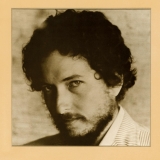
The album that had the – if not hard, definitely weird- task to follow up Self Portrait – and very little time passed between those two. If he wanted to make people forget about it, he wasn’t entirely successful. Most songs are kinda meh and even though the songwriting showcases an annoying lack of effort by no means is it done in the intentionally bad way of Self Portrait. If anything, the shock factor of that is gone, so this doesn’t make the same impression, the first listens are likely to pass you by.
He’s done so many worse albums since then that this gets a (rather high) pass, but compare it to what had to be expected from him at that point and it has to go down as a disappointing release. Still, there’s a lot of positives to be found here. First of all, his voice finds the right balance, he keeps a part of Nashville Skyline and at the same time shows a sign of his ‘60s self– many will dislike it, for the biased me it’s pure gold.
The opening track, If Not For You, is one of the first times he opens up concerning his faith (you might argue it’s simply a love song and you could very well be right. Personally, I never saw it that way), who knew what would follow this seemingly harmless little song in a decade or so. Day Of The Locusts is a hilarious one, it is inspired by his experience in Princeton and the way he describes it is classic Dylan (“Sure was glad to get out of there alive”). Time Passes Slowly perfectly captures what’s going on with Dylan in the late ‘60s - early ‘70s period. He had become a mega star and his popularity was getting dangerously out of control, he desperately needed a simpler and more peaceful lifestyle, one where time would pass slowly and his serenity wouldn’t be constantly disturbed. Even the next track, Went To See The Gypsy, presents us the fascinating lifestyle, but the narrator is only a spectator (“I watched them from the distance”), no fun to be had for him. If Dogs Run Free is a wonderful case of madness, so much fun – there was a time I was heavily addicted to this song, nowadays I don’t enjoy it that much, but nostalgia alone makes it a favourite for life. The self-titled track is one of the most forgettable songs here, which is a rare occurrence, but you never know what to expect with Dylan. Sign On The Window keeps describing the ideal lifestyle for him, it is a sequel of sorts to Time Passes Slowly. One More Weekend approaches country territory, but it works much better than Nashville Skyline, it’s not as overwhelming, making it easier to digest. The Man In Me is painfully average, I’d only keep those sweet lalalas. Three Angels is another excellent track in his trademark going beyond common wisdom style and of course it is another sign that he might wish to explore religious themes in the future. On that same note, the closing track, Father Of Night is a rap prayer or something, even in his “calmest” record, he always finds a way to rock the boat. Overall, this album mirrors Dylan’s attitude at the time: he’s happy to live like average Joe, away from the spotlight and isn’t looking for any sort of challenge, he’s had enough of those. I have a suspicion – and I’ve had it for some time now. I think I’m going to appreciate this more and more as I grow older. It’s still too early, we’ll have to wait and see, but I can already tell my perception of it has changed for the better, it’s one of the albums that did climb a few spots during this countdown.
Score: 7.25/10
He’s done so many worse albums since then that this gets a (rather high) pass, but compare it to what had to be expected from him at that point and it has to go down as a disappointing release. Still, there’s a lot of positives to be found here. First of all, his voice finds the right balance, he keeps a part of Nashville Skyline and at the same time shows a sign of his ‘60s self– many will dislike it, for the biased me it’s pure gold.
The opening track, If Not For You, is one of the first times he opens up concerning his faith (you might argue it’s simply a love song and you could very well be right. Personally, I never saw it that way), who knew what would follow this seemingly harmless little song in a decade or so. Day Of The Locusts is a hilarious one, it is inspired by his experience in Princeton and the way he describes it is classic Dylan (“Sure was glad to get out of there alive”). Time Passes Slowly perfectly captures what’s going on with Dylan in the late ‘60s - early ‘70s period. He had become a mega star and his popularity was getting dangerously out of control, he desperately needed a simpler and more peaceful lifestyle, one where time would pass slowly and his serenity wouldn’t be constantly disturbed. Even the next track, Went To See The Gypsy, presents us the fascinating lifestyle, but the narrator is only a spectator (“I watched them from the distance”), no fun to be had for him. If Dogs Run Free is a wonderful case of madness, so much fun – there was a time I was heavily addicted to this song, nowadays I don’t enjoy it that much, but nostalgia alone makes it a favourite for life. The self-titled track is one of the most forgettable songs here, which is a rare occurrence, but you never know what to expect with Dylan. Sign On The Window keeps describing the ideal lifestyle for him, it is a sequel of sorts to Time Passes Slowly. One More Weekend approaches country territory, but it works much better than Nashville Skyline, it’s not as overwhelming, making it easier to digest. The Man In Me is painfully average, I’d only keep those sweet lalalas. Three Angels is another excellent track in his trademark going beyond common wisdom style and of course it is another sign that he might wish to explore religious themes in the future. On that same note, the closing track, Father Of Night is a rap prayer or something, even in his “calmest” record, he always finds a way to rock the boat. Overall, this album mirrors Dylan’s attitude at the time: he’s happy to live like average Joe, away from the spotlight and isn’t looking for any sort of challenge, he’s had enough of those. I have a suspicion – and I’ve had it for some time now. I think I’m going to appreciate this more and more as I grow older. It’s still too early, we’ll have to wait and see, but I can already tell my perception of it has changed for the better, it’s one of the albums that did climb a few spots during this countdown.
Score: 7.25/10
Year of Release:
1970
Appears in:
Rank Score:
414
Rank in 1970:
Rank in 1970s:
Overall Rank:
Average Rating:
Comments:

Aaaand we made it to the top-20, it’s getting hot in here!
Even though I like his late ‘60s – early ‘70s period way more than the average listener, it has to be said: At this point in his career, Bob Dylan was going through a rough patch that was getting worryingly long - imagine being a fan back then, I'm sure more than a few would have given up on him. For this album, he collaborates with The Band. (Funny little story, as a kid I never knew they were actually named The Band, my initial impression was that they are too insignificant to have a name, as all that mattered was they were Bob Dylan’s backing band and as a result they gave them this generic name just to be able to address them, lol) I think this was a wasted chance, which is what I said about Street Legal as well, yet here it’s exactly the opposite: he’s in more than good company, but he isn’t firing in all cylinders - songwriting wise at least, his performance is more focused, brings more passion to the table and makes for a clear step up compared to The Basement Tapes. It’s fair to say the band comes close to outshining him, if there’s only one thing I could keep from this album it’s definitely the organ.
Thematically, it’s a very personal record, filled with love songs. He may not go deep in terms of being his usual poetic self, but his emotional involvement is beyond words (“Love you more than life itself, you mean that much to me” is a characteristic line). What I said while commenting on The Basement Tapes applies here as well: it’s more about the overall feel, the energy and the flow than it is about individual tracks or any kind of concrete considerations. Still, Going, Going, Gone is a stand out moment, standing helpless in front of your inescapable fate packs quite a punch – ok, it doesn’t reach the hopelessness levels of something like How To Disappear Completely (completely random comparison, not sure how or why it came to mind, haven't listened to it in ages, whatever), but its power can’t be denied. Hazel is another favourite of mine, a simple and infectious song, it gets its point across with ease. Forever Young is supposed to be the centerpiece of the album, but unfortunately it doesn’t do that much to me, the touching message to his son leaves me cold, not to mention the fast version could have been omitted altogether. Having the benefit of hindsight and knowing the absurd heights Blood On The Tracks and Desire would reach, there’s a danger of underrating this and viewing it as a transitional album, a mere harbinger of the greatness that was round the corner. But if we judge it from the 1974 perspective, as we should, this was the vehicle that drove him out of the slump and as a result deserves every praise coming its way.
Score: 7.2/10
Even though I like his late ‘60s – early ‘70s period way more than the average listener, it has to be said: At this point in his career, Bob Dylan was going through a rough patch that was getting worryingly long - imagine being a fan back then, I'm sure more than a few would have given up on him. For this album, he collaborates with The Band. (Funny little story, as a kid I never knew they were actually named The Band, my initial impression was that they are too insignificant to have a name, as all that mattered was they were Bob Dylan’s backing band and as a result they gave them this generic name just to be able to address them, lol) I think this was a wasted chance, which is what I said about Street Legal as well, yet here it’s exactly the opposite: he’s in more than good company, but he isn’t firing in all cylinders - songwriting wise at least, his performance is more focused, brings more passion to the table and makes for a clear step up compared to The Basement Tapes. It’s fair to say the band comes close to outshining him, if there’s only one thing I could keep from this album it’s definitely the organ.
Thematically, it’s a very personal record, filled with love songs. He may not go deep in terms of being his usual poetic self, but his emotional involvement is beyond words (“Love you more than life itself, you mean that much to me” is a characteristic line). What I said while commenting on The Basement Tapes applies here as well: it’s more about the overall feel, the energy and the flow than it is about individual tracks or any kind of concrete considerations. Still, Going, Going, Gone is a stand out moment, standing helpless in front of your inescapable fate packs quite a punch – ok, it doesn’t reach the hopelessness levels of something like How To Disappear Completely (completely random comparison, not sure how or why it came to mind, haven't listened to it in ages, whatever), but its power can’t be denied. Hazel is another favourite of mine, a simple and infectious song, it gets its point across with ease. Forever Young is supposed to be the centerpiece of the album, but unfortunately it doesn’t do that much to me, the touching message to his son leaves me cold, not to mention the fast version could have been omitted altogether. Having the benefit of hindsight and knowing the absurd heights Blood On The Tracks and Desire would reach, there’s a danger of underrating this and viewing it as a transitional album, a mere harbinger of the greatness that was round the corner. But if we judge it from the 1974 perspective, as we should, this was the vehicle that drove him out of the slump and as a result deserves every praise coming its way.
Score: 7.2/10
Year of Release:
1974
Appears in:
Rank Score:
501
Rank in 1974:
Rank in 1970s:
Overall Rank:
Average Rating:
Comments:

That’s an album which tends to divide the audience. I’m with neither side, the boring me lies somewhere in the middle. That being said, if I had to choose, I’d have to go with the detractors, mainly because it’s the point where it all started going downhill. He starts where Desire left off – willing to experiment and add new elements to his music- and this went even further, which unfortunately proved to be a bit too far in the end.
The opening track goes full, unapologetic pop, with gospel like backing vocals and a saxophone for the ages. It may sound horrible, but it works like a charm, one of the two best songs here - and by quite some distance from the rest. When it comes to the lyrics, he starts hesitantly (the songwriting is ambiguous enough to keep you guessing, he does an excellent job in that regard) flirting with religious themes, it’s only a matter of time before he’d fully embrace them.
The rest of the album desperately tries to emulate its success, but it never (with one exception) comes anywhere close to it, it may use the same ingredients but the balance is way off. Production is questionable to put it mildly, his most polished so far – of course, if you go in chronological order, wait until you get to the ‘80s, this is child’s play in comparison. Nothing is too annoying or unlistenable for me, though I know some fans that really hate this. Anyway, it can’t be denied that part of the magic is gone, this album could have been so much more, talk about a wasted chance. And yes, the songwriting can be embarrassingly weak, e.g. in New Pony, but that’s an exception, there’s much more to it here. I’ve caught a couple of reviews comparing Street Legal to something Bruce Springsteen would release, not entirely unreasonable (considering that I’m not Springsteen’s biggest fan, I’ m not ready to take a stand, but I ‘ll tell you Dylan easily outbosses him either way).
I like the symbolism behind the album cover, looking left and right wondering which road to take. There’s a transition going on here in terms of lyrical content – from the emotionally-charged exploration of interpersonal relationships to religious matters. Señor (Tales of Yankee Power) is a song that showcases this duality. For the most part it’s used to deal with his religious interests – and at the same time, as he would do in Slow Train Coming, use religion as a device to give some socio-political commentary. The most convincing -in my opinion- interpretation suggests that it’s a dialogue between Jesus Christ and God, yet there are a few lines which point to the other direction and remind us he’s gone through a divorce (“And a gypsy with a broken flag and flashing ring Said ‘Son, this ain't a dream no more, it's the real thing’ "). As I said in the intro, Steet Legal also serves as a middle ground between his old and new sound. His vocals are great throughout this record’s entirety, every word that comes out of his mouth is music to my ears. He doesn’t have the commanding presence or assertive tone or emotional involvement of the past, he is somehow wandering in an intentional way as if he knows exactly where he should eventually land.
No Time To Think is an epic, a fascinating character study of a multi-faceted personality. Speaking of transitions, you know, I don’t particularly like the ‘70s (not talking specifically about Bob Dylan’s work, I mean in general). However, one interesting aspect of this decade lyrics-wise is how they cover what we’d call a grey area, they break free from the stereotypical one dimensional male archetypes that dominated the ‘50s and the ‘60s – some of the most notable examples would be the ”tough” guy, the painfully romantic and the devastated, heartbroken one. Even Dylan’s writing during the ‘60s, which is undeniably top-notch for many different reasons, rarely – if ever – presents us a character that suffers from lack of confidence. A struggling, betrayed, confused, humiliated figure like the one in No Time To Think is something else and should comfortably enter his hall of fame. (And yes, I understand that some lines of this album could be read as misogynistic, but I view them as further deprecating of the main character, a desperate cry due to the inability to establish his dominance, his bitterness is all that’s left). It is a very interesting transition(and again, it reflects a general tendency of this decade), especially if you combine it with the social developments on a wider scale, the rise of feminism, etc.
This review goes full circle and I'll repeat this is a polarising album. Asked on a different day, I could see this climbing a few spots higher, but right now I feel the artificial sound overshadows the great songwriting.
Score: 7.15/10
The opening track goes full, unapologetic pop, with gospel like backing vocals and a saxophone for the ages. It may sound horrible, but it works like a charm, one of the two best songs here - and by quite some distance from the rest. When it comes to the lyrics, he starts hesitantly (the songwriting is ambiguous enough to keep you guessing, he does an excellent job in that regard) flirting with religious themes, it’s only a matter of time before he’d fully embrace them.
The rest of the album desperately tries to emulate its success, but it never (with one exception) comes anywhere close to it, it may use the same ingredients but the balance is way off. Production is questionable to put it mildly, his most polished so far – of course, if you go in chronological order, wait until you get to the ‘80s, this is child’s play in comparison. Nothing is too annoying or unlistenable for me, though I know some fans that really hate this. Anyway, it can’t be denied that part of the magic is gone, this album could have been so much more, talk about a wasted chance. And yes, the songwriting can be embarrassingly weak, e.g. in New Pony, but that’s an exception, there’s much more to it here. I’ve caught a couple of reviews comparing Street Legal to something Bruce Springsteen would release, not entirely unreasonable (considering that I’m not Springsteen’s biggest fan, I’ m not ready to take a stand, but I ‘ll tell you Dylan easily outbosses him either way).
I like the symbolism behind the album cover, looking left and right wondering which road to take. There’s a transition going on here in terms of lyrical content – from the emotionally-charged exploration of interpersonal relationships to religious matters. Señor (Tales of Yankee Power) is a song that showcases this duality. For the most part it’s used to deal with his religious interests – and at the same time, as he would do in Slow Train Coming, use religion as a device to give some socio-political commentary. The most convincing -in my opinion- interpretation suggests that it’s a dialogue between Jesus Christ and God, yet there are a few lines which point to the other direction and remind us he’s gone through a divorce (“And a gypsy with a broken flag and flashing ring Said ‘Son, this ain't a dream no more, it's the real thing’ "). As I said in the intro, Steet Legal also serves as a middle ground between his old and new sound. His vocals are great throughout this record’s entirety, every word that comes out of his mouth is music to my ears. He doesn’t have the commanding presence or assertive tone or emotional involvement of the past, he is somehow wandering in an intentional way as if he knows exactly where he should eventually land.
No Time To Think is an epic, a fascinating character study of a multi-faceted personality. Speaking of transitions, you know, I don’t particularly like the ‘70s (not talking specifically about Bob Dylan’s work, I mean in general). However, one interesting aspect of this decade lyrics-wise is how they cover what we’d call a grey area, they break free from the stereotypical one dimensional male archetypes that dominated the ‘50s and the ‘60s – some of the most notable examples would be the ”tough” guy, the painfully romantic and the devastated, heartbroken one. Even Dylan’s writing during the ‘60s, which is undeniably top-notch for many different reasons, rarely – if ever – presents us a character that suffers from lack of confidence. A struggling, betrayed, confused, humiliated figure like the one in No Time To Think is something else and should comfortably enter his hall of fame. (And yes, I understand that some lines of this album could be read as misogynistic, but I view them as further deprecating of the main character, a desperate cry due to the inability to establish his dominance, his bitterness is all that’s left). It is a very interesting transition(and again, it reflects a general tendency of this decade), especially if you combine it with the social developments on a wider scale, the rise of feminism, etc.
This review goes full circle and I'll repeat this is a polarising album. Asked on a different day, I could see this climbing a few spots higher, but right now I feel the artificial sound overshadows the great songwriting.
Score: 7.15/10
Year of Release:
1978
Appears in:
Rank Score:
679
Rank in 1978:
Rank in 1970s:
Overall Rank:
Average Rating:
Comments:


Hey, did you miss a bit of controversy? Here we go.
To be fair, said controversy isn’t all about me ranking it so low – though it’s not easy to ignore that part as well. This album is problematic on its own and as a result I am not sure what to make of it. A part of me thinks I might have underrated it and another part of me suggest the exact opposite. It excels at some aspects that you usually don’t expect from Dylan’s work (especially the loose “you caught us in the middle of a jamming session” feel), but at the same time comes short of his (admittedly sky-high) standards regarding some fundamental elements (songwriting and his own performance) Of course, I can’t help but address the elephant in the room, the main issue here is that a Bob Dylan album features 8 songs of The Band without him. Intruder alert, who let them in? I can partially forgive them or at least give them a pass, since the rest is more than decent.
It’s worth noting – even though it’s extremely well-known - that these songs were recorded in 1967 during Dylan’s recovery after his infamous motorcycle accident (quick disclaimer: I’m talking only about the ones with Dylan, the others I’m not entirely sure, probably somewhere between 1967 and 1975 but who cares really). By no means should you expect a profound artistic statement, this is the sound of simply having fun without a single care in the world, everything else is almost irrelevant. It’s probably the only record of his where not only am I totally clueless if you ask me what’s going in terms of lyrics - I never felt an urgency to pay attention to what everyone’s favourite bard is trying to say here, let alone look up the lyrics or any kind of review or song analysis - but I’d have a hard time recalling which songs are included here, which is plain embarrassing. It’s been argued that you can find better versions of this style both in Dylan’s and in The Band’s catalogue. Even the other album they did together, Planet Waves, was much tighter. The thing is, this kind of music doesn’t need any sort of refinement, it works just fine the way it is. I can see why some dedicated Dylanologists would go as far as calling it a guilty pleasure, and it’s easy to tell that it’s one of his most addictive albums. This is the equivalent of being drunk or high, you don’t need any reason to explain why it feels good, you mindlessly enjoy it as it is.
Now, would it be even better had 3-4 tracks been removed? Probably, but only due to Dylan’s absence. 24 tracks might appear intimidating at first, yet most of them barely pass the 3 minutes mark and consequently the album clocks in at 77 minutes, which is a perfectly acceptable length (to put things in perspective, it’s only 2 minutes longer than Blonde On Blonde). The overall sound is way too tied to the roots of American music, which is not exactly my cup of tea. Yes, that's a direction he follows in most of his music, but when they - he and The Band I mean -work together it’s even more striking, especially the country vibes. Just as it is the case with Planet Waves – more on that later- , the Band doesn’t bring out the best version of Bob Dylan, his performance is kinda meh, if not outright boring. One might claim that it captures the spirit of the album and that would be a valid point. Still, knowing what Dylan can do, this can’t possibly compare with his best moments.
Score: 6.85/10
To be fair, said controversy isn’t all about me ranking it so low – though it’s not easy to ignore that part as well. This album is problematic on its own and as a result I am not sure what to make of it. A part of me thinks I might have underrated it and another part of me suggest the exact opposite. It excels at some aspects that you usually don’t expect from Dylan’s work (especially the loose “you caught us in the middle of a jamming session” feel), but at the same time comes short of his (admittedly sky-high) standards regarding some fundamental elements (songwriting and his own performance) Of course, I can’t help but address the elephant in the room, the main issue here is that a Bob Dylan album features 8 songs of The Band without him. Intruder alert, who let them in? I can partially forgive them or at least give them a pass, since the rest is more than decent.
It’s worth noting – even though it’s extremely well-known - that these songs were recorded in 1967 during Dylan’s recovery after his infamous motorcycle accident (quick disclaimer: I’m talking only about the ones with Dylan, the others I’m not entirely sure, probably somewhere between 1967 and 1975 but who cares really). By no means should you expect a profound artistic statement, this is the sound of simply having fun without a single care in the world, everything else is almost irrelevant. It’s probably the only record of his where not only am I totally clueless if you ask me what’s going in terms of lyrics - I never felt an urgency to pay attention to what everyone’s favourite bard is trying to say here, let alone look up the lyrics or any kind of review or song analysis - but I’d have a hard time recalling which songs are included here, which is plain embarrassing. It’s been argued that you can find better versions of this style both in Dylan’s and in The Band’s catalogue. Even the other album they did together, Planet Waves, was much tighter. The thing is, this kind of music doesn’t need any sort of refinement, it works just fine the way it is. I can see why some dedicated Dylanologists would go as far as calling it a guilty pleasure, and it’s easy to tell that it’s one of his most addictive albums. This is the equivalent of being drunk or high, you don’t need any reason to explain why it feels good, you mindlessly enjoy it as it is.
Now, would it be even better had 3-4 tracks been removed? Probably, but only due to Dylan’s absence. 24 tracks might appear intimidating at first, yet most of them barely pass the 3 minutes mark and consequently the album clocks in at 77 minutes, which is a perfectly acceptable length (to put things in perspective, it’s only 2 minutes longer than Blonde On Blonde). The overall sound is way too tied to the roots of American music, which is not exactly my cup of tea. Yes, that's a direction he follows in most of his music, but when they - he and The Band I mean -work together it’s even more striking, especially the country vibes. Just as it is the case with Planet Waves – more on that later- , the Band doesn’t bring out the best version of Bob Dylan, his performance is kinda meh, if not outright boring. One might claim that it captures the spirit of the album and that would be a valid point. Still, knowing what Dylan can do, this can’t possibly compare with his best moments.
Score: 6.85/10
Year of Release:
1975
Appears in:
Rank Score:
1,539
Rank in 1975:
Rank in 1970s:
Overall Rank:
Average Rating:
Comments:

Well, probably that’s too low and should count as another surprise, but this and Nashville Skyline go hand in hand, so it was to be expected that I wouldn’t find this appealing as well. Actually, this is one of the very few albums that didn’t end up close to where I had them before getting on with this project, it significantly overachieved – to be exact, it surpassed three albums that used to be superior in my book.
Quick disclaimer: I have no idea what this movie is about, so it’s even harder to properly appreciate the soundtrack. I read that Dylan himself appears in it, so that should be a good enough reason to check it out at some point. The album received negative reviews for the most part when it came out (I suspect that this may have more to do with how unclear it is where this ranks compared to his typical work than with how bad when evaluated as a standalone piece of art said critics consider it to be), it is known as the one that has Knockin’ On Heaven’s door. I’ve never included it among my favourite songs by him. Of course, I have to admit that there’s a particular cover of this song that is nothing short of atrocious – no offence, that’s just me- , which in all likelihood alters the opinion I have of the original and judge it as too big – almost bigger than life, anthemic.
So, instrumental Dylan isn’t the best version of Dylan, that’s barely debatable, but it puts a different side of him on display, making it interesting, if nothing else. However, any intrigue used to fade away disappointingly fast for me to the point that the abundance of instrumentals here has always prevented me from coming back to this album. There are a few records of his that I consider worse than this, but I was more open to giving them another chance, as I I wonder if there’s something new to discover or somehow change my mind. When it came to this, I’d think “let’s be honest, there isn’t a snowball's chance in hell” and skip it. One thing I appreciated this time – and maybe explains why I have been rejecting this record so far- is how the music appears to be rather monotonous at first glance. That proves not to be entirely true, there are subtle changes in mood that - I can only guess - are supposed to reflect the chain of events that unfolds in the movie, it gets darker as the album progresses – still, I can’t deny I am extremely curious regarding Turkey Chase.
That’s about the instrumentals, the songs – I already mentioned Knockin’ On Heaven’s Door, so that leaves us with Billy 1, 4 and 7 - are fine, though I’m not sure we needed three variants of Billy. It is a simple, yet powerful and evocative song, it instantly transfers you to a different setting, you are an outlaw who has to watch his back 24/7, you never know what kind of danger might be lurking round the corner. Despite the adventurous lifestyle that revolves around being always on the run, it’s the little moments of taking a breather and enjoying the simple joys of life which add that extra flavour (“Camping out all night on the veranda Dealing’ cards ’till dawn in the hacienda”).
Also, it’s relatively short – my first reaction would be that albums like this can’t be short enough, but nowadays I don’t mind it that much. As I said in the beginning, it’s been an album that’s been slowly growing on me – although I don’t expect it to get much higher, saying it’s reached its peak should be a safe bet.
To conclude, this marks the end of the first chapter. In other words, it’s the last record I would consider bottom tier Dylan, i.e. achieving a score between 5 and 6.
Score: 5.85/10.
Quick disclaimer: I have no idea what this movie is about, so it’s even harder to properly appreciate the soundtrack. I read that Dylan himself appears in it, so that should be a good enough reason to check it out at some point. The album received negative reviews for the most part when it came out (I suspect that this may have more to do with how unclear it is where this ranks compared to his typical work than with how bad when evaluated as a standalone piece of art said critics consider it to be), it is known as the one that has Knockin’ On Heaven’s door. I’ve never included it among my favourite songs by him. Of course, I have to admit that there’s a particular cover of this song that is nothing short of atrocious – no offence, that’s just me- , which in all likelihood alters the opinion I have of the original and judge it as too big – almost bigger than life, anthemic.
So, instrumental Dylan isn’t the best version of Dylan, that’s barely debatable, but it puts a different side of him on display, making it interesting, if nothing else. However, any intrigue used to fade away disappointingly fast for me to the point that the abundance of instrumentals here has always prevented me from coming back to this album. There are a few records of his that I consider worse than this, but I was more open to giving them another chance, as I I wonder if there’s something new to discover or somehow change my mind. When it came to this, I’d think “let’s be honest, there isn’t a snowball's chance in hell” and skip it. One thing I appreciated this time – and maybe explains why I have been rejecting this record so far- is how the music appears to be rather monotonous at first glance. That proves not to be entirely true, there are subtle changes in mood that - I can only guess - are supposed to reflect the chain of events that unfolds in the movie, it gets darker as the album progresses – still, I can’t deny I am extremely curious regarding Turkey Chase.
That’s about the instrumentals, the songs – I already mentioned Knockin’ On Heaven’s Door, so that leaves us with Billy 1, 4 and 7 - are fine, though I’m not sure we needed three variants of Billy. It is a simple, yet powerful and evocative song, it instantly transfers you to a different setting, you are an outlaw who has to watch his back 24/7, you never know what kind of danger might be lurking round the corner. Despite the adventurous lifestyle that revolves around being always on the run, it’s the little moments of taking a breather and enjoying the simple joys of life which add that extra flavour (“Camping out all night on the veranda Dealing’ cards ’till dawn in the hacienda”).
Also, it’s relatively short – my first reaction would be that albums like this can’t be short enough, but nowadays I don’t mind it that much. As I said in the beginning, it’s been an album that’s been slowly growing on me – although I don’t expect it to get much higher, saying it’s reached its peak should be a safe bet.
To conclude, this marks the end of the first chapter. In other words, it’s the last record I would consider bottom tier Dylan, i.e. achieving a score between 5 and 6.
Score: 5.85/10.
Year of Release:
1973
Appears in:
Rank Score:
163
Rank in 1973:
Rank in 1970s:
Overall Rank:
Average Rating:
Comments:

(Posting this in a heartbeat as part of a futile attempt to draw attention away from the questionable placement of Nashville Skyline.)
The album that is also known as Self Portrait part 2. If you take into account the abysmal reviews this has received and the fact that it consists of outtakes from Self Portrait (tracks 8 and 9) and New Morning (tracks 1 to 7), you’d think you can’t set the bar low enough for this record. Add to this the story behind this album – to keep it short, it wasn’t supposed to have been released, it was a side effect of his decision to sign to Asylum Records and that was Columbia Records’ reply, talk about a dirty move, ouch! – and you have a recipe for disaster. He’s even missing from the album cover, that was basically unheard of!
Anyway, I dare say it’s better than its reputation would imply - not by much, just barely. One major problem that besets this record is it’s hard to classify it. This is by no means a “proper” album that could stand next to his classics in any possible way nor does it have the uncompromising “parody” feel of Self Portrait, it’s lost somewhere in between and it ends up failing at both. (In that regard, one could argue it’s somewhat similar to Under A Red Sky, which had a partially childish attitude due to being dedicated to his daughter, but didn’t fully commit itself to that cause, it tried to retain a sense of seriousness and purposefulness instead.)
If you are looking for a good example of the above mentioned zaniness, you have to look no further than the opening track, Lily Of The West. The reminiscent of medieval/Irish folk vibes, combined with the over the top backing vocals, it never fails to give me a good laugh, tons of fun. Sarah Jane is also one of the most entertaining tunes of the album, mainly due to its excessiveness and lack of any serious artistic merit – I guess that’s why most view it as the worst song of the album, lol. The rest of the tracks try to adopt a more balanced approach and suffer - to a varying degree - from the problem I previously described. There’s not much else to be said, really, you either accept it for what it is or you don’t. Overall, being an album of covers, it’s obvious that we lose the most important aspect of his work, which is his songwriting, an obstacle that proves impossible to overcome. His vocals follow the footsteps of his last four (in chronological order) releases, he shows his softer side – which I’m not a fan of, but in this environment they are on point and easier to digest - once more. Also, the performances are better than the fact that this is a collection of outtakes might lead you to believe, I can’t blame him for not trying. To sum it up, I view this as a slightly underrated entry in his catalogue, it has a few half-decent elements so that a Bob Dylan fan should probably find his way into liking or at least defending this. To be honest, that’s the main reason I decided to include it here, were it my intention to heavily criticise it, I’d rather skip it instead, as it’s a bit unfair to judge him on this one, he had no control over this release and there wasn’t much he could have done.
Score: 5.65/10.
The album that is also known as Self Portrait part 2. If you take into account the abysmal reviews this has received and the fact that it consists of outtakes from Self Portrait (tracks 8 and 9) and New Morning (tracks 1 to 7), you’d think you can’t set the bar low enough for this record. Add to this the story behind this album – to keep it short, it wasn’t supposed to have been released, it was a side effect of his decision to sign to Asylum Records and that was Columbia Records’ reply, talk about a dirty move, ouch! – and you have a recipe for disaster. He’s even missing from the album cover, that was basically unheard of!
Anyway, I dare say it’s better than its reputation would imply - not by much, just barely. One major problem that besets this record is it’s hard to classify it. This is by no means a “proper” album that could stand next to his classics in any possible way nor does it have the uncompromising “parody” feel of Self Portrait, it’s lost somewhere in between and it ends up failing at both. (In that regard, one could argue it’s somewhat similar to Under A Red Sky, which had a partially childish attitude due to being dedicated to his daughter, but didn’t fully commit itself to that cause, it tried to retain a sense of seriousness and purposefulness instead.)
If you are looking for a good example of the above mentioned zaniness, you have to look no further than the opening track, Lily Of The West. The reminiscent of medieval/Irish folk vibes, combined with the over the top backing vocals, it never fails to give me a good laugh, tons of fun. Sarah Jane is also one of the most entertaining tunes of the album, mainly due to its excessiveness and lack of any serious artistic merit – I guess that’s why most view it as the worst song of the album, lol. The rest of the tracks try to adopt a more balanced approach and suffer - to a varying degree - from the problem I previously described. There’s not much else to be said, really, you either accept it for what it is or you don’t. Overall, being an album of covers, it’s obvious that we lose the most important aspect of his work, which is his songwriting, an obstacle that proves impossible to overcome. His vocals follow the footsteps of his last four (in chronological order) releases, he shows his softer side – which I’m not a fan of, but in this environment they are on point and easier to digest - once more. Also, the performances are better than the fact that this is a collection of outtakes might lead you to believe, I can’t blame him for not trying. To sum it up, I view this as a slightly underrated entry in his catalogue, it has a few half-decent elements so that a Bob Dylan fan should probably find his way into liking or at least defending this. To be honest, that’s the main reason I decided to include it here, were it my intention to heavily criticise it, I’d rather skip it instead, as it’s a bit unfair to judge him on this one, he had no control over this release and there wasn’t much he could have done.
Score: 5.65/10.

Ok, here we are, let’s go. It’s somewhat fitting that this countdown begins with this album, the first part of the so called “Christian trilogy”, probably his most controversial period – at least up to this point, it’s fair to claim that he would go through a rough patch for the entirety of the ‘80s. Of course this doesn’t mean that I picked it because of any symbolic reason whatsoever, it’s simply the one record of his that I like less – or should I say dislike more, since it’s almost mission impossible trying to find any redeeming or likeable qualities in some of his “lesser” – for lack of a better word – records.
So, the first question that comes to anyone’s mind: how did he decide to move towards this direction? He’s supposed to have met Jesus, but it’s not only his personal growth/journey/call it what you want that drove him here. He observes the socio-political developments and as a result he is utterly disappointed (the self-titled track is a good example of that, “I feel so low-down and disgusted” being a characteristic line). Instead of merely protesting (at this point of his career and his life, it’s fair to assume he’s had enough of that), he finds a new way to promote a communal change in attitude (you know how it goes, when society and its basic principles go down in flames, the individual can’t be saved either, his identity, his morals are on the verge of collapse as well, he needs a guiding hand to show him the way to transformation and redemption). That being said, you can’t ignore that it’s one of his most “biographical” records. In large part, he hasn’t been keen on revealing parts of himself – compared to the typical introspective songwriter like Leonard Cohen or Joni Mitchell, he takes the opposite route and tends to draw influence from “external sources”, so to speak – and when he does get personal, it’s usually done in a vague, abstract manner. Here, he allows us to catch a glimpse of his vulnerable inner world. He is lost and needs a new identity. At the same time, he’s – as I noted above - a preacher at the service of God, too.
Before moving on, I’d like to proclaim an absence of prejudice regarding religion/Christianity. My family happens to have strong ties with the church, so it’s not like I got offended by the themes or anything, a huge part of my childhood was attending services and studying biblical texts, yet I tried to leave this outside my judgement. For example, there are many Christmas albums and songs that I genuinely enjoy, not to mention George Frideric Handel’s Messiah, one of the most awe-inspiring, monumental artistic achievements of all time.
Returning to Slow Train Coming, the opening track could quite possibly be the best thing here and that speak volumes about how bad this album is. In an attempt to emphasise the universality of his message, he compiles a long list of people who all have to “serve somebody”. By the way, the idea of a man being not as self-aware and self-reliant as he thinks had already received some attention in his previous album, Street-Legal, but more on that when it’s time to comment on that album instead. Man Gave Names to All the Animals is the other close to saving grace of the album, it’s a funny little song – not sure if that was the initial intention. I Believe In You is one of my least favourite Bob Dylan songs ever, a great example of what I don’t like in terms of his lyrics here, he’s getting defensive as it has this “you and me against the world” mentality, a well-worn theme that barely holds any relevance the way –the musical accompaniment doesn’t help either- it is presented here. Do Right To Me Baby unfolds in a similar fashion and is equally bad. I could go on and on about how each track excels in making matters worse, but let’s cut it some slack and keep negativity to a minimum.
All three parts of the trilogy deal with Christianity, but each of them seems to tackle a specific subject. So, this one’s point is clear: try and convince as many as possible to convert to Christianity. His method involves simple, in your face lyrics that water down any meaningful point he might express. However, the lyrical content is only part of the problem, it also has to do with the production and music itself. I mean, it’s only 1979, did the ‘80s arrive too early in Dylan-land? One of those occasions where being ahead of time isn’t a compliment, everything is too polished – one thing I can admit is that the gospel backing vocals are occasionally enjoyable. Taking into account the specific theme this album deals with, the slick sound doesn’t do it any justice and totally misses the point. Christianity didn’t attract any new worshippers by having it easy or thanks to any form of luxury, it was built on blood, sweat and tears – think of Saul of Tarsus becoming Paul the Apostle. I guess what I’m trying to say is that even if you do get lost in the groove – which wouldn’t be completely unreasonable, although there are some too epic, bombastic moments that stand in the way as they break the mood - the album has still failed in its duty.
Now, there are a handful of Dylanologists who believe there’s another way to look at it. They don’t focus on the outcome, namely religion, but on the process of conversion, as one has to reject his old values and then embrace the new ones – no matter what exactly old and new encompass. An interesting proposition, no doubt about it and if you set your mind on it, there are more than a few lines here that suggest so – after all, there’s a track that is titled Gonna Change My Way Of Thinking, highlighting that change is the key, not necessarily where this change leads to – but I find it too much of a stretch and hard to ignore the overarching concept of religion.
To be brutally honest, it was one of the 7-8 albums I contemplated skipping, but eventually I decided to cover them all for the sake of completeness. If I never hear this album again, that’s fine by me. I don’t like hating it, I admire him for being courageous enough to be so open about his faith – and I’m sure he was well aware of the risks, as he knew there was a chance many of his fans would take it the wrong way. Having the benefit of hindsight, it proved to be a smart move. I can’t help but think that If this hadn’t been so successful, maybe the other two wouldn’t have taken place, though Bob Dylan’s choices tend to be highly unpredictable, so you can never know for sure. Another reason I can’t hate it is because of his convincing performance, it’s easy to tell he’s really invested in it, which doesn’t change the fact that I couldn’t care less about it.
Score: 5.2/10.
So, the first question that comes to anyone’s mind: how did he decide to move towards this direction? He’s supposed to have met Jesus, but it’s not only his personal growth/journey/call it what you want that drove him here. He observes the socio-political developments and as a result he is utterly disappointed (the self-titled track is a good example of that, “I feel so low-down and disgusted” being a characteristic line). Instead of merely protesting (at this point of his career and his life, it’s fair to assume he’s had enough of that), he finds a new way to promote a communal change in attitude (you know how it goes, when society and its basic principles go down in flames, the individual can’t be saved either, his identity, his morals are on the verge of collapse as well, he needs a guiding hand to show him the way to transformation and redemption). That being said, you can’t ignore that it’s one of his most “biographical” records. In large part, he hasn’t been keen on revealing parts of himself – compared to the typical introspective songwriter like Leonard Cohen or Joni Mitchell, he takes the opposite route and tends to draw influence from “external sources”, so to speak – and when he does get personal, it’s usually done in a vague, abstract manner. Here, he allows us to catch a glimpse of his vulnerable inner world. He is lost and needs a new identity. At the same time, he’s – as I noted above - a preacher at the service of God, too.
Before moving on, I’d like to proclaim an absence of prejudice regarding religion/Christianity. My family happens to have strong ties with the church, so it’s not like I got offended by the themes or anything, a huge part of my childhood was attending services and studying biblical texts, yet I tried to leave this outside my judgement. For example, there are many Christmas albums and songs that I genuinely enjoy, not to mention George Frideric Handel’s Messiah, one of the most awe-inspiring, monumental artistic achievements of all time.
Returning to Slow Train Coming, the opening track could quite possibly be the best thing here and that speak volumes about how bad this album is. In an attempt to emphasise the universality of his message, he compiles a long list of people who all have to “serve somebody”. By the way, the idea of a man being not as self-aware and self-reliant as he thinks had already received some attention in his previous album, Street-Legal, but more on that when it’s time to comment on that album instead. Man Gave Names to All the Animals is the other close to saving grace of the album, it’s a funny little song – not sure if that was the initial intention. I Believe In You is one of my least favourite Bob Dylan songs ever, a great example of what I don’t like in terms of his lyrics here, he’s getting defensive as it has this “you and me against the world” mentality, a well-worn theme that barely holds any relevance the way –the musical accompaniment doesn’t help either- it is presented here. Do Right To Me Baby unfolds in a similar fashion and is equally bad. I could go on and on about how each track excels in making matters worse, but let’s cut it some slack and keep negativity to a minimum.
All three parts of the trilogy deal with Christianity, but each of them seems to tackle a specific subject. So, this one’s point is clear: try and convince as many as possible to convert to Christianity. His method involves simple, in your face lyrics that water down any meaningful point he might express. However, the lyrical content is only part of the problem, it also has to do with the production and music itself. I mean, it’s only 1979, did the ‘80s arrive too early in Dylan-land? One of those occasions where being ahead of time isn’t a compliment, everything is too polished – one thing I can admit is that the gospel backing vocals are occasionally enjoyable. Taking into account the specific theme this album deals with, the slick sound doesn’t do it any justice and totally misses the point. Christianity didn’t attract any new worshippers by having it easy or thanks to any form of luxury, it was built on blood, sweat and tears – think of Saul of Tarsus becoming Paul the Apostle. I guess what I’m trying to say is that even if you do get lost in the groove – which wouldn’t be completely unreasonable, although there are some too epic, bombastic moments that stand in the way as they break the mood - the album has still failed in its duty.
Now, there are a handful of Dylanologists who believe there’s another way to look at it. They don’t focus on the outcome, namely religion, but on the process of conversion, as one has to reject his old values and then embrace the new ones – no matter what exactly old and new encompass. An interesting proposition, no doubt about it and if you set your mind on it, there are more than a few lines here that suggest so – after all, there’s a track that is titled Gonna Change My Way Of Thinking, highlighting that change is the key, not necessarily where this change leads to – but I find it too much of a stretch and hard to ignore the overarching concept of religion.
To be brutally honest, it was one of the 7-8 albums I contemplated skipping, but eventually I decided to cover them all for the sake of completeness. If I never hear this album again, that’s fine by me. I don’t like hating it, I admire him for being courageous enough to be so open about his faith – and I’m sure he was well aware of the risks, as he knew there was a chance many of his fans would take it the wrong way. Having the benefit of hindsight, it proved to be a smart move. I can’t help but think that If this hadn’t been so successful, maybe the other two wouldn’t have taken place, though Bob Dylan’s choices tend to be highly unpredictable, so you can never know for sure. Another reason I can’t hate it is because of his convincing performance, it’s easy to tell he’s really invested in it, which doesn’t change the fact that I couldn’t care less about it.
Score: 5.2/10.
Year of Release:
1979
Appears in:
Rank Score:
490
Rank in 1979:
Rank in 1970s:
Overall Rank:
Average Rating:
Comments:
Total albums: 10. Page 1 of 1
Don't agree with this chart? Create your own from the My Charts page!
Bob Dylan composition
| Decade | Albums | % | |
|---|---|---|---|
| 1930s | 0 | 0% | |
| 1940s | 0 | 0% | |
| 1950s | 0 | 0% | |
| 1960s | 9 | 23% | |
| 1970s | 10 | 26% | |
| 1980s | 7 | 18% | |
| 1990s | 4 | 10% | |
| 2000s | 4 | 10% | |
| 2010s | 4 | 10% | |
| 2020s | 1 | 3% |
| Artist | Albums | % | |
|---|---|---|---|
|
|
|||
| Bob Dylan | 38 | 97% | |
| Bob Dylan & The Band | 1 | 3% |
Bob Dylan similar charts
| Title | Source | Type | Published | Country |
|---|---|---|---|---|
| An Absolutely Definitive Dylan Studio Album Ranking | cmoshier | Custom chart | 2024 |  |
| Bob Dylan studio album - My chart |  Sandrof1969 Sandrof1969 | Custom chart | 2021 |  |
| Bob Dylan: Albums ranked. | garycottier | Custom chart | 2017 | |
| Ranking Bob Dylan's Studio Albums | edubs | Custom chart | 2017 | |
| Mr. Zimmmerman's Urban Poetries |  SingingPeasant96 SingingPeasant96 | Custom chart | 2014 | |
| Bob Dylan Ranked | daCritic | Custom chart | 2025 | |
| RANKED: BOB DYLAN |  Captain_Dude Captain_Dude | Custom chart | 2017 | |
| Bob Dylan |  RockyRaccoon RockyRaccoon | Custom chart | 2023 | |
| Artist Series: Bob Dylan |  zags7000 zags7000 | Custom chart | 2016 | |
| Bob Dylan Albums | javicho07 | Custom chart | 2016 |  |
Bob Dylan similarity to your chart(s)
Not a member? Registering is quick, easy and FREE!
Why register?
- Join a passionate community of over 50,000 music fans.
- Create & share your own charts.
- Have your say in the overall rankings.
- Post comments in the forums and vote on polls.
- Comment on or rate any album, artist, track or chart.
- Discover new music & improve your music collection.
- Customise the overall chart using a variety of different filters & metrics.
- Create a wishlist of albums.
- Gain access to a Dark Mode theme.
- Help maintain the BEA database.
- Earn member points and gain access to increasing levels of functionality!
- ... And lots more!
Register now - it only takes a moment!
Other custom charts by kokkinos
| Title | Source | Type | Published | Country |
|---|---|---|---|---|
| New entries | kokkinos | Custom chart | 2023 | |
| Charles Mingus | kokkinos | Custom chart | 2021 | |
| Bob Dylan | kokkinos | Custom chart | 2021 | |
Bob Dylan ratings
Average Rating = (n ÷ (n + m)) × av + (m ÷ (n + m)) × AVwhere:
av = trimmed mean average rating an item has currently received.
n = number of ratings an item has currently received.
m = minimum number of ratings required for an item to appear in a 'top-rated' chart (currently 10).
AV = the site mean average rating.
N.B. The average rating for this chart will not be reliable as it has been rated very few times.
Showing all 4 ratings for this chart.
| Rating | Date updated | Member | Chart ratings | Avg. chart rating |
|---|---|---|---|---|
| 12/07/2021 21:45 |  Purplepash Purplepash | 1,738 | 88/100 | |
| 12/07/2021 13:59 |  Cytoma Cytoma | 170 | 90/100 | |
| 12/07/2021 02:44 |  Mercury Mercury | 257 | 95/100 | |
| 12/06/2021 22:10 | Luigii | 23 | 93/100 |
Bob Dylan comments
Be the first to add a comment for this Chart - add your comment!
Your feedback for Bob Dylan

Let us know what you think of this chart by adding a comment or assigning a rating below!
If you enjoy our site, please consider supporting us by sparing a few seconds to disable your ad blocker.
A lot of hard work happens in the background to keep BEA running, and it's especially difficult to do this when we can't pay our hosting fees :(
We work very hard to ensure our site is as fast (and FREE!) as possible, and we respect your privacy.
A lot of hard work happens in the background to keep BEA running, and it's especially difficult to do this when we can't pay our hosting fees :(
We work very hard to ensure our site is as fast (and FREE!) as possible, and we respect your privacy.
| Best Artists of 2024 | |
|---|---|
| 1. Magdalena Bay | |
| 2. Charli XCX | |
| 3. The Cure | |
| 4. Vampire Weekend | |
| 5. The Smile | |
| 6. Fontaines D.C. | |
| 7. Kendrick Lamar | |
| 8. The Last Dinner Party | |
| 9. Geordie Greep | |
| 10. Tyler, The Creator | |
| 11. Billie Eilish | |
| 12. Waxahatchee | |
| 13. Adrianne Lenker | |
| 14. Cindy Lee | |
| 15. Beth Gibbons | |
| 16. Father John Misty | |
| 17. Nick Cave & The Bad Seeds | |
| 18. Nick Cave | |
| 19. MJ Lenderman | |
| 20. Beyoncé |