Top 33 Music Albums of 1963
by kokkinos 
Disclaimer: The comments are taken from my diary, so there's a chance some of them might make little to no sense out of context.
- Chart updated: 01/11/2022 22:15
- (Created: 01/11/2022 22:03).
- Chart size: 33 albums.
Log in or create an account to rate this chart, leave comments or join the discussion.

Available from 
Quick disclaimer: There’s a version that includes four extra songs (Rocks And Gravel, Let Me Die in My Footsteps, Rambling Gambling Willie, Talkin' John Birch Blues). Even though that one might be the “original”, I will go with the one that’s considered the “official” nowadays – which is also the one I own and the one I ‘ ve learnt to love through all these years of enjoying its company.
So, here we go, the first “proper” album – going in chronological order I mean. His debut was good and stuff, but here he raises the stakes sky high. Before this, he was a nobody, just another face in the crowd. After this, all of a sudden he is the voice of a generation, talk about a moment that defined history and changed the world as we (well, “we” is an exaggeration, as I wasn’t even born in 1963, but you get my point) knew it, its influence can’t be measured.
So, what exactly was going on in the folk music scene of the time? Hard to tell, I am by no means an expert, but I think the saying “old songs with new meaning” is kinda accurate. They relied on the previous generation, either directly by covering their songs or indirectly by implementing their ideas to their own material, to promote their goals, mainly provide socio-political commentary. Saying they were lost would be a valid claim (“with no direction home” if you will).
Returning to The Freewheelin’ Bob Dylan and linking it with the above, one of the most common criticisms that surrounds this album is how it’s “insincere”. To be frank, I never understood this argument. It’s supposed to mean that, in his heart of hearts, he isn’t a folk singer/musician, he only used this as his ticket to success and, as soon as he got the chance, he turned his back on said scene/movement and went electric. If anything, Dylan being outside this ‘60s “folk” community helped him stand out. What he presents here isn’t pure “folk”, it’s his own distinct take on it, he is too talented to fit in the tradition, he has to take his own path – without ignoring or losing touch with his predecessors. To be unique and traditional at the same time is quite a task, he has gone on to describe this process of songwriting in great detail, how he had to “create” a new identity that would be different from the typical folk background that his contemporaries used.
This leads to a greater point that signifies a shift from the communal - folk songs of the past that echo the concerns of a group - don’t forget that in traditional folk the composer is either unknown or completely irrelevant, the songs belong to the community - to the individual - they are his own distinct artistic creations, voicing his identity, his thoughts, his passion, his ambitions, no matter if the subject matter is of sociopolitical nature or gets more private/personal. In other words, “we” becomes “I”. Not to say that he neglects his listeners, he does try to build a bridge between his world and his listeners’ – and having the benefit of hindsight, we know said bridge will become thinner in his next releases - but the balance has already been shaken for good. Not sure if all of that makes any sense, hopefully it does. And again, I don’t see how all that counts as negative and why one should hold that against him, art constantly evolves and new forms of artistic expression emerge, nothing wrong with that, quite the contrary.
The one question that begs to be answered remains: What sets him apart from every preceding singer/songwriter? Well, it’s not easy to narrow it down to a single factor, it’s clearly a much more complex subject. That being said, the one thing that instantly stands out is his ability to draw as many influences as possible and rework them to create something new. Among others, he represents the rural poor a la Woody Guthrie, which, apart from the obvious common themes, is highlighted by some linguistic choices such as “blowin’ ” instead of “blowing”. At the same time he resorts to earlier, buried in the past forms of language, like “a-gonna” instead of “gonna”. Then he uses modern language just as handily, speaking for the rebellious youth and the enquiring minds. This may sound cool, but it’s a testament to his enormous talent that it all works out, he blends all of them together without any part of it sounding unnatural, forced or out of place. It could easily have been a total mess. The most impressive is how he effortlessly changes from one to the other within a song, sometimes within a single line. This isn’t limited to his lyrics, it has to do with his vocals as well, he keeps transforming.
Speaking of which, his performance is as great as his writing. On the one hand, he is full of youthful energy and disarming confidence to the point you might confuse it with naivety, he is ready to take the world by storm and nothing’s gonna stop him. At the same time, he appears as a veteran, the assured tone in his writing and his performance gives a “been there, done that” impression. So, he is both young and old, one could argue he is growing in front of us as the album progresses and that’s quite a spectacle.
In this album, I am of the opinion that the overall feel that is more important than trying to examine each track separately, so I tried to avoid an exhaustive song by song analysis, but I couldn’t help sharing a thought or two about each of them anyhow.
The opening track is legendary, posing some rhetorical questions of various themes that hit hard – it might initially appear as randomly constructed, but after a while it creates this impression that each line heavily depends on the previous one and makes no sense without it, the song gains momentum as it progresses - and the answer is the same every time: everywhere yet nowhere in particular, just blowing in the wind. It reminds one of the old cliché phrases, that art -was it specifically about music or about art in general, I can’t quite recall, the point still stands no matter what- might not have all the answers, but it asks all the right questions. A timeless anthem. The one line that’s always been my favourite here is “How many ears must one man have before he can hear people cry?”, it contains everything that made early Dylan great, fiery socio-political commentary with a razor-sharp sense of irony. Maybe it’s slightly overplayed, but, all in all, it remains a 100/100 song.
The next song, Girl From The North Country, exemplifies what I was saying right above regarding the many faces of Bob Dylan. In terms of lyrical content, it sees him take a romantic, nostalgic turn. Everything about it is so delicate, a piece of art, a stunning beauty. The subject matter could have made for an intensely emotional song, but Dylan tackles it gently. Despite his pain, he still cares for his lost love. In a way, you could say it takes us back to the age of innocence. In terms of music, it is said that his point of reference is English folk – which might seem an outlandish addition, but Dylan handles it exactly how one should in order to make it fit with the other elements of the song and simultaneously make it an organic part of the album. It has appeared on this countdown before, as it was included in Nashville Skyline as well, but any comparison would be pointless, this one stands head and shoulders above the duet with Johnny Cash – no offence to fans of the latter.
Then it’s time for another twist, things suddenly get dead serious. Unlike the opening track, here he gets straight to the point. He takes a stand against the war and he pulls no punches, his words are sharper than a knife, one of his most powerful statements. The music is in the same mood as the protest, it stays in the background, but it is persistent, you can feel its intensity, it’s slowly reaching its boiling point, it won’t be any longer till the eruption. It makes Sabbath’s War Pigs seem like child’s play -ok, that’s a slight exaggeration to showcase this song’s fierceness. Just listen to the final verse, oppression has led to hatred of enormous magnitude, he’s out for blood, it gives me the chills every time.
Down The Highway and you are attending blues 101, you better take some notes. This was one of the few reasons I h
So, here we go, the first “proper” album – going in chronological order I mean. His debut was good and stuff, but here he raises the stakes sky high. Before this, he was a nobody, just another face in the crowd. After this, all of a sudden he is the voice of a generation, talk about a moment that defined history and changed the world as we (well, “we” is an exaggeration, as I wasn’t even born in 1963, but you get my point) knew it, its influence can’t be measured.
So, what exactly was going on in the folk music scene of the time? Hard to tell, I am by no means an expert, but I think the saying “old songs with new meaning” is kinda accurate. They relied on the previous generation, either directly by covering their songs or indirectly by implementing their ideas to their own material, to promote their goals, mainly provide socio-political commentary. Saying they were lost would be a valid claim (“with no direction home” if you will).
Returning to The Freewheelin’ Bob Dylan and linking it with the above, one of the most common criticisms that surrounds this album is how it’s “insincere”. To be frank, I never understood this argument. It’s supposed to mean that, in his heart of hearts, he isn’t a folk singer/musician, he only used this as his ticket to success and, as soon as he got the chance, he turned his back on said scene/movement and went electric. If anything, Dylan being outside this ‘60s “folk” community helped him stand out. What he presents here isn’t pure “folk”, it’s his own distinct take on it, he is too talented to fit in the tradition, he has to take his own path – without ignoring or losing touch with his predecessors. To be unique and traditional at the same time is quite a task, he has gone on to describe this process of songwriting in great detail, how he had to “create” a new identity that would be different from the typical folk background that his contemporaries used.
This leads to a greater point that signifies a shift from the communal - folk songs of the past that echo the concerns of a group - don’t forget that in traditional folk the composer is either unknown or completely irrelevant, the songs belong to the community - to the individual - they are his own distinct artistic creations, voicing his identity, his thoughts, his passion, his ambitions, no matter if the subject matter is of sociopolitical nature or gets more private/personal. In other words, “we” becomes “I”. Not to say that he neglects his listeners, he does try to build a bridge between his world and his listeners’ – and having the benefit of hindsight, we know said bridge will become thinner in his next releases - but the balance has already been shaken for good. Not sure if all of that makes any sense, hopefully it does. And again, I don’t see how all that counts as negative and why one should hold that against him, art constantly evolves and new forms of artistic expression emerge, nothing wrong with that, quite the contrary.
The one question that begs to be answered remains: What sets him apart from every preceding singer/songwriter? Well, it’s not easy to narrow it down to a single factor, it’s clearly a much more complex subject. That being said, the one thing that instantly stands out is his ability to draw as many influences as possible and rework them to create something new. Among others, he represents the rural poor a la Woody Guthrie, which, apart from the obvious common themes, is highlighted by some linguistic choices such as “blowin’ ” instead of “blowing”. At the same time he resorts to earlier, buried in the past forms of language, like “a-gonna” instead of “gonna”. Then he uses modern language just as handily, speaking for the rebellious youth and the enquiring minds. This may sound cool, but it’s a testament to his enormous talent that it all works out, he blends all of them together without any part of it sounding unnatural, forced or out of place. It could easily have been a total mess. The most impressive is how he effortlessly changes from one to the other within a song, sometimes within a single line. This isn’t limited to his lyrics, it has to do with his vocals as well, he keeps transforming.
Speaking of which, his performance is as great as his writing. On the one hand, he is full of youthful energy and disarming confidence to the point you might confuse it with naivety, he is ready to take the world by storm and nothing’s gonna stop him. At the same time, he appears as a veteran, the assured tone in his writing and his performance gives a “been there, done that” impression. So, he is both young and old, one could argue he is growing in front of us as the album progresses and that’s quite a spectacle.
In this album, I am of the opinion that the overall feel that is more important than trying to examine each track separately, so I tried to avoid an exhaustive song by song analysis, but I couldn’t help sharing a thought or two about each of them anyhow.
The opening track is legendary, posing some rhetorical questions of various themes that hit hard – it might initially appear as randomly constructed, but after a while it creates this impression that each line heavily depends on the previous one and makes no sense without it, the song gains momentum as it progresses - and the answer is the same every time: everywhere yet nowhere in particular, just blowing in the wind. It reminds one of the old cliché phrases, that art -was it specifically about music or about art in general, I can’t quite recall, the point still stands no matter what- might not have all the answers, but it asks all the right questions. A timeless anthem. The one line that’s always been my favourite here is “How many ears must one man have before he can hear people cry?”, it contains everything that made early Dylan great, fiery socio-political commentary with a razor-sharp sense of irony. Maybe it’s slightly overplayed, but, all in all, it remains a 100/100 song.
The next song, Girl From The North Country, exemplifies what I was saying right above regarding the many faces of Bob Dylan. In terms of lyrical content, it sees him take a romantic, nostalgic turn. Everything about it is so delicate, a piece of art, a stunning beauty. The subject matter could have made for an intensely emotional song, but Dylan tackles it gently. Despite his pain, he still cares for his lost love. In a way, you could say it takes us back to the age of innocence. In terms of music, it is said that his point of reference is English folk – which might seem an outlandish addition, but Dylan handles it exactly how one should in order to make it fit with the other elements of the song and simultaneously make it an organic part of the album. It has appeared on this countdown before, as it was included in Nashville Skyline as well, but any comparison would be pointless, this one stands head and shoulders above the duet with Johnny Cash – no offence to fans of the latter.
Then it’s time for another twist, things suddenly get dead serious. Unlike the opening track, here he gets straight to the point. He takes a stand against the war and he pulls no punches, his words are sharper than a knife, one of his most powerful statements. The music is in the same mood as the protest, it stays in the background, but it is persistent, you can feel its intensity, it’s slowly reaching its boiling point, it won’t be any longer till the eruption. It makes Sabbath’s War Pigs seem like child’s play -ok, that’s a slight exaggeration to showcase this song’s fierceness. Just listen to the final verse, oppression has led to hatred of enormous magnitude, he’s out for blood, it gives me the chills every time.
Down The Highway and you are attending blues 101, you better take some notes. This was one of the few reasons I h
Year of Release:
1963
Appears in:
Rank Score:
7,700
Rank in 1963:
Rank in 1960s:
Overall Rank:
Average Rating:
Comments:

Available from
Speaking of bombs, it can’t get louder than this one. Oh, wait a second, to make matters even worse, I’ll shamelessly admit that it actually overperformed, I expected it to finish below Mingus Ah Um. It was the first album by Mingus I ever listened. At that time it made a serious impression, it was miles (pun intended) ahead of Kind of Blue and A Love Supreme, which were my first attempts at getting into jazz of that era and both of them had been major let downs to put it mildly. Then I started digging deeper into his catalogue and this was quickly surpassed. Now, it seems it has come full circle and it finds itself near the very top again. Maybe the more music we listen the more we can appreciate the classics? I don’t know, there's a reason they've attained this status. So, according to BEA, it’s the 107th album of all time. According to RYM, it’s the 13th best album of all time. Piero Scaruffi has called it the best jazz album of all time. After all the numerous accolades it has received up to this point, is there anything substantial to add about this album that hasn’t already been repeated to death? Hard to tell. Ballet oriented music has been quite my thing when it comes to classical music, but to make it work in a jazz environment makes for an impressive feat. I would say there are two main characteristics that elevate this record to such an absurdly high level of greatness-ok, there are many more, but those are the biggest ones for me. On the one hand, it perfectly captures the human experience, as it covers a wide area of emotions, for example anger, serenity, anxiety, love and everything in between. On the other hand, it’s too good to have been made by mere human beings, its class and elegance are unparalleled, that’s a work of a Supreme Being. In other words, it possesses all the necessary tools to achieve its aforementioned goal in a very colourful and descriptive yet flawless from a technical point of view manner, it strikes a happy medium. Yeah, I guess the point is any words I use can’t do it justice, I’m simply trying in vain. To sum it up, it’s by far the most essential album on this list. Scratch that, it’s the most essential out of all the albums that have appeared so far on this diary and it’s not even close. Sit back, relax, press play and enjoy. A masterpiece.
Year of Release:
1963
Appears in:
Rank Score:
12,127
Rank in 1963:
Rank in 1960s:
Overall Rank:
Average Rating:
Comments:

Available from
Monk has always been a special case for me. He wasn’t like Miles Davis or John Coltrane, who I just couldn’t get into, but he wasn’t a love at first sight like Charles Mingus either. He’s been like a distant relative that visits you once in a blue moon. You keep hearing good things about him but when he comes round, he’s a bit weird, he’s got some cool stories, he knows a lot of stuff, but has a twisted sense of humour – you can’t even tell if he’s serious or joking and in the end makes you uncomfortable. Something similar happened with Monk's records. I didn't particularly enjoy them, but I 'd found myself thinking about them at random times and wondering how is it possible not to like them, then I'd give them another try, still no luck and so on and so forth. This album, however, is the exception to the above and it does strike home. He could produce some magic no matter the circumstances, but this lineup is by far my favourite. His personal style doesn’t get lost – how could it, he’s playful, and sophisticated, vibrant and moody, he’s got it all – but shines even brighter thanks to the band. There are many instances when the saxophone steals the show, credit to Charlie Rouse – an element that tends to characterise Mingus, but Monk can do it, too. The material also helps, it’s more relatable and easy to digest than ever – it’s fair to assume this being his first album for Columbia must have been a factor. When it comes to picking some highlights, it’s the longest tracks (Monk’s Dream, Bright Mississippi, Bolivar Blues, Bye-Ya) that take the cake – which is to be expected, they have more room to fully develop and the outcome is nothing short of majestic.
Year of Release:
1963
Appears in:
Rank Score:
1,011
Rank in 1963:
Rank in 1960s:
Overall Rank:
Average Rating:
Comments:


Available from
(Another great rec I got from Hayden’s charts)
Even though it can serve as an introduction to South African Jazz, it’s a balanced take on it and as a result it’s easy for any audience to connect with it, there’s something for anyone here. Apart from the obvious Afro-Jazz tradition that is apparent throughout, there’s an infectious joy running through it that takes us back to swing’s heyday – ‘30s and ‘40s – mixed with the energy and creativity of the next generation - think of guys like Charlie Parker - , while some parts offer a sense of serenity similar to Miles Davis at his best. Those are only the most basic points of reference, there’s much more to discover. Overall, wonderful stuff that I will definitely revisit.
Even though it can serve as an introduction to South African Jazz, it’s a balanced take on it and as a result it’s easy for any audience to connect with it, there’s something for anyone here. Apart from the obvious Afro-Jazz tradition that is apparent throughout, there’s an infectious joy running through it that takes us back to swing’s heyday – ‘30s and ‘40s – mixed with the energy and creativity of the next generation - think of guys like Charlie Parker - , while some parts offer a sense of serenity similar to Miles Davis at his best. Those are only the most basic points of reference, there’s much more to discover. Overall, wonderful stuff that I will definitely revisit.
Available from
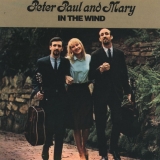
Just as gorgeous as the above, I’d say it’s slightly more consistent in terms of the atmosphere it tries to create and as a result it carries a heavier emotional punch. And of course it keeps me in the Dylan mood.


Available from
Now, that was something different. Maybe I’m overrating due to its surprise value, but who would have thought that a bass on its own – well, almost on its own, there’s also the drummer Armand Molinetti that deserves to be mentioned, his presence does go a long way, as he provides the foundation for François Rabbath and his bass to do their thing - can produce such a complete outcome. Highly creative playing style that rarely gets dull. At times it goes for a bigger sound, though it doesn’t need to create the impression of a full-size orchestra, it works just fine by itself.

Available from
Two words should be enough: Curtis Mayfield. It should have been a forgettable, run-of-the-mill R & B album, but he is such a wild, glorious driving force that he single-handedly carries it to next level. No matter how many times one listens to it, it doesn't age at all.
Available from
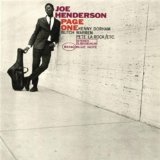
This album is full of vivid colours, it is extremely evocative, immediately transports you to a different place and time, perfect for a hot summer night, enjoying your drink in Cuba or a similar setting, you know what I mean. Relentless energy without a single wasted moment and the piano adds a level of class that allows the record to take the next step.

Available from
What can one say about this album. It features, like, the best lineup of all time? It has a strong case, that’s for sure. Duke Ellington on piano, Charles Mingus on bass, Max Roach on drums, what else could one ask for? I not so subtly hinted at this record a couple of weeks ago while commenting on Piano In The Foreground when I said Ellington has a better trio album, if you want to check how he fares in such an environment. Mingus/Ellington relationship is the stuff of legend. Ellington had been the biggest influence on Mingus – Charlie Parker the only one being in the same league, as we got to witness in the previous album. Even though Ellington was his childhood hero, it’s fair to say their relationship had its ups and downs. Mingus had the chance to play alongside Ellington in 1953. This promising collaboration came to an abrupt end when Ellington was more or less forced to fire – something that was totally out of character for him, he wasn’t a fan of taking such extreme measures - Mingus after he was involved in an “incident” with Juan Tizol. When it comes to this album, it wouldn’t be that much of a stretch to claim that the complex nature of their relationship reflects on the music, as tension transforms into passion, each one adds a part of his personality, yet again mixing them together creates a new sound, that doesn’t remind us of their “regular” stuff. Its quality is undeniable, but a trio is by no means enough for these guys – I mean, they give the impression of being more than three, that’s how big their sound is, imagine if there were actually more musicians present, it would have been marvellous. My favourite track here is easily Le fleurs africaines (African Flower) a wonderful if somewhat outlandish -which of course is part of the charm- ballad.
Year of Release:
1963
Appears in:
Rank Score:
609
Rank in 1963:
Rank in 1960s:
Overall Rank:
Average Rating:
Comments:
Available from
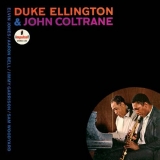
Based on their legendary status alone, this has to be one of the greatest collaborations of all time – actually, if we agree that Coltrane is the best saxophonist of all time and considering that Ellington is the most recorded jazz composer, it’s hard to come up with a better combination. Coltrane has adjusted to Ellington’s style more than the other way around, so if you are looking for some of Coltrane’s trademark otherworldly shenanigans, this might seem too basic and bore you. If you like a healthy dose of old school cinematic vibes in your jazz, then here we are, this is for you. They aren’t particularly diverse or adventurous or willing to experiment and as a result they don’t cover a lot of ground musically speaking, but every track is a highly emotional ride - the opening track being the best example of it.
Year of Release:
1963
Appears in:
Rank Score:
675
Rank in 1963:
Rank in 1960s:
Overall Rank:
Average Rating:
Comments:
Total albums: 33. Page 1 of 4
Don't agree with this chart? Create your own from the My Charts page!
Top 33 Music Albums of 1963 composition
| Artist | Albums | % | |
|---|---|---|---|
|
|
|||
| Peter, Paul And Mary | 2 | 6% | |
| John Coltrane | 2 | 6% | |
| Sun Ra | 1 | 3% | |
| Thelonious Monk | 1 | 3% | |
| Helen Shapiro | 1 | 3% | |
| Chico Hamilton | 1 | 3% | |
| Chris McGregor & The Castle Lager Big Band | 1 | 3% | |
| Show all | |||


Top 33 Music Albums of 1963 similarity to your chart(s)
Not a member? Creating an account is quick, easy and FREE!
Join 50,000+ music fans
- Join a community of over 50,000 music fans.
- Create & share your own charts.
- Influence the overall album rankings.
- Post comments in the forums and vote on polls.
- Comment on or rate any album, artist, track or chart.
- Discover new music & improve your music collection.
- Customise the overall chart using a variety of different filters & metrics.
- Create a wishlist of albums.
- Unlock Dark Mode and other member features.
- Help maintain the BEA database.
- Earn member points and gain access to increasing levels of functionality!
- And much more.
Join now It only takes a moment.
Top 33 Music Albums of 1963 ratings
Not enough data Average Rating = (n ÷ (n + m)) × av + (m ÷ (n + m)) × AVwhere:
av = trimmed mean average rating an item has currently received.
n = number of ratings an item has currently received.
m = minimum number of ratings required for an item to appear in a 'top-rated' chart (currently 10).
AV = the site mean average rating.
Please log in or create an account if you want to be able to leave a rating
Top 33 Music Albums of 1963 favourites
Please log in or create an account if you want to be able to add a favourite
Top 33 Music Albums of 1963 forum mentions
This chart has been referenced 1 time on the forums, Explore the wider forum discussion to see what members have said about it.
From kokkinos 01/11/2022 22:05 in I'm going back to the start
“And here's the . Way more entries than usual, not sure if it was such a great year or I loosened up. (Still haven't made up my mind regarding The Beatles, I'll probably get 1964 going and think about it along the way.)”
View post →Top 33 Music Albums of 1963 comments

What do you think of this chart? Be the first to comment!!
Log in or create an account to rate this chart, leave comments or join the discussion.