Listed below are the overall rankings for the best albums in history as determined by their aggregate positions in over 59,000 different greatest album charts on BestEverAlbums.com! (Chart last updated: 3 hours ago).
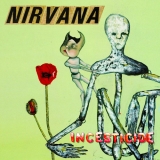
"The first half sits comfortably next to Nevermind, if somewhat less essential. The second half is weaker than the low points of bleach. Then it finishes with one of their best track."Reply
"LEFT RIGHT LEFT RIGHT A very unique album if I do say so myself. At the beginning of the marvelous decade known as the 90's, Primus released not just one, but 2 amazing pieces of insanity. The style of singing that sounds like a stereotypical white male attempting to impersonate a stereotypical w...""LEFT
RIGHT
LEFT
RIGHT
A very unique album if I do say so myself. At the beginning of the marvelous decade known as the 90's, Primus released not just one, but 2 amazing pieces of insanity. The style of singing that sounds like a stereotypical white male attempting to impersonate a stereotypical white male from the country has come to be a very unique piece of vocals. The main draw of Primus' music is just how insane it truly is. Just a bunch of amazingly well made tunes with the bass parts played superbly while the singing just suits the overly tone of the album itself.
The thing I've always liked about Primus is that they seem like the sort of band that just don't care. This is what reflects in their music, just a bunch of goof balls trying to make songs. It turns out amazing. "[+]Reply
""At San Quentin" is one of the all-time essential live albums. Johnny Cash had released the live album "At Folsom Prison" just a year before but "At San Quentin" is its equal in every way (well, except for the fact that this album lacks the song "Cocaine Blues"). The defining moment comes on the ..."""At San Quentin" is one of the all-time essential live albums. Johnny Cash had released the live album "At Folsom Prison" just a year before but "At San Quentin" is its equal in every way (well, except for the fact that this album lacks the song "Cocaine Blues").
The defining moment comes on the song "San Quentin." The crowd of convicts simply EXPLODES with adoration for Cash and vitriol for the prison as they hang on to every word of the song:
"San Quentin, may you rot and burn in hell!
May your walls fall and may I live to tell!
May all the world forget you ever stood.
And may all the world regret you did no good."
The response is so thunderous that Cash plays the song a second time immediately thereafter. Here you have one of the biggest stars in the world speaking directly to the hearts of some of the "lowest" men in the world and the connection is electric.
Add to that the fact that you have Cash favorites "I Walk the Line" and "Folsom Prison Blues," plus the premiere of two great new songs: the Bob Dylan/Johnny Cash penned "Wanted Man" and Shel Silverstein's hilarious "A Boy Named Sue." And of course, if you pick up an extended CD re-release of the album, it has even more classics than the 10 issued on the original release.
Cash always amazes me with his ability to mix humor, vulgarity and spirituality. His mastery of all three are what made the prisoners love him, and why this album will always be one of my favorites."[+]Reply
"Sitting on the Dock of the Bay has to be one of the all-time great tracks for empathy. You can really imagine the lack of direction, sense of loss, and searching for hope. You can see yourself sitting there with him watching time roll away. What a craftsman with his voice."Reply
"Wonderfully experimental. This is the only album of it's kind and has the potential to influence pop for years to come. I think the rock-only nerds got to the album first (currently a 72) - ya'll know pop music can be good, right? Especially when it's this euphorically fucked up?"Reply
"Sadly, people outside of Canada just do not understand. I, for one, do not understand why you can call anything by Radiohead (for example) more atmospheric or resonant than Locked in the Trunk of a Car. In Canada, this album spawned five modern rock radio staples and began to crystalize the band'...""Sadly, people outside of Canada just do not understand. I, for one, do not understand why you can call anything by Radiohead (for example) more atmospheric or resonant than Locked in the Trunk of a Car. In Canada, this album spawned five modern rock radio staples and began to crystalize the band's status as icons. Stellar, haunting album tracks like Pigeoon Camera only add to this CD's greatness."[+]Reply
"Up until yesterday, I had avoided this album. I had done this based on numerous negative comments about the album and band at the time. It shows how important it is to form your own opinion and not be swayed by others. What I try not to do is compare later albums with earlier works or vice versa,...""Up until yesterday, I had avoided this album. I had done this based on numerous negative comments about the album and band at the time. It shows how important it is to form your own opinion and not be swayed by others. What I try not to do is compare later albums with earlier works or vice versa, this applies to all the music I listen to. So, in my opinion, this is an excellent album with great music and great production. I have bought it on vinyl and am pleased that it is still housed in the brown paper cover like the original was. The one comparison which I will make, Is that I accept that keyboards feature more on this album than previous works which I like and which suits the band development at the time. "[+]Reply
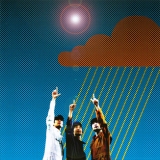
"One of the ways the Fishmans online community stokes the fire of their fandom is through the creation of "The Seasonal Report", a fanzine consisting of all things concerning the Japanese outfit. Said volumes contain recent Fishmans-related news, fan retrospectives and even occasional poetry. Howe...""One of the ways the Fishmans online community stokes the fire of their fandom is through the creation of "The Seasonal Report", a fanzine consisting of all things concerning the Japanese outfit. Said volumes contain recent Fishmans-related news, fan retrospectives and even occasional poetry. However, the passion project can only be accessed on 'The Fish Tank' (Fishmans' Discord), issuu.com and archive.org. This narrowness of access is an emblematic reminder of the legacy the band has left in its wake. It's a portrait of veracious artisans whose existence and collected works are shrouded in just as much mystery as truth. This attaches value to excavating deep within cavernous labyrinths to find gold among endless, pedestrian sediment. Some things are meant to be uncovered by happenstance and, due to this, many don't find Fishmans. Fishmans find you. Furthermore, it seems fitting that the closing studio effort was 1997's 'Uchu Nippon Setagaya', an eight-chapter odyssey that saw the band fully harness and deploy the optimal strength of their dream pop powers. See, just as Fishmans was destined to be difficult to discover, they also curated a candle which burned ineffably bright for a finite amount of time. At the risk of inducing melodrama, Fishmans' catalog extends beyond the plane of human achievement and dexterity. To put it plainly, it was the music of the angels.
Album seven is the final entry in Fishmans' Wakiki Trilogy, so named for the new studio HQ, "Waikiki Beach", provided by the band's record label (Polydor). The sonic space birthed fruitful products, as they went on to release three of their most acclaimed records in this new auditory ecosystem. The upgrade in capital also aided a transition to a more evocative and mellifluous sound, supplanting their dub roots. The new look artistic temperament is unabashed and unshrouded in the opening track of 'Space Japan Setagaya', entitled 'Pokka Pokka'. The opening melody coos with a delicate, childlike disposition, almost with the intention to softly awaken one from a dream. Kin-Ichi Motegi's patient drum beat gently breaks the serenity to pull you in as Sato's falsetto safely ushers you to the next soundscape. His lyrics craft a vision more mournful than on previous records. He sings, "I wish I could be kind only to someone; I wish I could live without relying on tomorrow." Honzi's violin, which served as a lynchpin for the band's dream pop realignment, softly puts the track to bed and marks another tender moment in an already alluring discography. At the close, it becomes clear that it's a heinous crime that 98 percent of the western world will never experience this music but it also functions as a magnificent anomaly to those who greet its majesty. It's like finding a four-leaf clover or witnessing a double rainbow by accident. Track two advances the dynamism as icy keys give way to a submerged bassline from Yuzuru Kashiwabara, who's always been a phenomenal bass player, but 'Weather Report' is one of his finest hours. Also, the production done by ZAK is another highlight, as the song shares DNA with Joy Division's 'Atmosphere'. The glassy, sweeping walls of sound contrast the throbbing, ever-present bassline. It's a heavier, but no less comely moment for the group.
'うしろ姿'opens with concordant ticking, evoking a hair-triggered clock. The bass again buoys as Sato sings, "Sometimes I walk a little too far, sometimes I go a little crazy." The track evolves into a pleasing cacophony of dueling rhythms and melodies, all while reverbed vocals hover in the distance, watching the sounds perpetually crawl over each other. Next, comes one of the album's more tranquil passages. The tale goes that when Sato provided his mates with a demo tape which would become 'Uchu Nippon Setagaya', most of the demos were nearly complete. The band was reluctant to tamper with the grandeur of the work, especially 'In the Flight'. On the final version, Sato's dove coos are obscured and hauntingly placid. A disciplined, observant drumbeat lingers behind as the song slowly dissipates into the ether. It's squarely doleful, ruminating on Sato's own personal sense of creative and personal unfulfillment after the band's first 10 years. The juxtaposition of beauty and sorrow coagulate to create a hymn with an idiosyncratic, potent aura. These are the sort of triumphs Fishmans make look elementary. 'Magic Love' commences with what sounds like junkyard percussion and stakes its claim as the cheeriest cut on the record. There's a lot brewing here and the bombastic production furnishes the immediacy. Its flamboyance isn't to its detriment as 'Magic Love' is still distinctly Fishmans and, therefore, funkily merry.
The band rekindle their trip-hop ethos with 'バックビートにのっかって', a slow-churning sway which steadily unravels to don a new sonic identity. Honzi's polite keyboard strokes give way to a more ethereal tone which elicits violin and a more ominous vocal style. "Anxiety hovers in the air at night, it must be ruining someone's life," Sato croons. It's a patient exercise which precurses the maximalist leanings of the subsequent anthem. For the penultimate effort, the album recedes back into itself during the intro of 'Walking in the Rhythm'. Alternating sets of key strokes frame the outer edges of the track as a harmonious chant begins in lock-step while encouraging the listener to 'Walk in the Rhythm'. Clocking in at nearly 13 minutes, this 'Walk' is the record's most prolonged but possibly most serene. Honzi's violin blots the midpoint, as the strings are purposely manic, sonically abyssal and the reverberation creates an illusion of ricocheted amati lost in a spectral wilderness. Soon after, the song shrinks again as a subdued, elongated coda allows the once triumphant harmonies to be ingested subtly by the Earth. 'Walking in the Rhythm' is a masterstroke of simplicity, intention and cognizant repetition. The LP leaves us with its defining statement. 'Daydream' is a bubbling, dilating, caliginous opus that starts with a modest drumbeat. Sato bellows overtop, "A figure in the sunset, standing with a quiet face; They looked so defenseless; They blankly stood." The track oscillates with progressive whimsy, coalescing into a multi-pronged beast of arpeggio. The weighted wheel of guitar that arrives at the track's latter half conjures the sensation of being kissed by the sun after a brief summer rain storm. 'Daydream' gives in to its own anxiety as fragments begin to decouple in a heavenly fashion before dissolving ahead of its full maturation. It remains the most poignant exhibition amongst a marvelous octet of culminating art.
When Shinji Sato presented his decade-long collaborators with his sparkling demo tape for what would become the final record, they were puzzled and questioned their place in an outfit that was rapidly becoming singular. However, Sato's intentions were noble and driven by a pursuit to make music that had the capacity to "change a person's life". In reality, Sato trusted his bandmates to interpret and execute his artistic vision and they too checked their egos in order to produce something wholly momentous. Despite not knowing the full vulnerability of Sato's personal headspace, Kashiwabara and Motegi were aware of the pain he carried as a result of watching his band dissolve in front of his eyes. So, as a reactionary measure, Sato employed loneliness to combat future loneliness. The byproduct was a record marked by solemnity but bathed in a whimsical elixir of creative utopia, a paradise which Sato deeply longed for. His relentless pursuit of perfection was his final undertaking. Sato died in March of 1999, but his bandmates still visit his grave to politely conversate. For theirs is a bond which never can be severed, not even by death. Fishmans still exist, as Sato would've surely wanted, never straying from their desire to plot a path through rain clouds to reach the gleaming sun of ambition and the vivid sky of artistic fulfillment.
"I'm filling the holes in my heart, little by little"
-Pokka Pokka
1. Daydream
2. Walking in the Rhythm
3. In the Flight
95.3"[+]Reply
"(Nostalgic and bittersweet album. Manages to take that 90s Shoegaze/Noise Pop influence and warp it to something very personal and moving. When the album rocks it really rocks and when the big emotional screamed crescendos hit they really hit..) Overall, I saw the growing hype for this album and ...""(Nostalgic and bittersweet album. Manages to take that 90s Shoegaze/Noise Pop influence and warp it to something very personal and moving. When the album rocks it really rocks and when the big emotional screamed crescendos hit they really hit..)
Overall, I saw the growing hype for this album and I meant to get to it before the hype got out of hand. Well, too late. This is one of the surprise hits of the year amongst music nerds. And I listened with that in the back of my mind. I was thinking I may be disappointed. I wasn't. At least, not much.
The guitars and especially the drums here are excellent. The drums have a clear and crunching compressed intensity that is cool. Makes the otherworldly Shoegaze waves of sound a bit more grounded and tangible, which I much prefer over a general sense of just walls of s=disorienting pretty sound and noise. The guitar sounds are similarly cool, drawing not only from ethereal waves of sound in MBV albums but also from more clear and structured riffs you may find in a Smashing Pumpkins or more direct post-punk album. It's a nice mix.
The vocals are clearly very emotional. On some of the songs a clear Emo influence comes over the tracks, especially on the cathartic climaxes where the vocals scream with intense sadness or anger or some other passion.
The songs are consistently beautiful and not super samey. The more catchy alternative rock songs, especially "Analog Sentimentalism", "Excuse", and "Chicken" all have an infectious and catchy power to them. They somehow made me feel bliss by how damn great the tunes were and also a deep sad nostalgia. Great tunes.
The Epic songs, of which there are 2 and arguably 3, (10 minutes, 9 and a half minutes and 7 minute jams are these ones) are cool and give the music time to build and breathe. The best of the big towering tracks is track 6 "Age of Fluctuation". It is also maybe the heaviest song here and very noisey. But it creates a really inviting world that explodes into a screaming emo crescendo.
There are a lot of highlights - the guitars and their sounds, the drums and the way they are recorded, the excellent vocals, the flow of the album is good, the nice little unexpected touches that Parannoul throw in when least expected etc etc. The only tracks that I maybe wasn't vibing with nearly as much on my first couple listens were track 8 "Extra Story" and maybe "Youth rebellion". But really those will probably grow on me. This is a really nice album."[+]Reply
"Quite a simple collection of songs that are trying to hook you to their choruses and make you sing them for the rest of the day. This works to a varying degree of success with the best tracks coming very early on. Almost every track on side 1 has a fantastic chorus and is so infectious to listen ...""Quite a simple collection of songs that are trying to hook you to their choruses and make you sing them for the rest of the day. This works to a varying degree of success with the best tracks coming very early on. Almost every track on side 1 has a fantastic chorus and is so infectious to listen to. I leave this album with Baby Love and Where Did Our Love Go firmly wedged inside my brain. The song that has grown on me the most though is When The Lovelight Starts Shining Through His Eyes which is such an effective song and I always sing along to it whenever it comes on. However, side 2 is the complete opposite and I find no song really works on there at all. If you removed the whole of side 2 I think it would only make the album better as all the boring and dull tracks would be removed. Overall, a simple but effective release that is let down drastically by the second half in my opinion. "[+]Reply


 johnnyonthespot1 | Helpful? (Log in to vote) | +5 votes (5 helpful | 0 unhelpful)
A maximum of 5 top-voted qualifying comments are selected for each album. To provide the best experience for visitors, comments are excluded if they refer to data corrections, contain excessive profanity, are written in all caps, are non-English, are too short, consist of conversations between users, or contain lists of best tracks etc.
johnnyonthespot1 | Helpful? (Log in to vote) | +5 votes (5 helpful | 0 unhelpful)
A maximum of 5 top-voted qualifying comments are selected for each album. To provide the best experience for visitors, comments are excluded if they refer to data corrections, contain excessive profanity, are written in all caps, are non-English, are too short, consist of conversations between users, or contain lists of best tracks etc.

 junodog4 | Helpful? (Log in to vote) | +5 votes (5 helpful | 0 unhelpful)
A maximum of 5 top-voted qualifying comments are selected for each album. To provide the best experience for visitors, comments are excluded if they refer to data corrections, contain excessive profanity, are written in all caps, are non-English, are too short, consist of conversations between users, or contain lists of best tracks etc.
junodog4 | Helpful? (Log in to vote) | +5 votes (5 helpful | 0 unhelpful)
A maximum of 5 top-voted qualifying comments are selected for each album. To provide the best experience for visitors, comments are excluded if they refer to data corrections, contain excessive profanity, are written in all caps, are non-English, are too short, consist of conversations between users, or contain lists of best tracks etc.

 Kamens | Helpful? (Log in to vote) | +6 votes (7 helpful | 1 unhelpful)
A maximum of 5 top-voted qualifying comments are selected for each album. To provide the best experience for visitors, comments are excluded if they refer to data corrections, contain excessive profanity, are written in all caps, are non-English, are too short, consist of conversations between users, or contain lists of best tracks etc.
Kamens | Helpful? (Log in to vote) | +6 votes (7 helpful | 1 unhelpful)
A maximum of 5 top-voted qualifying comments are selected for each album. To provide the best experience for visitors, comments are excluded if they refer to data corrections, contain excessive profanity, are written in all caps, are non-English, are too short, consist of conversations between users, or contain lists of best tracks etc.
 jhuik | Helpful? (Log in to vote) | +5 votes (5 helpful | 0 unhelpful)
A maximum of 5 top-voted qualifying comments are selected for each album. To provide the best experience for visitors, comments are excluded if they refer to data corrections, contain excessive profanity, are written in all caps, are non-English, are too short, consist of conversations between users, or contain lists of best tracks etc.
jhuik | Helpful? (Log in to vote) | +5 votes (5 helpful | 0 unhelpful)
A maximum of 5 top-voted qualifying comments are selected for each album. To provide the best experience for visitors, comments are excluded if they refer to data corrections, contain excessive profanity, are written in all caps, are non-English, are too short, consist of conversations between users, or contain lists of best tracks etc.


 DriftingOrpheus | Helpful? (Log in to vote) | +4 votes (4 helpful | 0 unhelpful)
A maximum of 5 top-voted qualifying comments are selected for each album. To provide the best experience for visitors, comments are excluded if they refer to data corrections, contain excessive profanity, are written in all caps, are non-English, are too short, consist of conversations between users, or contain lists of best tracks etc.
DriftingOrpheus | Helpful? (Log in to vote) | +4 votes (4 helpful | 0 unhelpful)
A maximum of 5 top-voted qualifying comments are selected for each album. To provide the best experience for visitors, comments are excluded if they refer to data corrections, contain excessive profanity, are written in all caps, are non-English, are too short, consist of conversations between users, or contain lists of best tracks etc.


 Mercury | Helpful? (Log in to vote) | +3 votes (3 helpful | 0 unhelpful)
A maximum of 5 top-voted qualifying comments are selected for each album. To provide the best experience for visitors, comments are excluded if they refer to data corrections, contain excessive profanity, are written in all caps, are non-English, are too short, consist of conversations between users, or contain lists of best tracks etc.
Mercury | Helpful? (Log in to vote) | +3 votes (3 helpful | 0 unhelpful)
A maximum of 5 top-voted qualifying comments are selected for each album. To provide the best experience for visitors, comments are excluded if they refer to data corrections, contain excessive profanity, are written in all caps, are non-English, are too short, consist of conversations between users, or contain lists of best tracks etc.