Overall Chart
Listed below are the overall rankings for the best albums in history as determined by their aggregate positions in over 59,000 different greatest album charts on BestEverAlbums.com! (Chart last updated: 2 hours ago).
You can customise how this chart is generated, browse the individual charts constituting the overall rankings from The Charts page, or submit your own chart from the My Charts page!

"The second half of this album is a bit weaker, but this is possibly the greatest piece of art that Lady Gaga has ever produced. And this site has criminally under rated LG and other adjacent pop artists for decades and it is time for all of you boomers to realize that pop music in 2025 is far bet..." [+] Reply
-  corenfro | Helpful? (Log in to vote) | +4 votes (9 helpful | 5 unhelpful)
A maximum of 5 top-voted qualifying comments are selected for each album. To provide the best experience for visitors, comments are excluded if they refer to data corrections, contain excessive profanity, are written in all caps, are non-English, are too short, consist of conversations between users, or contain lists of best tracks etc.
corenfro | Helpful? (Log in to vote) | +4 votes (9 helpful | 5 unhelpful)
A maximum of 5 top-voted qualifying comments are selected for each album. To provide the best experience for visitors, comments are excluded if they refer to data corrections, contain excessive profanity, are written in all caps, are non-English, are too short, consist of conversations between users, or contain lists of best tracks etc.

"Contemplative, atmospheric and even haunting at times. It's really hard for me to find the words to describe this album. Definitely my favorite release of this year so far. Favorite tracks: Crimson Tide, It Just Doesn't Happen, foolssong, Cue Synthesizer" Reply
Year of Release:
2020
Appears in:
Rank Score:
466
Rank in 2020:
Rank in 2020s:
Overall Rank:
Average Rating:
Comments:

"This is a really good album by far her best up to this point all the uptempo tracks come one after the other followed by the slower tracks at the end of the album. It runs very smoothly best tracks for me are If, Throb, That's the Way Love Goes & all the slower tacks at the end. A great RnB album..." [+] Reply
-  Tamthebam | Helpful? (Log in to vote) | 0 votes (0 helpful | 0 unhelpful)
A maximum of 5 top-voted qualifying comments are selected for each album. To provide the best experience for visitors, comments are excluded if they refer to data corrections, contain excessive profanity, are written in all caps, are non-English, are too short, consist of conversations between users, or contain lists of best tracks etc.
Tamthebam | Helpful? (Log in to vote) | 0 votes (0 helpful | 0 unhelpful)
A maximum of 5 top-voted qualifying comments are selected for each album. To provide the best experience for visitors, comments are excluded if they refer to data corrections, contain excessive profanity, are written in all caps, are non-English, are too short, consist of conversations between users, or contain lists of best tracks etc.
Year of Release:
1993
Appears in:
Rank Score:
466
Rank in 1993:
Rank in 1990s:
Overall Rank:
Average Rating:
Comments:

Share your opinion and help others discover this album. The top-voted comments are showcased in our aggregate charts!

"A highly intimate album in which Sting lets go a little the virtuoso playing to tell a story and give it the space it deserves. To be listened to attentively. This one is not a party album. it is to be taken in more as you would take in a great movie or book." Reply
-  Robert Anton Wilson | Helpful? (Log in to vote) | +2 votes (2 helpful | 0 unhelpful)
A maximum of 5 top-voted qualifying comments are selected for each album. To provide the best experience for visitors, comments are excluded if they refer to data corrections, contain excessive profanity, are written in all caps, are non-English, are too short, consist of conversations between users, or contain lists of best tracks etc.
Robert Anton Wilson | Helpful? (Log in to vote) | +2 votes (2 helpful | 0 unhelpful)
A maximum of 5 top-voted qualifying comments are selected for each album. To provide the best experience for visitors, comments are excluded if they refer to data corrections, contain excessive profanity, are written in all caps, are non-English, are too short, consist of conversations between users, or contain lists of best tracks etc.
Year of Release:
1991
Appears in:
Rank Score:
465
Rank in 1991:
Rank in 1990s:
Overall Rank:
Average Rating:
Comments:

"The first half is brilliant, unfortunately the second half is a big drop-off. My highlights are Mr Writer, Have A Nice Day, Vegas Two Times and Step On My Old Size Nines. Weakest tracks - Caravan Holiday, Rooftop and Everyday I Think Of Money. The 2002 re-issue contains their brilliant cover of H..." [+] Reply
Year of Release:
2001
Appears in:
Rank Score:
465
Rank in 2001:
Rank in 2000s:
Overall Rank:
Average Rating:
Comments:

"Lately, The Flaming Lips have entered a very experimental stage of their career. They’ve always been fairly experimental and odd in their music, but lately they’ve been going in a very different direction from some of their earlier albums like “Yoshimi Battles The Pink Robots" and “The Soft Bulle..." [+] Reply
-  RockyRaccoon | Helpful? (Log in to vote) | +4 votes (4 helpful | 0 unhelpful)
A maximum of 5 top-voted qualifying comments are selected for each album. To provide the best experience for visitors, comments are excluded if they refer to data corrections, contain excessive profanity, are written in all caps, are non-English, are too short, consist of conversations between users, or contain lists of best tracks etc.
RockyRaccoon | Helpful? (Log in to vote) | +4 votes (4 helpful | 0 unhelpful)
A maximum of 5 top-voted qualifying comments are selected for each album. To provide the best experience for visitors, comments are excluded if they refer to data corrections, contain excessive profanity, are written in all caps, are non-English, are too short, consist of conversations between users, or contain lists of best tracks etc.
Year of Release:
2013
Appears in:
Rank Score:
465
Rank in 2013:
Rank in 2010s:
Overall Rank:
Average Rating:
Comments:

"I stumbled upon this album and I'm so glad I did as it is fantastic. Fans of arena rock and guitar shredding in general owe it to themselves to find this album. You are already a fan of Michael Scheneker and you just don't know it yet. I have no idea why he and this band aren't more well known in..." [+] Reply
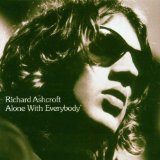
"not heard this in many a years ....c'mon people you in my mind in my sleep and song for the lovers ...superb" Reply
Year of Release:
2000
Appears in:
Rank Score:
464
Rank in 2000:
Rank in 2000s:
Overall Rank:
Average Rating:
Comments:

"tim rice isn't religious at all and webber is too big to say that he isn't, but doesn't talk about it. I suppose they think this is funny, "jesus christ superstar," "this jesus must die." lol, rice was knighted. the album was originally banned for blasphemy, anything by guys this huge to do such ..." [+] Reply
Total albums: 10,000. Page 328 of 1,000
Overall Chart composition
| Decade | Albums | % | |
|---|---|---|---|
| 1930s | 2 | 0% | |
| 1940s | 35 | 0% | |
| 1950s | 302 | 3% | |
| 1960s | 708 | 7% | |
| 1970s | 1,426 | 14% | |
| 1980s | 1,414 | 14% | |
| 1990s | 1,601 | 16% | |
| 2000s | 1,729 | 17% | |
| 2010s | 1,958 | 20% | |
| 2020s | 825 | 8% |
| Artist | Albums | % | |
|---|---|---|---|
|
|
|||
| Bob Dylan | 37 | 0% | |
| The Rolling Stones | 35 | 0% | |
| David Bowie | 32 | 0% | |
| The Beatles | 29 | 0% | |
| Miles Davis | 27 | 0% | |
| Neil Young | 26 | 0% | |
| Various Artists | 25 | 0% | |
| Show all | |||
| Country | Albums | % | |
|---|---|---|---|
|
|
|||
 |
5,008 | 50% | |
 |
2,657 | 27% | |
 |
430 | 4% | |
 |
335 | 3% | |
 |
221 | 2% | |
 |
157 | 2% | |
 |
134 | 1% | |
| Show all | |||