Overall Chart
Listed below are the overall rankings for the best albums in history as determined by their aggregate positions in over 59,000 different greatest album charts on BestEverAlbums.com! (Chart last updated: 1 hour ago).
You can customise how this chart is generated, browse the individual charts constituting the overall rankings from The Charts page, or submit your own chart from the My Charts page!
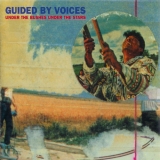
"I bought this on cassette when it came out and was hooked. I listened to it several times in a row without stopping and haven't stopped listening to it for 20 years. In the span of albums from "Box" through "Under the Stars," Robert Pollard draws inspiration from the entire history of rock after ..." [+] Reply

"The people who dismiss the Monkees without ever having listened to them, and who refer to them derisively as a "band" (never without quotation marks), can never really be convinced of their merits. I don't have ill feelings toward these people because they had the whole media telling a story abou..." [+] Reply
Year of Release:
1967
Appears in:
Rank Score:
358
Rank in 1967:
Rank in 1960s:
Overall Rank:
Average Rating:
Comments:


"This album really gets you moving and has such a fantastic rhythm to it which is just so infectious. It really does groove and that is all down to the brilliant instrumentation with each aspect of the sound playing a vital role. The percussion is simply phenomenal with the bongos and timbales ste..." [+] Reply

"Nick Cave may not be as young as he used to be, but his most recent side project takes the rawness and energy that The Birthday Party once oozed in and moulds it with the eyes and hands of a dirty old man. Sexy yet crude, rough yet calculated - it sounds exactly like its name." Reply
-  Dr. Mambo | Helpful? (Log in to vote) | +1 votes (1 helpful | 0 unhelpful)
A maximum of 5 top-voted qualifying comments are selected for each album. To provide the best experience for visitors, comments are excluded if they refer to data corrections, contain excessive profanity, are written in all caps, are non-English, are too short, consist of conversations between users, or contain lists of best tracks etc.
Dr. Mambo | Helpful? (Log in to vote) | +1 votes (1 helpful | 0 unhelpful)
A maximum of 5 top-voted qualifying comments are selected for each album. To provide the best experience for visitors, comments are excluded if they refer to data corrections, contain excessive profanity, are written in all caps, are non-English, are too short, consist of conversations between users, or contain lists of best tracks etc.
Year of Release:
2007
Appears in:
Rank Score:
358
Rank in 2007:
Rank in 2000s:
Overall Rank:
Average Rating:
Comments:

"Excessively heavy metal. Just grinds you down. If Black Sabbath were depressed, they would have played like this." Reply
Year of Release:
2018
Appears in:
Rank Score:
358
Rank in 2018:
Rank in 2010s:
Overall Rank:
Average Rating:
Comments:

Share your opinion and help others discover this album. The top-voted comments are showcased in our aggregate charts!

"Never heard of this guy or album until I read about it in the forums on this site. That is a travesty. This is a fantastic blues album." Reply

"Forgot how much I liked this album, one of the true classics of the 70s..."Chicago" was the hit single from this, but "I used to be a King" was the track that AOR played and it is one of my all time favorite album tracks. It could have easily fit on a CSNY album. This album ha..." [+] Reply
-  ffudnebbuh | Helpful? (Log in to vote) | +8 votes (8 helpful | 0 unhelpful)
A maximum of 5 top-voted qualifying comments are selected for each album. To provide the best experience for visitors, comments are excluded if they refer to data corrections, contain excessive profanity, are written in all caps, are non-English, are too short, consist of conversations between users, or contain lists of best tracks etc.
ffudnebbuh | Helpful? (Log in to vote) | +8 votes (8 helpful | 0 unhelpful)
A maximum of 5 top-voted qualifying comments are selected for each album. To provide the best experience for visitors, comments are excluded if they refer to data corrections, contain excessive profanity, are written in all caps, are non-English, are too short, consist of conversations between users, or contain lists of best tracks etc.
Year of Release:
1971
Appears in:
Rank Score:
357
Rank in 1971:
Rank in 1970s:
Overall Rank:
Average Rating:
Comments:

"Yo La Tengo is one of the most consistent bands of their generation, releasing album after album of catchy indie rock that always sounds recognizably like Yo La Tengo without being overly repetitive. The subtly adventurous Fade rates as an above-average Yo La Tengo album, highlighted by the opene..." [+] Reply
-  buzzdainer | Helpful? (Log in to vote) | +1 votes (1 helpful | 0 unhelpful)
A maximum of 5 top-voted qualifying comments are selected for each album. To provide the best experience for visitors, comments are excluded if they refer to data corrections, contain excessive profanity, are written in all caps, are non-English, are too short, consist of conversations between users, or contain lists of best tracks etc.
buzzdainer | Helpful? (Log in to vote) | +1 votes (1 helpful | 0 unhelpful)
A maximum of 5 top-voted qualifying comments are selected for each album. To provide the best experience for visitors, comments are excluded if they refer to data corrections, contain excessive profanity, are written in all caps, are non-English, are too short, consist of conversations between users, or contain lists of best tracks etc.
Year of Release:
2013
Appears in:
Rank Score:
357
Rank in 2013:
Rank in 2010s:
Overall Rank:
Average Rating:
Comments:

"Pretty good album. Falls off a bit towards the end. Could’ve benefited from being trimmed to 15 or 16 songs. Overall respectable alternative metal album. Don’t let Manson’s persona scare you away. This is nearly as good as Antichrist Superstar Love Song, Fight Song, Disposable Teens, Target Audie..." [+] Reply
-  elo269megv | Helpful? (Log in to vote) | 0 votes (0 helpful | 0 unhelpful)
A maximum of 5 top-voted qualifying comments are selected for each album. To provide the best experience for visitors, comments are excluded if they refer to data corrections, contain excessive profanity, are written in all caps, are non-English, are too short, consist of conversations between users, or contain lists of best tracks etc.
elo269megv | Helpful? (Log in to vote) | 0 votes (0 helpful | 0 unhelpful)
A maximum of 5 top-voted qualifying comments are selected for each album. To provide the best experience for visitors, comments are excluded if they refer to data corrections, contain excessive profanity, are written in all caps, are non-English, are too short, consist of conversations between users, or contain lists of best tracks etc.
Total albums: 10,000. Page 408 of 1,000
Overall Chart composition
| Decade | Albums | % | |
|---|---|---|---|
| 1930s | 2 | 0% | |
| 1940s | 34 | 0% | |
| 1950s | 302 | 3% | |
| 1960s | 710 | 7% | |
| 1970s | 1,424 | 14% | |
| 1980s | 1,413 | 14% | |
| 1990s | 1,600 | 16% | |
| 2000s | 1,726 | 17% | |
| 2010s | 1,962 | 20% | |
| 2020s | 827 | 8% |
| Artist | Albums | % | |
|---|---|---|---|
|
|
|||
| Bob Dylan | 37 | 0% | |
| The Rolling Stones | 35 | 0% | |
| David Bowie | 32 | 0% | |
| The Beatles | 29 | 0% | |
| Miles Davis | 27 | 0% | |
| Neil Young | 26 | 0% | |
| Various Artists | 25 | 0% | |
| Show all | |||
| Country | Albums | % | |
|---|---|---|---|
|
|
|||
 |
5,005 | 50% | |
 |
2,655 | 27% | |
 |
431 | 4% | |
 |
335 | 3% | |
 |
221 | 2% | |
 |
157 | 2% | |
 |
134 | 1% | |
| Show all | |||
| Best Artists of 2020 | |
|---|---|
| 1. The Strokes | |
| 2. Fiona Apple | |
| 3. Phoebe Bridgers | |
| 4. Taylor Swift | |
| 5. Charli XCX | |
| 6. Jessie Ware | |
| 7. Fleet Foxes | |
| 8. The Weeknd | |
| 9. Run The Jewels | |
| 10. Tame Impala |