Best Albums of the 1960s
Listed below are the best albums of the 1960s as calculated from their overall rankings in over 58,000 greatest album charts. (Chart last updated: 39 minutes ago).

"Fantastic Jazz album, this is one record to listen to when you're starting to get into the genre! Great fast-paced pieces like the title track, Spiral, and Cousin Mary proves how Jazz doesn't always have to be very relaxing and slow (Nothing wrong with that though)." Reply
Year of Release:
1960
Appears in:
Rank Score:
3,724
Rank in 1960:
Rank in 1960s:
Overall Rank:
Average Rating:
Comments:

"A notch below Cosmo's for me but obviously a great American rock album. The guitar riff and drumbeat on Feelin Blue are irresistible. Some less than stellar tracks, Came out of the sky comes to mind. All in all a really solid album." Reply
Year of Release:
1969
Appears in:
Rank Score:
3,472
Rank in 1969:
Rank in 1960s:
Overall Rank:
Average Rating:
Comments:

"This album is an interesting case. Individually, I'm not a huge fan of any of the songs, but as a whole, it's an amazing listen." Reply
-  Fischman | Helpful? (Log in to vote) | +5 votes (6 helpful | 1 unhelpful)
A maximum of 5 top-voted qualifying comments are selected for each album. To provide the best experience for visitors, comments are excluded if they refer to data corrections, contain excessive profanity, are written in all caps, are non-English, are too short, consist of conversations between users, or contain lists of best tracks etc.
Fischman | Helpful? (Log in to vote) | +5 votes (6 helpful | 1 unhelpful)
A maximum of 5 top-voted qualifying comments are selected for each album. To provide the best experience for visitors, comments are excluded if they refer to data corrections, contain excessive profanity, are written in all caps, are non-English, are too short, consist of conversations between users, or contain lists of best tracks etc.
Year of Release:
1967
Appears in:
Rank Score:
3,445
Rank in 1967:
Rank in 1960s:
Overall Rank:
Average Rating:
Comments:

"1964 was a turbulent year for the United States of America. Injustice violated the air with a stench that, at its best, resembled cigar smoke caked into waterlogged, whiskey-stained clothing. At its worst, it conjured the fragrance of rotting corpses piled into black plague mass graves. A societa..." [+] Reply
-  DriftingOrpheus | Helpful? (Log in to vote) | +5 votes (5 helpful | 0 unhelpful)
A maximum of 5 top-voted qualifying comments are selected for each album. To provide the best experience for visitors, comments are excluded if they refer to data corrections, contain excessive profanity, are written in all caps, are non-English, are too short, consist of conversations between users, or contain lists of best tracks etc.
DriftingOrpheus | Helpful? (Log in to vote) | +5 votes (5 helpful | 0 unhelpful)
A maximum of 5 top-voted qualifying comments are selected for each album. To provide the best experience for visitors, comments are excluded if they refer to data corrections, contain excessive profanity, are written in all caps, are non-English, are too short, consist of conversations between users, or contain lists of best tracks etc.
Year of Release:
1964
Appears in:
Rank Score:
3,443
Rank in 1964:
Rank in 1960s:
Overall Rank:
Average Rating:
Comments:

"Their best album. Gorgeous. Gorgeous. Gorgeous. On this one Simon has finally reached his peak as an arranger and composer (maybe not as a lyricist, but not a big problem) and Garfunkel and him sing these songs with pastoral youthful emotion. There's an emotional arc to almost every song, and the..." [+] Reply
Year of Release:
1966
Appears in:
Rank Score:
3,440
Rank in 1966:
Rank in 1960s:
Overall Rank:
Average Rating:
Comments:

"Even on his first record the Captain exudes a well-rounded palette of contrasting emotions and styles. Compare the contemptuous misanthropic rejections on Dropout Boogie with the tender plebeian complacency on I'm Glad. Like Zappa, Beefheart seems to be utilizing popular genres in order to satiri..." [+] Reply
Year of Release:
1967
Appears in:
Rank Score:
3,438
Rank in 1967:
Rank in 1960s:
Overall Rank:
Average Rating:
Comments:

"This is a brilliant commentary on society in the 60's that is still extremely relevant to this day with the consumerism we have present in modern society. It is also a genius parody of the music in the 60's but also a demonstration of how it could be made to a higher musical quality if artists st..." [+] Reply
Year of Release:
1966
Appears in:
Rank Score:
3,397
Rank in 1966:
Rank in 1960s:
Overall Rank:
Average Rating:
Comments:
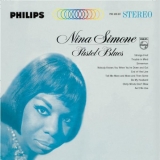
"I'm surprised this isn't ranked higher. A terrific record where every track is killer, an extreme rarity in the pre-Pet Sounds/Revolver music landscape. Sinnerman is the obvious highlight, a truly incredible and moving epic." Reply
-  flamingyesdept | Helpful? (Log in to vote) | +11 votes (11 helpful | 0 unhelpful)
A maximum of 5 top-voted qualifying comments are selected for each album. To provide the best experience for visitors, comments are excluded if they refer to data corrections, contain excessive profanity, are written in all caps, are non-English, are too short, consist of conversations between users, or contain lists of best tracks etc.
flamingyesdept | Helpful? (Log in to vote) | +11 votes (11 helpful | 0 unhelpful)
A maximum of 5 top-voted qualifying comments are selected for each album. To provide the best experience for visitors, comments are excluded if they refer to data corrections, contain excessive profanity, are written in all caps, are non-English, are too short, consist of conversations between users, or contain lists of best tracks etc.
Year of Release:
1965
Appears in:
Rank Score:
3,083
Rank in 1965:
Rank in 1960s:
Overall Rank:
Average Rating:
Comments:

"If nothing else, this is an incredibly diverse album. There's pop, hard rock, waltzes, elements of world music, blues, folk, psychedelia and so on. Very difficult to classify, but it's just "out there" enough to catch people's ear, yet not so indulgent as to scare off listeners who prefer more co..." [+] Reply
-  Decurso | Helpful? (Log in to vote) | +4 votes (4 helpful | 0 unhelpful)
A maximum of 5 top-voted qualifying comments are selected for each album. To provide the best experience for visitors, comments are excluded if they refer to data corrections, contain excessive profanity, are written in all caps, are non-English, are too short, consist of conversations between users, or contain lists of best tracks etc.
Decurso | Helpful? (Log in to vote) | +4 votes (4 helpful | 0 unhelpful)
A maximum of 5 top-voted qualifying comments are selected for each album. To provide the best experience for visitors, comments are excluded if they refer to data corrections, contain excessive profanity, are written in all caps, are non-English, are too short, consist of conversations between users, or contain lists of best tracks etc.
Year of Release:
1968
Appears in:
Rank Score:
2,839
Rank in 1968:
Rank in 1960s:
Overall Rank:
Average Rating:
Comments:
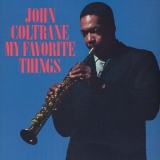
"Sure Coltrane is good... but to think that this album of standards is better than A Love Supreme it's just not getting the point. The take on "My Favorite Things" is beautiful, even though some parts of the last round of sax solos are redundant. The take on "Summertime" is powerful... and natural..." [+] Reply
-  JoaoMoreira | Helpful? (Log in to vote) | +2 votes (4 helpful | 2 unhelpful)
A maximum of 5 top-voted qualifying comments are selected for each album. To provide the best experience for visitors, comments are excluded if they refer to data corrections, contain excessive profanity, are written in all caps, are non-English, are too short, consist of conversations between users, or contain lists of best tracks etc.
JoaoMoreira | Helpful? (Log in to vote) | +2 votes (4 helpful | 2 unhelpful)
A maximum of 5 top-voted qualifying comments are selected for each album. To provide the best experience for visitors, comments are excluded if they refer to data corrections, contain excessive profanity, are written in all caps, are non-English, are too short, consist of conversations between users, or contain lists of best tracks etc.
Year of Release:
1961
Appears in:
Rank Score:
2,800
Rank in 1961:
Rank in 1960s:
Overall Rank:
Average Rating:
Comments:
Total albums: 1,000. Page 7 of 100
Best Albums of the 1960s composition
| Year | Albums | % | |
|---|---|---|---|
| 1960 | 57 | 6% | |
| 1961 | 65 | 7% | |
| 1962 | 50 | 5% | |
| 1963 | 52 | 5% | |
| 1964 | 70 | 7% | |
| 1965 | 89 | 9% | |
| 1966 | 98 | 10% | |
| 1967 | 139 | 14% | |
| 1968 | 188 | 19% | |
| 1969 | 192 | 19% |
| Artist | Albums | % | |
|---|---|---|---|
|
|
|||
| The Beatles | 17 | 2% | |
| The Beach Boys | 15 | 2% | |
| The Rolling Stones | 14 | 1% | |
| John Coltrane | 13 | 1% | |
| Miles Davis | 12 | 1% | |
| Nina Simone | 10 | 1% | |
| Bob Dylan | 10 | 1% | |
| Show all | |||
| Country | Albums | % | |
|---|---|---|---|
|
|
|||
 |
634 | 63% | |
 |
201 | 20% | |
 |
38 | 4% | |
 |
24 | 2% | |
 |
23 | 2% | |
 |
17 | 2% | |
 |
11 | 1% | |
| Show all | |||
If you enjoy our site, please consider supporting us by sparing a few seconds to disable your ad blocker.
A lot of hard work happens in the background to keep BEA running, and it's especially difficult to do this when we can't pay our hosting fees :(
We work very hard to ensure our site is as fast (and FREE!) as possible, and we respect your privacy.
A lot of hard work happens in the background to keep BEA running, and it's especially difficult to do this when we can't pay our hosting fees :(
We work very hard to ensure our site is as fast (and FREE!) as possible, and we respect your privacy.