Overall Chart
Listed below are the overall rankings for the best albums in history as determined by their aggregate positions in over 59,000 different greatest album charts on BestEverAlbums.com! (Chart last updated: 7 hours ago).
You can customise how this chart is generated, browse the individual charts constituting the overall rankings from The Charts page, or submit your own chart from the My Charts page!


"This is a pretty cool album, the first three parts especially. The last two kinda drag on a bit. But part one is awesome and sludgy, and part two has some really fun guitar work a bit reminiscent of Jimi Hendrix. Part three is a pretty cool, and more straightforward song, with vocals. Overall, a ..." [+] Reply
-  JulianR | Helpful? (Log in to vote) | +1 votes (1 helpful | 0 unhelpful)
A maximum of 5 top-voted qualifying comments are selected for each album. To provide the best experience for visitors, comments are excluded if they refer to data corrections, contain excessive profanity, are written in all caps, are non-English, are too short, consist of conversations between users, or contain lists of best tracks etc.
JulianR | Helpful? (Log in to vote) | +1 votes (1 helpful | 0 unhelpful)
A maximum of 5 top-voted qualifying comments are selected for each album. To provide the best experience for visitors, comments are excluded if they refer to data corrections, contain excessive profanity, are written in all caps, are non-English, are too short, consist of conversations between users, or contain lists of best tracks etc.

"In my opinion, this is Underworlds best record. Juanita/Kiteless/To Dream Of Love is an epic opening track." Reply
Year of Release:
1996
Appears in:
Rank Score:
523
Rank in 1996:
Rank in 1990s:
Overall Rank:
Average Rating:
Comments:

"One of those John Coltrane albums that's either genius or nonsense, depending on what mood I'm in. It sometimes works for me, other times it just annoys and frustrates me. Am i trying to like it? Do I like it? Or do I hate it? I don't know, I really don't know." Reply
Year of Release:
1966
Appears in:
Rank Score:
523
Rank in 1966:
Rank in 1960s:
Overall Rank:
Average Rating:
Comments:


"Three charts? How the most celebrated roots reggae album of all time could get such little love is kinda... lame?" Reply
Year of Release:
1973
Appears in:
Rank Score:
523
Rank in 1973:
Rank in 1970s:
Overall Rank:
Average Rating:
Comments:

"Honestly I was underwhelmed by Chemtrails, it's not bad but any means. Starts off great and sadly falls into the uninspiring/kinda boring realm for me.. Blue Banisters is a vast improvement! I really enjoyed this one. It's beautifully crafted and more interesting to my ears and her vocals are won..." [+] Reply
-  ExTeaSea | Helpful? (Log in to vote) | +4 votes (4 helpful | 0 unhelpful)
A maximum of 5 top-voted qualifying comments are selected for each album. To provide the best experience for visitors, comments are excluded if they refer to data corrections, contain excessive profanity, are written in all caps, are non-English, are too short, consist of conversations between users, or contain lists of best tracks etc.
ExTeaSea | Helpful? (Log in to vote) | +4 votes (4 helpful | 0 unhelpful)
A maximum of 5 top-voted qualifying comments are selected for each album. To provide the best experience for visitors, comments are excluded if they refer to data corrections, contain excessive profanity, are written in all caps, are non-English, are too short, consist of conversations between users, or contain lists of best tracks etc.
Year of Release:
2021
Appears in:
Rank Score:
523
Rank in 2021:
Rank in 2020s:
Overall Rank:
Average Rating:
Comments:

"Really solid follow up to Light Up Gold, though it shouldnt be compared to its predecessor. Both are completely different albums with individual strengths. Sunbathing Animal's strength lies within its jamming-instrumentation and witty songwriting. Sunbathing Animal and Instant Dissassembly are in..." [+] Reply
Year of Release:
2014
Appears in:
Rank Score:
523
Rank in 2014:
Rank in 2010s:
Overall Rank:
Average Rating:
Comments:

"Beautifully written, sung and performed. Abigail Morris is one the finest vocalists in modern music. A buffet for the ears" Reply
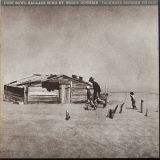
"One of the most important albums of American music ever made. Woody is the great American trubador and "Dust Bowl Ballads" is a kind a musical narrative of the Great Depression that is the equal to Stienbeck's "Grapes of Wrath" for gritty realism. Woody's influence on the music Bob Dylan, the Byr..." [+] Reply

"Day for Night was the album the Tragically Hip had long attempted produce. Hints from previous albums including the pacing and cohesiveness of Road Apples with the exceptional songwriting of Fully Completely come together here as the band's masterpiece. In addition to the retrospective approach, ..." [+] Reply
-  ghosttomost | Helpful? (Log in to vote) | +2 votes (2 helpful | 0 unhelpful)
A maximum of 5 top-voted qualifying comments are selected for each album. To provide the best experience for visitors, comments are excluded if they refer to data corrections, contain excessive profanity, are written in all caps, are non-English, are too short, consist of conversations between users, or contain lists of best tracks etc.
ghosttomost | Helpful? (Log in to vote) | +2 votes (2 helpful | 0 unhelpful)
A maximum of 5 top-voted qualifying comments are selected for each album. To provide the best experience for visitors, comments are excluded if they refer to data corrections, contain excessive profanity, are written in all caps, are non-English, are too short, consist of conversations between users, or contain lists of best tracks etc.
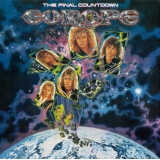
"I've always thought that when someone (the longer-than-life critics establishment, fans, etc) review and album, the review actually should be written in the context to the album, the band and the music genre. I would never review a hip hop album because I do not like hip hop at all. Well, that's ..." [+] Reply
-  ponkine | Helpful? (Log in to vote) | +6 votes (6 helpful | 0 unhelpful)
A maximum of 5 top-voted qualifying comments are selected for each album. To provide the best experience for visitors, comments are excluded if they refer to data corrections, contain excessive profanity, are written in all caps, are non-English, are too short, consist of conversations between users, or contain lists of best tracks etc.
ponkine | Helpful? (Log in to vote) | +6 votes (6 helpful | 0 unhelpful)
A maximum of 5 top-voted qualifying comments are selected for each album. To provide the best experience for visitors, comments are excluded if they refer to data corrections, contain excessive profanity, are written in all caps, are non-English, are too short, consist of conversations between users, or contain lists of best tracks etc.
Year of Release:
1986
Appears in:
Rank Score:
522
Rank in 1986:
Rank in 1980s:
Overall Rank:
Average Rating:
Comments:
Total albums: 10,000. Page 295 of 1,000
Overall Chart composition
| Decade | Albums | % | |
|---|---|---|---|
| 1930s | 2 | 0% | |
| 1940s | 34 | 0% | |
| 1950s | 302 | 3% | |
| 1960s | 710 | 7% | |
| 1970s | 1,424 | 14% | |
| 1980s | 1,413 | 14% | |
| 1990s | 1,600 | 16% | |
| 2000s | 1,730 | 17% | |
| 2010s | 1,958 | 20% | |
| 2020s | 827 | 8% |
| Artist | Albums | % | |
|---|---|---|---|
|
|
|||
| Bob Dylan | 37 | 0% | |
| The Rolling Stones | 35 | 0% | |
| David Bowie | 32 | 0% | |
| The Beatles | 29 | 0% | |
| Miles Davis | 27 | 0% | |
| Neil Young | 26 | 0% | |
| Various Artists | 25 | 0% | |
| Show all | |||
| Country | Albums | % | |
|---|---|---|---|
|
|
|||
 |
5,009 | 50% | |
 |
2,654 | 27% | |
 |
431 | 4% | |
 |
335 | 3% | |
 |
221 | 2% | |
 |
157 | 2% | |
 |
134 | 1% | |
| Show all | |||
| Best Artists of the 2000s | |
|---|---|
| 1. Radiohead | |
| 2. Arcade Fire | |
| 3. The Strokes | |
| 4. Coldplay | |
| 5. Sufjan Stevens | |
| 6. Muse | |
| 7. Arctic Monkeys | |
| 8. The White Stripes | |
| 9. Wilco | |
| 10. Animal Collective |