Listed below are the overall rankings for the best albums in history as determined by their aggregate positions in over 59,000 different greatest album charts on BestEverAlbums.com! (Chart last updated: 4 hours ago).
"I reckon it's the lyricism which sets this apart from every other electropop/synthpop LP out there this century, rarely ever does the genre inhabit lyrics with this much sensitivity and depth. Not that "Silent Shout" doesn't have great production.. it's ambitious, sounds epic but most of all pair...""I reckon it's the lyricism which sets this apart from every other electropop/synthpop LP out there this century, rarely ever does the genre inhabit lyrics with this much sensitivity and depth. Not that "Silent Shout" doesn't have great production.. it's ambitious, sounds epic but most of all pairs together symbiotically with Dreijer's vocals which excellently add another dimension of unease. Pretty much the pinnacle of the genre in its decade."[+]Reply
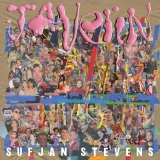
"Having listened to it thrice today, and knowing the impetus for the record, Javelin stands as Sufjan Stevens's most open-hearted and devastating work to date, even more so than the thorny beauty of his magnificent Carrie & Lowell. Elegiac, wounded, and life-affirming through and through, Javelin ...""Having listened to it thrice today, and knowing the impetus for the record, Javelin stands as Sufjan Stevens's most open-hearted and devastating work to date, even more so than the thorny beauty of his magnificent Carrie & Lowell. Elegiac, wounded, and life-affirming through and through, Javelin is characteristically meditative and soulful, while crystalizing the folktronica sensibilities that he's wrestled with over the years into its most moving configurations yet, and that, despite its weight, is still so warm and inviting. One of the best from one of the best ever to do it."[+]Reply
"In my opinion the most prolific musician currently making music. This album is perfect through and through and if you haven't listened to it yet, do yourself a favor and take a listen. Currently somewhat overlooked and underrated, but if you've listened to it as much as I have, you can see there'...""In my opinion the most prolific musician currently making music. This album is perfect through and through and if you haven't listened to it yet, do yourself a favor and take a listen. Currently somewhat overlooked and underrated, but if you've listened to it as much as I have, you can see there's something so incredibly unique that exists within the eclectic mix of genres (some glam-rock, post-punk, pop) he's cultivated. I can't exactly put my finger on it, so I like to call it "maplerock." There are some other Canadian bands associated with him that I also define as maplerock such as Homeshake, Freelove Fenner, Each Other, Alex Calder, that are also worth checking out. "[+]Reply
"The Beatles fourth album is a step back to the combination of originals and covers. Of the originals, the cover of the album, that lovely shot by Robert Freeman, betrays the mood of the songs. There's a kind of autumnal melancholy about them. The first track, no reply, is one of the Beatles best,...""The Beatles fourth album is a step back to the combination of originals and covers. Of the originals, the cover of the album, that lovely shot by Robert Freeman, betrays the mood of the songs. There's a kind of autumnal melancholy about them. The first track, no reply, is one of the Beatles best, and one of the greatest openers on any of their albums. Other strong songs from Lennon-McCartney are, the Dylanish, I'm a loser, every little thing, and the U.S. no:1 single, eight days a week. As for the covers, rock and roll music, the boys take on Chuck Berry's all time classic, is my favourite of all the covers the Beatles did. Kansas city is also good, as is George's vocal spot, everybody's trying to be my baby. Not so good is, Mr moonlight, which features an absolutely appalling organ solo from Paul. Buddy Holly's words of love, is a bit forgetful too. One point I'd like to make is that I feel this album is underrated in the fact that this is arguably the first folk/rock record, alright it's not lyrically important, but it's a predominantly acoustic album, featuring folk, country, and rock'n'roll, four months before Bob Dylan released his magnificent, bringing it all back home, masterpiece. I'm certainly not comparing this record with Dylan's, no, it's more an observation really, less a claim, but I think it's an interesting point. The album though is still definitely one of the band's least essential, but it is a Beatles album, so it's still well worth having for the casual fan. For us fanatics, well, it's essential. "[+]Reply
"Luis Alberto Spinetta was a big fan of John Lennon, and the latter's Plastic Ono Band is a point of reference to begin to understand the masterpiece known as Artaud. Both albums were recorded at times of turmoil in both artists' lives and in their respective countries, and this is reflected on th...""Luis Alberto Spinetta was a big fan of John Lennon, and the latter's Plastic Ono Band is a point of reference to begin to understand the masterpiece known as Artaud. Both albums were recorded at times of turmoil in both artists' lives and in their respective countries, and this is reflected on the naked sincerity of their lyrics. But while Lennon made the decision to play straightforward rock with simple lyrics and simpler arrangements, Spinetta favored complex compositions full of weird voicings, surrealist imagery and avant-garde elements, best exemplified in the 9-minute suite 'Cantata de Puentes Amarillos', inspired by Van Gogh, Artaud and Elagabalus, the transgender Roman Emperor.
Although it is considered a fundamentally acoustic work, Artaud has its moments of electric grandeur, such as 'Las Habladurias del Mundo', 'Cementerio Club' and 'Bajan', showcasing Spinetta's axe skills. This is one of those records you can listen to a million times and still find something new. Highly recommended."[+]Reply
"I'm surprised the rave reviews aren't pouring in for this truly great album. I cannot praise it highly enough - I've placed it at No.3 in my overall chart, No.2 in my decade chart and No.1 in my year chart; and would certainly rate it my favourite soul album, notwithstanding the greatness of Aret...""I'm surprised the rave reviews aren't pouring in for this truly great album. I cannot praise it highly enough - I've placed it at No.3 in my overall chart, No.2 in my decade chart and No.1 in my year chart; and would certainly rate it my favourite soul album, notwithstanding the greatness of Aretha, Otis, Marvin, Stevie, Al and the rest. A consummate, heavenly work from beginning to end. And to think that she was too scared to go to Memphis and do the vocals!"[+]Reply
"I'm not a huge fan of rap. I'm a rock, blues, and metal guy, but this album has something about it that just pulled me in. It also helps that I've seen Snoop Dogg live. But seriously, this album is a classic from front to back."Reply
"Okay, and here we are. His 3rd album, and his second of 1969. Townes output in 69 was better than anyone else. It was bonkers. And the production here is nearly perfect! Its so bare and breezy and simple and this gives TVZ's songs room to breathe, to float into your ears and heart and make you we...""Okay, and here we are. His 3rd album, and his second of 1969. Townes output in 69 was better than anyone else. It was bonkers. And the production here is nearly perfect! Its so bare and breezy and simple and this gives TVZ's songs room to breathe, to float into your ears and heart and make you weep. The lyrics and the actual songs, THE SONGS!!!! are even better here than on Our Mother The Mountain. TVZ had really turned the corner in the intervening few months and turned on his next gear. To keep that sports analogy going just a bit more (I hear your groans, I'm sorry, just one second) This album represents the age 27 season of that star QB, when he is still putting up the big numbers, still scrambling aorund and showing off his gifts, still throwing it deep, but now he's throwing less interceptions, he's reading the game next level, and he goes to the championship! But he loses... and its not close. In this case cuz of a couple 30 somethings who just act as killjoys to his glory and poke holes in his schemes. But he moves onto the next season to regroup and hopefully break through. With Townes, he just continues honing his craft and makes 3 or 4 more classics and wins a couple championships.
Okay, and I am done with that. Thank gawd.
What I think is amazing about this Self titled Townes album is how effortless it feels. Right from the jump you are treated with one of the breeziest and subtly morunful and confused songwriting feats ever. "For The Sake of the Song" features a gorgeous guitar line from Townes (who much like Joni, is an underrated guitarist). There's a very subdued little bass line. Some pretty percussion. And over the top of this beautiful and again Breezy sound, Townes just seems to be talking to a friend about his predicament with a relationship. The internal rhyme pattern is detailed but not over the top. And you are just sitting there as the audience marvelling at how deeply thought out and intricate the observations are and how quickly the5+ minute song goes by.
And this is true of the whole album. You go through this subtle, shimmering, at times deeply emotional, at other times just comfortably familiar, journey with TVZ, and you enjoy every second being in its presence.
The songs here don't jump out at me. When I look at the tracklist for Our Mother The Mountain or his debut, or even Delta Momma Blues, The Late Great Townes Van Zandt or even High Low and In Between, I am struck by 3 or 4 absolute stand outs, totally memorable and singular Townes moments. With this album though, the whole album coalesces and plays just right, one song to the next, that I just know when I finish the album there is not a less than stellar track here, and I wanna push play again, and again.
That is probably due to just how warm and simple the production is. There are some more flashy parts, like the groove of the bass on "Waitin' Round To Die" (oh and I suppose this song does stick out on the tracklist, so there is a correction from last paragraph). But those more fl;ashy moments are rare, and they are all in beautiful service to the songs. They make sense. The harmonica and bass groove, so dark and ominous, absolutely pushes this song over the top. It seems like Townes and his producer at the time finally realized the earthy genius of Townes, and that you didn't need bells and whistles to make these songs move mountains. The lone voice and guitar and minimal other things alone can just overcome a listener. This album is proof of that.
Other examples of the extra ornamentation working beautfully here is the strangely timed bass drum rhythm on the stunning blues reimagining of "Lungs". And the gorgeous violin backing, and tambourine fun of "(Quicksilver Daydreams of) Maria".
Songs like "Don't Take It Too Bad", "Colorado Girl", "None But The Rain", "I'll Be Here In the Morning" and "For The sake of the Song" seem to me like perfect examples of that distinctly Townes way of just being the most inviting, sensitive, singer/songwriter of the folk/country field.
Anyway, this album is damn near perfect. And if you wanna know where to get started with becoming a huge Townes fan, here it is your best bet methinks.
This album is proof that you can do a TVZ album without added stuff, and it proved that all by himself, Townes Can Zandt! (I'm sorry...)
"All the mountains and the rivers
And the valleys can't compare
To your blue lit dancin' eyes
And yellow shining hair
I could never hit the open road
And leave you layin' there
Lay your head back easy, love,
Close your cryin' eyes
I'll be layin' here beside you
When the sun comes on the rise
I'll stay as long as the cuckoo wails
And the lonesome blue jay cries" -Townes
Rating: 9.7/10"[+]Reply
"In general "Sabbath Bloody Sabbath" (hereafter abbreviated to "SBS") was released in December 1973 and, with music history as the ultimate judge, the fifth masterpiece in four years. It was the first Black Sabbath album I heard and its music irresistibly became the soundtrack to my pretty carefre...""In general
"Sabbath Bloody Sabbath" (hereafter abbreviated to "SBS") was released in December 1973 and, with music history as the ultimate judge, the fifth masterpiece in four years. It was the first Black Sabbath album I heard and its music irresistibly became the soundtrack to my pretty carefree adolescence.
I remember as yesterday how musical preferences determined which group of young people you belonged to: the alternatives that principally opposed everything that was commercial (quite a naive division, but hardly discussed) or the large group of young people who were satisfied with transparent and commercial Glam Rock or the ubiquitous progressive rock, and who generally didn't care for loud music, daring vocals, and visuals associated with the occult, the devil's adoration, and other obscure ideas. At that time, the Catholic Church was perfectly able to preach the dualism between good and evil in order to keep the mass of believers on the good, Catholic path. "Good" and "Evil" did not need to be further defined, but let's be honest: the religious history of the West (think about the Crusades) mainly illustrates how many people were killed in the name of God (Killing people in the name of the Devil should make more sense, no?). "Good" and "Evil", "Light and Dark": in a worldview that was full of political tensions, those categories needed representatives. Black Sabbath built up a questionable image with dark, threatening and explicit songs on the first 3 albums (the track "Black Sabbath" was very explicit and not really susceptible to interpretation). On the one hand, Sabbath could benefit from it, because it gave the fame of the group a boost in those early years. On the other hand, the effect very quickly lost its charm and the image even turned against the band.
Cover
But allow me to return to the album and all those magical times that I listened to it and dreamed away with what may easily be declared the best cover of 1973. No, just say "of all times". Covers had started to grow into artistic gems at the time, and the SBS cover work of the highly regarded Drew Struzan belongs in a museum. Front and back seemed to be opponents. The main character on the front dies a horrific death and everything looks like he is about to be included in a group of demons floating around the bed. The skull and the explicit reference to the devil in the number 666 now seem a bit outdated and somewhat cheap. At the time it became part of the cover however, it all added up perfectly. On the back we see a man on his deathbed, surrounded by family members in a human form. Most of them regret his imminent death. Both illustrations are loaded with symbolism and religious inspiration, and the band (especially Ozzy) loved what Struzan produced. Everything here is right. That certainly also applies to the Gothic font used: Struzan has refined it and applies a precise spacing. This is art. The refined finish through the use of threatening red on the front and calming blue on the back will hardly ever be matched later on. Think of "Born Again" or Iron Maiden's "Eddie the Head" and note the remarkable differences. Art and kitsch are indeed opponents of each other.
Progrock?
Another conclusion is that the sound of Sabbath is closer to the Progrock of that time. Especially the arrangements with piano, flute, strings, acoustic guitar and synthesizer (undoubtedly a Minimoog) testify of a different musical approach. The indispensable and sophisticated riffs of Iommi (beautifully balanced between menacing and melodic) are still the backbone, but they are no longer the only driving force. It is clear that SBS is the result of maturity. Thanks to the fact that the band was given more time in the sound studio, Iommi's solos are often a dueling game of question and answer, and the sound image becomes richer because of what Rick Wakeman of Yes contributes on the piano (It was only late that I learned that Wakeman had an active role in the production of SBS). That Sabbath went in a different direction in terms of timbre was welcomed by the sympathy of the specialized press. And it has to be said: every song has its own vibe and atmosphere, and yet the record remains very consistent. Production here is particularly strong.
Lyrics
Just like the sound, the lyrics (the majority were contributed by Geezer Butler) have undergone a transformation. Explicit themes (the witch sabbath of "Black Sabbath" or the devil as true ruler of the world in the text of "Lord of This World") are exchanged for suggestive and more closed lyrics. In a song like "Who are You?" The hostile identity no longer has a name. Geezer leaves the interpretation to the listener, who gets sucked into the song in such a way that the doom and the darkness fall heavily upon his shoulders. It’s a real shame how the lyrics of "Killing Yourself to Live" had to be adjusted by law. Whoever does not get further in the texts, is insensitive to the many metaphors and, for the sake of convenience, only takes the lyrics very literally has no contact with the world, and certainly not with the artistic value that SBS has to offer. It’s crystal clear the lyrics are not inviting to commit suicide but telling how very hard and uncertain a musicians life could be.
Drugs
But the rapid growth of the band was accompanied by more and more drugs and alcohol. Sabbath was undermined by its success. Of course, Bill Ward's drinking was particularly problematic and the frictions between the members of the band became ever greater and more problematic. In fact, it was already a special achievement that the first 4 albums were made. After all, Ozzy was often an unguided projectile, Iommi felt obliged to come up with strong riffs faster and faster, and Geezer Butler was a melancholic who struggled with himself and everyday life (he makes that clear in the lyrics of SBS). However, it must also be said that during the 1970s many musicians were keen to let their audience know how dangerous and excessive their lives were. This was even a part of the image. David Bowie also claims that he does not remember anything about the recordings for "Station to Station" due to an excessive use of Coke. I have my questions about this. It is very exceptional that drugs help to stimulate and improve a creative flow. Cocaine in particular. Coke gives you the feeling that you are unique, but in reality does not make you better or sharper.
The tracks
“Sabbath Bloody Sabbath” leans on one of Iommi's greatest riffs, one of Ozzy's best vocal performances (he sounds both more powerful and more confident than ever before) and the beautifully sounding bass of Geezer. For quite a lot reviewers this track is simply one of the greatest metal songs that has ever been made. During some earlier listening I did indeed notice how heavy the riffs are, and how high-contrasted the high pitched vocals of Ozzy hit the dark and brooding, growling riff. It is also striking how Iommi starts making his riffs and the structure of the songs more complex than ever. The outro is, as usual, doom and terror, but in itself sufficient to be elevated to a form of art. 5/5
After the intensity of the title track, the listener is once again served with one of Iommi's great riffs. The melody that drives “A National Acrobat” is simple but effortlessly sustained throughout the first part of the song. The bass is absolutely top here and again there is another masterful vocal performance by Osbourne. The spaciousness that creeps into the sound image sometimes reminds me of Gothic. Ok, "proto-gothic" if you want. For some reviewers, this is even one of Sabbath's best tracks and I can very well get into that. The second part of the track is in my opinion a bit less as this song does not need a light-hearted outro. But who am I to complain about this? 5/5
"Fluff" is beautiful but not extraordinary and especially particularly innocent. When this record became the best in my collection, I gladly added a track like "Fluff". That is no longer the case. For me this musical excursion from Iommi and - at least according to the credits - Wakeman does not belong on this album. Again, before shooting at the pianist: technically and in terms of arrangements there is little to criticize. Iommi plays the acoustic guitar in a masterly way. But "Fluff" is not representative of the entire album and it does ruin the atmosphere a bit. It hardly fits with anything else on this album. Give me a second “Planet Caravan” instead. Dark, sultry and sensual. Unfortunately. "Fluff" is possibly the reason why I rate "Sabotage" a little higher. (2/5)
Sabbra Cadabra is daring because it occupies a unique place in Sabbath's oeuvre. The brutality of the first albums, far ahead of what would become known as “Stoner rock”, seems far away, but this unusual love song once again starts with a great and very catchy riff. Furthermore there are excellent drums and Ozzy also performs unusually strong. The bluesy drums of Ward and the piano work of Rick Wakeman (of progressive Rock band Yes) give the song a nice, optimistic vibe (boogie-woogie!). Complex instrumental sections take over the second half of the song and the outro also has the character of a weathered jam session that goes on just long enough. Too bad that the lyrics here - exceptionally - are a bit weaker. (5/5)
Killing Yourself to Live again has a strong guitar performance of Iommi (a recurring pattern it seems) and this prevents that the song, composed of three different parts, does not suddenly implode. The tempo changes are beautiful and magically executed. Iommi effortlessly takes his colleagues in tow and shows how close and tight Sabbath was. Extremely powerful song that never ceases to amaze and entertain despite the somewhat daring structure. (5/5)
I do not understand the annoyance regarding "Who Are You?" that is voiced by many other reviewers. Well, Black Sabbath has now come closer to progressive rock and gets help from Rick Wakeman and a Minimoog, but I can only applaud this. In this unusual track the typical Iommi riff on guitar is traded in for a great and sinister melody line that - especially when that melody line gets doubled - is fascinating enough in terms of timbre (The Moog filters are definitely among the best) to successfully carry the Ozzy vocals. According to the literature, the most important part of the composition was delivered by Ozzy. I may never find out the truth, but I am inclined to believe that Wakeman has translated the Ozzy's riff into an exceptionally beautiful "programming" of the Moog. The comparison with prog rock is not entirely right. Sabbath maintained its identity. Admittedly, the synthesizer solo in the break is quite the same as the traditional progrock use of the minimoog. But is this song too slow? Maybe so, but in its slowness this track remains fascinating. Geezer's lyrics have also undergone a transformation. Whoever tries to find out what this song is about does not pass a closed, dense and highly suggestive text. Geezer has grown enormously as a writer. He is less pronounced and wraps up the occult themes in alienating darkness. In the past, evil was called by name ("Satan sitting there, he's smiling") or the text was a bit too literal and somewhat banal ("The pope at the end of a rope"). With "Who are you", the listener is given the freedom to create his own image of the dangerous identity that Ozzy addresses. Oh, and while listening, don’t forget the high pitched vocals of Ozzy are also doubled perfectly. Some flaws here and there are not bothering. The spaciousness that remains in the overall sound image makes this song very digestible. The progrock level increases during the break. Not the most thundering piano part and as mentioned before, the sound of the Moog in the break is a bit disappointing, but the outro is of an exceptionally high level. Just like the lyrics, the bizarre sounds become very suggestive and create a self-contained universe. For fans of Heavy Metal and / or Hardrock this is understandably a strange thing to do, but I gladly admit that I think the song is fantastic. Other bands would not venture into this experiment and that is exactly what Sabbath does. More, more! (5/5)
"Looking for Today" is one of Sabbath's poppier songs, but I have absolutely no objection to that. It is exceptionally radio - friendly and could well have been a single. The structure is predictable and a bit too repetitive, but again the song is effortlessly maintained by four musicians who give the best of themselves. The lyrics criticize the type of bands and musicians who are already happy to be and stay a one-hit wonder or just populate the scene to grab some easy, quickly earned money. The arrangement with flutes in the bridges is nice: it brings light into the darkness and secures a well-defined sophisticated balance. (5/5)
"Spiral Architect" - less Hard Rock and due to the many strings and the orchestra most closely related to Progressive rock - closes the album very nicely. Iommi is doing great guitar work and Ozzy is at his best. Although the bass has been pushed back too much in the mix, the lyrics of Geezer Butler are among the best that was written together in 1973. The song is about DNA but at the same time touches on multiple themes. According to the literature, the suggestive and philosophically tinted lyrics were ready in an instant. It is the merit of the craftsmanship of the literary learned Geezer's that the song got a theme so quickly. (5/5)
Conclusion (4,6 /5)
Depending on the source being consulted, "SBS" would be considered the high point of the career of Black Sabbath (and therefore the high point of the so-called Ozzy-Era) and some reviewers even dare call it one of the best Hard Rock albums of all time . I will probably never get out of it because, although almost unthinkable, on "Sabotage" there may be even better songs. Allow me to stick to a status quo. Both albums are stuck together as an iconic duo. It must be clear however that on "SBS" all four musicians prove that their critics were wrong by increasing the creative effort, giving unprecedented attention to production standards and arrangements and not to forget the sublime cover paintings.
"[+]Reply

 HoldenM | Helpful? (Log in to vote) | +8 votes (13 helpful | 5 unhelpful)
A maximum of 5 top-voted qualifying comments are selected for each album. To provide the best experience for visitors, comments are excluded if they refer to data corrections, contain excessive profanity, are written in all caps, are non-English, are too short, consist of conversations between users, or contain lists of best tracks etc.
HoldenM | Helpful? (Log in to vote) | +8 votes (13 helpful | 5 unhelpful)
A maximum of 5 top-voted qualifying comments are selected for each album. To provide the best experience for visitors, comments are excluded if they refer to data corrections, contain excessive profanity, are written in all caps, are non-English, are too short, consist of conversations between users, or contain lists of best tracks etc.

 dougotto | Helpful? (Log in to vote) | +5 votes (6 helpful | 1 unhelpful)
A maximum of 5 top-voted qualifying comments are selected for each album. To provide the best experience for visitors, comments are excluded if they refer to data corrections, contain excessive profanity, are written in all caps, are non-English, are too short, consist of conversations between users, or contain lists of best tracks etc.
dougotto | Helpful? (Log in to vote) | +5 votes (6 helpful | 1 unhelpful)
A maximum of 5 top-voted qualifying comments are selected for each album. To provide the best experience for visitors, comments are excluded if they refer to data corrections, contain excessive profanity, are written in all caps, are non-English, are too short, consist of conversations between users, or contain lists of best tracks etc.


 Jasonconfused | Helpful? (Log in to vote) | +3 votes (3 helpful | 0 unhelpful)
A maximum of 5 top-voted qualifying comments are selected for each album. To provide the best experience for visitors, comments are excluded if they refer to data corrections, contain excessive profanity, are written in all caps, are non-English, are too short, consist of conversations between users, or contain lists of best tracks etc.
Jasonconfused | Helpful? (Log in to vote) | +3 votes (3 helpful | 0 unhelpful)
A maximum of 5 top-voted qualifying comments are selected for each album. To provide the best experience for visitors, comments are excluded if they refer to data corrections, contain excessive profanity, are written in all caps, are non-English, are too short, consist of conversations between users, or contain lists of best tracks etc.

 Mercury | Helpful? (Log in to vote) | +4 votes (4 helpful | 0 unhelpful)
A maximum of 5 top-voted qualifying comments are selected for each album. To provide the best experience for visitors, comments are excluded if they refer to data corrections, contain excessive profanity, are written in all caps, are non-English, are too short, consist of conversations between users, or contain lists of best tracks etc.
Mercury | Helpful? (Log in to vote) | +4 votes (4 helpful | 0 unhelpful)
A maximum of 5 top-voted qualifying comments are selected for each album. To provide the best experience for visitors, comments are excluded if they refer to data corrections, contain excessive profanity, are written in all caps, are non-English, are too short, consist of conversations between users, or contain lists of best tracks etc.