Overall Chart
Listed below are the overall rankings for the best albums in history as determined by their aggregate positions in over 59,000 different greatest album charts on BestEverAlbums.com! (Chart last updated: 6 hours ago).
You can customise how this chart is generated, browse the individual charts constituting the overall rankings from The Charts page, or submit your own chart from the My Charts page!

"Nice second effort from Welch who seems to try to get a bit more serious in her work with vocal harmonies and to distance herself from the more accesible music of her the debut, it has some nice tunes but it lacks consistency in general, particularly in the middle..." Reply
-  covecove | Helpful? (Log in to vote) | +3 votes (3 helpful | 0 unhelpful)
A maximum of 5 top-voted qualifying comments are selected for each album. To provide the best experience for visitors, comments are excluded if they refer to data corrections, contain excessive profanity, are written in all caps, are non-English, are too short, consist of conversations between users, or contain lists of best tracks etc.
covecove | Helpful? (Log in to vote) | +3 votes (3 helpful | 0 unhelpful)
A maximum of 5 top-voted qualifying comments are selected for each album. To provide the best experience for visitors, comments are excluded if they refer to data corrections, contain excessive profanity, are written in all caps, are non-English, are too short, consist of conversations between users, or contain lists of best tracks etc.
Year of Release:
2011
Appears in:
Rank Score:
1,964
Rank in 2011:
Rank in 2010s:
Overall Rank:
Average Rating:
Comments:

"A little inconsistent, but it's first and last third are nothing short of stellar. The second third is rather good, but for what Kendrick would come up with next, it doesn't fit into his master-class catalogue that would come after Section.80. Key Cuts: A.D.H.D, Hiiipower, Rigamortis" Reply
Year of Release:
2011
Appears in:
Rank Score:
1,964
Rank in 2011:
Rank in 2010s:
Overall Rank:
Average Rating:
Comments:

"Such a quirky album, they really managed to capture a unique feel to all their songs which I love! It's a little bit post-punk, a little bit pop, a little bit new wave and that's the beauty of the album, you don't know what's going to happen next! Favourite tracks are 'Dance This Mess Around' and..." [+] Reply
Year of Release:
1979
Appears in:
Rank Score:
1,964
Rank in 1979:
Rank in 1970s:
Overall Rank:
Average Rating:
Comments:

"Just like any popular radio band, Sublime seems to attract an unforgivably annoying, loyal fan base. I can't tell you how many girls I've bumped into since the mid-90's who've lived their lives with this album as a soundtrack. Yikes. In all honesty, I hate listening to Sublime around humans becau..." [+] Reply
Year of Release:
1996
Appears in:
Rank Score:
1,963
Rank in 1996:
Rank in 1990s:
Overall Rank:
Average Rating:
Comments:

"Imagine if Massive attack seriously took to quaaludes. For a year. The next day they swear they are NEVER going to touch that crazy ass shit again because they're paranoid as all fuck, and Tricky just shot a gun at the new guest vocalist because she was talking to another guy. BUT FIRST, you can'..." [+] Reply
Year of Release:
1995
Appears in:
Rank Score:
1,962
Rank in 1995:
Rank in 1990s:
Overall Rank:
Average Rating:
Comments:

"This album punched me really hard in the face. And I enjoyed it immensely." Reply
-  SquishypuffDave | Helpful? (Log in to vote) | +11 votes (11 helpful | 0 unhelpful)
A maximum of 5 top-voted qualifying comments are selected for each album. To provide the best experience for visitors, comments are excluded if they refer to data corrections, contain excessive profanity, are written in all caps, are non-English, are too short, consist of conversations between users, or contain lists of best tracks etc.
SquishypuffDave | Helpful? (Log in to vote) | +11 votes (11 helpful | 0 unhelpful)
A maximum of 5 top-voted qualifying comments are selected for each album. To provide the best experience for visitors, comments are excluded if they refer to data corrections, contain excessive profanity, are written in all caps, are non-English, are too short, consist of conversations between users, or contain lists of best tracks etc.
Year of Release:
2011
Appears in:
Rank Score:
1,962
Rank in 2011:
Rank in 2010s:
Overall Rank:
Average Rating:
Comments:

"An excellent album from The Byrds. Younger than yesterday, really sees the band moving on. Opener, so you want to be a rock'n'roll star, is a sardonic take on the music business featuring trumpet from Hugh Masekela, and it's followed by, have you seen her face, one of Chris Hillman's best byrd so..." [+] Reply
Year of Release:
1967
Appears in:
Rank Score:
1,961
Rank in 1967:
Rank in 1960s:
Overall Rank:
Average Rating:
Comments:
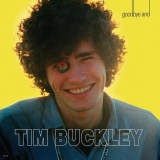
"I had a busy day of listening today. I had a half dozen albums to relisten to. This one included. And to be honest I just wasn't overwhelmingly excited about listening to Tim Buckley. He had never yet clicked with me. Meaning he had never really connected with me or illuminated for me some sort o..." [+] Reply
-  Mercury | Helpful? (Log in to vote) | +7 votes (7 helpful | 0 unhelpful)
A maximum of 5 top-voted qualifying comments are selected for each album. To provide the best experience for visitors, comments are excluded if they refer to data corrections, contain excessive profanity, are written in all caps, are non-English, are too short, consist of conversations between users, or contain lists of best tracks etc.
Mercury | Helpful? (Log in to vote) | +7 votes (7 helpful | 0 unhelpful)
A maximum of 5 top-voted qualifying comments are selected for each album. To provide the best experience for visitors, comments are excluded if they refer to data corrections, contain excessive profanity, are written in all caps, are non-English, are too short, consist of conversations between users, or contain lists of best tracks etc.
Year of Release:
1967
Appears in:
Rank Score:
1,960
Rank in 1967:
Rank in 1960s:
Overall Rank:
Average Rating:
Comments:
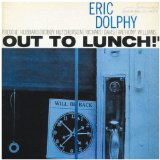
"This record's really the epitome of hard-bop, even as it stretches the boundaries of the genre into something approaching true avant-garde while still often keeping the boundaries of familiar jazz, resulting in a crucial listen." Reply
Year of Release:
1964
Appears in:
Rank Score:
1,960
Rank in 1964:
Rank in 1960s:
Overall Rank:
Average Rating:
Comments:
890.

Safe Mode: On Certain images on this site may contain sensitive content and are flagged as 'unsafe'. BestEverAlbums.com does not display these images by default, but you may choose to show or hide these images from your profile page. If you choose to hide these images, you'll see an image with a warning message instead of the actual image. If you choose to show them, you'll see these images no differently than regular (safe) images.
"Funky Prince with sex written all over it. Absolutely amazing! A masterpiece from the 80s!" Reply
-  vilangelo | Helpful? (Log in to vote) | +3 votes (3 helpful | 0 unhelpful)
A maximum of 5 top-voted qualifying comments are selected for each album. To provide the best experience for visitors, comments are excluded if they refer to data corrections, contain excessive profanity, are written in all caps, are non-English, are too short, consist of conversations between users, or contain lists of best tracks etc.
vilangelo | Helpful? (Log in to vote) | +3 votes (3 helpful | 0 unhelpful)
A maximum of 5 top-voted qualifying comments are selected for each album. To provide the best experience for visitors, comments are excluded if they refer to data corrections, contain excessive profanity, are written in all caps, are non-English, are too short, consist of conversations between users, or contain lists of best tracks etc.
Year of Release:
1980
Appears in:
Rank Score:
1,957
Rank in 1980:
Rank in 1980s:
Overall Rank:
Average Rating:
Comments:
Total albums: 10,000. Page 89 of 1,000
Overall Chart composition
| Decade | Albums | % | |
|---|---|---|---|
| 1930s | 2 | 0% | |
| 1940s | 35 | 0% | |
| 1950s | 303 | 3% | |
| 1960s | 709 | 7% | |
| 1970s | 1,426 | 14% | |
| 1980s | 1,409 | 14% | |
| 1990s | 1,602 | 16% | |
| 2000s | 1,743 | 17% | |
| 2010s | 1,949 | 19% | |
| 2020s | 822 | 8% |
| Artist | Albums | % | |
|---|---|---|---|
|
|
|||
| Bob Dylan | 37 | 0% | |
| The Rolling Stones | 35 | 0% | |
| David Bowie | 32 | 0% | |
| The Beatles | 29 | 0% | |
| Miles Davis | 27 | 0% | |
| Neil Young | 26 | 0% | |
| Various Artists | 25 | 0% | |
| Show all | |||
| Country | Albums | % | |
|---|---|---|---|
|
|
|||
 |
5,013 | 50% | |
 |
2,652 | 27% | |
 |
430 | 4% | |
 |
335 | 3% | |
 |
219 | 2% | |
 |
157 | 2% | |
 |
133 | 1% | |
| Show all | |||