Overall Chart
Listed below are the overall rankings for the best albums in history as determined by their aggregate positions in over 59,000 different greatest album charts on BestEverAlbums.com! (Chart last updated: 4 hours ago).
You can customise how this chart is generated, browse the individual charts constituting the overall rankings from The Charts page, or submit your own chart from the My Charts page!

"At first I was just pleasantly enjoying it but by the end I was totally blown away. Such a complex and incredibly well-executed blend of genres." Reply
Year of Release:
2003
Appears in:
Rank Score:
2,016
Rank in 2003:
Rank in 2000s:
Overall Rank:
Average Rating:
Comments:
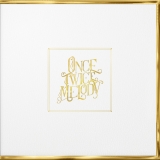
"First, don't want to ruin this experience for anybody by over hyping it. Take it in in a natural way. So, Beach House is my favorite. I contemplate my favorite album of all time as Teen Dream, Bloom, Depression Cherry, and now Once Twice Melody. This album blows me away with the sonics and sounds..." [+] Reply
-  C_Krug2009 | Helpful? (Log in to vote) | +5 votes (5 helpful | 0 unhelpful)
A maximum of 5 top-voted qualifying comments are selected for each album. To provide the best experience for visitors, comments are excluded if they refer to data corrections, contain excessive profanity, are written in all caps, are non-English, are too short, consist of conversations between users, or contain lists of best tracks etc.
C_Krug2009 | Helpful? (Log in to vote) | +5 votes (5 helpful | 0 unhelpful)
A maximum of 5 top-voted qualifying comments are selected for each album. To provide the best experience for visitors, comments are excluded if they refer to data corrections, contain excessive profanity, are written in all caps, are non-English, are too short, consist of conversations between users, or contain lists of best tracks etc.
Year of Release:
2022
Appears in:
Rank Score:
2,009
Rank in 2022:
Rank in 2020s:
Overall Rank:
Average Rating:
Comments:

"RTJ 4 is the opposite of timeless music. This is the encapsulation of a specific moment in history: here and now." Reply
Year of Release:
2020
Appears in:
Rank Score:
2,000
Rank in 2020:
Rank in 2020s:
Overall Rank:
Average Rating:
Comments:
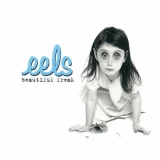
"It's keeping my attention right now. Has a peculier anger, one which is grinding its teeth even at the lines and notes themselves. Someone isn't pleased... the someone isn't me." Reply
Year of Release:
1996
Appears in:
Rank Score:
1,998
Rank in 1996:
Rank in 1990s:
Overall Rank:
Average Rating:
Comments:

"The repetitive nature and lack of quality lyrics in tunes like Never Learnt to Share "but I don't blame them..." are the things that ultimately spoiled this album for me. It has some awesome moments, and I find it hard to not appreciate the production (that bass...), but I can't listen to the ent..." [+] Reply
-  craola | Helpful? (Log in to vote) | +5 votes (5 helpful | 0 unhelpful)
A maximum of 5 top-voted qualifying comments are selected for each album. To provide the best experience for visitors, comments are excluded if they refer to data corrections, contain excessive profanity, are written in all caps, are non-English, are too short, consist of conversations between users, or contain lists of best tracks etc.
craola | Helpful? (Log in to vote) | +5 votes (5 helpful | 0 unhelpful)
A maximum of 5 top-voted qualifying comments are selected for each album. To provide the best experience for visitors, comments are excluded if they refer to data corrections, contain excessive profanity, are written in all caps, are non-English, are too short, consist of conversations between users, or contain lists of best tracks etc.
Year of Release:
2011
Appears in:
Rank Score:
1,997
Rank in 2011:
Rank in 2010s:
Overall Rank:
Average Rating:
Comments:

"Gram Parsons only stuck around to make a single record with the Byrds, but it was far and away the best thing the Byrds ever did, and that includes "Eight Miles High" and the other iconic Roger McGuinn-penned Byrds songs of the sixties. Sweetheart of the Rodeo never attained quite the same commer..." [+] Reply
-  buzzdainer | Helpful? (Log in to vote) | +3 votes (3 helpful | 0 unhelpful)
A maximum of 5 top-voted qualifying comments are selected for each album. To provide the best experience for visitors, comments are excluded if they refer to data corrections, contain excessive profanity, are written in all caps, are non-English, are too short, consist of conversations between users, or contain lists of best tracks etc.
buzzdainer | Helpful? (Log in to vote) | +3 votes (3 helpful | 0 unhelpful)
A maximum of 5 top-voted qualifying comments are selected for each album. To provide the best experience for visitors, comments are excluded if they refer to data corrections, contain excessive profanity, are written in all caps, are non-English, are too short, consist of conversations between users, or contain lists of best tracks etc.
Year of Release:
1968
Appears in:
Rank Score:
1,997
Rank in 1968:
Rank in 1960s:
Overall Rank:
Average Rating:
Comments:

"It pains me to rate this album so low. Not only is it a heartbreaking, deep look at loss and mourning, but it's also really beautiful. The shimmering synths sound just like the cover looks - alive and crisp. But there's just too much here, and there's not enough variety. The first couple songs ar..." [+] Reply
-  babyBlueSedan | Helpful? (Log in to vote) | +7 votes (7 helpful | 0 unhelpful)
A maximum of 5 top-voted qualifying comments are selected for each album. To provide the best experience for visitors, comments are excluded if they refer to data corrections, contain excessive profanity, are written in all caps, are non-English, are too short, consist of conversations between users, or contain lists of best tracks etc.
babyBlueSedan | Helpful? (Log in to vote) | +7 votes (7 helpful | 0 unhelpful)
A maximum of 5 top-voted qualifying comments are selected for each album. To provide the best experience for visitors, comments are excluded if they refer to data corrections, contain excessive profanity, are written in all caps, are non-English, are too short, consist of conversations between users, or contain lists of best tracks etc.
Year of Release:
2019
Appears in:
Rank Score:
1,991
Rank in 2019:
Rank in 2010s:
Overall Rank:
Average Rating:
Comments:

"I think I'm in the minority, but I like alt-rock darlings Sonic Youth best when they are at least somewhat accessible, and when they record things that sound at least a little bit like songs. Which is why I prefer Dirty to, say, Daydream Nation. Here Thurston Moore's whirling, swirling guitars la..." [+] Reply
- buzzdainer | Helpful? (Log in to vote) | +5 votes (5 helpful | 0 unhelpful)
A maximum of 5 top-voted qualifying comments are selected for each album. To provide the best experience for visitors, comments are excluded if they refer to data corrections, contain excessive profanity, are written in all caps, are non-English, are too short, consist of conversations between users, or contain lists of best tracks etc.
Year of Release:
1992
Appears in:
Rank Score:
1,990
Rank in 1992:
Rank in 1990s:
Overall Rank:
Average Rating:
Comments:

"One of the most creative, interesting and ambitious rock albums of the entire decade, this basically sticks a middle finger up at the conventions of both glossy glam rock and mopey indie college bands that were popular at the time. It doesn't really fit in with the metal genre either, nor the gru..." [+] Reply
-  capkronos | Helpful? (Log in to vote) | +4 votes (4 helpful | 0 unhelpful)
A maximum of 5 top-voted qualifying comments are selected for each album. To provide the best experience for visitors, comments are excluded if they refer to data corrections, contain excessive profanity, are written in all caps, are non-English, are too short, consist of conversations between users, or contain lists of best tracks etc.
capkronos | Helpful? (Log in to vote) | +4 votes (4 helpful | 0 unhelpful)
A maximum of 5 top-voted qualifying comments are selected for each album. To provide the best experience for visitors, comments are excluded if they refer to data corrections, contain excessive profanity, are written in all caps, are non-English, are too short, consist of conversations between users, or contain lists of best tracks etc.
Year of Release:
1989
Appears in:
Rank Score:
1,986
Rank in 1989:
Rank in 1980s:
Overall Rank:
Average Rating:
Comments:

"I've been into weird post-punky side of rock for more than a decade but I finally got this album's vibe just a couple of days ago. As unbelievably amazing as Flowers of Romance is, this one is even better. A milestone album, really. On the same level of unique innovation and inventiveness as TMR ..." [+] Reply
-  Amirkhosro | Helpful? (Log in to vote) | +5 votes (5 helpful | 0 unhelpful)
A maximum of 5 top-voted qualifying comments are selected for each album. To provide the best experience for visitors, comments are excluded if they refer to data corrections, contain excessive profanity, are written in all caps, are non-English, are too short, consist of conversations between users, or contain lists of best tracks etc.
Amirkhosro | Helpful? (Log in to vote) | +5 votes (5 helpful | 0 unhelpful)
A maximum of 5 top-voted qualifying comments are selected for each album. To provide the best experience for visitors, comments are excluded if they refer to data corrections, contain excessive profanity, are written in all caps, are non-English, are too short, consist of conversations between users, or contain lists of best tracks etc.
Year of Release:
1979
Appears in:
Rank Score:
1,983
Rank in 1979:
Rank in 1970s:
Overall Rank:
Average Rating:
Comments:
Total albums: 10,000. Page 87 of 1,000
Overall Chart composition
| Decade | Albums | % | |
|---|---|---|---|
| 1930s | 2 | 0% | |
| 1940s | 34 | 0% | |
| 1950s | 302 | 3% | |
| 1960s | 710 | 7% | |
| 1970s | 1,424 | 14% | |
| 1980s | 1,414 | 14% | |
| 1990s | 1,600 | 16% | |
| 2000s | 1,729 | 17% | |
| 2010s | 1,959 | 20% | |
| 2020s | 826 | 8% |
| Artist | Albums | % | |
|---|---|---|---|
|
|
|||
| Bob Dylan | 37 | 0% | |
| The Rolling Stones | 35 | 0% | |
| David Bowie | 32 | 0% | |
| The Beatles | 29 | 0% | |
| Miles Davis | 27 | 0% | |
| Neil Young | 26 | 0% | |
| Various Artists | 25 | 0% | |
| Show all | |||
| Country | Albums | % | |
|---|---|---|---|
|
|
|||
 |
5,009 | 50% | |
 |
2,654 | 27% | |
 |
431 | 4% | |
 |
335 | 3% | |
 |
221 | 2% | |
 |
157 | 2% | |
 |
134 | 1% | |
| Show all | |||