Best Albums of the 1990s
Listed below are the best albums of the 1990s as calculated from their overall rankings in over 58,000 greatest album charts. (Chart last updated: 4 hours ago).

"If there's one Los Lobos album that cannot be ignored it is undoubtedly "Kiko". You can draw parallels to the Kinks' '"Village Green Preservation Society" or the Beatles' "Sgt Pepper's." Two albums that have become classics because musical details have met in a higher unity. These three albums ha..." [+] Reply

"You really just can't got wrong with Pharaoh Sanders blowing his brains out through his sax." Reply
-  Onater | Helpful? (Log in to vote) | +1 votes (1 helpful | 0 unhelpful)
A maximum of 5 top-voted qualifying comments are selected for each album. To provide the best experience for visitors, comments are excluded if they refer to data corrections, contain excessive profanity, are written in all caps, are non-English, are too short, consist of conversations between users, or contain lists of best tracks etc.
Onater | Helpful? (Log in to vote) | +1 votes (1 helpful | 0 unhelpful)
A maximum of 5 top-voted qualifying comments are selected for each album. To provide the best experience for visitors, comments are excluded if they refer to data corrections, contain excessive profanity, are written in all caps, are non-English, are too short, consist of conversations between users, or contain lists of best tracks etc.

"Edges of Twilight is an absolute trip. It is chockers full of awesome songs and very skilfully crosses over between the genres of rock, blues, folk and world music. This is where The Tea Party further developed the Eastern and Indian flavours explored in Splendor Solis, merging these sounds and c..." [+] Reply

"My third favorite electronic album behind violator and pretty hate machine" Reply
Year of Release:
1999
Appears in:
Rank Score:
352
Rank in 1999:
Rank in 1990s:
Overall Rank:
Average Rating:
Comments:

"The finest electro music you can get.. straight outta detroit baby" Reply
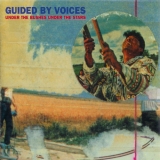
"I bought this on cassette when it came out and was hooked. I listened to it several times in a row without stopping and haven't stopped listening to it for 20 years. In the span of albums from "Box" through "Under the Stars," Robert Pollard draws inspiration from the entire history of rock after ..." [+] Reply

Share your opinion and help others discover this album. The top-voted comments are showcased in our aggregate charts!

"this was a really strong debut album, and the song "Gorecki" is a real standout, and it has made it onto many mix CDs i've burned for friends. a snippet was included in the film Moulin Rouge, and it's been used in other films and the tv series Torchwood." Reply
-  philbutrin | Helpful? (Log in to vote) | +2 votes (2 helpful | 0 unhelpful)
A maximum of 5 top-voted qualifying comments are selected for each album. To provide the best experience for visitors, comments are excluded if they refer to data corrections, contain excessive profanity, are written in all caps, are non-English, are too short, consist of conversations between users, or contain lists of best tracks etc.
philbutrin | Helpful? (Log in to vote) | +2 votes (2 helpful | 0 unhelpful)
A maximum of 5 top-voted qualifying comments are selected for each album. To provide the best experience for visitors, comments are excluded if they refer to data corrections, contain excessive profanity, are written in all caps, are non-English, are too short, consist of conversations between users, or contain lists of best tracks etc.

"Contains two strong singles in What Time Is Love? and 3 A.M. Eternal, as well as one annoying single in Justified and Ancient. The remaining six songs are pointless filler." Reply
-  Bork | Helpful? (Log in to vote) | +1 votes (1 helpful | 0 unhelpful)
A maximum of 5 top-voted qualifying comments are selected for each album. To provide the best experience for visitors, comments are excluded if they refer to data corrections, contain excessive profanity, are written in all caps, are non-English, are too short, consist of conversations between users, or contain lists of best tracks etc.
Bork | Helpful? (Log in to vote) | +1 votes (1 helpful | 0 unhelpful)
A maximum of 5 top-voted qualifying comments are selected for each album. To provide the best experience for visitors, comments are excluded if they refer to data corrections, contain excessive profanity, are written in all caps, are non-English, are too short, consist of conversations between users, or contain lists of best tracks etc.
Year of Release:
1991
Appears in:
Rank Score:
349
Rank in 1991:
Rank in 1990s:
Overall Rank:
Average Rating:
Comments:

"To this date the last great Marillion - Album . All the following have major flaws . Either too much ``Pop-appeal`` ; too much Hogarth and not enough Rothery ." Reply
-  doombringer | Helpful? (Log in to vote) | 0 votes (0 helpful | 0 unhelpful)
A maximum of 5 top-voted qualifying comments are selected for each album. To provide the best experience for visitors, comments are excluded if they refer to data corrections, contain excessive profanity, are written in all caps, are non-English, are too short, consist of conversations between users, or contain lists of best tracks etc.
doombringer | Helpful? (Log in to vote) | 0 votes (0 helpful | 0 unhelpful)
A maximum of 5 top-voted qualifying comments are selected for each album. To provide the best experience for visitors, comments are excluded if they refer to data corrections, contain excessive profanity, are written in all caps, are non-English, are too short, consist of conversations between users, or contain lists of best tracks etc.
Total albums: 1,000. Page 68 of 100
Best Albums of the 1990s composition
| Year | Albums | % | |
|---|---|---|---|
| 1990 | 84 | 8% | |
| 1991 | 85 | 9% | |
| 1992 | 102 | 10% | |
| 1993 | 108 | 11% | |
| 1994 | 127 | 13% | |
| 1995 | 104 | 10% | |
| 1996 | 108 | 11% | |
| 1997 | 99 | 10% | |
| 1998 | 99 | 10% | |
| 1999 | 84 | 8% |
| Artist | Albums | % | |
|---|---|---|---|
|
|
|||
| Blur | 6 | 1% | |
| The Flaming Lips | 6 | 1% | |
| Beck | 5 | 1% | |
| Autechre | 5 | 1% | |
| Tori Amos | 5 | 1% | |
| Suede | 5 | 1% | |
| Pavement | 5 | 1% | |
| Show all | |||
| Country | Albums | % | |
|---|---|---|---|
|
|
|||
 |
536 | 54% | |
 |
270 | 27% | |
 |
41 | 4% | |
 |
24 | 2% | |
 |
24 | 2% | |
 |
16 | 2% | |
 |
12 | 1% | |
| Show all | |||
If you enjoy our site, please consider supporting us by sparing a few seconds to disable your ad blocker.
A lot of hard work happens in the background to keep BEA running, and it's especially difficult to do this when we can't pay our hosting fees :(
We work very hard to ensure our site is as fast (and FREE!) as possible, and we respect your privacy.
A lot of hard work happens in the background to keep BEA running, and it's especially difficult to do this when we can't pay our hosting fees :(
We work very hard to ensure our site is as fast (and FREE!) as possible, and we respect your privacy.