Listed below are the best albums of the 1990s as calculated from their overall rankings in over 58,000 greatest album charts. (Chart last updated: 4 hours ago).
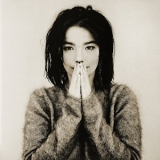
"My first Bjork experience, I've played this maybe 4-5 times over the past year. Was not a big fan of the vocals initially, but her delivery and tone have really grown on me with repeated listens. Biggest problem I still have with this one are the several tracks with heavy dance/house beats. Feels...""My first Bjork experience, I've played this maybe 4-5 times over the past year. Was not a big fan of the vocals initially, but her delivery and tone have really grown on me with repeated listens.
Biggest problem I still have with this one are the several tracks with heavy dance/house beats. Feels like some standard "club" music and it's not really my cup of tea. However, she does make some interesting stylistic choices here and there on those tracks to make them tolerable and even enjoyable at moments for me. I'm in the minority in that Big Time Sensuality was a low point for me.
Joining in the herd on Venus as a Boy - that track is fantastic. My favorite section of the album though was the string of One Day->Aeroplane->Come to Me. Overall there is a nice diversity of styles here and I like the flow from track to track even if not every track was a win for me.
Though I tend to prefer dark, brooding, depressive themes, I really dig the positive vibes on this one. There is a childlike innocence and energy here that gives power to the messaging on tracks like Human Behavior, One Day, and Come to Me. I read that Bjork had actually written some of this material as a kid/teen. I don't feel like it's a corporate motivational speaker selling me cliches. More like a good friend who really believes in me.
Also somehow I've come to rather enjoy the Anchor Song.
All said, a solid album that has potential as a grower for me over time. Excited to explore more of her discography when I eventually find the time."[+]Reply
"Ground breaking, time defining music. Not only did it help launch the "Bristol scene" (Portishead, Tricky, etc) but it actually shaped it. If you are interested in the history of music, you should definitely own a copy of this album."Reply
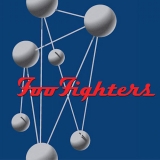
"This is slightly different to their debut but there is still loads to love on this record and it is an under rated follow up. It is very tough to follow an album as good as Ten is and you can see they struggled a little to figure out which way they wanted to take the music. Once the record gets s...""This is slightly different to their debut but there is still loads to love on this record and it is an under rated follow up. It is very tough to follow an album as good as Ten is and you can see they struggled a little to figure out which way they wanted to take the music. Once the record gets started though we are kicked right into a storm with 2 extremely energetic tracks which are possibly my favourite on the record. This really gives us an idea of what the rest of the album is going to be like and they follow this pattern, to a varying degree of success, on the rest of the tracks. It can be a bit up and down in spells but when the group get going they really create some powerful and enjoyable songs. Songs like Daughter and Rearviewmirror are prime examples of this and are very catchy. It does drag on a little too long for me however and it is let down by some filler cuts. Overall, this flies a little under the radar of some listeners due to the quality of Ten even though it deserves a lot of praise and is a very strong follow up. "[+]Reply
"Takes you at time when things were a little different, when with a little help from your friends we were together as one for those long nights and chilled mornings at least!!"Reply
"Dave's 2nd album is more elaborately fleshed out both musically and lyrically. This album really bridged a shift in style from the 1st album to the rest of their output. (i felt subsequent albums just haven't been as good, and i just found out that dave grohl created most of the songs of the 2nd ...""Dave's 2nd album is more elaborately fleshed out both musically and lyrically. This album really bridged a shift in style from the 1st album to the rest of their output. (i felt subsequent albums just haven't been as good, and i just found out that dave grohl created most of the songs of the 2nd album -- i already knew he did the whole first album himself.) It's not as abrasive as his post-grunge-fest debut, but grohl still rips and bangs this mutha. Doesn't sound that way from the outset though, as "doll" eases us in to the rockin' splendor, beginning with lead single "monkey wrench" ("whatever happened to innocence?") . It's a fun song amidst a serious topic of relationship problems and despite sounding like a standard rocker -- i love the raging scream-fest at the end. "hey, johnny park!" plays the quiet/loud game nirvana helped make popular. "my poor brain" is more fun, again punctuated by a lil ending rage. "see you" is short and sweet. The other highlights for me are "my hero", "everlong", "enough space" and "walking after you", with "everlong" being the gem. The song is seductive and philosophical, wondering "If everything could ever feel this real forever"."[+]Reply
"On December 28th, 1998, enigmatic frontman Shinji Sato gazed upon a vigilant crowd gathered lovingly at the Akasaka Blitz in Minato, Tokyo. It was here that his band, Fishmans, was prepared to bid adieu to their bassist, Yuzuru Kashiwabara, who was set upon leaving the group. Little did anyone kn...""On December 28th, 1998, enigmatic frontman Shinji Sato gazed upon a vigilant crowd gathered lovingly at the Akasaka Blitz in Minato, Tokyo. It was here that his band, Fishmans, was prepared to bid adieu to their bassist, Yuzuru Kashiwabara, who was set upon leaving the group. Little did anyone know, the amount of finality and reverence this performance would carry would forever bathe the band in a balmy luster of posthumous praise. As the first reverberations of guitar are heard, a docility seems to rain over the multitude, almost entranced in a spiritual, reverent manner. Such things happen without warning, yet, when they do, they have the tendency to stifle the passing of time and render the present moment motionless. What happened on that December evening in Tokyo is exalted for the transcendent-nature of the musicality and Sato's passing in the months that would follow. What many don't perceive, is that it wasn't just Sato's passage that galvanized those proceedings. Every single soul on stage and in attendance would take part in the ascension to a higher state of musical consciousness, now permanent, invisible residents of both the Akasaka Blitz and another heavenly dimension.
Sato and company begin with the pleasantries and with 'Oh! Slime', which bestows respective introductions to each of the band's players. This preamble progressively evolves from a spacey, serene whirring into a bouncy declaration of jubilee. It's clear that the forthcoming ceremony isn't going to be colored by solemnity, despite it being Kashiwabara's swan song. The chants of "Are you feel good?" further blur the collective reality and affix the qualities of a fragmented dream. The band slips back into serenity with the arrival of their legendary cut, 'ナイトクルージング (Night Cruising)'. This 'Night Cruise' is more tranquil than its studio album doppelganger, exercising more force and dramatic heft. Sato's presence seems to emanate like vapor through the bright, twinkly guitar chords. The track unfurls at a measured tempo, conjuring images of summer-swept, evening car rides with the windows at half mast. Distorted guitar clangs charge into Sato's banshee wail which fuels the burgeoning sense of grandiosity as the track fades from view. Next in queue, is a revisitation of the band's sophomore effort, 1992's King Master George. The cosmic, percussive 'なんてったの (What Was It)', materializes in a form seemingly untethered and which could fly away at a moment's notice. It's Honzi's work at the keys that colors and elevates the track, as her exploits attach a perceptible sense of melancholy to the song. The bittersweet sensations persist as Fishmans slip into 'Thank You', a explicit championing of life and an unbridled expression of gratitude for its peaks and valleys. The track's somber essence is one of hindsight, as Sato's screeches of life pre-date the ending of his own just months thereafter. It, at times, seems like a conscious goodbye, adding to the mystical gravitas of the band's live farewell.
The band ceases to drag their feet as they decide to live within the present with 'Shiawase-mono (A Happy Person)', a bassy, simmering concoction of placid guitar tones which are ushered away gracefully by Honzi's egressing, endearing keys. The pace lounges more evidently with 'Tayorinai Tenshi (Unreliable Angel)', which shimmers like a calm before a storm, despite its aesthetic allure. Carrying distinct reggae and ska sheens, Fishmans re-enliven their dub roots with pastoral, matured sensibilities. The velocity does resurface, however, the piquancy remains with 'Hikōki (ひこうき; Airplane)', a noticeably more rosy affair fit with phosphorescent guitar and jovial vocals. The infectious guitar solo marks a triumphant break within the track, providing a raucous, screeching wall which firmly divides the two melodic sections. After a brief exchange, the mood swells, the crowd loosens and the stage at the Blitz is now shrouded. The band recrudesces with a signature composition, 'In the Flight', off of 1997's 'Uchū Nippon Setagaya (Space Japan Setagaya)'. The track is rife with gradual escalation, with a dream pop alpha flowing into a brief but elastic, omega. Often cooing as gently as a dove, Sato's vocals on the track are befittingly avian, fragile and susceptible to a soft breeze. Honzi's violin passage weeps softly and elegantly acting as the perfect placeholder and compliment to Sato's own delicate offerings. An arresting symbiotic relationship carries 'In the Flight' into the ether. With a pivot from one legacy-defining track to another, 'Walking in the Rhythm' manifests. This 'Rhythm' is not as melodramatic as it dutifully chugs along before cascading overtop of itself with an assortment of varying guitar sections. The eponymous chants have never sounded so weighty as the track spirals into a cosmic cauldron of intergalactic synth and dueling guitar before crescendoing with labored exaltations from all parties. It's an incredible, stream-of-consciousness adaptation of the band's original masterpiece.
Another trans-dimensional odyssey takes place with the subsequent, 'Smilin' Days, Summer Holiday'. This voyage is powered by guitars that swirl and circulate like maelstroms, but without carrying a semblance of menace or ill-will. They gleam brightly from portion to portion as a cluster of voices flow out, tucked in snugly beneath the ever-advancing strings. After a particularly upbeat, punchy rendition of 'Melody' off of 1994's 'Orange', the stage darkens once more and the disposition becomes one of voiceless consideration. Fishmans begin to perform 'Yurameki in the Air (Flickering in the Air)', a composition that brandishes the same genetic makeup of slow-developing staples such as 'Night Cruising' and 'In the Flight', but stretched out to infinity. It's here that they return to music so gauzy and ethereal that, if you adjust your gaze or shift too brashly, it may flee from view, like innocent fauna of the forest. This intimate mind-meld between artist and audience for 16 unbroken minutes is pure bliss. Penultimate effort, "Ikareta Baby (いかれた Baby; Crazy Baby)", uncoils in a very disparate fashion than its studio counterpart. Here, the piece prefers to wander amidst the expanded acoustics of the Blitz and ride a persistent tempo into the final act of Fishmans' final hour.
So, Fishmans and Shinji Sato offered their parting gift to the world and it began with a cosmic whirl which bleeds into the unforgettable keyboard centerpiece. 'Long Season' was now in full swing, and experiencing it in its fully-realized form makes it easy to forget that the project was once a microscopic idea. This idea continued to propagate from the original six-minute version to the now towering, 41-minute monolith of musical perfection. Albeit tragic, it seems utterly apt that this composition would be the last thing the first iteration of the band would perform. Sato's guitar solo creates the proverbial shriek of a imploding star, a ball of gas which burns so bright that it collapses in on itself by way of its own brilliance. This final 'season' is one which seemingly endures the changing of the leaves, the shifting of tectonic plates and causes the earth, for a brief moment, to cease its rotation and stand still.
The Akasaka Blitz was closed in 2020, now a musical tomb, further painting a picture of a night more reminiscent of a mirage than a historical event. Its memory remains eternally imprinted upon the site and in the hearts and minds of those who witnessed this performance. Until recently, few outside Japan knew of the majesty Fishmans could conjure, but their creative tree fell in the woods in December 1998. Few heard it's alluring reverberation then, but now, finally, all can take part in its auditory luster. You see, as the tree collided with the Earth below, its descent and demise fertilized a beautiful garden which blooms more vividly each day and remains an idyllic place to sit, listen and ponder the radiance of life itself.
"I hope you don't fade away today"
- ゆらめき in the Air
Standout Tracks:
1. Long Season
2. ゆらめき in the Air
3. ナイトクルージング (Nightcruising)"[+]Reply
"After careful listening and consideration, I think this is my favorite shoegaze album. Loveless is great, but it just doesn't have that energy. Where Loveless is a brilliant wall of sound, Nowhere feels more like a warm mid-spring day with the wind blowing in my hair. For me, that means more in m...""After careful listening and consideration, I think this is my favorite shoegaze album. Loveless is great, but it just doesn't have that energy. Where Loveless is a brilliant wall of sound, Nowhere feels more like a warm mid-spring day with the wind blowing in my hair. For me, that means more in music than just having an awesome wall of sound. Great music should make you feel like you're in a certain place of which you are currently not existing in. And that's what this album does for me."[+]Reply
"What to make of Out Of Time? As an R.E.M mega fan I’ve grappled with this question for 25 years & TBH I still don’t know & may never fully understand. The 1st 4 songs in Radio Song , Loosing My Religion, Low and Near Wild Heaven are average to say the least before Endgame , Shiny Happy People ( y...""What to make of Out Of Time? As an R.E.M mega fan I’ve grappled with this question for 25 years & TBH I still don’t know & may never fully understand. The 1st 4 songs in Radio Song , Loosing My Religion, Low and Near Wild Heaven are average to say the least before Endgame , Shiny Happy People ( yes I love this song even though the band doesn’t) Belong and Half A World Away ( am I the only one who thinks their unplugged version is better than the album version? ) stops the rot and resumes regular transmission . Texacarna is a misplaced inclusion & should have been a B Side . Then we close with the magestic Country Feedback Song with may well be the best R.E.M track period leaving me breathless to this day and incredible Me In Honey. All up it’s a real mixed bag of The Good, The Bad and The Kinda OK . I’ll be listening to the 25th Anniversary Edition wire to wire as per every 25 year release but I recon I’ll be skipping a few tracks to get to the good ones "[+]Reply


 demetrios | Helpful? (Log in to vote) | +8 votes (8 helpful | 0 unhelpful)
A maximum of 5 top-voted qualifying comments are selected for each album. To provide the best experience for visitors, comments are excluded if they refer to data corrections, contain excessive profanity, are written in all caps, are non-English, are too short, consist of conversations between users, or contain lists of best tracks etc.
demetrios | Helpful? (Log in to vote) | +8 votes (8 helpful | 0 unhelpful)
A maximum of 5 top-voted qualifying comments are selected for each album. To provide the best experience for visitors, comments are excluded if they refer to data corrections, contain excessive profanity, are written in all caps, are non-English, are too short, consist of conversations between users, or contain lists of best tracks etc.


 SingingPeasant96 | Helpful? (Log in to vote) | +19 votes (20 helpful | 1 unhelpful)
A maximum of 5 top-voted qualifying comments are selected for each album. To provide the best experience for visitors, comments are excluded if they refer to data corrections, contain excessive profanity, are written in all caps, are non-English, are too short, consist of conversations between users, or contain lists of best tracks etc.
SingingPeasant96 | Helpful? (Log in to vote) | +19 votes (20 helpful | 1 unhelpful)
A maximum of 5 top-voted qualifying comments are selected for each album. To provide the best experience for visitors, comments are excluded if they refer to data corrections, contain excessive profanity, are written in all caps, are non-English, are too short, consist of conversations between users, or contain lists of best tracks etc.
 paladisiac | Helpful? (Log in to vote) | +3 votes (4 helpful | 1 unhelpful)
A maximum of 5 top-voted qualifying comments are selected for each album. To provide the best experience for visitors, comments are excluded if they refer to data corrections, contain excessive profanity, are written in all caps, are non-English, are too short, consist of conversations between users, or contain lists of best tracks etc.
paladisiac | Helpful? (Log in to vote) | +3 votes (4 helpful | 1 unhelpful)
A maximum of 5 top-voted qualifying comments are selected for each album. To provide the best experience for visitors, comments are excluded if they refer to data corrections, contain excessive profanity, are written in all caps, are non-English, are too short, consist of conversations between users, or contain lists of best tracks etc.

 DriftingOrpheus | Helpful? (Log in to vote) | +6 votes (6 helpful | 0 unhelpful)
A maximum of 5 top-voted qualifying comments are selected for each album. To provide the best experience for visitors, comments are excluded if they refer to data corrections, contain excessive profanity, are written in all caps, are non-English, are too short, consist of conversations between users, or contain lists of best tracks etc.
DriftingOrpheus | Helpful? (Log in to vote) | +6 votes (6 helpful | 0 unhelpful)
A maximum of 5 top-voted qualifying comments are selected for each album. To provide the best experience for visitors, comments are excluded if they refer to data corrections, contain excessive profanity, are written in all caps, are non-English, are too short, consist of conversations between users, or contain lists of best tracks etc.
 Brad1770 | Helpful? (Log in to vote) | +6 votes (8 helpful | 2 unhelpful)
A maximum of 5 top-voted qualifying comments are selected for each album. To provide the best experience for visitors, comments are excluded if they refer to data corrections, contain excessive profanity, are written in all caps, are non-English, are too short, consist of conversations between users, or contain lists of best tracks etc.
Brad1770 | Helpful? (Log in to vote) | +6 votes (8 helpful | 2 unhelpful)
A maximum of 5 top-voted qualifying comments are selected for each album. To provide the best experience for visitors, comments are excluded if they refer to data corrections, contain excessive profanity, are written in all caps, are non-English, are too short, consist of conversations between users, or contain lists of best tracks etc.