Listed below are the best albums of the 1960s as calculated from their overall rankings in over 59,000 greatest album charts. (Chart last updated: 3 hours ago).
"Etta James is a gutsy and versatile singer ranging across the styles popular at the turn of the decade: blues, R&B, doo-wop, gospel, jazz, and the emerging soul. After some success in the early 60s, though her work continued to attract critical attention, she stopped being popular, and by the lat..."" Etta James is a gutsy and versatile singer ranging across the styles popular at the turn of the decade: blues, R&B, doo-wop, gospel, jazz, and the emerging soul. After some success in the early 60s, though her work continued to attract critical attention, she stopped being popular, and by the late 70s she was struggling with drug addiction. She re-gained public attention in the 90s, largely due to a 1996 Pepsi advert. She has a long list of singers who admire and respect her singing, including Diana Ross, Janis Joplin, Mick Jagger, Joss Stone and Adele. This is a great album"[+]Reply
"Cream's true masterpiece and along with Layla, Clapton's most relevant album, this is a really underrated record which shows the band mastering the blues and transitioning it to the sound that would later be part of the sound of Zeppelin, Purple and Sabbath, although the live recordings are too m...""Cream's true masterpiece and along with Layla, Clapton's most relevant album, this is a really underrated record which shows the band mastering the blues and transitioning it to the sound that would later be part of the sound of Zeppelin, Purple and Sabbath, although the live recordings are too much jamming for my taste there isn't a weak moment on the studio album (except for the babbling in track 4), far better than Disraeli Gears which seems less coherent and inspired..."[+]Reply
"Gram Parsons only stuck around to make a single record with the Byrds, but it was far and away the best thing the Byrds ever did, and that includes "Eight Miles High" and the other iconic Roger McGuinn-penned Byrds songs of the sixties. Sweetheart of the Rodeo never attained quite the same commer...""Gram Parsons only stuck around to make a single record with the Byrds, but it was far and away the best thing the Byrds ever did, and that includes "Eight Miles High" and the other iconic Roger McGuinn-penned Byrds songs of the sixties. Sweetheart of the Rodeo never attained quite the same commercial success of the Byrds' other work, but it's some of the finest and most influential country rock ever recorded. For me there's not a bad song on the whole album, but any discussion of Sweetheart of the Rodeo has to begin with "You Ain't Going Nowhere," probably the song I've played on more porches in Georgia and North Carolina than any other, ever. Just one of those great, simple, timeless tunes that everyone knows, even when they're not quite sure how or when or where they heard it first."[+]Reply
"There's three distinct periods in the Beach Boys career. Pre, post and Pet Sounds. This album is the culmination of the pre-Pet Sounds era. When Brian was still writing songs about girls, being a teenager, cars and girls. Before he scraps the drums, bass, guitar surf music style he releases what ...""There's three distinct periods in the Beach Boys career. Pre, post and Pet Sounds. This album is the culmination of the pre-Pet Sounds era. When Brian was still writing songs about girls, being a teenager, cars and girls. Before he scraps the drums, bass, guitar surf music style he releases what can be argued to be their best album. If, by some unknown reason you find Pet Sounds boring (only because I read the reviews in this site) then this album is important to know where Brian was coming from. This is the album of songs Mike Love was referring to when he told Brian he was f*cking with the formula when he first heard Pet Sounds. But Brian was moving past the beach, cars and girls topics and stretching the sound...especially in "Kiss Me Baby" "She Knows Me Too Well". Wonderful!"[+]Reply
"It's funny that most of the comments here allude to this being below par for Bob, and not on the same level as some of his other recordings. Personally I think that's absolute hogwash - this is Dylan at his very best; Dylan the mythologiser, Dylan the storyteller, Dylan the philosopher. Beginning...""It's funny that most of the comments here allude to this being below par for Bob, and not on the same level as some of his other recordings. Personally I think that's absolute hogwash - this is Dylan at his very best; Dylan the mythologiser, Dylan the storyteller, Dylan the philosopher.
Beginning with the opener and title track, Dylan weaves a series of telling tales about his life and his career as told through the point of view of others. The title track is no more about John Wesley Hardin than it is about Dylan the protest-singer, or at least the one which the media chose to portray. It may seem like a simple tale of a Robin Hood-esque noble outlaw, but the song itself acts as a metaphor for Dylan's own exploits, or at least some exaggerated version of them as dreamed up by those raving, quasi-religious "followers" he was so reluctant to acknowledge in the first place. In the final verse he appears to switch to something more accurate, at least in terms of his opinion of himself and the way he could confound expectations and hopes others had of him ("no charge held against him could they prove"). And why, of all people, choose John Wesley Hardin anyway? The man was apparently so mean that he once killed a man for snoring (though this probably didn't actually happen), so why choose his name for a tale about a noble outlaw? My opinion is that Dylan chose Hardin for his reputation as a self-mythologiser, a man who would wilfully embellish his stories in order to make them more exciting, just as Dylan has been wont to do. (Anybody who seriously believes Chronicles to be a work of accurate autobiography needs their head checked.) Dylan even looks like a noble outlaw on the cover, enhancing the idea that he sees himself as Hardin, or at least the Harding of this song and this album. What people often dismiss as a series of cute folk tales and ditties, ones which I've been told pale in comparison to his apparently more focused and passionate paeans to love or justice, are arguably his most personal (or, perhaps more accurately, his most self-referencing) works, those in which he puts himself smack bang in the middle of the story, even as somebody else entirely.
And we see this happen throughout the record. Dylan is the lonesome hobo who has served his time for everything except begging on the street (or is he? Would he really admit to not trusting his brother?), who in turn is the accused drifter. He is both the joker (whose wine is drunk by businessmen and whose earth is dug by ploughmen, without gratitude or recognition of his worth) and the thief (who understands that life is but a joke). Whilst he is defiant in the face of accusations (he is no martyr), he feels the pressure of expectation, the guilt that perhaps he played along and performed his role, even going so far as to bowing his head and crying in the (imagined) presence of St. Augustine (who wasn't, in fact, martyred - perhaps more mythologising on Dylan's part).
Perhaps the album's two most striking moments, the parable 'The Ballad of Frankie Lee and Judas Priest' and the piano-driven 'Dear Landlord', appear to be about Dylan's relationship with his management. Judas Priest tries to force Frankie to accept his offer "before (it) all disappears"; Frankie, in his attempts to join Judas in his beautiful home, dies of thirst. Did Dylan sell his soul? Is that what he's admitting to? Or is it just a precursory warning about the trappings of fame, about mistaking paradise for that home across the road? But later, on 'Dear Landlord' (frequently thought to refer to God, but that reading doesn't wash with me, it seems far too confrontational for that), he warns that he's "not about to move to no other place". Perhaps he likes the home after all. "If you don't underestimate me", he states to the Landlord, "I won't underestimate you" - perhaps a grudging respect, or just a necessary compromise.
Not all of the album's songs are so dense with cryptic tales and biblical imagery (in fact, on first inspection, not many of them seem remotely cryptic at all, but that's another story). Album closer 'I'll Be Your Baby Tonight' is a simple love song, much more in line with the stuff he'd record on Nashville Skyline, often regarded as this album's sister. That may be true musically (both definitely take their cues from roots and country music), but thematically the two couldn't be more different. Here we have Dylan the shapeshifter, the defiant myth-buster, the mischievous myth-maker, whereas on Nashville Skyline we see Dylan the hopeless romantic. And the music here is much more sparse, darker, naked. On Nashville Skyline there's a certain decadence musically, Dylan basking in the Nashville sound, with all its twangs and rhinestones. Here Dylan lays his soul bare, over fittingly austere accompaniments, often nothing more than a few shuffling guitar chords. Where The Band - whose Music from Big Pink I see as more of a sister album to John Wesley Harding than anything else - used roots music as something expansive and out-of-time (sounding at once centuries old and yet of the present, as though it has no time of reference at all, the musical equivalent of a tree that stands for hundreds of years), Dylan here uses roots music as something small and insular, music to share stories around the campfire to.
Which is, essentially, what this album is. It's Dylan sharing his stories around the campfire, his fears and his guilt, and his pride in forever confounding expectation. This is Dylan the man, and Dylan the myth. This is Dylan the honest, sharing his thoughts as nakedly as he ever would, so long as you're willing to dig a little.
Or maybe - just maybe - this is Dylan the deceiver, singing simple folk tales for his followers to dig into forever more, in futile search of some deeper meaning that simply isn't there. Maybe - just maybe - I've been duped, and this album does, in fact, pale in comparison to his earlier works. And maybe - just maybe - the little neighbour boy was right; "nothing is revealed"."[+]Reply
"Raw, edgy garage with a queasy, malevolent psychedelic gleam. A glorious atmosphere and great, robust songs throughout. I personally love the electric jug, but I see it's not to everyone's taste! A crucial record for more reasons than just being the first to have the word "Psychedelic" in the tit...""Raw, edgy garage with a queasy, malevolent psychedelic gleam. A glorious atmosphere and great, robust songs throughout. I personally love the electric jug, but I see it's not to everyone's taste! A crucial record for more reasons than just being the first to have the word "Psychedelic" in the title. I recommend this to anyone who enjoys 60s "garage" and the more provocative underground limb of early psychedelic rock."[+]Reply
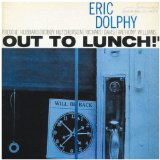
"This record's really the epitome of hard-bop, even as it stretches the boundaries of the genre into something approaching true avant-garde while still often keeping the boundaries of familiar jazz, resulting in a crucial listen."Reply
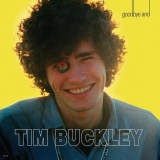
"I had a busy day of listening today. I had a half dozen albums to relisten to. This one included. And to be honest I just wasn't overwhelmingly excited about listening to Tim Buckley. He had never yet clicked with me. Meaning he had never really connected with me or illuminated for me some sort o...""I had a busy day of listening today. I had a half dozen albums to relisten to. This one included. And to be honest I just wasn't overwhelmingly excited about listening to Tim Buckley. He had never yet clicked with me. Meaning he had never really connected with me or illuminated for me some sort of realization of the greatness of his music or the coolness or the style or virtuosity, etc. It just had never straightened into a clear concept in my mind which I liked. I had listened to this album and a few of his later (stranger and more experimental) albums.
But I just made myself push play to at least recollect what i thought of this album. And the coolest thing happened. I finally "Got It". I mean I finally heard the sheer creative audacity of what Buckley had done with this album. I found myself overcome by the emotions he was expressing, I heard and understood what he was doing with his somewhat over the top musical waves. The palate with which he paints this album is immense. There are strange effects on many things, and guitars, and keyboards and symphonies and big crescendos and there is, of course, his vocals. His vocals were what finally worked for me. They just are all over the place and all in service of the songs. His voice has always been mentioned as a game changer in many ways, but I never liked them much. But here they really work, he sounds like he is almost bursting with an unimaginable amount of emotion and fire and sadness. And as he sings he is releasing these sounds and these feelings and its oft-times glorious.
And yes later albums are definitely pushed way way up my "To Listen" list. I believe its generally understood that he got more and more out there and experimental as he went along in his short life. And I do recall "Lorca" and "Starsailor" being quite strange and beautiful. I am very very excited to listen to them for later songwriter lists (1969-1971 will probably HAVE to be top 15s at this rate cuz man there is a lot of great stuff coming up to listen to for those years). Its amazing to think he became somehow MORE innovative. Cuz listening to this today just blew my mind in how incredibly unique and forward-thinking the whole sound and flow of the album was. I mean you can hear traces of it in Fred Neil, but this is just next level wild and ahead of its time. Its a goodie.
Grade: 9.2/10"[+]Reply
"An excellent album from The Byrds. Younger than yesterday, really sees the band moving on. Opener, so you want to be a rock'n'roll star, is a sardonic take on the music business featuring trumpet from Hugh Masekela, and it's followed by, have you seen her face, one of Chris Hillman's best byrd so...""An excellent album from The Byrds. Younger than yesterday, really sees the band moving on. Opener, so you want to be a rock'n'roll star, is a sardonic take on the music business featuring trumpet from Hugh Masekela, and it's followed by, have you seen her face, one of Chris Hillman's best byrd songs. Elsewhere, there's hints of, sweetheart at the rodeo, on the countryfied, time between, and, the girl with no name, and, everybody's been burned, is a great David Crosby track. Unfortunately, another Crosby number, mind gardens, is atrocious, an awful attempt at something unconventional, it's the only moment on the LP that stops it from being a total classic. A pity, because everything else here is great, from the brilliant, thoughts and words, and an excellent Dylan cover in, my back pages. All in all, a very good album, just tarnished by a moment of indulgence from Crosby. "[+]Reply
"Wow! What a special album this one is. This record is so personal and real. It was such a hard left turn in terms of theme in comparison to "The Times They Are A-Changin'". I personally love this more introspective vibe on here. Overall I will say this album isn't quite as consistent as its prede...""
Wow! What a special album this one is. This record is so personal and real. It was such a hard left turn in terms of theme in comparison to "The Times They Are A-Changin'". I personally love this more introspective vibe on here.
Overall I will say this album isn't quite as consistent as its predecessor. This albums only weakness, if slight, is I don't personally feel it flows perfectly throughout. I don't love the transition from the openly funny "Motorpsycho Nitemare" to the masterpeice of introspective poetry "My Back Pages", as an example.
Still none of the tracks here are less than very good and the High point - "My Back Pages" is about as beautiful an expression of a songwriter ever recorded. And the other highs like "Chimes of Freedom", "Black Crow Blues", "To Ramona", "Spanish Harlem Incident", "Ballad In Plain D" and (no matter how many times I hear it) "It Ain't Me Babe" present practically a clinic on how one goes about being mysterious, sensitive, emotive, intelligent, poetic, sincere and never too serious about oneself all on one album. Truly this is just another fucking peice of genius from The Genius.
Grade: 91/100"[+]Reply


 covecove | Helpful? (Log in to vote) | +1 votes (1 helpful | 0 unhelpful)
A maximum of 5 top-voted qualifying comments are selected for each album. To provide the best experience for visitors, comments are excluded if they refer to data corrections, contain excessive profanity, are written in all caps, are non-English, are too short, consist of conversations between users, or contain lists of best tracks etc.
covecove | Helpful? (Log in to vote) | +1 votes (1 helpful | 0 unhelpful)
A maximum of 5 top-voted qualifying comments are selected for each album. To provide the best experience for visitors, comments are excluded if they refer to data corrections, contain excessive profanity, are written in all caps, are non-English, are too short, consist of conversations between users, or contain lists of best tracks etc.

 buzzdainer | Helpful? (Log in to vote) | +3 votes (3 helpful | 0 unhelpful)
A maximum of 5 top-voted qualifying comments are selected for each album. To provide the best experience for visitors, comments are excluded if they refer to data corrections, contain excessive profanity, are written in all caps, are non-English, are too short, consist of conversations between users, or contain lists of best tracks etc.
buzzdainer | Helpful? (Log in to vote) | +3 votes (3 helpful | 0 unhelpful)
A maximum of 5 top-voted qualifying comments are selected for each album. To provide the best experience for visitors, comments are excluded if they refer to data corrections, contain excessive profanity, are written in all caps, are non-English, are too short, consist of conversations between users, or contain lists of best tracks etc.


 Skinny | Helpful? (Log in to vote) | +14 votes (15 helpful | 1 unhelpful)
A maximum of 5 top-voted qualifying comments are selected for each album. To provide the best experience for visitors, comments are excluded if they refer to data corrections, contain excessive profanity, are written in all caps, are non-English, are too short, consist of conversations between users, or contain lists of best tracks etc.
Skinny | Helpful? (Log in to vote) | +14 votes (15 helpful | 1 unhelpful)
A maximum of 5 top-voted qualifying comments are selected for each album. To provide the best experience for visitors, comments are excluded if they refer to data corrections, contain excessive profanity, are written in all caps, are non-English, are too short, consist of conversations between users, or contain lists of best tracks etc.

 Mercury | Helpful? (Log in to vote) | +7 votes (7 helpful | 0 unhelpful)
A maximum of 5 top-voted qualifying comments are selected for each album. To provide the best experience for visitors, comments are excluded if they refer to data corrections, contain excessive profanity, are written in all caps, are non-English, are too short, consist of conversations between users, or contain lists of best tracks etc.
Mercury | Helpful? (Log in to vote) | +7 votes (7 helpful | 0 unhelpful)
A maximum of 5 top-voted qualifying comments are selected for each album. To provide the best experience for visitors, comments are excluded if they refer to data corrections, contain excessive profanity, are written in all caps, are non-English, are too short, consist of conversations between users, or contain lists of best tracks etc.