Overall Chart
Listed below are the overall rankings for the best albums in history as determined by their aggregate positions in over 59,000 different greatest album charts on BestEverAlbums.com! (Chart last updated: 6 hours ago).
You can customise how this chart is generated, browse the individual charts constituting the overall rankings from The Charts page, or submit your own chart from the My Charts page!

"Absolutely thunderous. If I ever we going to go ape-shit on some fascists, I'd listen to this at full volume first." Reply
-  junodog4 | Helpful? (Log in to vote) | +8 votes (8 helpful | 0 unhelpful)
A maximum of 5 top-voted qualifying comments are selected for each album. To provide the best experience for visitors, comments are excluded if they refer to data corrections, contain excessive profanity, are written in all caps, are non-English, are too short, consist of conversations between users, or contain lists of best tracks etc.
junodog4 | Helpful? (Log in to vote) | +8 votes (8 helpful | 0 unhelpful)
A maximum of 5 top-voted qualifying comments are selected for each album. To provide the best experience for visitors, comments are excluded if they refer to data corrections, contain excessive profanity, are written in all caps, are non-English, are too short, consist of conversations between users, or contain lists of best tracks etc.
Year of Release:
1992
Appears in:
Rank Score:
11,413
Rank in 1992:
Rank in 1990s:
Overall Rank:
Average Rating:
Comments:

"Well, I'm listening to it right now. I was expecting a nice heartfelt acoustic/folk album, since Tom Waits is the whitest name ever and the album cover looked relatively harmless. HOLY GOD WHAT IS THIS" Reply
-  makerofbuckets | Helpful? (Log in to vote) | +35 votes (35 helpful | 0 unhelpful)
A maximum of 5 top-voted qualifying comments are selected for each album. To provide the best experience for visitors, comments are excluded if they refer to data corrections, contain excessive profanity, are written in all caps, are non-English, are too short, consist of conversations between users, or contain lists of best tracks etc.
makerofbuckets | Helpful? (Log in to vote) | +35 votes (35 helpful | 0 unhelpful)
A maximum of 5 top-voted qualifying comments are selected for each album. To provide the best experience for visitors, comments are excluded if they refer to data corrections, contain excessive profanity, are written in all caps, are non-English, are too short, consist of conversations between users, or contain lists of best tracks etc.
Year of Release:
1985
Appears in:
Rank Score:
11,403
Rank in 1985:
Rank in 1980s:
Overall Rank:
Average Rating:
Comments:

"Dylan's great leap forward. Bringing it all back home, is where Dylan goes electric, well, for at least half of it anyway. Quite why the first side is given over to the electric songs, and side two the acoustic, I thought it would be better the other way round. Anyway, as far as the first(electri..." [+] Reply
Year of Release:
1965
Appears in:
Rank Score:
11,388
Rank in 1965:
Rank in 1960s:
Overall Rank:
Average Rating:
Comments:

"Ball and Biscuit. I have said enough. I'll continue anyway. This album is killer from start to finish, not a bad song on the it. This is the most rockin' album Jack made with this band, and Ball and Biscuit has his finest guitar work ever." Reply
-  Mike43 | Helpful? (Log in to vote) | +7 votes (7 helpful | 0 unhelpful)
A maximum of 5 top-voted qualifying comments are selected for each album. To provide the best experience for visitors, comments are excluded if they refer to data corrections, contain excessive profanity, are written in all caps, are non-English, are too short, consist of conversations between users, or contain lists of best tracks etc.
Mike43 | Helpful? (Log in to vote) | +7 votes (7 helpful | 0 unhelpful)
A maximum of 5 top-voted qualifying comments are selected for each album. To provide the best experience for visitors, comments are excluded if they refer to data corrections, contain excessive profanity, are written in all caps, are non-English, are too short, consist of conversations between users, or contain lists of best tracks etc.
Year of Release:
2003
Appears in:
Rank Score:
11,338
Rank in 2003:
Rank in 2000s:
Overall Rank:
Average Rating:
Comments:
115.

Safe Mode: On Certain images on this site may contain sensitive content and are flagged as 'unsafe'. BestEverAlbums.com does not display these images by default, but you may choose to show or hide these images from your profile page. If you choose to hide these images, you'll see an image with a warning message instead of the actual image. If you choose to show them, you'll see these images no differently than regular (safe) images.
"I remember one summer when when I was a kid, I came home to my family, who were outside by the barn shucking corn. It was one of those balmy, late summer afternoons in south Georgia. After helping out for a while, I walked into our hundred year old house and got some iced tea. I walked upstairs a..." [+] Reply
Year of Release:
1973
Appears in:
Rank Score:
11,261
Rank in 1973:
Rank in 1970s:
Overall Rank:
Average Rating:
Comments:
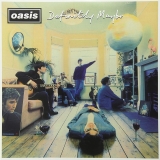
"To fully "get" this, it helps if you were there. Northern. A bloke. 15-early 20s. At the time of release. Lamenting the roses going AWOL, the Mondays going a bit wrong. Sick of grunge and ripped jeans and flannel shirts. Tale end of shoegaze. Verve never fulfilled the glory of the eps on the debu..." [+] Reply
-  Graeme2 | Helpful? (Log in to vote) | +14 votes (15 helpful | 1 unhelpful)
A maximum of 5 top-voted qualifying comments are selected for each album. To provide the best experience for visitors, comments are excluded if they refer to data corrections, contain excessive profanity, are written in all caps, are non-English, are too short, consist of conversations between users, or contain lists of best tracks etc.
Graeme2 | Helpful? (Log in to vote) | +14 votes (15 helpful | 1 unhelpful)
A maximum of 5 top-voted qualifying comments are selected for each album. To provide the best experience for visitors, comments are excluded if they refer to data corrections, contain excessive profanity, are written in all caps, are non-English, are too short, consist of conversations between users, or contain lists of best tracks etc.
Year of Release:
1994
Appears in:
Rank Score:
10,923
Rank in 1994:
Rank in 1990s:
Overall Rank:
Average Rating:
Comments:

"I get that there are reasons people dislike Guns n Roses and that Axl is an ass, but I do not understand people who listen to this and say it's boring or a ripoff. In a way I find criticisms of GnR similar to criticisms of Aerosmith (7os era Aerosmith that is) - it's blues based rock music, of co..." [+] Reply
-  Caesar01 | Helpful? (Log in to vote) | +6 votes (6 helpful | 0 unhelpful)
A maximum of 5 top-voted qualifying comments are selected for each album. To provide the best experience for visitors, comments are excluded if they refer to data corrections, contain excessive profanity, are written in all caps, are non-English, are too short, consist of conversations between users, or contain lists of best tracks etc.
Caesar01 | Helpful? (Log in to vote) | +6 votes (6 helpful | 0 unhelpful)
A maximum of 5 top-voted qualifying comments are selected for each album. To provide the best experience for visitors, comments are excluded if they refer to data corrections, contain excessive profanity, are written in all caps, are non-English, are too short, consist of conversations between users, or contain lists of best tracks etc.
Year of Release:
1987
Appears in:
Rank Score:
10,876
Rank in 1987:
Rank in 1980s:
Overall Rank:
Average Rating:
Comments:

"Decided to get back into Bon Iver. This is a beautiful album. Justin's voice is so haunting and his falsetto is to die for. The simplicity of it enhances it fully, their second album falls from being over produced. Justin escaped into the Woods for a few months to work on this album and you can h..." [+] Reply
Year of Release:
2007
Appears in:
Rank Score:
10,645
Rank in 2007:
Rank in 2000s:
Overall Rank:
Average Rating:
Comments:

"My worthless two cents on Coyne's lyrics... it's all subjective, of course... A lot of bands tackle the themes covered in some of the work of the Lips, but in my opinion few do it in Coyne's unpretentious fashion. I can relate to his musings on life and love far better than any other musician or ..." [+] Reply
Year of Release:
2002
Appears in:
Rank Score:
10,619
Rank in 2002:
Rank in 2000s:
Overall Rank:
Average Rating:
Comments:

"Not just a wondrous fusion of South African and World music, but truly some of the best song writing ever. There's a certain magic to this album - I'm not exactly sure where it comes from, perhaps from Simon's voice, the gentle and bright sound of the album, or perhaps just the warmth that seems ..." [+] Reply
-  DeusExMackia | Helpful? (Log in to vote) | +6 votes (6 helpful | 0 unhelpful)
A maximum of 5 top-voted qualifying comments are selected for each album. To provide the best experience for visitors, comments are excluded if they refer to data corrections, contain excessive profanity, are written in all caps, are non-English, are too short, consist of conversations between users, or contain lists of best tracks etc.
DeusExMackia | Helpful? (Log in to vote) | +6 votes (6 helpful | 0 unhelpful)
A maximum of 5 top-voted qualifying comments are selected for each album. To provide the best experience for visitors, comments are excluded if they refer to data corrections, contain excessive profanity, are written in all caps, are non-English, are too short, consist of conversations between users, or contain lists of best tracks etc.
Year of Release:
1986
Appears in:
Rank Score:
10,558
Rank in 1986:
Rank in 1980s:
Overall Rank:
Average Rating:
Comments:
Total albums: 10,000. Page 12 of 1,000
Overall Chart composition
| Decade | Albums | % | |
|---|---|---|---|
| 1930s | 2 | 0% | |
| 1940s | 34 | 0% | |
| 1950s | 302 | 3% | |
| 1960s | 708 | 7% | |
| 1970s | 1,424 | 14% | |
| 1980s | 1,416 | 14% | |
| 1990s | 1,600 | 16% | |
| 2000s | 1,723 | 17% | |
| 2010s | 1,968 | 20% | |
| 2020s | 823 | 8% |
| Artist | Albums | % | |
|---|---|---|---|
|
|
|||
| Bob Dylan | 37 | 0% | |
| The Rolling Stones | 35 | 0% | |
| David Bowie | 32 | 0% | |
| The Beatles | 29 | 0% | |
| Miles Davis | 27 | 0% | |
| Neil Young | 26 | 0% | |
| Various Artists | 25 | 0% | |
| Show all | |||
| Country | Albums | % | |
|---|---|---|---|
|
|
|||
 |
4,997 | 50% | |
 |
2,658 | 27% | |
 |
432 | 4% | |
 |
337 | 3% | |
 |
221 | 2% | |
 |
157 | 2% | |
 |
134 | 1% | |
| Show all | |||
| Member Levels | |
|---|---|
| Gedster | Level 4 |
| NiceLemon282 | Level 3 |
| emnasut | Level 2 |
| JonathanFisk02 | Level 2 |
| michelefarina | Level 2 |
| New levels achieved over the last 7 days. Well done to all :) | |