Overall Chart
Listed below are the overall rankings for the best albums in history as determined by their aggregate positions in over 59,000 different greatest album charts on BestEverAlbums.com! (Chart last updated: 5 hours ago).
You can customise how this chart is generated, browse the individual charts constituting the overall rankings from The Charts page, or submit your own chart from the My Charts page!

"Interesting that this guy sounds obviously very influenced by Dylan and yr a big Dylan fan.... The title track reminds of something on Blood on the Tracks... "Buckets of Rain" a bit, maybe... The picking, some phrasing, and overall vibe on third track "Troubles..." is total Dylan... reminds of "B..." [+] Reply
Year of Release:
2010
Appears in:
Rank Score:
2,404
Rank in 2010:
Rank in 2010s:
Overall Rank:
Average Rating:
Comments:

"Finest example of the importance of creative freedom. When Stax broke with Atlantic Records in 1968 and lost her entire back catalogue, Hayes was compelled to make a studio album. He wasn't very happy to; his debut album "Presenting Isaac Hayes" failed to chart and Hayes had decided to stay in th..." [+] Reply
Year of Release:
1969
Appears in:
Rank Score:
2,403
Rank in 1969:
Rank in 1960s:
Overall Rank:
Average Rating:
Comments:

"This is one of the best Queen albums. It shows that the band was much better when they took risks. The theatrical progressive rock here blows away any tame classic rock sounds this album has to offer. Procession is a decent intro, but also aids well in allowing the album to flow with how it seaml..." [+] Reply
-  AAL2014 | Helpful? (Log in to vote) | +3 votes (3 helpful | 0 unhelpful)
A maximum of 5 top-voted qualifying comments are selected for each album. To provide the best experience for visitors, comments are excluded if they refer to data corrections, contain excessive profanity, are written in all caps, are non-English, are too short, consist of conversations between users, or contain lists of best tracks etc.
AAL2014 | Helpful? (Log in to vote) | +3 votes (3 helpful | 0 unhelpful)
A maximum of 5 top-voted qualifying comments are selected for each album. To provide the best experience for visitors, comments are excluded if they refer to data corrections, contain excessive profanity, are written in all caps, are non-English, are too short, consist of conversations between users, or contain lists of best tracks etc.
Year of Release:
1974
Appears in:
Rank Score:
2,400
Rank in 1974:
Rank in 1970s:
Overall Rank:
Average Rating:
Comments:

"Nominally, Joni Mitchell is Folk. This is really only true insofar as it indicates where she began as a songwriter. Mitchell's career quickly evolved into something far greater, and progressively harder to define. The Hissing of Summer Lawns is not only the greatest example of Joni Mitchell's cre..." [+] Reply
Year of Release:
1975
Appears in:
Rank Score:
2,399
Rank in 1975:
Rank in 1970s:
Overall Rank:
Average Rating:
Comments:

"An incredibly creative effort leading to their most successful album to date,"Fear of a Blank Planet";moreover,Wilson has an astonishing haunting voice and he is likewise a great lyricist."Deadwing" is full of magnificent songs.Don't underestimate it!" Reply
-  Omid | Helpful? (Log in to vote) | +11 votes (12 helpful | 1 unhelpful)
A maximum of 5 top-voted qualifying comments are selected for each album. To provide the best experience for visitors, comments are excluded if they refer to data corrections, contain excessive profanity, are written in all caps, are non-English, are too short, consist of conversations between users, or contain lists of best tracks etc.
Omid | Helpful? (Log in to vote) | +11 votes (12 helpful | 1 unhelpful)
A maximum of 5 top-voted qualifying comments are selected for each album. To provide the best experience for visitors, comments are excluded if they refer to data corrections, contain excessive profanity, are written in all caps, are non-English, are too short, consist of conversations between users, or contain lists of best tracks etc.
Year of Release:
2005
Appears in:
Rank Score:
2,392
Rank in 2005:
Rank in 2000s:
Overall Rank:
Average Rating:
Comments:

"nursery cryme was the first very good genesis album. The prior two albums were not as good -- 1969 debut from genesis to revelation was carved in a generic 60s-music template mold and follow-up trespass didn't yet carve out a unique identity for genesis yet (although sporting one of their better ..." [+] Reply
-  paladisiac | Helpful? (Log in to vote) | +6 votes (6 helpful | 0 unhelpful)
A maximum of 5 top-voted qualifying comments are selected for each album. To provide the best experience for visitors, comments are excluded if they refer to data corrections, contain excessive profanity, are written in all caps, are non-English, are too short, consist of conversations between users, or contain lists of best tracks etc.
paladisiac | Helpful? (Log in to vote) | +6 votes (6 helpful | 0 unhelpful)
A maximum of 5 top-voted qualifying comments are selected for each album. To provide the best experience for visitors, comments are excluded if they refer to data corrections, contain excessive profanity, are written in all caps, are non-English, are too short, consist of conversations between users, or contain lists of best tracks etc.
Year of Release:
1971
Appears in:
Rank Score:
2,390
Rank in 1971:
Rank in 1970s:
Overall Rank:
Average Rating:
Comments:

"Can't really bring much new to say, yes she benefited greatly from being born into a hollywood family and her preternal social-media savviness and heaps of self-confidence definitely helped hype her music to the extreme. And yes she is a precociously deft songwriter with striking, crinkly-voiced ..." [+] Reply
-  cestuneblague | Helpful? (Log in to vote) | +9 votes (10 helpful | 1 unhelpful)
A maximum of 5 top-voted qualifying comments are selected for each album. To provide the best experience for visitors, comments are excluded if they refer to data corrections, contain excessive profanity, are written in all caps, are non-English, are too short, consist of conversations between users, or contain lists of best tracks etc.
cestuneblague | Helpful? (Log in to vote) | +9 votes (10 helpful | 1 unhelpful)
A maximum of 5 top-voted qualifying comments are selected for each album. To provide the best experience for visitors, comments are excluded if they refer to data corrections, contain excessive profanity, are written in all caps, are non-English, are too short, consist of conversations between users, or contain lists of best tracks etc.
Year of Release:
2019
Appears in:
Rank Score:
2,390
Rank in 2019:
Rank in 2010s:
Overall Rank:
Average Rating:
Comments:
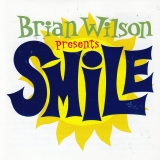
"It's hard to explain quite how amazing this album is. Had it been released in December 1966 as originally planned, it would have changed the course of popular music forever, having just as great, if not a greater, impact than the Beatles with Sgt. Pepper's. But even released four decades later it..." [+] Reply
-  flamingyesdept | Helpful? (Log in to vote) | +7 votes (7 helpful | 0 unhelpful)
A maximum of 5 top-voted qualifying comments are selected for each album. To provide the best experience for visitors, comments are excluded if they refer to data corrections, contain excessive profanity, are written in all caps, are non-English, are too short, consist of conversations between users, or contain lists of best tracks etc.
flamingyesdept | Helpful? (Log in to vote) | +7 votes (7 helpful | 0 unhelpful)
A maximum of 5 top-voted qualifying comments are selected for each album. To provide the best experience for visitors, comments are excluded if they refer to data corrections, contain excessive profanity, are written in all caps, are non-English, are too short, consist of conversations between users, or contain lists of best tracks etc.
Year of Release:
2004
Appears in:
Rank Score:
2,378
Rank in 2004:
Rank in 2000s:
Overall Rank:
Average Rating:
Comments:

"Its hard to imagine an album better exemplifying its genre than this album. If you're looking for blues, this is as good as it gets." Reply
Year of Release:
1959
Appears in:
Rank Score:
2,377
Rank in 1959:
Rank in 1950s:
Overall Rank:
Average Rating:
Comments:

"I typically don't like to consider compilations as proper albums and avoid putting them in my charts, but for this and Hatful of Hollow, I make an exception. Most of these tracks don't show up on any of the Smiths' studio releases, so might as well rate it as any other album." Reply
-  Onater | Helpful? (Log in to vote) | +7 votes (7 helpful | 0 unhelpful)
A maximum of 5 top-voted qualifying comments are selected for each album. To provide the best experience for visitors, comments are excluded if they refer to data corrections, contain excessive profanity, are written in all caps, are non-English, are too short, consist of conversations between users, or contain lists of best tracks etc.
Onater | Helpful? (Log in to vote) | +7 votes (7 helpful | 0 unhelpful)
A maximum of 5 top-voted qualifying comments are selected for each album. To provide the best experience for visitors, comments are excluded if they refer to data corrections, contain excessive profanity, are written in all caps, are non-English, are too short, consist of conversations between users, or contain lists of best tracks etc.
Year of Release:
1987
Appears in:
Rank Score:
2,376
Rank in 1987:
Rank in 1980s:
Overall Rank:
Average Rating:
Comments:
Total albums: 10,000. Page 73 of 1,000
Overall Chart composition
| Decade | Albums | % | |
|---|---|---|---|
| 1930s | 2 | 0% | |
| 1940s | 34 | 0% | |
| 1950s | 302 | 3% | |
| 1960s | 710 | 7% | |
| 1970s | 1,426 | 14% | |
| 1980s | 1,414 | 14% | |
| 1990s | 1,601 | 16% | |
| 2000s | 1,721 | 17% | |
| 2010s | 1,967 | 20% | |
| 2020s | 823 | 8% |
| Artist | Albums | % | |
|---|---|---|---|
|
|
|||
| Bob Dylan | 37 | 0% | |
| The Rolling Stones | 35 | 0% | |
| David Bowie | 32 | 0% | |
| The Beatles | 29 | 0% | |
| Miles Davis | 27 | 0% | |
| Neil Young | 26 | 0% | |
| Various Artists | 25 | 0% | |
| Show all | |||
| Country | Albums | % | |
|---|---|---|---|
|
|
|||
 |
4,995 | 50% | |
 |
2,658 | 27% | |
 |
433 | 4% | |
 |
337 | 3% | |
 |
221 | 2% | |
 |
157 | 2% | |
 |
134 | 1% | |
| Show all | |||
| Best Ever Artists | |
|---|---|
| 1. The Beatles | |
| 2. Radiohead | |
| 3. Pink Floyd | |
| 4. David Bowie | |
| 5. Bob Dylan | |
| 6. Led Zeppelin | |
| 7. The Rolling Stones | |
| 8. Arcade Fire | |
| 9. Neil Young | |
| 10. Nirvana | |
| 11. The Velvet Underground | |
| 12. Kendrick Lamar | |
| 13. Miles Davis | |
| 14. The Smiths | |
| 15. R.E.M. | |
| 16. The Beach Boys | |
| 17. Kanye West | |
| 18. Bruce Springsteen | |
| 19. The Cure | |
| 20. Pixies |
If you enjoy our site, please consider supporting us by sparing a few seconds to disable your ad blocker.
A lot of hard work happens in the background to keep BEA running, and it's especially difficult to do this when we can't pay our hosting fees :(
We work very hard to ensure our site is as fast (and FREE!) as possible, and we respect your privacy.
A lot of hard work happens in the background to keep BEA running, and it's especially difficult to do this when we can't pay our hosting fees :(
We work very hard to ensure our site is as fast (and FREE!) as possible, and we respect your privacy.