Best Albums of the 1960s
Listed below are the best albums of the 1960s as calculated from their overall rankings in over 58,000 greatest album charts. (Chart last updated: 3 hours ago).

"I feel like this album could have been (and still could be) better received if it had better packaging and marketing, and a better title, which sounds weird maybe, but people weren't prepared for what a change of direction it is. If you tell me something is cosmic blues, I'm expecting loosey-goos..." [+] Reply
Year of Release:
1969
Appears in:
Rank Score:
1,013
Rank in 1969:
Rank in 1960s:
Overall Rank:
Average Rating:
Comments:
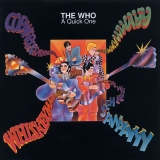
"The Who's second album is a much more democratic affair than it's predecessor, my generation. Both Roger Daltrey and even Keith Moon contribute to the songwriting, but unfortunately again like, my generation, it flatters to deceive. There is some good stuff here though, Boris the spider, is one o..." [+] Reply
Year of Release:
1966
Appears in:
Rank Score:
1,010
Rank in 1966:
Rank in 1960s:
Overall Rank:
Average Rating:
Comments:

"Joni has been blowing my mind lately. I previously had only a passing knowledge of her work, and in my head I almost thought of Blue as her coming out party, her first great album. I thought of her jazz albums as her most revered albums and perhaps that is true, but I just didn't have a clear pic..." [+] Reply
-  Mercury | Helpful? (Log in to vote) | +7 votes (7 helpful | 0 unhelpful)
A maximum of 5 top-voted qualifying comments are selected for each album. To provide the best experience for visitors, comments are excluded if they refer to data corrections, contain excessive profanity, are written in all caps, are non-English, are too short, consist of conversations between users, or contain lists of best tracks etc.
Mercury | Helpful? (Log in to vote) | +7 votes (7 helpful | 0 unhelpful)
A maximum of 5 top-voted qualifying comments are selected for each album. To provide the best experience for visitors, comments are excluded if they refer to data corrections, contain excessive profanity, are written in all caps, are non-English, are too short, consist of conversations between users, or contain lists of best tracks etc.
Year of Release:
1969
Appears in:
Rank Score:
999
Rank in 1969:
Rank in 1960s:
Overall Rank:
Average Rating:
Comments:

""Ain't that Good News" from 1964 was the last album Sam Cooke released in his lifetime, and for me it is also one of his most consistent and artistically successful. In 1964 Cooke was more or less a veteran in pop music, but this album clearly (especially the original side 1) proves he was far fr..." [+] Reply
Year of Release:
1964
Appears in:
Rank Score:
998
Rank in 1964:
Rank in 1960s:
Overall Rank:
Average Rating:
Comments:

""At San Quentin" is one of the all-time essential live albums. Johnny Cash had released the live album "At Folsom Prison" just a year before but "At San Quentin" is its equal in every way (well, except for the fact that this album lacks the song "Cocaine Blues"). The defining moment comes on the ..." [+] Reply
-  johnnyonthespot1 | Helpful? (Log in to vote) | +5 votes (5 helpful | 0 unhelpful)
A maximum of 5 top-voted qualifying comments are selected for each album. To provide the best experience for visitors, comments are excluded if they refer to data corrections, contain excessive profanity, are written in all caps, are non-English, are too short, consist of conversations between users, or contain lists of best tracks etc.
johnnyonthespot1 | Helpful? (Log in to vote) | +5 votes (5 helpful | 0 unhelpful)
A maximum of 5 top-voted qualifying comments are selected for each album. To provide the best experience for visitors, comments are excluded if they refer to data corrections, contain excessive profanity, are written in all caps, are non-English, are too short, consist of conversations between users, or contain lists of best tracks etc.
Year of Release:
1969
Appears in:
Rank Score:
993
Rank in 1969:
Rank in 1960s:
Overall Rank:
Average Rating:
Comments:

"Sitting on the Dock of the Bay has to be one of the all-time great tracks for empathy. You can really imagine the lack of direction, sense of loss, and searching for hope. You can see yourself sitting there with him watching time roll away. What a craftsman with his voice." Reply
-  junodog4 | Helpful? (Log in to vote) | +5 votes (5 helpful | 0 unhelpful)
A maximum of 5 top-voted qualifying comments are selected for each album. To provide the best experience for visitors, comments are excluded if they refer to data corrections, contain excessive profanity, are written in all caps, are non-English, are too short, consist of conversations between users, or contain lists of best tracks etc.
junodog4 | Helpful? (Log in to vote) | +5 votes (5 helpful | 0 unhelpful)
A maximum of 5 top-voted qualifying comments are selected for each album. To provide the best experience for visitors, comments are excluded if they refer to data corrections, contain excessive profanity, are written in all caps, are non-English, are too short, consist of conversations between users, or contain lists of best tracks etc.
Year of Release:
1968
Appears in:
Rank Score:
990
Rank in 1968:
Rank in 1960s:
Overall Rank:
Average Rating:
Comments:

"Quite a simple collection of songs that are trying to hook you to their choruses and make you sing them for the rest of the day. This works to a varying degree of success with the best tracks coming very early on. Almost every track on side 1 has a fantastic chorus and is so infectious to listen ..." [+] Reply
Year of Release:
1964
Appears in:
Rank Score:
987
Rank in 1964:
Rank in 1960s:
Overall Rank:
Average Rating:
Comments:

"A Salty Dog was the last Procol Harum album to feature the original 5-piece line-up. Compared to the previous two, which were very much dominated by Gary Booker's songs and vocals ( not a negative thing at all ), more space is given to guitarist Robin Trower and organist Matthew Fisher. Robin Tro..." [+] Reply
Year of Release:
1969
Appears in:
Rank Score:
976
Rank in 1969:
Rank in 1960s:
Overall Rank:
Average Rating:
Comments:
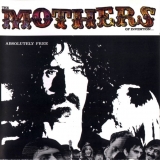
"This record struggles with its brilliance, a more brilliant record I'm not sure there is, I never tire of it, I know all the words, my friends know all the words. Like some people know all the bits to The Sound Of Music, we know all the bits to Absolutely Free." Reply
-  ticharu | Helpful? (Log in to vote) | +4 votes (4 helpful | 0 unhelpful)
A maximum of 5 top-voted qualifying comments are selected for each album. To provide the best experience for visitors, comments are excluded if they refer to data corrections, contain excessive profanity, are written in all caps, are non-English, are too short, consist of conversations between users, or contain lists of best tracks etc.
ticharu | Helpful? (Log in to vote) | +4 votes (4 helpful | 0 unhelpful)
A maximum of 5 top-voted qualifying comments are selected for each album. To provide the best experience for visitors, comments are excluded if they refer to data corrections, contain excessive profanity, are written in all caps, are non-English, are too short, consist of conversations between users, or contain lists of best tracks etc.
Year of Release:
1967
Appears in:
Rank Score:
975
Rank in 1967:
Rank in 1960s:
Overall Rank:
Average Rating:
Comments:

"Has some great parts, but some mediocre parts drag it down a bit. The bass and drum solos are too long and rambling, yet I would say Ornette's soloing stands out (minutes 10-19)" Reply
-  JulianR | Helpful? (Log in to vote) | +1 votes (1 helpful | 0 unhelpful)
A maximum of 5 top-voted qualifying comments are selected for each album. To provide the best experience for visitors, comments are excluded if they refer to data corrections, contain excessive profanity, are written in all caps, are non-English, are too short, consist of conversations between users, or contain lists of best tracks etc.
JulianR | Helpful? (Log in to vote) | +1 votes (1 helpful | 0 unhelpful)
A maximum of 5 top-voted qualifying comments are selected for each album. To provide the best experience for visitors, comments are excluded if they refer to data corrections, contain excessive profanity, are written in all caps, are non-English, are too short, consist of conversations between users, or contain lists of best tracks etc.
Year of Release:
1961
Appears in:
Rank Score:
967
Rank in 1961:
Rank in 1960s:
Overall Rank:
Average Rating:
Comments:
Total albums: 1,000. Page 17 of 100
Best Albums of the 1960s composition
| Year | Albums | % | |
|---|---|---|---|
| 1960 | 57 | 6% | |
| 1961 | 65 | 7% | |
| 1962 | 50 | 5% | |
| 1963 | 52 | 5% | |
| 1964 | 70 | 7% | |
| 1965 | 89 | 9% | |
| 1966 | 98 | 10% | |
| 1967 | 139 | 14% | |
| 1968 | 188 | 19% | |
| 1969 | 192 | 19% |
| Artist | Albums | % | |
|---|---|---|---|
|
|
|||
| The Beatles | 17 | 2% | |
| The Beach Boys | 15 | 2% | |
| The Rolling Stones | 14 | 1% | |
| John Coltrane | 13 | 1% | |
| Miles Davis | 12 | 1% | |
| Nina Simone | 10 | 1% | |
| Bob Dylan | 10 | 1% | |
| Show all | |||
| Country | Albums | % | |
|---|---|---|---|
|
|
|||
 |
634 | 63% | |
 |
201 | 20% | |
 |
38 | 4% | |
 |
24 | 2% | |
 |
23 | 2% | |
 |
17 | 2% | |
 |
11 | 1% | |
| Show all | |||
If you enjoy our site, please consider supporting us by sparing a few seconds to disable your ad blocker.
A lot of hard work happens in the background to keep BEA running, and it's especially difficult to do this when we can't pay our hosting fees :(
We work very hard to ensure our site is as fast (and FREE!) as possible, and we respect your privacy.
A lot of hard work happens in the background to keep BEA running, and it's especially difficult to do this when we can't pay our hosting fees :(
We work very hard to ensure our site is as fast (and FREE!) as possible, and we respect your privacy.