Overall Chart
Listed below are the overall rankings for the best albums in history as determined by their aggregate positions in over 58,000 different greatest album charts on BestEverAlbums.com! (Chart last updated: 4 hours ago).
You can customise how this chart is generated, browse the individual charts constituting the overall rankings from The Charts page, or submit your own chart from the My Charts page!
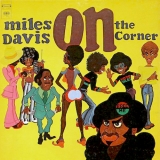
"Fucking Miles Davis. Just when you thought he'd already broken more new ground and created more timeless masterpieces than could ever be matched, he drops this piece of fusion genius, which is probably the most ambitious thing Davis ever released in his career. And I mean this is fucking Miles Da..." [+] Reply
Year of Release:
1972
Appears in:
Rank Score:
1,635
Rank in 1972:
Rank in 1970s:
Overall Rank:
Average Rating:
Comments:

"I'm going to tell you that this is The White Stripes' best album so hang with me. I get that you all are attached to White Blood Cells. I get the appeal of that album, it's a jolt of rock. This album is not White Blood Cells. It requires an acquired taste, an open mind. The White Stripes fan base..." [+] Reply
-  NubbinBased | Helpful? (Log in to vote) | +6 votes (6 helpful | 0 unhelpful)
A maximum of 5 top-voted qualifying comments are selected for each album. To provide the best experience for visitors, comments are excluded if they refer to data corrections, contain excessive profanity, are written in all caps, are non-English, are too short, consist of conversations between users, or contain lists of best tracks etc.
NubbinBased | Helpful? (Log in to vote) | +6 votes (6 helpful | 0 unhelpful)
A maximum of 5 top-voted qualifying comments are selected for each album. To provide the best experience for visitors, comments are excluded if they refer to data corrections, contain excessive profanity, are written in all caps, are non-English, are too short, consist of conversations between users, or contain lists of best tracks etc.
Year of Release:
2005
Appears in:
Rank Score:
1,632
Rank in 2005:
Rank in 2000s:
Overall Rank:
Average Rating:
Comments:

"Genres exist because it’s human nature to want to categorize things. We want to put everything, people, art, everything that exists, into little categories with certain attributes so that we don’t have to spend all of our time examining each individual thing to observe its unique properties. It’s..." [+] Reply
-  RockyRaccoon | Helpful? (Log in to vote) | +10 votes (11 helpful | 1 unhelpful)
A maximum of 5 top-voted qualifying comments are selected for each album. To provide the best experience for visitors, comments are excluded if they refer to data corrections, contain excessive profanity, are written in all caps, are non-English, are too short, consist of conversations between users, or contain lists of best tracks etc.
RockyRaccoon | Helpful? (Log in to vote) | +10 votes (11 helpful | 1 unhelpful)
A maximum of 5 top-voted qualifying comments are selected for each album. To provide the best experience for visitors, comments are excluded if they refer to data corrections, contain excessive profanity, are written in all caps, are non-English, are too short, consist of conversations between users, or contain lists of best tracks etc.
Year of Release:
2014
Appears in:
Rank Score:
1,628
Rank in 2014:
Rank in 2010s:
Overall Rank:
Average Rating:
Comments:

"Yeah, it rips off almost every great record from '66 to '70 but, boy, it's a whole lot of fun to listen to!" Reply
-  ButterThumbz | Helpful? (Log in to vote) | +9 votes (11 helpful | 2 unhelpful)
A maximum of 5 top-voted qualifying comments are selected for each album. To provide the best experience for visitors, comments are excluded if they refer to data corrections, contain excessive profanity, are written in all caps, are non-English, are too short, consist of conversations between users, or contain lists of best tracks etc.
ButterThumbz | Helpful? (Log in to vote) | +9 votes (11 helpful | 2 unhelpful)
A maximum of 5 top-voted qualifying comments are selected for each album. To provide the best experience for visitors, comments are excluded if they refer to data corrections, contain excessive profanity, are written in all caps, are non-English, are too short, consist of conversations between users, or contain lists of best tracks etc.
Year of Release:
2013
Appears in:
Rank Score:
1,627
Rank in 2013:
Rank in 2010s:
Overall Rank:
Average Rating:
Comments:
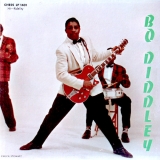
"If you're a rock fan and haven't listened to this yet, do so as soon as you can. At times, this almost sounds like a documentary on African music- just listen to "Hush Your Mouth". But this is also the origins of hard, garage, and psychedelic music we all love, and much of that has to do with McD..." [+] Reply
-  poppmusic | Helpful? (Log in to vote) | +3 votes (3 helpful | 0 unhelpful)
A maximum of 5 top-voted qualifying comments are selected for each album. To provide the best experience for visitors, comments are excluded if they refer to data corrections, contain excessive profanity, are written in all caps, are non-English, are too short, consist of conversations between users, or contain lists of best tracks etc.
poppmusic | Helpful? (Log in to vote) | +3 votes (3 helpful | 0 unhelpful)
A maximum of 5 top-voted qualifying comments are selected for each album. To provide the best experience for visitors, comments are excluded if they refer to data corrections, contain excessive profanity, are written in all caps, are non-English, are too short, consist of conversations between users, or contain lists of best tracks etc.
Year of Release:
1958
Appears in:
Rank Score:
1,626
Rank in 1958:
Rank in 1950s:
Overall Rank:
Average Rating:
Comments:

"Props to purple, whose album comment delivers a great impression of this site's own beloved member RFNAPLES. ... This jazzy album-length-track is both chaotic and precise. I especially like the piano and drum work near the end." Reply
-  paladisiac | Helpful? (Log in to vote) | +3 votes (3 helpful | 0 unhelpful)
A maximum of 5 top-voted qualifying comments are selected for each album. To provide the best experience for visitors, comments are excluded if they refer to data corrections, contain excessive profanity, are written in all caps, are non-English, are too short, consist of conversations between users, or contain lists of best tracks etc.
paladisiac | Helpful? (Log in to vote) | +3 votes (3 helpful | 0 unhelpful)
A maximum of 5 top-voted qualifying comments are selected for each album. To provide the best experience for visitors, comments are excluded if they refer to data corrections, contain excessive profanity, are written in all caps, are non-English, are too short, consist of conversations between users, or contain lists of best tracks etc.
Year of Release:
1966
Appears in:
Rank Score:
1,626
Rank in 1966:
Rank in 1960s:
Overall Rank:
Average Rating:
Comments:
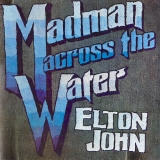
"For me this is Elton John at his peak. Tackling progressive rock, Elton John and Bernie Taupin expanded their songcraft and in doing so created my personal favourite album of all time. What helps Madman Across the Water to be so exceptional are a couple of things. Firstly, the album holds some of..." [+] Reply
Year of Release:
1971
Appears in:
Rank Score:
1,624
Rank in 1971:
Rank in 1970s:
Overall Rank:
Average Rating:
Comments:
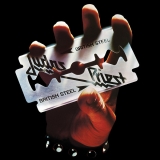
"Released in the same year Black Sabbath released Heaven and Hell and Saxon released Wheels of Steel. The metal scene at the time was sizzling with new talent and this album with its iconic timeless cover was timed perfectly. Rob Halford's voice has taken me a while to gravitate to but there is no..." [+] Reply
Year of Release:
1980
Appears in:
Rank Score:
1,622
Rank in 1980:
Rank in 1980s:
Overall Rank:
Average Rating:
Comments:

"I actually thought there were a few really gorgeous tracks here. Most notably Heart is a Drum. I don't know.. I don't think this is that much weaker than his "big" releases at all..." Reply
Year of Release:
2014
Appears in:
Rank Score:
1,621
Rank in 2014:
Rank in 2010s:
Overall Rank:
Average Rating:
Comments:

"Best Punk album I ever heard." Reply
-  alelsupreme | Helpful? (Log in to vote) | +9 votes (9 helpful | 0 unhelpful)
A maximum of 5 top-voted qualifying comments are selected for each album. To provide the best experience for visitors, comments are excluded if they refer to data corrections, contain excessive profanity, are written in all caps, are non-English, are too short, consist of conversations between users, or contain lists of best tracks etc.
alelsupreme | Helpful? (Log in to vote) | +9 votes (9 helpful | 0 unhelpful)
A maximum of 5 top-voted qualifying comments are selected for each album. To provide the best experience for visitors, comments are excluded if they refer to data corrections, contain excessive profanity, are written in all caps, are non-English, are too short, consist of conversations between users, or contain lists of best tracks etc.
Year of Release:
1980
Appears in:
Rank Score:
1,618
Rank in 1980:
Rank in 1980s:
Overall Rank:
Average Rating:
Comments:
Total albums: 10,000. Page 107 of 1,000
Overall Chart composition
| Decade | Albums | % | |
|---|---|---|---|
| 1930s | 2 | 0% | |
| 1940s | 37 | 0% | |
| 1950s | 303 | 3% | |
| 1960s | 719 | 7% | |
| 1970s | 1,437 | 14% | |
| 1980s | 1,432 | 14% | |
| 1990s | 1,611 | 16% | |
| 2000s | 1,735 | 17% | |
| 2010s | 1,993 | 20% | |
| 2020s | 731 | 7% |
| Artist | Albums | % | |
|---|---|---|---|
|
|
|||
| Bob Dylan | 37 | 0% | |
| The Rolling Stones | 35 | 0% | |
| David Bowie | 32 | 0% | |
| The Beatles | 29 | 0% | |
| Miles Davis | 27 | 0% | |
| Neil Young | 26 | 0% | |
| Various Artists | 25 | 0% | |
| Show all | |||
| Country | Albums | % | |
|---|---|---|---|
|
|
|||
 |
5,012 | 50% | |
 |
2,664 | 27% | |
 |
432 | 4% | |
 |
317 | 3% | |
 |
222 | 2% | |
 |
159 | 2% | |
 |
136 | 1% | |
| Show all | |||
If you enjoy our site, please consider supporting us by sparing a few seconds to disable your ad blocker.
A lot of hard work happens in the background to keep BEA running, and it's especially difficult to do this when we can't pay our hosting fees :(
We work very hard to ensure our site is as fast (and FREE!) as possible, and we respect your privacy.
A lot of hard work happens in the background to keep BEA running, and it's especially difficult to do this when we can't pay our hosting fees :(
We work very hard to ensure our site is as fast (and FREE!) as possible, and we respect your privacy.
| Best Artists of 2014 | |
|---|---|
| 1. The War On Drugs | |
| 2. Swans | |
| 3. Mark Kozelek | |
| 4. Sun Kil Moon | |
| 5. Run The Jewels | |
| 6. Mac DeMarco | |
| 7. Freddie Gibbs & Madlib | |
| 8. St. Vincent | |
| 9. D'Angelo | |
| 10. D'Angelo And The Vanguard | |
| 11. Lana Del Rey | |
| 12. Alvvays | |
| 13. Spoon | |
| 14. FKA Twigs | |
| 15. Richard David James | |
| 16. Aphex Twin | |
| 17. Ariel Pink | |
| 18. Royal Blood | |
| 19. Flying Lotus | |
| 20. Beck |