Listed below are the overall rankings for the best albums in history as determined by their aggregate positions in over 59,000 different greatest album charts on BestEverAlbums.com! (Chart last updated: 5 hours ago).
"-Hey, we need a chorus for "Highway to hell". -Ok. What about "I'm on a highway to hell, highway to hell, highway to hell, highway to hell"? -Cool. We also need a chorus for "You shook me all night long". -I've got it. We could say, you know, "you shook me all night long, yeah, you shook me all n...""-Hey, we need a chorus for "Highway to hell".
-Ok. What about "I'm on a highway to hell, highway to hell, highway to hell, highway to hell"?
-Cool. We also need a chorus for "You shook me all night long".
-I've got it. We could say, you know, "you shook me all night long, yeah, you shook me all night long, shook me all night long, shook me all night long".
-Wow, you're a genius. What about "Back in black"?
-Well, we can say "I'm back, yeah, I'm back, well, I'm back, yes, I'm back, back, back in black".
-Damn! That's deep.
Joking aside, if I'm hanging out with my friends and we're half drunk and someone plays Highway to hell, we will sing our lungs out, but it's not an album I would normally return to. I mean, I find Back in black kind of fun and catchy, but also insubstantial, repetitive and unambitious. I don't hate it, but it doesn't speak to me too much either, to be honest."[+]Reply
"The halls of Columbia University birthed Vampire Weekend, a baroque pop outfit with a pension for utilizing world music. They were critically lauded soon after, but in the eyes of those who equate surroundings to people, they were little more than privileged rich boys who gained the favor of thos...""The halls of Columbia University birthed Vampire Weekend, a baroque pop outfit with a pension for utilizing world music. They were critically lauded soon after, but in the eyes of those who equate surroundings to people, they were little more than privileged rich boys who gained the favor of those with power in the industry. The band shrugged such ridiculous claims off and just kept on keeping on. In other words, they kept making some of the best pop music of the decade. Nevermore was their genius more validated than with 2013's Modern Vampires of the City. Sporting a crystalline sheen and drastically more sinister tone, Vampire Weekend concocted its best collection of tracks to date.
Seemingly alternating between uptempo, positively-charged romps and sentimental, breezy ballads, Modern Vampires of the City prioritizes balance far more than the band's prior work. The first landmark comes in the form of third track Step, which twinkles triumphantly leaving Rostam Batmanglij's production as the hallmark of the sweepingly gorgeous cut. The album soon receives an adrenaline shot in the form of Diane Young, a full-gear stomper which emphasizes a desire to live life at its fullest, with no regrets about being rebellious or young for that matter. One of the album's most audacious excursions comes in the form of tenth track Ya Hey. Frontman Ezra Koenig's vocal delivery is in stark contrast to the rest of the album, invoking religious fervor at a subdued pace.
As convention would have it, Modern Vampires of the City is indeed a pop record. It's one that takes risks, nudges away stereotypical classification and entrenches Vampire Weekend as a prominent force in modern music. Provocatively written, skillful executed and exquisitely produced, the album is a testament to the blossoming creativity of a young group on the rise, with much success predicted to follow. The album has a warm quality and has effectively become a comfort piece for me, calling back to better times. It's a record for those with youthful flesh and minds with temperaments far beyond their years.
"Ancestors told me that their girl was better
She's richer than Croesus, she's tougher than leather
I just ignored all the tales of a past life
Stale conversation deserves but a bread knife"
-Step
Standout Tracks:
1. Step
2. Finger Back
3. Don't Lie
99.6"[+]Reply
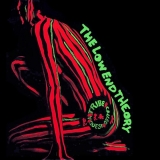
"Very possibly, no hyperbole, the best hip-hop/rap album ever. It just taps into the soul in a way I haven't experienced with other music from the genre. Incredible."Reply
"For those that don't know what Marmite is, basically it's a yeast spread that you put on toast or crumpets; a quite strong and distinct taste. They say you either love it or hate it... Is Amnesiac like Marmite? For me, "Pyramid Song" is very easy to love and the ratio of who love it to those that...""For those that don't know what Marmite is, basically it's a yeast spread that you put on toast or crumpets; a quite strong and distinct taste. They say you either love it or hate it...
Is Amnesiac like Marmite?
For me, "Pyramid Song" is very easy to love and the ratio of who love it to those that don't seems very big from my view: so it's not a marmite song as I've seen someone suggest this.
As for the album, sure I think there's a few songs that are like Marmite such as, "Morning Bell", "Like Spinning Plates", "Pulk Pull Revolving Doors", and "Hunting Bears". Maybe this is why the album isn't as highly rated as some of their other albums but for me there's still plenty of quality and I love most of the Marmite songs.
To end I think this is a very mature album and not something I would expect a young teenager to love, not to say they won't. It's definitely more aimed at adults from my point of view, ending with the lovely, "Life In A Glasshouse". "[+]Reply
"Probably the most 'atmospheric' album I've ever heard in that sense. Completely transports you to some sunny old town in the American south sometime circa 1983. Stunningly good tunes and, well, I like Stipe's voice.."Reply
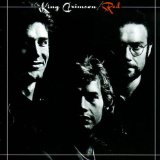
"Many will say that you're not a real fan of King Crimson, if you're not so crazy about the group's long and partly improvised pieces, but prefer the melodic side of the band. Personally I prefer the group when it stays within the relatively rigid framework which normally applies to the rhythmic m...""Many will say that you're not a real fan of King Crimson, if you're not so crazy about the group's long and partly improvised pieces, but prefer the melodic side of the band.
Personally I prefer the group when it stays within the relatively rigid framework which normally applies to the rhythmic music. Then you can then say that I have not understood the group's uniqueness, well, so be it.
In any event, is widely agreed that "Red" is one of the big albums in rock history, so if I allow myself to make objections, it is obviously I who is something wrong.
The title track "Red" is one of the tracks that I have a little trouble with. It is an instrumental with guitarist Robert Fripp in focus. That he is musical equillibrist is beyond dioscussion, and the sound of the guitar is superb. I think, however, that more than six minutes at the top.
In contrast, "Fallen Angel" has everything I like about the group; A beautiful melodic composition by Fripp / Wetton / Palmer-James. Both vocally and instrumentally very convincing, and in this case, the playing time is perfect.
"One More Red Nightmare" is a little harder to go to, but it is actually a very interesting compostition, both musically and lyrically.
The long instrumental "Providence" may well be hard diet and it contains both harmony and dissonance. As a friend told me, "You can not play music like this, when children are nearby, it could go in their nerves". He may have a point.
"Starless" is as beautiful a song as "Fallen Angel" and it may bring to mind the title track on the group's first album. Unfortunately the group here lets the number grow in some instrumentally complex directions, which some will love and others will feel destroy more than it benefits.'
If you are unfamiliar with King Crimson, this probably won't be the best album to introduce to you. "In the Court of the Crimson King" was the album that convinced me of the band's musical importance.
The sound on this new edition is superb, and moreover the album is expanded with three alternate versions and a DVD containing an interesting live performance from France."[+]Reply
"Australia's own Kevin Parker is one of modern music's preeminent figures and most forward-thinking creators. His creativity and artistic foresight has helped partially reinvigorate a stagnant rock industry which has seen itself surpassed by hip-hop in recent years. He burst on the scene with 2010...""Australia's own Kevin Parker is one of modern music's preeminent figures and most forward-thinking creators. His creativity and artistic foresight has helped partially reinvigorate a stagnant rock industry which has seen itself surpassed by hip-hop in recent years. He burst on the scene with 2010's Innerspeaker, a trippy, rainbow-colored interpretation of contemporary psychedelia. His layered, consummate sonic textures earned him widespread acclaim. He then upped the ante on 2012's Lonerism, a richer, more refined collection of the motifs found on Innerspeaker. His vocals channeled John Lennon on tracks like Sun's Coming Up and his guitar-propelled breakdowns were awe-inspiring on tracks like Keep on Lying. Lonerism was even more heavily lauded and alternative rock was ready to crown its newest talisman. Then Kevin did what every great artist does. He made a hard left turn. 2015 marked the arrival of his third studio album, Currents, a record bubbling with pop textures, emphasis on airy synth work and clearer production. He effortlessly repackaged his sound and reinvented his approach as an artist and the endgame resulted in his most luscious, vibrant record to date. Currents is a synth-pop symphony which made fellow genre mates look like neophytes noodling around with Casio keyboards in 6th grade music class.
The record begins emphatically with the anthemic, Let It Happen. The track buzzes into focus as synth walls hiss while fuzzed out beats linger behind. Parker concludes, "All this running around, trying to cover my shadow; an ocean growing inside, all the others seem shallow." The track reaches a midpoint climax where it undergoes stylized skips as string-like synth tones swell concurrently. Let It Happen is just as springy as it is languid, flowing out without any resistance, avoiding any sonic intrusion. It's a shot to the arm that kicks the album into gear and remains one of Parker's finest achievements. Brief interlude, Nangs, acts as a quasi-comedown but while also turning up the thematic dissatisfaction as Parker croons (faintly), "But is there something more than that?" The album resuscitates with third track, The Moment. The song carries more girth as the bass takes a more noticeable role in the fray. It's also marked by an uptick in the quality of its poetry. Parker accepts, "In the end, it's stronger than I know how to be and I can't just spend my whole lifetime wondering; I fell in love with the sound of my heels on the wooden floor; I don't want our footsteps to be silent anymore." The track moves at a breakneck pace despite lasting over four minutes. Another highlight of danceable vitality delivered with punchy intensity. Currents' second masterpiece is unveiled in the form of fourth track, Yes I'm Changing. The song unfurls with spectral delicacy, creating the illusion of lying face up on a raft, drifting down a boundless river. The percussion structure here is caressing but never overbearing and it galvanizes the song with a steady heartbeat. Parker's maturation is evident on the track as he declares, "And I can't always hide away, curse indulgence and despise the fame; there's a world out there and it's calling my name and it's calling yours too." Parker has shed the shackles of his pre-disposition to avoid incorporating new musical ideas and has opted to grow as an artist and a person. He's inviting you to grow with him. Yes I'm Changing then majestically twinkles out of your reach. A beautiful meditation.
Fifth track, Eventually, journals a deteriorating relationship, characterized by peaks and valleys, both in metaphor and musicality. Eventually launches with authoritative guitar thwacks that contrast the more despondent moments of sound where Parker elegizes, "Wish I could turn you back into a stranger; 'cause if I was never in your life, you wouldn't have to change it." The back half is markedly wondrous as a fizzing synth alternates between both audio channels signifying a situation spiraling out of control. Parker's creative visions have never been more realized and clearly communicated. Sixth track, Gossip, splits the album in two as it transports the listener through osmosis with an aqueous production style. Shortly after, The Less I Know the Better gives us the most clearly-defined pop song on the record. Its tempo is consistent, carrying DNA from The Moment in terms of its percussive principles. Failing romantic relations once again take center stage as Parker laments his inclusion within a love triangle. He details, "I was doing fine without ya till I saw your face, now I can't erase; giving in to all his bullshit, is this what you want; is this who you are?" The song is reinforced by a boisterous guitar riff that forms a rib cage in which to encase the emotional synth chimes. It's both melancholic and madcap in equal measure. Past Life represents the only outright miss on the album, incorporating a distorted spoken word piece awash with Parker's epic, yet marooned synth explosions. Past Life seems more like an unpolished proposition rather than a finished track. It slightly disturbs the flow of the LP but what's shaky for Kevin Parker is another artist's treasure. Disciples starts as a short burst of lo-fi funk, a concept that calls back to the guitar-driven work of Innerspeaker. The song then clears, carving a path for Parker's crystalline vocals. The track is surely a microcosm for the artistic motivations presented on the album.
Ten spot, Cause I'm a Man, is a dissertation that outlines the deficiencies that plague the male sex. Kevin provides his strongest vocal outing on the track, howling apologetically as he slices through his electric ozone. He croons, "Cause I'm a man, woman; don't always think before I do; cause I'm a man, woman; that's the only answer I've got for you." It stands as one of the most implicit moments of humor on Currents. Reality in Motion follows and reclaims your attention harboring all things zealous. It's another example of Parker's gravitational pull to the percussive on the LP as an infectious drum texture spirals throughout. Love/Paranoia is another doleful anecdote à la Eventually. Conclusively, Parker pledges a return to form instead of flying the white flag as he did on Eventually. The second half of the track hovers with an icy synth backing reminiscent of early New Order. The swan song, New Person, Same Old Mistakes, is a bonafide belter as chest felt bass swaggers proudly. Parker seems to uncork the might of his arsenal on the track, as it represents the most ambitious cut since Let It Happen. Kevin celebrates, "Finally taking flight; I know you don't think it's right; I know that you think it's fake; maybe fake's what I like." At the finale, a synth bridge seems to progress inversely before the Aussie puts an end to it with the bombastic refrain. It's a sublime way to conclude the cosmic record.
With Currents, Kevin Parker didn't just craft top notch pop music, he rearranged its pieces in order to shape something superior altogether. Currents represents pop's future and all the things the genre could be if properly upheaved. The fledgeling genius knows that the only way to create change is from within, and he's certainly set a precedent with his third LP by looking within himself and pushing multiple boundaries. By transversing electronic soundscapes, turning over new leaves while reflecting on old ones, Parker has emphatically expanded his reach and influence. His much-awaited follow up, 2020's The Slow Rush is another feather in his cap but 2015's Currents is his chef-d'oeuvre. It's an LP that assuredly livens up any college party while simultaneously prompting its guests to contemplate their ever-murky futures.
"Man, I know that it's hard to digest,
But maybe your story ain't so different from the rest,
And I know it seems wrong to accept
But you've got your demons, and she's got her regrets."
-New Person/Same Old Mistakes
Standout Tracks:
1. Let It Happen
2. Yes I'm Changing
3. New Person/Same Old Mistakes
92.8"[+]Reply

 9999 | Helpful? (Log in to vote) | +9 votes (9 helpful | 0 unhelpful)
A maximum of 5 top-voted qualifying comments are selected for each album. To provide the best experience for visitors, comments are excluded if they refer to data corrections, contain excessive profanity, are written in all caps, are non-English, are too short, consist of conversations between users, or contain lists of best tracks etc.
9999 | Helpful? (Log in to vote) | +9 votes (9 helpful | 0 unhelpful)
A maximum of 5 top-voted qualifying comments are selected for each album. To provide the best experience for visitors, comments are excluded if they refer to data corrections, contain excessive profanity, are written in all caps, are non-English, are too short, consist of conversations between users, or contain lists of best tracks etc.

 DriftingOrpheus | Helpful? (Log in to vote) | +6 votes (6 helpful | 0 unhelpful)
A maximum of 5 top-voted qualifying comments are selected for each album. To provide the best experience for visitors, comments are excluded if they refer to data corrections, contain excessive profanity, are written in all caps, are non-English, are too short, consist of conversations between users, or contain lists of best tracks etc.
DriftingOrpheus | Helpful? (Log in to vote) | +6 votes (6 helpful | 0 unhelpful)
A maximum of 5 top-voted qualifying comments are selected for each album. To provide the best experience for visitors, comments are excluded if they refer to data corrections, contain excessive profanity, are written in all caps, are non-English, are too short, consist of conversations between users, or contain lists of best tracks etc.


 LAF2 | Helpful? (Log in to vote) | +26 votes (26 helpful | 0 unhelpful)
A maximum of 5 top-voted qualifying comments are selected for each album. To provide the best experience for visitors, comments are excluded if they refer to data corrections, contain excessive profanity, are written in all caps, are non-English, are too short, consist of conversations between users, or contain lists of best tracks etc.
LAF2 | Helpful? (Log in to vote) | +26 votes (26 helpful | 0 unhelpful)
A maximum of 5 top-voted qualifying comments are selected for each album. To provide the best experience for visitors, comments are excluded if they refer to data corrections, contain excessive profanity, are written in all caps, are non-English, are too short, consist of conversations between users, or contain lists of best tracks etc.
 40footwolf | Helpful? (Log in to vote) | +8 votes (9 helpful | 1 unhelpful)
A maximum of 5 top-voted qualifying comments are selected for each album. To provide the best experience for visitors, comments are excluded if they refer to data corrections, contain excessive profanity, are written in all caps, are non-English, are too short, consist of conversations between users, or contain lists of best tracks etc.
40footwolf | Helpful? (Log in to vote) | +8 votes (9 helpful | 1 unhelpful)
A maximum of 5 top-voted qualifying comments are selected for each album. To provide the best experience for visitors, comments are excluded if they refer to data corrections, contain excessive profanity, are written in all caps, are non-English, are too short, consist of conversations between users, or contain lists of best tracks etc.


 meruizh | Helpful? (Log in to vote) | +12 votes (12 helpful | 0 unhelpful)
A maximum of 5 top-voted qualifying comments are selected for each album. To provide the best experience for visitors, comments are excluded if they refer to data corrections, contain excessive profanity, are written in all caps, are non-English, are too short, consist of conversations between users, or contain lists of best tracks etc.
meruizh | Helpful? (Log in to vote) | +12 votes (12 helpful | 0 unhelpful)
A maximum of 5 top-voted qualifying comments are selected for each album. To provide the best experience for visitors, comments are excluded if they refer to data corrections, contain excessive profanity, are written in all caps, are non-English, are too short, consist of conversations between users, or contain lists of best tracks etc.

 drakonium | Helpful? (Log in to vote) | +8 votes (9 helpful | 1 unhelpful)
A maximum of 5 top-voted qualifying comments are selected for each album. To provide the best experience for visitors, comments are excluded if they refer to data corrections, contain excessive profanity, are written in all caps, are non-English, are too short, consist of conversations between users, or contain lists of best tracks etc.
drakonium | Helpful? (Log in to vote) | +8 votes (9 helpful | 1 unhelpful)
A maximum of 5 top-voted qualifying comments are selected for each album. To provide the best experience for visitors, comments are excluded if they refer to data corrections, contain excessive profanity, are written in all caps, are non-English, are too short, consist of conversations between users, or contain lists of best tracks etc.

 telefunker | Helpful? (Log in to vote) | +10 votes (10 helpful | 0 unhelpful)
A maximum of 5 top-voted qualifying comments are selected for each album. To provide the best experience for visitors, comments are excluded if they refer to data corrections, contain excessive profanity, are written in all caps, are non-English, are too short, consist of conversations between users, or contain lists of best tracks etc.
telefunker | Helpful? (Log in to vote) | +10 votes (10 helpful | 0 unhelpful)
A maximum of 5 top-voted qualifying comments are selected for each album. To provide the best experience for visitors, comments are excluded if they refer to data corrections, contain excessive profanity, are written in all caps, are non-English, are too short, consist of conversations between users, or contain lists of best tracks etc.