Listed below are the overall rankings for the best albums in history as determined by their aggregate positions in over 59,000 different greatest album charts on BestEverAlbums.com! (Chart last updated: 5 hours ago).
"In general "Sabbath Bloody Sabbath" (hereafter abbreviated to "SBS") was released in December 1973 and, with music history as the ultimate judge, the fifth masterpiece in four years. It was the first Black Sabbath album I heard and its music irresistibly became the soundtrack to my pretty carefre...""In general
"Sabbath Bloody Sabbath" (hereafter abbreviated to "SBS") was released in December 1973 and, with music history as the ultimate judge, the fifth masterpiece in four years. It was the first Black Sabbath album I heard and its music irresistibly became the soundtrack to my pretty carefree adolescence.
I remember as yesterday how musical preferences determined which group of young people you belonged to: the alternatives that principally opposed everything that was commercial (quite a naive division, but hardly discussed) or the large group of young people who were satisfied with transparent and commercial Glam Rock or the ubiquitous progressive rock, and who generally didn't care for loud music, daring vocals, and visuals associated with the occult, the devil's adoration, and other obscure ideas. At that time, the Catholic Church was perfectly able to preach the dualism between good and evil in order to keep the mass of believers on the good, Catholic path. "Good" and "Evil" did not need to be further defined, but let's be honest: the religious history of the West (think about the Crusades) mainly illustrates how many people were killed in the name of God (Killing people in the name of the Devil should make more sense, no?). "Good" and "Evil", "Light and Dark": in a worldview that was full of political tensions, those categories needed representatives. Black Sabbath built up a questionable image with dark, threatening and explicit songs on the first 3 albums (the track "Black Sabbath" was very explicit and not really susceptible to interpretation). On the one hand, Sabbath could benefit from it, because it gave the fame of the group a boost in those early years. On the other hand, the effect very quickly lost its charm and the image even turned against the band.
Cover
But allow me to return to the album and all those magical times that I listened to it and dreamed away with what may easily be declared the best cover of 1973. No, just say "of all times". Covers had started to grow into artistic gems at the time, and the SBS cover work of the highly regarded Drew Struzan belongs in a museum. Front and back seemed to be opponents. The main character on the front dies a horrific death and everything looks like he is about to be included in a group of demons floating around the bed. The skull and the explicit reference to the devil in the number 666 now seem a bit outdated and somewhat cheap. At the time it became part of the cover however, it all added up perfectly. On the back we see a man on his deathbed, surrounded by family members in a human form. Most of them regret his imminent death. Both illustrations are loaded with symbolism and religious inspiration, and the band (especially Ozzy) loved what Struzan produced. Everything here is right. That certainly also applies to the Gothic font used: Struzan has refined it and applies a precise spacing. This is art. The refined finish through the use of threatening red on the front and calming blue on the back will hardly ever be matched later on. Think of "Born Again" or Iron Maiden's "Eddie the Head" and note the remarkable differences. Art and kitsch are indeed opponents of each other.
Progrock?
Another conclusion is that the sound of Sabbath is closer to the Progrock of that time. Especially the arrangements with piano, flute, strings, acoustic guitar and synthesizer (undoubtedly a Minimoog) testify of a different musical approach. The indispensable and sophisticated riffs of Iommi (beautifully balanced between menacing and melodic) are still the backbone, but they are no longer the only driving force. It is clear that SBS is the result of maturity. Thanks to the fact that the band was given more time in the sound studio, Iommi's solos are often a dueling game of question and answer, and the sound image becomes richer because of what Rick Wakeman of Yes contributes on the piano (It was only late that I learned that Wakeman had an active role in the production of SBS). That Sabbath went in a different direction in terms of timbre was welcomed by the sympathy of the specialized press. And it has to be said: every song has its own vibe and atmosphere, and yet the record remains very consistent. Production here is particularly strong.
Lyrics
Just like the sound, the lyrics (the majority were contributed by Geezer Butler) have undergone a transformation. Explicit themes (the witch sabbath of "Black Sabbath" or the devil as true ruler of the world in the text of "Lord of This World") are exchanged for suggestive and more closed lyrics. In a song like "Who are You?" The hostile identity no longer has a name. Geezer leaves the interpretation to the listener, who gets sucked into the song in such a way that the doom and the darkness fall heavily upon his shoulders. It’s a real shame how the lyrics of "Killing Yourself to Live" had to be adjusted by law. Whoever does not get further in the texts, is insensitive to the many metaphors and, for the sake of convenience, only takes the lyrics very literally has no contact with the world, and certainly not with the artistic value that SBS has to offer. It’s crystal clear the lyrics are not inviting to commit suicide but telling how very hard and uncertain a musicians life could be.
Drugs
But the rapid growth of the band was accompanied by more and more drugs and alcohol. Sabbath was undermined by its success. Of course, Bill Ward's drinking was particularly problematic and the frictions between the members of the band became ever greater and more problematic. In fact, it was already a special achievement that the first 4 albums were made. After all, Ozzy was often an unguided projectile, Iommi felt obliged to come up with strong riffs faster and faster, and Geezer Butler was a melancholic who struggled with himself and everyday life (he makes that clear in the lyrics of SBS). However, it must also be said that during the 1970s many musicians were keen to let their audience know how dangerous and excessive their lives were. This was even a part of the image. David Bowie also claims that he does not remember anything about the recordings for "Station to Station" due to an excessive use of Coke. I have my questions about this. It is very exceptional that drugs help to stimulate and improve a creative flow. Cocaine in particular. Coke gives you the feeling that you are unique, but in reality does not make you better or sharper.
The tracks
“Sabbath Bloody Sabbath” leans on one of Iommi's greatest riffs, one of Ozzy's best vocal performances (he sounds both more powerful and more confident than ever before) and the beautifully sounding bass of Geezer. For quite a lot reviewers this track is simply one of the greatest metal songs that has ever been made. During some earlier listening I did indeed notice how heavy the riffs are, and how high-contrasted the high pitched vocals of Ozzy hit the dark and brooding, growling riff. It is also striking how Iommi starts making his riffs and the structure of the songs more complex than ever. The outro is, as usual, doom and terror, but in itself sufficient to be elevated to a form of art. 5/5
After the intensity of the title track, the listener is once again served with one of Iommi's great riffs. The melody that drives “A National Acrobat” is simple but effortlessly sustained throughout the first part of the song. The bass is absolutely top here and again there is another masterful vocal performance by Osbourne. The spaciousness that creeps into the sound image sometimes reminds me of Gothic. Ok, "proto-gothic" if you want. For some reviewers, this is even one of Sabbath's best tracks and I can very well get into that. The second part of the track is in my opinion a bit less as this song does not need a light-hearted outro. But who am I to complain about this? 5/5
"Fluff" is beautiful but not extraordinary and especially particularly innocent. When this record became the best in my collection, I gladly added a track like "Fluff". That is no longer the case. For me this musical excursion from Iommi and - at least according to the credits - Wakeman does not belong on this album. Again, before shooting at the pianist: technically and in terms of arrangements there is little to criticize. Iommi plays the acoustic guitar in a masterly way. But "Fluff" is not representative of the entire album and it does ruin the atmosphere a bit. It hardly fits with anything else on this album. Give me a second “Planet Caravan” instead. Dark, sultry and sensual. Unfortunately. "Fluff" is possibly the reason why I rate "Sabotage" a little higher. (2/5)
Sabbra Cadabra is daring because it occupies a unique place in Sabbath's oeuvre. The brutality of the first albums, far ahead of what would become known as “Stoner rock”, seems far away, but this unusual love song once again starts with a great and very catchy riff. Furthermore there are excellent drums and Ozzy also performs unusually strong. The bluesy drums of Ward and the piano work of Rick Wakeman (of progressive Rock band Yes) give the song a nice, optimistic vibe (boogie-woogie!). Complex instrumental sections take over the second half of the song and the outro also has the character of a weathered jam session that goes on just long enough. Too bad that the lyrics here - exceptionally - are a bit weaker. (5/5)
Killing Yourself to Live again has a strong guitar performance of Iommi (a recurring pattern it seems) and this prevents that the song, composed of three different parts, does not suddenly implode. The tempo changes are beautiful and magically executed. Iommi effortlessly takes his colleagues in tow and shows how close and tight Sabbath was. Extremely powerful song that never ceases to amaze and entertain despite the somewhat daring structure. (5/5)
I do not understand the annoyance regarding "Who Are You?" that is voiced by many other reviewers. Well, Black Sabbath has now come closer to progressive rock and gets help from Rick Wakeman and a Minimoog, but I can only applaud this. In this unusual track the typical Iommi riff on guitar is traded in for a great and sinister melody line that - especially when that melody line gets doubled - is fascinating enough in terms of timbre (The Moog filters are definitely among the best) to successfully carry the Ozzy vocals. According to the literature, the most important part of the composition was delivered by Ozzy. I may never find out the truth, but I am inclined to believe that Wakeman has translated the Ozzy's riff into an exceptionally beautiful "programming" of the Moog. The comparison with prog rock is not entirely right. Sabbath maintained its identity. Admittedly, the synthesizer solo in the break is quite the same as the traditional progrock use of the minimoog. But is this song too slow? Maybe so, but in its slowness this track remains fascinating. Geezer's lyrics have also undergone a transformation. Whoever tries to find out what this song is about does not pass a closed, dense and highly suggestive text. Geezer has grown enormously as a writer. He is less pronounced and wraps up the occult themes in alienating darkness. In the past, evil was called by name ("Satan sitting there, he's smiling") or the text was a bit too literal and somewhat banal ("The pope at the end of a rope"). With "Who are you", the listener is given the freedom to create his own image of the dangerous identity that Ozzy addresses. Oh, and while listening, don’t forget the high pitched vocals of Ozzy are also doubled perfectly. Some flaws here and there are not bothering. The spaciousness that remains in the overall sound image makes this song very digestible. The progrock level increases during the break. Not the most thundering piano part and as mentioned before, the sound of the Moog in the break is a bit disappointing, but the outro is of an exceptionally high level. Just like the lyrics, the bizarre sounds become very suggestive and create a self-contained universe. For fans of Heavy Metal and / or Hardrock this is understandably a strange thing to do, but I gladly admit that I think the song is fantastic. Other bands would not venture into this experiment and that is exactly what Sabbath does. More, more! (5/5)
"Looking for Today" is one of Sabbath's poppier songs, but I have absolutely no objection to that. It is exceptionally radio - friendly and could well have been a single. The structure is predictable and a bit too repetitive, but again the song is effortlessly maintained by four musicians who give the best of themselves. The lyrics criticize the type of bands and musicians who are already happy to be and stay a one-hit wonder or just populate the scene to grab some easy, quickly earned money. The arrangement with flutes in the bridges is nice: it brings light into the darkness and secures a well-defined sophisticated balance. (5/5)
"Spiral Architect" - less Hard Rock and due to the many strings and the orchestra most closely related to Progressive rock - closes the album very nicely. Iommi is doing great guitar work and Ozzy is at his best. Although the bass has been pushed back too much in the mix, the lyrics of Geezer Butler are among the best that was written together in 1973. The song is about DNA but at the same time touches on multiple themes. According to the literature, the suggestive and philosophically tinted lyrics were ready in an instant. It is the merit of the craftsmanship of the literary learned Geezer's that the song got a theme so quickly. (5/5)
Conclusion (4,6 /5)
Depending on the source being consulted, "SBS" would be considered the high point of the career of Black Sabbath (and therefore the high point of the so-called Ozzy-Era) and some reviewers even dare call it one of the best Hard Rock albums of all time . I will probably never get out of it because, although almost unthinkable, on "Sabotage" there may be even better songs. Allow me to stick to a status quo. Both albums are stuck together as an iconic duo. It must be clear however that on "SBS" all four musicians prove that their critics were wrong by increasing the creative effort, giving unprecedented attention to production standards and arrangements and not to forget the sublime cover paintings.
"[+]Reply
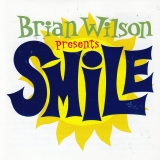
"It's hard to explain quite how amazing this album is. Had it been released in December 1966 as originally planned, it would have changed the course of popular music forever, having just as great, if not a greater, impact than the Beatles with Sgt. Pepper's. But even released four decades later it...""It's hard to explain quite how amazing this album is. Had it been released in December 1966 as originally planned, it would have changed the course of popular music forever, having just as great, if not a greater, impact than the Beatles with Sgt. Pepper's. But even released four decades later it stands as an extraordinary feat of musical ingenuity. Not only was this album years ahead of its time - it was decades ahead. Even released in 2004 this sounded fresh and groundbreaking. This album is coherent like no other I have ever heard. Musical and lyrical themes and ideas intertwine and recapitulate throughout the record, providing a thoroughly cohesive and consistent listen throughout; its unique three-movement structure is downright ingenious, with all the songs linked inseparably. The arrangements are just incredible, production pin-perfect and performances stunning. Even at 61, Brian Wilson's voice remains powerful and provides impeccable delivery. The breadth and depth of emotions covered in this album is simply incredible, moving from the amazing beauty of Our Prayer to the jaunty and uplifting Heroes and Villains to the somber and thought-provoking Surf's Up to the experimental Mrs O'Leary's Cow and then the downright joyous Good Vibrations. The lyrics, courtesy of Wilson's collaborator Van Dyke Parks, are poetic in their vivid imagery and depth of imagination. In all then, this is possibly the most incredible album I've ever heard, and as far as I'm concerned the definitive artistic statement in popular music. To consider this album was originally conceived over half a century ago by a 23 year-old man who was half-deaf, had terrible drug-addiction issues, suffered paranoid schizophrenia and experienced several mental breakdowns, who somehow was able to piece it all together perfectly 40 years later is nothing short of astounding. It upsets me greatly that this isn't even in the top 500 on this website, it's just a bit rediculous really."[+]Reply
"I've got to say, this is not a great album, not musically, not lyrically, not innovative, you can say it all sounds the same, but at the end what does it matter. I was 12 years old when this album came out, I couldnt stop listening to it, it was simply the best for me back then. Honestly Linkin P...""I've got to say, this is not a great album, not musically, not lyrically, not innovative, you can say it all sounds the same, but at the end what does it matter. I was 12 years old when this album came out, I couldnt stop listening to it, it was simply the best for me back then. Honestly Linkin Park sucks, they are terrible, but back in the day, they were the soundtrack of my life. 11 yrs after I still know every lyric, and its amazing from beginning to end. "[+]Reply
"There are a couple of tracks in particular that actually stand out but in general its not that special, her voice is her absolute treasure and lets hope that in the future she is able to work her music better in that sense."Reply
"This record is genius in so many ways and the group create some simply phenomenal music on here. The way they walk on the line between psychedelic and poppy is marvellous and they never tend to lean too heavy on either side. This leads to a very balanced sounding record that fulfils both things y...""This record is genius in so many ways and the group create some simply phenomenal music on here. The way they walk on the line between psychedelic and poppy is marvellous and they never tend to lean too heavy on either side. This leads to a very balanced sounding record that fulfils both things you could be looking for. If you enjoy the more sing a long, pop rock songs then they are on here and are so infectious and catchy. If you enjoy the psychedelic and complex musicianship of the group then that is also on here with a diverse array of instruments all played beautifully. The record never feels slow as well and the music flies by due to how well it is put together. No song is skippable also and the record is an experience right from the start all the way to the end as the group really find their flow on this album making it feel so cohesive. The only issue is the length which is just so short which can lead to me craving more of it once its finished. Other than that this release is stunning and such a delight to listen to. Overall, a fantastic album that really deserves a lot of credit for its progressiveness and for its very high quality which is evident throughout. "[+]Reply
"To me by far their worst album. Songwriting wasn't as sharp and covers weren't as good. Three good songs (It' Won't Be Long, All I've Got To Do, and All My Loving), but rest are just fillers and b-sides."Reply
"I feel like it's a great album for people who want a reflective album about misery but do not want to feel the same way in their own lives. Once you can accept the sadness in the world, then you can truly be happy. This album allows that to happen."Reply
"For some odd reason, this album is the only record I've heard that not only tries to separate itself between two very different sets of music (almost two different albums really), but does so extremely well. The first half feels like a mix between Licensed to Ill's energy (but mellower) and Paul'...""For some odd reason, this album is the only record I've heard that not only tries to separate itself between two very different sets of music (almost two different albums really), but does so extremely well. The first half feels like a mix between Licensed to Ill's energy (but mellower) and Paul's Boutique's intelligence (but simpler), and done so extremely well as the first half is an absolute joy to listen to. The second half can turn a lot of people away, but for people that are fans of such things as Boutique's B-Boy Bouillabaise and Abbey Road's second half, it's a hip-hop journey and an incredible listen. The Boys know how to use their instruments, which was proven in Check Your Head, and boy do they ever use them well.
Key Cuts: Sure Shot, Root Down, Get It Together"[+]Reply
"A minority opinion, but I think Pavement got better with each of their first three albums, culminating with this masterpiece. So much to love here, most notably at the beginning and the end. "Father to a Sister to a Thought" is brilliant too. A very '90s record."Reply