Best Albums of 2000
Listed below are the best albums of 2000 as calculated from their overall rankings in over 58,000 greatest album charts. (Chart last updated: 8 hours ago).
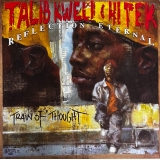
"A strong album with great ideas but simply too long and too much filler (relative to the best tracks--of which there is 9, IMO!) to be a classic. The album balances Hip Hop with Neo Soul and Jazz to make for a well-produced and varied listen, but the first half is much stronger than the second ha..." [+] Reply

"A really fantastic recording and performance. I'd say this outdoes the studio recording except for Another Brick in the Wall Part II, Comfortably Numb, and The Trial (all of which benefit from more polished studio work on the normal versions). Everything else just totally smokes the studio versio..." [+] Reply
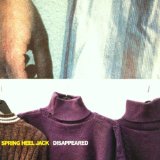
"The Spring Heel Jack project was launched in 1994 by the duo of John Coxon, ex guitarist for Spiritualized and Ashley Wales, ex collaborator of Shock Headed Peters. The first track on this amazing album, 'Rachel Point', opens with pounding drums, Miles Davis-style trumpet licks and looping keyboa..." [+] Reply

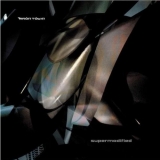
"highly consistent with the characteristic duster feels that I know and love, but feels more put-together than stratosphere" Reply
-  seb7 | Helpful? (Log in to vote) | +1 votes (1 helpful | 0 unhelpful)
A maximum of 5 top-voted qualifying comments are selected for each album. To provide the best experience for visitors, comments are excluded if they refer to data corrections, contain excessive profanity, are written in all caps, are non-English, are too short, consist of conversations between users, or contain lists of best tracks etc.
seb7 | Helpful? (Log in to vote) | +1 votes (1 helpful | 0 unhelpful)
A maximum of 5 top-voted qualifying comments are selected for each album. To provide the best experience for visitors, comments are excluded if they refer to data corrections, contain excessive profanity, are written in all caps, are non-English, are too short, consist of conversations between users, or contain lists of best tracks etc.

Share your opinion and help others discover this album. The top-voted comments are showcased in our aggregate charts!

"It has often been noted that it may be difficult to put genre label on Emmylou Harris' "new" style which was founded with "Wrecking Ball" in 1995. It is obvious that there are strong roots in both country, folk and rock, and I feel that her music can be compared with Richard Thompson's, which of ..." [+] Reply

"Lovely gooey lemon jelly goodness. A delight to listen to all the time. Favourite tracks are 'His Majesty King Raam' and 'The Staunton Lick'" Reply
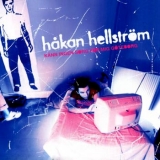
"The U2 of Sweden. Except I love these songs more than the U2 songs of the same period." Reply

"The album begins with “Small Fries”: shifting, clean guitar notes, pounding bass and soft drum cymbals. The guitar continues its jazzy, soft lament as the vocals set in: “…But you can't evict the sun It shines on one hour Every morning Every day..” Quite appropriate at the moment..." [+] Reply
-  NickVolos | Helpful? (Log in to vote) | +1 votes (1 helpful | 0 unhelpful)
A maximum of 5 top-voted qualifying comments are selected for each album. To provide the best experience for visitors, comments are excluded if they refer to data corrections, contain excessive profanity, are written in all caps, are non-English, are too short, consist of conversations between users, or contain lists of best tracks etc.
NickVolos | Helpful? (Log in to vote) | +1 votes (1 helpful | 0 unhelpful)
A maximum of 5 top-voted qualifying comments are selected for each album. To provide the best experience for visitors, comments are excluded if they refer to data corrections, contain excessive profanity, are written in all caps, are non-English, are too short, consist of conversations between users, or contain lists of best tracks etc.

"For those not familiar with the history of jazz, Louis Armstrong was probably the most important figure in the early development of the genre. His innovative improvisations and superb technical skills on the trumpet and cornet basically set the standard for jazz in the 1920s and 1930s. My favorit..." [+] Reply
Total albums: 1,000. Page 12 of 100
Best Albums of 2000 composition
| Artist | Albums | % | |
|---|---|---|---|
|
|
|||
| Various Artists | 14 | 1% | |
| King Crimson | 5 | 1% | |
| Songs: Ohia | 3 | 0% | |
| Current 93 | 3 | 0% | |
| Grateful Dead | 3 | 0% | |
| Sunn O))) | 2 | 0% | |
| Porcupine Tree | 2 | 0% | |
| Show all | |||
| Country | Albums | % | |
|---|---|---|---|
|
|
|||
 |
442 | 44% | |
 |
208 | 21% | |
 |
38 | 4% | |
 |
35 | 4% | |
 |
30 | 3% | |
 |
24 | 2% | |
 |
24 | 2% | |
| Show all | |||
If you enjoy our site, please consider supporting us by sparing a few seconds to disable your ad blocker.
A lot of hard work happens in the background to keep BEA running, and it's especially difficult to do this when we can't pay our hosting fees :(
We work very hard to ensure our site is as fast (and FREE!) as possible, and we respect your privacy.
A lot of hard work happens in the background to keep BEA running, and it's especially difficult to do this when we can't pay our hosting fees :(
We work very hard to ensure our site is as fast (and FREE!) as possible, and we respect your privacy.