Best Albums of the 1990s
Listed below are the best albums of the 1990s as calculated from their overall rankings in over 58,000 greatest album charts. (Chart last updated: 2 hours ago).

"I discovered this album at the same time as Cure for Pain from Morphine and Worst Case Scenario from dEUS. These records became my soundtrack of that summer. Stuart Staples has an amazing voice, and on their debut they manage to create a perfect melancholic record. The album lasts 77 minutes, as ..." [+] Reply
Year of Release:
1993
Appears in:
Rank Score:
1,023
Rank in 1993:
Rank in 1990s:
Overall Rank:
Average Rating:
Comments:

"In many ways, this album is better than "faith". Where "faith" was more immediately-grabbing, "vol.1" is more complex and emotionally/musically layered. His covers (including a b-side elton cover) nail those songs' sentiment. G.Michael attempts to show us there's more than a tight @ss behind his ..." [+] Reply
-  paladisiac | Helpful? (Log in to vote) | +6 votes (6 helpful | 0 unhelpful)
A maximum of 5 top-voted qualifying comments are selected for each album. To provide the best experience for visitors, comments are excluded if they refer to data corrections, contain excessive profanity, are written in all caps, are non-English, are too short, consist of conversations between users, or contain lists of best tracks etc.
paladisiac | Helpful? (Log in to vote) | +6 votes (6 helpful | 0 unhelpful)
A maximum of 5 top-voted qualifying comments are selected for each album. To provide the best experience for visitors, comments are excluded if they refer to data corrections, contain excessive profanity, are written in all caps, are non-English, are too short, consist of conversations between users, or contain lists of best tracks etc.
Year of Release:
1990
Appears in:
Rank Score:
1,022
Rank in 1990:
Rank in 1990s:
Overall Rank:
Average Rating:
Comments:

"I always had trouble with the album falling short of breath quite early on. Until I discovered the actual track sequence Paul Simon had in mind for this (which, when considering the actual sequence on the album as produced is 3-6-4-7-8-1-2-9-5-10). I tried it and only then discovered the masterpi..." [+] Reply
Year of Release:
1990
Appears in:
Rank Score:
1,017
Rank in 1990:
Rank in 1990s:
Overall Rank:
Average Rating:
Comments:

"Jayhawks are a band that more people on this site need to hear. The harmonies of Marc Olson and Gary Louris are as good as you will ever find." Reply
-  Romanelli | Helpful? (Log in to vote) | +3 votes (3 helpful | 0 unhelpful)
A maximum of 5 top-voted qualifying comments are selected for each album. To provide the best experience for visitors, comments are excluded if they refer to data corrections, contain excessive profanity, are written in all caps, are non-English, are too short, consist of conversations between users, or contain lists of best tracks etc.
Romanelli | Helpful? (Log in to vote) | +3 votes (3 helpful | 0 unhelpful)
A maximum of 5 top-voted qualifying comments are selected for each album. To provide the best experience for visitors, comments are excluded if they refer to data corrections, contain excessive profanity, are written in all caps, are non-English, are too short, consist of conversations between users, or contain lists of best tracks etc.
Year of Release:
1995
Appears in:
Rank Score:
1,015
Rank in 1995:
Rank in 1990s:
Overall Rank:
Average Rating:
Comments:

"Probably their worst album, but that says more about how great they are than anything else! A great album with a lot of keepers." Reply
-  lightmyway | Helpful? (Log in to vote) | +2 votes (2 helpful | 0 unhelpful)
A maximum of 5 top-voted qualifying comments are selected for each album. To provide the best experience for visitors, comments are excluded if they refer to data corrections, contain excessive profanity, are written in all caps, are non-English, are too short, consist of conversations between users, or contain lists of best tracks etc.
lightmyway | Helpful? (Log in to vote) | +2 votes (2 helpful | 0 unhelpful)
A maximum of 5 top-voted qualifying comments are selected for each album. To provide the best experience for visitors, comments are excluded if they refer to data corrections, contain excessive profanity, are written in all caps, are non-English, are too short, consist of conversations between users, or contain lists of best tracks etc.
Year of Release:
1999
Appears in:
Rank Score:
1,014
Rank in 1999:
Rank in 1990s:
Overall Rank:
Average Rating:
Comments:

"The debut from Jack and Meg is a raw, stripped down, electric guitar and drum, in your face affair that plain kicks ass. And there's 17 tracks of it, none longer than 3:22. So even though the songs mostly have a similar feel to them, the album moves right along and keeps the energy going right th..." [+] Reply
-  drivebytornado | Helpful? (Log in to vote) | +2 votes (2 helpful | 0 unhelpful)
A maximum of 5 top-voted qualifying comments are selected for each album. To provide the best experience for visitors, comments are excluded if they refer to data corrections, contain excessive profanity, are written in all caps, are non-English, are too short, consist of conversations between users, or contain lists of best tracks etc.
drivebytornado | Helpful? (Log in to vote) | +2 votes (2 helpful | 0 unhelpful)
A maximum of 5 top-voted qualifying comments are selected for each album. To provide the best experience for visitors, comments are excluded if they refer to data corrections, contain excessive profanity, are written in all caps, are non-English, are too short, consist of conversations between users, or contain lists of best tracks etc.
Year of Release:
1999
Appears in:
Rank Score:
1,014
Rank in 1999:
Rank in 1990s:
Overall Rank:
Average Rating:
Comments:

"I don't say it's their best album,but it was the first manics album i heard,so i really enjoy this one." Reply
-  Omid | Helpful? (Log in to vote) | +3 votes (3 helpful | 0 unhelpful)
A maximum of 5 top-voted qualifying comments are selected for each album. To provide the best experience for visitors, comments are excluded if they refer to data corrections, contain excessive profanity, are written in all caps, are non-English, are too short, consist of conversations between users, or contain lists of best tracks etc.
Omid | Helpful? (Log in to vote) | +3 votes (3 helpful | 0 unhelpful)
A maximum of 5 top-voted qualifying comments are selected for each album. To provide the best experience for visitors, comments are excluded if they refer to data corrections, contain excessive profanity, are written in all caps, are non-English, are too short, consist of conversations between users, or contain lists of best tracks etc.
Year of Release:
1998
Appears in:
Rank Score:
1,013
Rank in 1998:
Rank in 1990s:
Overall Rank:
Average Rating:
Comments:

"Like eating vanilla ice cream. Actually, it's more like making ice cream, y'know with the ice and the coffee can and the grinding and general annoyance that's supposed to make you appriciate the end product but then you ended up eating shitty homemade vanilla ice cream and you have to sit there a..." [+] Reply
-  ShaneSpear | Helpful? (Log in to vote) | +2 votes (2 helpful | 0 unhelpful)
A maximum of 5 top-voted qualifying comments are selected for each album. To provide the best experience for visitors, comments are excluded if they refer to data corrections, contain excessive profanity, are written in all caps, are non-English, are too short, consist of conversations between users, or contain lists of best tracks etc.
ShaneSpear | Helpful? (Log in to vote) | +2 votes (2 helpful | 0 unhelpful)
A maximum of 5 top-voted qualifying comments are selected for each album. To provide the best experience for visitors, comments are excluded if they refer to data corrections, contain excessive profanity, are written in all caps, are non-English, are too short, consist of conversations between users, or contain lists of best tracks etc.
Year of Release:
1996
Appears in:
Rank Score:
1,007
Rank in 1996:
Rank in 1990s:
Overall Rank:
Average Rating:
Comments:
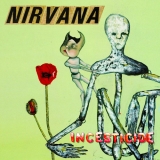
"The first half sits comfortably next to Nevermind, if somewhat less essential. The second half is weaker than the low points of bleach. Then it finishes with one of their best track." Reply
Year of Release:
1992
Appears in:
Rank Score:
1,002
Rank in 1992:
Rank in 1990s:
Overall Rank:
Average Rating:
Comments:
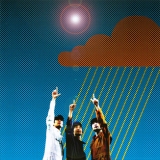
"One of the ways the Fishmans online community stokes the fire of their fandom is through the creation of "The Seasonal Report", a fanzine consisting of all things concerning the Japanese outfit. Said volumes contain recent Fishmans-related news, fan retrospectives and even occasional poetry. Howe..." [+] Reply
-  DriftingOrpheus | Helpful? (Log in to vote) | +4 votes (4 helpful | 0 unhelpful)
A maximum of 5 top-voted qualifying comments are selected for each album. To provide the best experience for visitors, comments are excluded if they refer to data corrections, contain excessive profanity, are written in all caps, are non-English, are too short, consist of conversations between users, or contain lists of best tracks etc.
DriftingOrpheus | Helpful? (Log in to vote) | +4 votes (4 helpful | 0 unhelpful)
A maximum of 5 top-voted qualifying comments are selected for each album. To provide the best experience for visitors, comments are excluded if they refer to data corrections, contain excessive profanity, are written in all caps, are non-English, are too short, consist of conversations between users, or contain lists of best tracks etc.
Year of Release:
1997
Appears in:
Rank Score:
999
Rank in 1997:
Rank in 1990s:
Overall Rank:
Average Rating:
Comments:
Total albums: 1,000. Page 31 of 100
Best Albums of the 1990s composition
| Year | Albums | % | |
|---|---|---|---|
| 1990 | 84 | 8% | |
| 1991 | 85 | 9% | |
| 1992 | 102 | 10% | |
| 1993 | 108 | 11% | |
| 1994 | 127 | 13% | |
| 1995 | 104 | 10% | |
| 1996 | 108 | 11% | |
| 1997 | 99 | 10% | |
| 1998 | 99 | 10% | |
| 1999 | 84 | 8% |
| Artist | Albums | % | |
|---|---|---|---|
|
|
|||
| Blur | 6 | 1% | |
| The Flaming Lips | 6 | 1% | |
| Beck | 5 | 1% | |
| Autechre | 5 | 1% | |
| Tori Amos | 5 | 1% | |
| Suede | 5 | 1% | |
| Pavement | 5 | 1% | |
| Show all | |||
| Country | Albums | % | |
|---|---|---|---|
|
|
|||
 |
536 | 54% | |
 |
270 | 27% | |
 |
41 | 4% | |
 |
24 | 2% | |
 |
24 | 2% | |
 |
16 | 2% | |
 |
12 | 1% | |
| Show all | |||
If you enjoy our site, please consider supporting us by sparing a few seconds to disable your ad blocker.
A lot of hard work happens in the background to keep BEA running, and it's especially difficult to do this when we can't pay our hosting fees :(
We work very hard to ensure our site is as fast (and FREE!) as possible, and we respect your privacy.
A lot of hard work happens in the background to keep BEA running, and it's especially difficult to do this when we can't pay our hosting fees :(
We work very hard to ensure our site is as fast (and FREE!) as possible, and we respect your privacy.
| Best Artists of the 2020s | |
|---|---|
| 1. Black Country, New Road | |
| 2. The Strokes | |
| 3. Charli XCX | |
| 4. Little Simz | |
| 5. Magdalena Bay | |
| 6. Fontaines D.C. | |
| 7. Kendrick Lamar | |
| 8. Big Thief | |
| 9. King Gizzard & The Lizard Wizard | |
| 10. The Smile | |
| 11. Taylor Swift | |
| 12. Phoebe Bridgers | |
| 13. Fiona Apple | |
| 14. Black Midi | |
| 15. Lana Del Rey | |
| 16. The Weeknd | |
| 17. Sufjan Stevens | |
| 18. Tyler, The Creator | |
| 19. Jessie Ware | |
| 20. Floating Points, Pharoah Sanders & The London Symphony Orchestra |