Listed below are the best albums of 1975 as calculated from their overall rankings in over 58,000 greatest album charts. (Chart last updated: 3 hours ago).
"On the group's third album from 1975 Abba took a huge musical leap upward compared to their first two albums, which had been somewhat uneven, though without in any way being weak. With two of the group's biggest and most timeless hits "Mama Mia" and "SOS" is the album can only be a five star rele...""On the group's third album from 1975 Abba took a huge musical leap upward compared to their first two albums, which had been somewhat uneven, though without in any way being weak.
With two of the group's biggest and most timeless hits "Mama Mia" and "SOS" is the album can only be a five star release. On top of that are other big hits, which are almost as strong as the two. "So Long" is possibly the best rock 'n roll number ever recorded by Abba. "Bang-a-Boomerang" was only released as a single in selected countries, but it is a near perfect pop production, and quite on a par with many of the group's biggest hits.
"I Do I Do I Do I Do I Do" was also a big hit in many places. A retro-inspired number (a little Fats Domino), only to a certain extent featuring the well known, the Abba sound.
"I've Been Waiting For You" is a very nice ballad that anticipates the direction the group would explore later with songs like "Thank You For the Music", an obvious musical number.
"Hey, Hey Helen" is an attempt at more heavy tones - and for once the group is quite successful with this. A little overlooked gem.
A few numbers come slightly in the more trivial department, but you easily bear with this. "Tropical Loveland" and "Man in the Middle" I will put in this category, though I would not call any of them weak.
The instrumental "Intermezzo no. 1 "is exciting enough, but may seem a little misplaced on an Abba album."[+]Reply
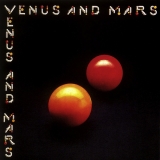
"I've heard some people call this better than Band on the Run. Can't say I agree, but it is a damn good record that is a high point for Wings. Particularly the first 6-7 tracks are fab. And it's immaculately produced. There's a great article about Paul being a pop auteur, and I think I can get beh...""I've heard some people call this better than Band on the Run. Can't say I agree, but it is a damn good record that is a high point for Wings. Particularly the first 6-7 tracks are fab. And it's immaculately produced. There's a great article about Paul being a pop auteur, and I think I can get behind that. Even on his lesser work, there's always glimmers of genius. On this one, I'd say more than a glimmer. It's not a masterpiece, but it is consistently enjoyable."[+]Reply
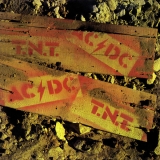
"Great album that is a huge leap forward from their Australian debut. This album established the signature AC/DC sound and contains some of their best known songs. They wisely took most of this album, swapped a couple of the weaker tracks with the best songs off the Australian debut, and released ...""Great album that is a huge leap forward from their Australian debut. This album established the signature AC/DC sound and contains some of their best known songs. They wisely took most of this album, swapped a couple of the weaker tracks with the best songs off the Australian debut, and released their international debut the following year. I suspect this album would be ranked much higher if people didn't already have the majority of it on the international High Voltage. That makes this album a curiosity for the most dedicated."[+]Reply
"Some absolutely dynamite songs here. Sweet Transvestite and Time Warp are probably the best known, but Susan Sarandon's rendition of Touch-a Touch-a Touch Me is smoking hot and Meatloaf's Hot Patootie is superior to anything he did after. But what makes this a great all around album is probably T...""Some absolutely dynamite songs here. Sweet Transvestite and Time Warp are probably the best known, but Susan Sarandon's rendition of Touch-a Touch-a Touch Me is smoking hot and Meatloaf's Hot Patootie is superior to anything he did after. But what makes this a great all around album is probably The Floor Show medley. Best movie soundtrack ever."[+]Reply
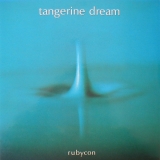
"There is something quite disconcerting about the cover of this album, it is one of my all time favourite album covers for that very reason, the gloss green, the central water droplet, the text font, the name 'Rubycon' builds the imagination as to what lies within. I am fortunate to own a near min...""There is something quite disconcerting about the cover of this album, it is one of my all time favourite album covers for that very reason, the gloss green, the central water droplet, the text font, the name 'Rubycon' builds the imagination as to what lies within. I am fortunate to own a near mint copy on vinyl and it is without doubt a journey through sound, conjuring up visions of vast emptiness and otherworldly realms. When this came out in 1975 it must have sounded like something from another planet. As a musician myself, it has taken me years to work out how Tangerine Dream produced the bubbling bass lines which underpin many of their earlier great works, to think that they did this with fairly rudimentary recording techniques and unreliable instruments is fairly mind blowing. Naming a favourite Tangerine Dream album is always a tough call for me as I love much of their work, however for overall impact, I think Rubycon has to be top of the tree, Phaedra and Zeit following closely with Force Majeure, Ricochet, Stratosfear and Tangram all competing for fourth place. The early TD were way ahead of the game in terms of sound experimentation and sequencing. I have seen them live three times, the final time being at the Royal Albert Hall, awesome!"[+]Reply
"The recording of Sheet Music is reputed to be the highlight for the four members of 10cc. However, it is The Original Soundtrack that portrays the clever lyrics with catchy music and melodies. Une nuit in Paris is by far the wittiest song ever written. It is followed by the moving I'm Not in Love...""The recording of Sheet Music is reputed to be the highlight for the four members of 10cc. However, it is The Original Soundtrack that portrays the clever lyrics with catchy music and melodies. Une nuit in Paris is by far the wittiest song ever written. It is followed by the moving I'm Not in Love, with some great lyrics about denial. The first side closes with Blackmail - a funny story of a crime gone wrong. The second side starts of brilliantly with the cleverly worded The Second Sitting for the Last Supper. The rest of the albums tails of a little, but you still feel that you have listened to the funniest lyrics yet seriously great music album. Unfortunately this could not be repeated for How Dare You. "[+]Reply
"Royal Mail Ship Titanic was comprised of nine decks and three million rivets, fitted with a total of 29 boilers which fed two reciprocating steam engines and one low-pressure turbine that allowed the ship to reach speeds of up to 21 knots at a staggering length of just under 883 feet from bow to ...""Royal Mail Ship Titanic was comprised of nine decks and three million rivets, fitted with a total of 29 boilers which fed two reciprocating steam engines and one low-pressure turbine that allowed the ship to reach speeds of up to 21 knots at a staggering length of just under 883 feet from bow to stern. She required three years to complete and her hardware was (and in many ways still is) a miracle of science and sat comfortably at the pinnacle of technological advancement when it first launched from Southampton in April of 1912. Her luxury accommodations and various architectural adornments were equally unrivaled and positioned Titanic as a mobile, sparkling rendezvous which out-twinkled the finest hotels of the stationary variety. Her promenade deck was surely the most winsome, featuring a myriad of ornamental configurations whose inspirations date as far back as the Renaissance Era. It was a structural phenomenon and a major artery of artistic design allowing the blood of inspiration to flow and provide oxygen to dreams. In hindsight, it became the most appropriate locale for an ending of tragic, Shakespearian proportions. How do you successfully compartmentalize and synthesize her indominable aura and legacy into a 25-minute piece of art? Or, better yet, does one even try?
Henry James Beauchamp, 28, 2nd Class
Dorothy Sage, 14, 3rd Class
Thomas Andrews, Naval Architect, 39, 1st Class
When Gavin Bryars first enrolled at Sheffield University, his primary focus of study was philosophy, which no doubt engrained within him an acute perspective, optimal for when the eventual transition into music beckoned. He began his ever-evolving, sonic trek by dabbling in the world of jazz, employing the upright bass as his instrument of choice, first traditionally, then tinted with a sheen for the avant-garde. Like many visionaries, his taste for the conventional soon withered, as did his interest towards playing. It wasn't until a move abroad that his artistic sensibilities would come into full focus. He briefly studied under the minimalist icon, John Cage, and rapidly gained an esteem for the uncolored edges of sonic exploration. He returned to England soon after to pursue a teaching role at Portsmouth College of Fine Art. Here, he would pen his most significant and enduring work, a monument as much as it is a marvel, firmly in tune with the ship it honored.
Jack Phillips, Marconi Wireless Operator, 25, Crew
Augusta Charlotta Lindblom, 45, 3rd Class
Henry Michael Mitchell, 71, 2nd Class
Titanic was equipped with 16 watertight bulkheads, ones that fatally didn't rise above D deck. This caused the unimaginable amount of water rushing in, as a result of the 300-foot gash which parted her double hull, to spill over each of these watertight compartments in succession, dragging Titanic's bow underneath the waterline. The promenade deck, once grounds for regalia and soirees, would soon be a scene of hysteria and stampede for the better portion of two hours and forty minutes. Despite the myth, Titanic's marketing never brandished an "unsinkable" moniker, but her inexorable descent into the icy Atlantic remains a chilling exemplar of nature's dominion over the impudence of man. As dinner jackets, newly-molded china and suitcases in abundance homogenized with the sea, in congruence to the legend, Titanic's orchestra played until they were submerged in order to calm their terrified fellow men and women. 57 years onward, Gavin Bryars would use this symphonic motif as the basis for his masterpiece.
Salli Helena Rosblom, 2, 3rd Class
Henriette Yvois, 24, 2nd Class
Toufik Nakhli, 17, 3rd Class
Bryars originally planned for 'The Sinking of the Titanic' to be purely conceptual and free of the limitations that a tangible performance would provide. Nevertheless, Bryars eventually performed the piece in 1972 with its first revision surfacing in 1975. It's often viewed as an open work, consistently subject to re-toolings and re-imaginings, yet, the conceptual framework stays intact, akin to the still majestic, but ghostly shipwreck located 12,500 feet from the trough of the waves. Bryars was intrigued by the peculiar concept of how the orchestral sounds of Titanic's players would locomote when rendered subaqueous. Put simply, how would they sound if they were able to play until they met the ocean floor? As the music would theoretically distort, morph and provide a very divergent timbre, the reverberating sound waves would serve as one final sonic footnote, a siren song and elegy for the once mighty ship to be accompanied by during its final descent. Using the hymn 'Autumn' by Barthélemon as a skeleton, a piece present during the sinking by witness testimony (though more likely ‘Songe d’Autumne’ by Archibald Joyce), Bryars translated his initial theory into classical composition. The first rework was featured as the inaugural release in a decet of albums on the Brian Eno-founded label 'Obscure Records' in 1975. On it, Bryars plays a dual role of conductor and pianist, as he captains a weighty, solemn procession shepherded by strings which sound as if they have been in use since 1912 and keys befitting a piano in a dilapidated chateau which strike heavily and originate from a floor above and two rooms over. There's a pulsating hum which envelopes the piece in its entirety that aims to simulate the water's annulments which results in a shadowy, yet tranquil experience that furnishes an idea of a bleak, yet dignified acceptance of death. This assimilation into liquid continues for nearly a half hour, broken only briefly by the attestations from survivor Eva Hart, when finally, the damp resonance ceases from a place below and no longer in sight. It is, without hesitation, a triumph of aural intention and realization which offers consistent treasures upon re-visitation.
Engelhart Cornelius Ostby, 64, 1st Class
Eric Rice, 7, 3rd Class
Emil Christmann, 29, 3rd Class
The record's B-Side has received acclaim and has carved out a place of reverence in its own right. 'Jesus' Blood Never Failed Me Yet' is less an art project and more of a humanistic observation set to music. Anchored by an audio sample of a destitute reaffirming his allegiance to God, the song is fairly more traditional than the title track, save for the inclusion of minute escalations in the instrumentational flow. The set of players return from 'Sinking' and the musical coloring remains unaltered as they craft another circular, albeit less oxidizing auditory space. Swelling strings coalesce into a autonomous power source only halting for a brief moment as plucked guitar strings dance above them as if they were native to a nautical lullaby. Its relationship with the former track isn't directly analogous, yet it does occupy emblematic territory. It doesn't strain one's imagination to make the connection that it could resemble the last words of an inebriated passenger, life jacket-clad and clinging to debris, requesting absolution in the face of the impending hereafter. Bryars' composition expertly paints a portrait of a regretless sage singing to the starless night, kept warm in the glassy waters by faith alone, defiant in the face of 'Titanic's colossal vortex.
Aloisia Haas, 24, 3rd Class
Arthur Webster Newell, 58, 1st Class
Captain Edward Smith, 62, Crew
Who could have imagined, as the collective stood on Titanic's port side in anticipation of her maiden voyage, the kind of lightning rod the steamer would become for art, literature, music and film? It's easy to forget, while some had their personal effects taken to their room and others were being checked for lice, that the ship that would carry both subsets, man and woman, rich and poor, was made of iron. It was, at the time, an inanimate object with the sole purpose of passage. Now, it's a ghost, a shadow and a vivid memory in the minds of those who never walked her decks. It lies at 41°43′57′′ N 49°56′49′′ W. Today, with modern technology, we can view what remains of the vessel. You'd swear you could see it breathe, iron and all. Even if it wasn't 'Nearer My God to Thee', the truth endures, Titanic's musicians played to the end. We can only hope it sounded this beautiful.
Standout Tracks:
1. The Sinking of the Titanic
2. Jesus' Blood Never Failed Me Yet
97.5"[+]Reply
"The bing-bang of a way of life, think, be. An incomparable sound and a marvellous simplicity by a magician, Sam Philips. One exceptional voice absorbed by blues,country, for make something completely fresh, new, unrepeatable."Reply


 indieshins | Helpful? (Log in to vote) | +3 votes (3 helpful | 0 unhelpful)
A maximum of 5 top-voted qualifying comments are selected for each album. To provide the best experience for visitors, comments are excluded if they refer to data corrections, contain excessive profanity, are written in all caps, are non-English, are too short, consist of conversations between users, or contain lists of best tracks etc.
indieshins | Helpful? (Log in to vote) | +3 votes (3 helpful | 0 unhelpful)
A maximum of 5 top-voted qualifying comments are selected for each album. To provide the best experience for visitors, comments are excluded if they refer to data corrections, contain excessive profanity, are written in all caps, are non-English, are too short, consist of conversations between users, or contain lists of best tracks etc.



 Decurso | Helpful? (Log in to vote) | +3 votes (3 helpful | 0 unhelpful)
A maximum of 5 top-voted qualifying comments are selected for each album. To provide the best experience for visitors, comments are excluded if they refer to data corrections, contain excessive profanity, are written in all caps, are non-English, are too short, consist of conversations between users, or contain lists of best tracks etc.
Decurso | Helpful? (Log in to vote) | +3 votes (3 helpful | 0 unhelpful)
A maximum of 5 top-voted qualifying comments are selected for each album. To provide the best experience for visitors, comments are excluded if they refer to data corrections, contain excessive profanity, are written in all caps, are non-English, are too short, consist of conversations between users, or contain lists of best tracks etc.



 DriftingOrpheus | Helpful? (Log in to vote) | +1 votes (1 helpful | 0 unhelpful)
A maximum of 5 top-voted qualifying comments are selected for each album. To provide the best experience for visitors, comments are excluded if they refer to data corrections, contain excessive profanity, are written in all caps, are non-English, are too short, consist of conversations between users, or contain lists of best tracks etc.
DriftingOrpheus | Helpful? (Log in to vote) | +1 votes (1 helpful | 0 unhelpful)
A maximum of 5 top-voted qualifying comments are selected for each album. To provide the best experience for visitors, comments are excluded if they refer to data corrections, contain excessive profanity, are written in all caps, are non-English, are too short, consist of conversations between users, or contain lists of best tracks etc.