Listed below are the best albums of 1964 as calculated from their overall rankings in over 58,000 greatest album charts. (Chart last updated: 3 hours ago).
"Pure joy. Don't overlook their early work and paint it all as silly pop-music. These boys knew how to construct melody, and we're always adding in beautiful and perfect musical touches. Little riffs, added harmonies, runs of notes, harmonica here, Rickenbacker there. These guys were geniuses, but...""Pure joy. Don't overlook their early work and paint it all as silly pop-music. These boys knew how to construct melody, and we're always adding in beautiful and perfect musical touches. Little riffs, added harmonies, runs of notes, harmonica here, Rickenbacker there. These guys were geniuses, but we think it has to be profound to count. Not so here - pure pop excellence."[+]Reply
"1964 was a turbulent year for the United States of America. Injustice violated the air with a stench that, at its best, resembled cigar smoke caked into waterlogged, whiskey-stained clothing. At its worst, it conjured the fragrance of rotting corpses piled into black plague mass graves. A societa...""1964 was a turbulent year for the United States of America. Injustice violated the air with a stench that, at its best, resembled cigar smoke caked into waterlogged, whiskey-stained clothing. At its worst, it conjured the fragrance of rotting corpses piled into black plague mass graves. A societal powder keg was ready to burst, sending shrapnel in the form of violence and revolution across the land. Chronicles of this time in history are aplenty, but Bob Dylan's 'The Times They are A-Changin' occupies a place of poignance and societal relevance as our newest decade commences. The greatest art tends to come rocket-strapped with perennial staying power and universal application. Bob Dylan's third LP effort slides comfortably into those categories and classifications. It touches upon righteous, homely, American ethnocentrism, the painful ineffectiveness of the justice system and selective poverty. Despite Dylan rejecting the label of "Protest Songs", journalists flocked to confine his writing to an ideological box that they could present to the curious and quick-to-judge public. Dylan coyly sat on the fence during interviews which felt more like police interrogations, never confirming or denying anything. Still, the lyricism said more than Dylan ever could, surely illuminating the fact that the poet staunchly sympathized with the plight of the racially suppressed and disenfranchised. The inner shade of Dylan's heart was never in doubt with his position usually reserved for artists of color, those with intentions of questioning the status quo when it came to inequality in the United States. To hear a mid-western, white youth comment on the hypocrisy of American military conquest, the hideousness of white nationalism and imbalanced nature of wealth distribution was refreshing to millions and for thousands more fortunate, feather ruffling. 'The Times They are A-Changin' is concurrently a pinpoint, flaming arrow aimed at the controversial topics of the 1960's and a philosophical thought cloud of ideas and wisdom. All this from a scrawny, Minnesota-born New Yorker who could seemingly wear both hats and walk in all kinds of shoes.
The record greets us with the eternal strums of an acoustic guitar as Dylan's voice, strained and imperfect, a survivor of house fire, arrives with its own visage. The seminal opener chugs along at a fixed tempo, adorned with harmonica bursts that enliven the docile guitar tones. The harmonica, a humble and inexpensive instrument that acted as a trusted companion for many, was Dylan's weapon of choice during his early years. He declares, "Come mothers and fathers throughout the land and don't criticize what you can't understand." His prophetic and anthemic rallying cry has endured for nearly 60 years since it first graced ears. The album turns to a significantly grimmer beast with the introduction of second track, 'Ballad of Hollis Brown', a look at a poverty-stricken farmer in rural South Dakota. Dylan takes his tale of desperation and uses it as an allegory for those struggling with destitution. The metaphors are intentionally fatalistic, but many could view them as exaggerated. Here, Dylan's goal is to establish perspective, not provide a factual retelling. It's merely a painting of despair to be learned from. Dylan sings, "Your brain is a-bleedin' and your legs can’t seem to stand; Your eyes fix on the shotgun that you’re holding in your hand." The expanding wage distribution, in Dylan's estimation, provides a slow death with one alternative. One of Dylan's darkest, yet powerful statements. Next, he confronts an extremely prevalent bias during the middle of the 20th century in the United States. 'With God on Our Side' creates an image of an elitist America, one that can do no wrong and is justified, no matter the bloodshed. Dylan sees toxic patriotism acting as a slow, indoctrinating cancer (another contemporary issue). He wails, "The First World War, boys, it came and it went; The reason for fightin' I never did get but I learned to accept it, accept it with pride; For you don’t count the dead when God’s on your side." The arrogance needed to assume God identifies with a specific country's crusade is elephantine, however, it's a belief typified by the Pledge of Allegiance and by swearing upon a bible. Dylan's character comes to the realization that God's love is reserved for people and not places and that a country is just a plot of land and nothing more. Sadly, it's usually the prize for which fighting is done. The Vietnam War enveloped the decade and Dylan's parable is forever an unheeded warning.
The second half of the record begins with 'Only a Pawn in Their Game', another narration confronting hatred and prejudice, this time by way of propaganda and inculcation. The track examines lower-income, white southerners who are brainwashed into hating their black neighbors with an end goal of sustained oppression. Dylan illustrates this with syntax, "A South politician preaches to the poor white man “You got more than the blacks, don’t complain; You’re better than them, you been born with white skin." The simple instrumentation of 'Pawn' and the stressed rhyme repetition make sure that the message doesn't get clouded beneath the music. However, Dylan doesn't refuse the chance to include a romantic ballad on the LP. 'Boots of Spanish Leather' is a letter-exchanged anecdote of longing and gradual realization. The song is tinted by delicately plucked strings and alternating perspectives that create a gloomy overtone that comes to fruition when the narrator surmises the final fate of his crumbling union across a vast ocean. "I’m sure your mind is a-roamin'; I’m sure your thoughts are not with me but with the country to where you’re goin." The record arrives at an uptick in morale with 'When the Ship Comes In', an affirmative, inspirational testification that the future holds brighter days and that those who engage in tyranny and bigotry will eventually be overcome. Finally, LP centerpiece, 'The Lonesome Death of Hattie Carroll', draws inspiration from the murder of an African-American barmaid by the wealthy William Zantzinger. The track directs scrutiny at the murderer for devaluing the life of a woman he deemed "lesser than" and the justice system for (mostly) turning a blind eye. Dylan delivers the verdict, "And handed out strongly, for penalty and repentance, William Zanzinger with a six-month sentence." The track is a microcosm of the record's major themes and an unsettling reminder that justice remains imbalanced.
Dylan was just 23 years of age when 'Times' was first pressed, but his incredible perception was decades his senior. The clairvoyance of his prose is even parts astonishing and tragic given that little has changed since his pen first hit the paper. The poetry of these 10 tracks easily sit amongst the scribe's most visceral compositions. The album presents Dylan at perhaps his most uncompromising and forthright, functioning as his final, unabashed protest record. Oddly, the LP is often shunned from the 1960's landmark music rolodex with albums such as 'Highway 61 Revisited', 'Bringing It All Back Home' and even 'The Freewheelin' Bob Dylan' achieving a higher sense of reverence. Strangely enough, its content makes it a contender for his most topical, underrated and pertinent enterprise, both in 1964 and 2021. Dylan's uncanny ability to find the pulse of the given zeitgeist has never been in doubt, as he's strung together lyrical encapsulations at will for 60 years. Here, he weaves sorrow and hope into a homogeneous, digestible whole the likes of which none could reproduce. The power of 'Times' does not lie in division, but in a belief that human morality will win out. It's a beautiful sentiment and an eternal principle. In some ways, we're still waiting.
"And we’ll shout from the bow your days are numbered
And like Pharoah’s tribe they’ll be drowdned in the tide
and like Goliath, they’ll be conquered."
-When the Ship Comes In
Standout Tracks:
1. The Times They are A-Changin'
2. The Lonesome Death of Hattie Carroll
3. When the Ship Comes In
94.4"[+]Reply
"The Beatles fourth album is a step back to the combination of originals and covers. Of the originals, the cover of the album, that lovely shot by Robert Freeman, betrays the mood of the songs. There's a kind of autumnal melancholy about them. The first track, no reply, is one of the Beatles best,...""The Beatles fourth album is a step back to the combination of originals and covers. Of the originals, the cover of the album, that lovely shot by Robert Freeman, betrays the mood of the songs. There's a kind of autumnal melancholy about them. The first track, no reply, is one of the Beatles best, and one of the greatest openers on any of their albums. Other strong songs from Lennon-McCartney are, the Dylanish, I'm a loser, every little thing, and the U.S. no:1 single, eight days a week. As for the covers, rock and roll music, the boys take on Chuck Berry's all time classic, is my favourite of all the covers the Beatles did. Kansas city is also good, as is George's vocal spot, everybody's trying to be my baby. Not so good is, Mr moonlight, which features an absolutely appalling organ solo from Paul. Buddy Holly's words of love, is a bit forgetful too. One point I'd like to make is that I feel this album is underrated in the fact that this is arguably the first folk/rock record, alright it's not lyrically important, but it's a predominantly acoustic album, featuring folk, country, and rock'n'roll, four months before Bob Dylan released his magnificent, bringing it all back home, masterpiece. I'm certainly not comparing this record with Dylan's, no, it's more an observation really, less a claim, but I think it's an interesting point. The album though is still definitely one of the band's least essential, but it is a Beatles album, so it's still well worth having for the casual fan. For us fanatics, well, it's essential. "[+]Reply
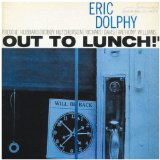
"This record's really the epitome of hard-bop, even as it stretches the boundaries of the genre into something approaching true avant-garde while still often keeping the boundaries of familiar jazz, resulting in a crucial listen."Reply
"Wow! What a special album this one is. This record is so personal and real. It was such a hard left turn in terms of theme in comparison to "The Times They Are A-Changin'". I personally love this more introspective vibe on here. Overall I will say this album isn't quite as consistent as its prede...""
Wow! What a special album this one is. This record is so personal and real. It was such a hard left turn in terms of theme in comparison to "The Times They Are A-Changin'". I personally love this more introspective vibe on here.
Overall I will say this album isn't quite as consistent as its predecessor. This albums only weakness, if slight, is I don't personally feel it flows perfectly throughout. I don't love the transition from the openly funny "Motorpsycho Nitemare" to the masterpeice of introspective poetry "My Back Pages", as an example.
Still none of the tracks here are less than very good and the High point - "My Back Pages" is about as beautiful an expression of a songwriter ever recorded. And the other highs like "Chimes of Freedom", "Black Crow Blues", "To Ramona", "Spanish Harlem Incident", "Ballad In Plain D" and (no matter how many times I hear it) "It Ain't Me Babe" present practically a clinic on how one goes about being mysterious, sensitive, emotive, intelligent, poetic, sincere and never too serious about oneself all on one album. Truly this is just another fucking peice of genius from The Genius.
Grade: 91/100"[+]Reply
"There is truly no more saccharine, lovely pop album than The Ronettes' debut. As far as per-minute sweetness, excitement, earworminess, and fun, this might be the most technically perfect pop album ever constructed. If you've met a person who dislikes The Ronettes, you've met a person who a) hasn...""There is truly no more saccharine, lovely pop album than The Ronettes' debut. As far as per-minute sweetness, excitement, earworminess, and fun, this might be the most technically perfect pop album ever constructed. If you've met a person who dislikes The Ronettes, you've met a person who a) hasn't heard them, or b) is a dick."[+]Reply
""Ain't that Good News" from 1964 was the last album Sam Cooke released in his lifetime, and for me it is also one of his most consistent and artistically successful. In 1964 Cooke was more or less a veteran in pop music, but this album clearly (especially the original side 1) proves he was far fr..."""Ain't that Good News" from 1964 was the last album Sam Cooke released in his lifetime, and for me it is also one of his most consistent and artistically successful. In 1964 Cooke was more or less a veteran in pop music, but this album clearly (especially the original side 1) proves he was far from finished in his musical development. Cooke is often called the father of soul, and not least because the songs he wrote and recorded during the last 2-3 years of his lifetime. Cooke had in most of his songs an ease and light way of dealing with both very personal and serious themes, and this is one the characteristics of this album, where most of his original songs could well be called classics. Good examples are "Good Times", "Another Saturday Night", "Meet Me at Mary's Place" and of course "A Change Is Gonna Come" which came two exemplify the 1960s' Civil Rights Movement.
On tracks like "Ain't that Good News", "Good Times" and his touching interpretation of "The Riddle Song" Cooke shows that he is in tune with the new sounds that streamed to America from Europe, especially thanks to The Beatles.
This is undoubtedly Cooke's most modern album, although some of the more orchestrated tracks on the original side two, may be mostly rooted in the 1950s.
"[+]Reply
"Quite a simple collection of songs that are trying to hook you to their choruses and make you sing them for the rest of the day. This works to a varying degree of success with the best tracks coming very early on. Almost every track on side 1 has a fantastic chorus and is so infectious to listen ...""Quite a simple collection of songs that are trying to hook you to their choruses and make you sing them for the rest of the day. This works to a varying degree of success with the best tracks coming very early on. Almost every track on side 1 has a fantastic chorus and is so infectious to listen to. I leave this album with Baby Love and Where Did Our Love Go firmly wedged inside my brain. The song that has grown on me the most though is When The Lovelight Starts Shining Through His Eyes which is such an effective song and I always sing along to it whenever it comes on. However, side 2 is the complete opposite and I find no song really works on there at all. If you removed the whole of side 2 I think it would only make the album better as all the boring and dull tracks would be removed. Overall, a simple but effective release that is let down drastically by the second half in my opinion. "[+]Reply
"Definitely revolves around "You Really Got Me", which was hugely influential in creating the hard rock sound. But there are a lot of great "forgotten" songs here, most notably Stop Sobbing and I Took My Baby Home. The cover of Beautiful Delilah is insanely sped up and heavy for it's time."Reply

 junodog4 | Helpful? (Log in to vote) | +7 votes (7 helpful | 0 unhelpful)
A maximum of 5 top-voted qualifying comments are selected for each album. To provide the best experience for visitors, comments are excluded if they refer to data corrections, contain excessive profanity, are written in all caps, are non-English, are too short, consist of conversations between users, or contain lists of best tracks etc.
junodog4 | Helpful? (Log in to vote) | +7 votes (7 helpful | 0 unhelpful)
A maximum of 5 top-voted qualifying comments are selected for each album. To provide the best experience for visitors, comments are excluded if they refer to data corrections, contain excessive profanity, are written in all caps, are non-English, are too short, consist of conversations between users, or contain lists of best tracks etc.

 Hayden | Helpful? (Log in to vote) | +9 votes (9 helpful | 0 unhelpful)
A maximum of 5 top-voted qualifying comments are selected for each album. To provide the best experience for visitors, comments are excluded if they refer to data corrections, contain excessive profanity, are written in all caps, are non-English, are too short, consist of conversations between users, or contain lists of best tracks etc.
Hayden | Helpful? (Log in to vote) | +9 votes (9 helpful | 0 unhelpful)
A maximum of 5 top-voted qualifying comments are selected for each album. To provide the best experience for visitors, comments are excluded if they refer to data corrections, contain excessive profanity, are written in all caps, are non-English, are too short, consist of conversations between users, or contain lists of best tracks etc.

 DriftingOrpheus | Helpful? (Log in to vote) | +5 votes (5 helpful | 0 unhelpful)
A maximum of 5 top-voted qualifying comments are selected for each album. To provide the best experience for visitors, comments are excluded if they refer to data corrections, contain excessive profanity, are written in all caps, are non-English, are too short, consist of conversations between users, or contain lists of best tracks etc.
DriftingOrpheus | Helpful? (Log in to vote) | +5 votes (5 helpful | 0 unhelpful)
A maximum of 5 top-voted qualifying comments are selected for each album. To provide the best experience for visitors, comments are excluded if they refer to data corrections, contain excessive profanity, are written in all caps, are non-English, are too short, consist of conversations between users, or contain lists of best tracks etc.


 Mercury | Helpful? (Log in to vote) | +5 votes (5 helpful | 0 unhelpful)
A maximum of 5 top-voted qualifying comments are selected for each album. To provide the best experience for visitors, comments are excluded if they refer to data corrections, contain excessive profanity, are written in all caps, are non-English, are too short, consist of conversations between users, or contain lists of best tracks etc.
Mercury | Helpful? (Log in to vote) | +5 votes (5 helpful | 0 unhelpful)
A maximum of 5 top-voted qualifying comments are selected for each album. To provide the best experience for visitors, comments are excluded if they refer to data corrections, contain excessive profanity, are written in all caps, are non-English, are too short, consist of conversations between users, or contain lists of best tracks etc.


 Decurso | Helpful? (Log in to vote) | +6 votes (6 helpful | 0 unhelpful)
A maximum of 5 top-voted qualifying comments are selected for each album. To provide the best experience for visitors, comments are excluded if they refer to data corrections, contain excessive profanity, are written in all caps, are non-English, are too short, consist of conversations between users, or contain lists of best tracks etc.
Decurso | Helpful? (Log in to vote) | +6 votes (6 helpful | 0 unhelpful)
A maximum of 5 top-voted qualifying comments are selected for each album. To provide the best experience for visitors, comments are excluded if they refer to data corrections, contain excessive profanity, are written in all caps, are non-English, are too short, consist of conversations between users, or contain lists of best tracks etc.