Top 100 Greatest Music Albums
by  AvalancheGrips
This chart is always a work in progress. I generally hate this website as I think the opinions of most people here are very antiquated and basic. However, it does allow me to write basically an infinite amount on my chart unlike other sites, so that is what I will use it for.
- Chart updated: 14 hours ago
- (Created: 01/13/2018 01:55).
- Chart size: 100 albums.
View the complete list of 60,000 charts on BestEverAlbums.com from The Charts page.

While each songs constructs this narrative of exploitation, abuse, fame, and ultimate resilience, Kendrick recites a poem, which gets one line further each time it is recited. On "Mortal Man", he finally gets the chance to finish the poem. It is a perfect summarization of the themes of this record. It's about putting aside differences through a mutual respect and uniting on a single front, presumably against the forces that continue to exploit and abuse Black Americans.
This album represents an optimism that unfortunately has not been able to come to fruition. The darker parts of this record have aged really well as capital exploitation has reached an all time high. A year after the release of this record, Donald Trump would be elected president and begin an age of rabid hatred and oligarchical seizure of control. Every day, news is released that hurts the global working class; people of color get the worst of it. ICE raids, mass deportations, hate crimes, and outright bigotry are some of the defining characteristics of the last ten years and will continue until we behead this beast of capital. I don't think Kendrick Lamar is an avid communist, but his message of putting aside differences and finding a mutual respect to fight on a unified front is so powerful and yet so naïve. It's a difficult world we live in, so I am glad that people like Kendrick Lamar are able to create such earnest expressions of self and soul.
To Pimp a Butterfly is the first Great American Record. [First added to this chart: 01/12/2018]
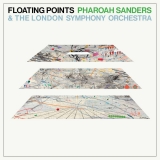
It has taken me some time to be able to call this a perfect record, but I cannot think of a word that describes this album more completely. It is simply without flaw, in a way that does not remove its character and soul. It is a testament to the talent, skill, and passion each contributor possesses. It is a divine project that cannot be replicated, as if the stars aligned for this record to be completed, like a cathedral, or the mountains that carve up the Earth. [First added to this chart: 07/26/2021]

The performances are so tight while also feeling free-flowing. The sheer feat of being able to lead up to ten musicians in creating some of the densest and most complex grooves is astounding. It's also hard to believe that this album took just three days to record. I love the image of the musicians gathered in a circle with Miles in the center, each player watching Miles intently and waiting for his next cue.
This record feels like a deconstruction of music. Its as if none of the parts were meant to fit together, like every musician is playing to their own song. It's incongruent and collapses in on itself as each track goes and goes and lingers. Songs will start out simple and soft and slowly the drumming gets harder and each strum of the guitar is stronger and the keyboards are louder and the groove grows more intense. It sounds like a record from another planet. It is an insanely ambitious recording at over an hour and a half long. Despite this gargantuan runtime, it feels like a cool breeze, like it's not task at all to listen to the entire thing.
It's hard to overstate just how important this record is. I do not think a band or musician, or even person, is worth the time if they do not consider this album as one of their most influential records. [First added to this chart: 07/26/2021]


The album cover is the most striking aspect of this record. It is a statue of the Virgin Mary covered by a blanket during restorations at Duomo di Milano. Its figure seemingly alludes to the infamous Hooded Man photograph taken at Abu Ghraib prison. To me, the music on Virgins is the perfect allegory for the events that unfolded at that prison. Hecker takes beautiful woodwinds, piano, and organ lines and deconstructs them, creating something alien and seemingly not of the Earth. Compare this to the treatment of the prisoners of Abu Ghraib, who were continuously humiliated, tortured, and molested, "deconstructed", by the staff. In performing these acts, the guards created an environment and situation that is utterly alien to most normal people. The images from this time at the prison are too outlandish and barbaric to even seem real. They treated the prisoners as if they were not human, and were thus making themselves less human in the process. The act of othering people to this extent is itself inhuman. By alluding to these events with a photograph of a statue of the Virgin Mary, he attributes her purity and her grace to the prisoners of Abu Ghraib. Taking one step further, he is juxtaposing the events of the Bible, the Passion of Jesus specifically, to the torture of the prisoners. Combining this juxtaposition on the album cover with the music creates such a cohesive narrative without a single word spoken.
Virgins is a work of absolute genius. It is Hecker's perfection of craft, the zenith of his career. [First added to this chart: 05/12/2024]

To me, it is not very important that Talk Talk was a new wave band when they first started. They could have started with The Colour of Spring and this album would still be its own revolution. It is so forward and progressive that it is hard to believe that it exists at all, even today, almost 40 years later. [First added to this chart: 01/12/2018]

This album is a cyst about to burst with pure anger, rage, and fury. It's like being branded with a hot iron. This record is completely unbounded. Eugene Robinson's vocals are like a babbling baby; the voices scheme like a murder of sentient, talking crows. This album, fittingly, sounds like the deepest depths of hell or the surface of the sun or like being part of an insurgent militia in Libya, each scenario exudes "an evil heat". Though this is a noise rock album, not once is it grating or difficult to listen to. That is not to say that it is not a challenging album; the average listener would likely not appreciate this record. However, it is so well mixed and the guitar effects are so refined that it is a joy to listen to for someone used to noisy music. Most tracks reach climaxes that feel like a bed of sound. Additionally, the song writing is so strong. Each track is quite dynamic, as they start soft and low and gradually get more hectic, louder, and more deranged.
"Shine (Glimmer)" closes with a starkly contrasted sound to the rest of the album. While the other eight tracks are like pressure vessels about to explode, the closer is a sprawling landscape of open desert. The guitars layer upon each to create an almost delicate and soothing soundscape. The drums are a consistent beat throughout the entire 30 minute runtime, only pausing at the center of the track and then resuming in the latter third. The vocals on this track are relatively calm and even more gibberish than ever before. Though the guitars lay a soft, soothing bed of sound and the drums maintain a constant groove and the vocals have subsided on this track, this is easily the most evil track on the album. It's all held together with great tension, and there is an underlying sense of dread that it will all snap at once and all the world will end.
This album will strike even the most steadfast atheist with the fear of God. [First added to this chart: 03/21/2025]

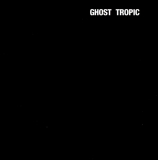
Lyrically, its richness and complexity is astounding; what Molina is able to do with so few words is breathtaking. It’s about the struggle of being on your own. Even after all this listlessness and state of being lost, there are “still no guides,” after all “it’s not a generous world/ It is a separate world”. Life can never be so easy. It foreshadows the opening line of “Ring the Bell,” on Songs: Ohia’s succeeding record, Didn’t It Rain, “Help does not just walk up to you.” You are ultimately alone in this world and that aloneness, not loneliness, can feel just like the album cover, a black infinite void. It’s as though we are all stumbling through a dark forest with our arms out grasping for someone to take our hands. The pivotal line, which I cannot shake from my mind (“Lightning Standing! Drained and like us, deeply risked it all”), is so reflective of the human experience. Though we are alone and in this void, distant in outer space from one another, we crack the darkness with our strikes of lightning, risking it all with a show of blue and purple lights. With this lightning bolt, we light our own way forward. We live our lives earnestly and in doing so reveal parts of ourselves and risk pain and scrutiny. We create art and poetry and music and make career moves and purchases and investments. Each moment we are floating delicately between oblivion and pure bliss. It's all incapsulated in this one gargantuan but subdued and restrained moment. It lasts but one second.
“Body Burns Away” faces death; the void returns with a different mask. There is nothing more alienating than death. We all face it, but in it we are completely alone. Death makes of us what it wants (“I am an empty page to you”). It’s a horrifying journey; to it, you can only give “the fool’s look,” you can only be dumbfounded as you face it. The way we process death is irrational, because there is no way to process rationally unexistence. Molina tackles it relatively intelligently. He sees it as a deal to be made and a transformation. Lightning returns, but this time it is a binding force. Death is the deal we all made when we were born and the “binding lightning” will one day come, and when it does “your body burns away.” Death will leave your body in a forever changed state that is irrevocable, much like a branch is burned down to cinders.
The two interlude tracks are the grounding base of the record. There are both ghastly instrumentals with tropical bird calls fronting them. They are touchingly serene and almost certainly gorgeous in their plumage, but their calls are also haunting and alienating. It reminds me of a video I saw of the last member of a species of bird calling out for a mate only to be met with despairing silence. Even though there are many birds in these samples, it’s hard to shake that feeling of loneliness on these tracks. The simple and pained instrumentals are heightened in their dreariness by the birds’ calls. The meaning behind the name of the record, and these two tracks, is made more apparent by their sound. We live in a Ghost Tropic. It’s bleak and depressing and haunted, alienated and isolated, and the Earth itself is mostly tropical, covered in empty forests. The world is lively and always moving, but do humans really have a grasp on their own faculties, or their emotions? Molina answers with a resounding “No.”
“Not Just a Ghost’s Heart” is the wounded climax of the album. Its rich guitar licks, twinkling piano, and unique sputtering synth are a distinct sound from the rest of the record. There isn’t a notable progression throughout this 12 minute track; it maintains an atmosphere like a haunted, dusty attic. The instrumental is reminiscent of Talk Talk’s “The Rainbow” where the deeply textured guitar and piano exchange places and a steady, unfettered rhythm accompanies them. In both tracks, the space between the instruments takes center stage, and Molina does it just as brilliantly and with just as much subtlety and restraint as the British post-rock band.
The defeated and forlorn finale is “Incantation.” The guitar vibrates deeply and close to the ear, you can hear Molina’s fingers with each change of the chord. The synthscape is simply tragic. It’s like a choir of ghosts. As the music begins to fade, Molina’s voice comes in again “Worked it out with me.” On this track, Molina is the titular ghost, as his voice is notably more distant from the microphone and seems to come in and out like a transient spirit. The synth closes out and fades and repeats the same ghostly notes, like a record left spinning.
The sparseness of this record is unlike any other album, even within the Songs: Ohia discography. Jason Molina focused more on the texture of the instruments on this record, obviously pulling from some post-rock influences. This focus on sound drives the emotion behind each track. You can almost feel the sadness baked into the instruments. Each track is its own brilliant tragedy. Each not just tinged with blackness, but coated in it. This record rewards the patient tremendously, and those willing to unpack this intricate and veiled album will be surely compensated. [First added to this chart: 03/15/2025]

Talking Heads were slowly working their way up, their debut has a lot of solid tracks, but is generally just okay. They lost some footing with their sophomore release, More Songs About Buildings and Food, which is again just fine. All the while, they are sustaining a groovy and eccentric sound that set them apart from other acts. They achieved a bit of greatness with Fear of Music. They started to incorporate Afrobeat influences that gave a lot of the tracks more complex grooves. "I Zimbra" is very simple, but the groove is undeniable. My favorite is "Cities" because they find such a pocket in that track, and it's their best so far. Another highlight is "Life During Wartime" which also has a killer beat. David Byrne's vocals as well improve on this record and become more charismatic. I would say that the three aforementioned tracks foreshadow Talking Heads' direction for their next record the most.
Remain in Light can be seen as split into two records. There's a side with some of the most complex and layered dance rock even 45 years later, and a side with dark and atmospheric bouts of insanity. Regardless of where a track lies, one can be assured that it will have cutting edge Brian Eno production and electrifying and borderline uncomfortable performances from David Byrne. The Afrobeat influence is turned up to 100 on this record as it is apparent in every single track. The first four tracks have polyrhythms that a listener could try and decode for hours. There are guitar solos that will have your jaw dropped realizing that this record came out just a decade after the Beatles.
I used to write-off the latter four tracks because they were not as invigorating as the first half, but that was a complete mistake. There would be no Remain in Light supremacy without the latter half. It serves as the backbone of this record. Can you imagine an entire record of "The Great Curve"? It would be unbearable. One can tell that the band was on something different during the production of this record because there is nothing in their discography even remotely similar to "The Overload."
It really does seem that Talking Heads were striving for not just greatness on this record, but legendary status, because every quirk or quality that makes this album special feels like a deliberate choice made by the band or Brian Eno himself. It is a shame that culture sided with hair metal and U2 as opposed to records like this in the 80s, because a future where a record like this is the zeitgeist is one where poverty is nonexistent and war has stopped. [First added to this chart: 01/12/2018]
Top 100 Greatest Music Albums composition
| Decade | Albums | % | |
|---|---|---|---|
| 1930s | 0 | 0% | |
| 1940s | 0 | 0% | |
| 1950s | 0 | 0% | |
| 1960s | 5 | 5% | |
| 1970s | 21 | 21% | |
| 1980s | 4 | 4% | |
| 1990s | 15 | 15% | |
| 2000s | 25 | 25% | |
| 2010s | 20 | 20% | |
| 2020s | 10 | 10% |
| Artist | Albums | % | |
|---|---|---|---|
|
|
|||
| Godspeed You! Black Emperor | 4 | 4% | |
| Swans | 4 | 4% | |
| The Necks | 4 | 4% | |
| Miles Davis | 3 | 3% | |
| Jason Molina | 3 | 3% | |
| Tim Hecker | 3 | 3% | |
| Can | 3 | 3% | |
| Show all | |||
| Country | Albums | % | |
|---|---|---|---|
|
|
|||
| |
54 | 54% | |
 |
12 | 12% | |
 |
10 | 10% | |
 |
6 | 6% | |
 |
5 | 5% | |
 |
5 | 5% | |
 |
3 | 3% | |
| Show all | |||
Top 100 Greatest Music Albums chart changes
| Biggest climbers |
|---|
Up 26 from 85th to 59th |
Up 18 from 50th to 32nd |
Up 3 from 92nd to 89th |
| Biggest fallers |
|---|
Down 9 from 91st to 100th |
Down 3 from 65th to 68th |
Down 3 from 66th to 69th |
| New entries |
|---|
Top 100 Greatest Music Albums similar charts
| Title | Source | Type | Published | Country |
|---|---|---|---|---|
| Top 100 Greatest Music Albums | juanr1096 | Overall chart | 2025 | |
| Top 100 Greatest Music Albums |  pjohnsongolf pjohnsongolf | Overall chart | 2024 |  |
| Top 100 Greatest Music Albums |  Stanleykurosawa Stanleykurosawa | Overall chart | 2023 | |
| Top 100 Greatest Music Albums |  scwrlw scwrlw | Overall chart | 2026 | |
| essential dank memes for all you plebs |  HazeyTwilight HazeyTwilight | Custom chart | 2015 |  |
| PPV Overall Ranking | bea | Custom chart | 2021 | |
| Top 100 Greatest Music Albums |  PinkZeppelin PinkZeppelin | Overall chart | 2024 | |
| Top 100 Greatest Music Albums |  flyingcitrus flyingcitrus | Overall chart | 2019 | |
| Top 100 Greatest Music Albums | gravityrider999 | Overall chart | 2019 | |
Top 100 Greatest Music Albums similarity to your chart(s)
Not a member? Creating an account is quick, easy and FREE!
Join 50,000+ music fans
- Join a community of over 50,000 music fans.
- Create & share your own charts.
- Influence the overall album rankings.
- Post comments in the forums and vote on polls.
- Comment on or rate any album, artist, track or chart.
- Discover new music & improve your music collection.
- Customise the overall chart using a variety of different filters & metrics.
- Create a wishlist of albums.
- Unlock Dark Mode and other member features.
- Help maintain the BEA database.
- Earn member points and gain access to increasing levels of functionality!
- And much more.
Join now It only takes a moment.
Top 100 Greatest Music Albums ratings
Average Rating = (n ÷ (n + m)) × av + (m ÷ (n + m)) × AVwhere:
av = trimmed mean average rating an item has currently received.
n = number of ratings an item has currently received.
m = minimum number of ratings required for an item to appear in a 'top-rated' chart (currently 10).
AV = the site mean average rating.
Showing latest 3 ratings for this chart. | Show all 72 ratings for this chart.
| Rating | Date updated | Member | Chart ratings | Avg. chart rating |
|---|---|---|---|---|
| ! | 06/20/2026 15:58 |  jhuik jhuik | 172 | 89/100 |
| ! | 03/05/2025 15:51 |  slatsheit slatsheit | 28 | 88/100 |
| ! | 02/08/2025 18:13 |  DeusExMackia DeusExMackia | 134 | 82/100 |
Rating metrics:
Outliers can be removed when calculating a mean average to dampen the effects of ratings outside the normal distribution. This figure is provided as the trimmed mean. A high standard deviation can be legitimate, but can sometimes indicate 'gaming' is occurring. Consider a simplified example* of an item receiving ratings of 100, 50, & 0. The mean average rating would be 50. However, ratings of 55, 50 & 45 could also result in the same average. The second average might be more trusted because there is more consensus around a particular rating (a lower deviation).
(*In practice, some charts can have several thousand ratings)
This chart is rated in the top 2% of all charts on BestEverAlbums.com. This chart has a Bayesian average rating of 90.8/100, a mean average of 89.9/100, and a trimmed mean (excluding outliers) of 91.5/100. The standard deviation for this chart is 12.6.
Top 100 Greatest Music Albums favourites
Showing all 6 members who have added this chart as a favourite


Forum mentions
 BestEverAlbums 04/26/2026 08:00 in Chart of the day (#5294): By AvalancheGrips BestEverAlbums 10/08/2025 08:00 in Chart of the day (#5095): By AvalancheGrips BestEverAlbums 01/28/2025 09:00 in Chart of the day (#4843): By AvalancheGrips
Top 100 Greatest Music Albums comments
Most Helpful First | Newest First | Positive Sentiment First | Longest Comments First
(Only showing comments with -2 votes or higher. You can alter this threshold from your profile page. Manage Profile)
jhuik 06/20/2026 16:00 | #314985
I love the idiosyncracy off this chart, and I appreciate that you've put a lot of thought into some of the comments. You obviously love music as much as I do. Any list of best ever is always intensely personal, and this is a great example of that. (Edited)
slatsheit 03/05/2025 15:51 | #307883
I can't stand some of the stuff in your top 20, but the list is so eclectic and thoughtful that I have to give it some credit. (Edited)
I think you're missing my point. Don't add soul and jazz just because I suggested it. Don't bow to social pressure at all. Add something that you authentically love, but that won't win you points with the snobs. Yes, some of your choices aren't commonly seen on BEA charts. But they fit in with the general snob-core tone of the rest of your list. It's ok to like those albums. But do you like anything that wouldn't be snob-approved? Do you have any guilty pleasures? Something that might get ridiculed by the music elitists? Add THAT! Then I would respect your list a lot more. It could be any genre. And from any era. Doesn't matter if it's boomer or zoomer. (why are you obsessed with generational distinctions?) And the genres I suggested were just picked at random. It could be ska, or blues, or K-pop, or Hindustani classical music (hmm, that one might actually be a logical next step for a Swans fan).
And when I suggested mainstream pop, what I meant was popular/Top 40 music that isn't indie-approved. Yes, Gorillaz and Outkast are popular, but when I say 'mainstream pop' I mean stuff like Bruno Mars, or Harry Styles, or Elton John, etc. For example, a recent Chart-of-the-Day had multiple John Mayer albums on it. Personally, I never much liked John Mayer, and I still don't. But I respect that user's bravery and guilelessness. Because they had a mix of critic-approved and critic-panned stuff, I found their list much more interesting and individualistic than yours. Of course, that's just my opinion. And it shouldn't hurt your feelings that not everyone loves your kind of Top 100.
As for my own Top 100, you're free to hate it. But when you call it "run-of-the-mill Rolling Stones magazine boomer bullshit", it shows you have no idea what you're talking about. My chart has 2 albums each from Julian Cope, Lisa Germano, and SFA. And NONE of them have ever shown up on any RS chart. RS barely knows they exist. In fact, well over 50% of my chart is stuff that RS ignored or shat on. Is there some overlap with RS charts? Sure. It would be odd if there wasn't. But it's minimal. Your chart has plenty that's also on Pitchfork's charts. So if I called it "run-of-the-mill Pitchfork zoomer bullshit", I'd have a much stronger case. As for adding a hip-hop album from the last decade to my Top 100, if BEA allowed us a Top 300, you would see a few: Kendrick, Little Simz, Danny Brown, Tyler maybe. I like those albums a lot. Just not enough to supplant the ones I already have in my Top 100. So I guess you'll have to keep thinking I'm a racist. Oh well. I'll try not to lose any sleep over it. (Edited)
AvalancheGrips 05/14/2024 13:53 | #303518
@BorderFreeAndrew most of these criticisms fall completely flat to me because there are albums on my chart that I've literally never seen on others (e.g. Lift to Experience, Nicolas Jaar, Elza Soares, even Low is rare on this site). Meanwhile, your chart is the same boring run-of-the-mill Rolling Stones magazine boomer bullshit. 64 albums from the 60s and 70s is sickening to me, where's the diversity? Another funny thing is I've never used RYM, you're yelling at clouds dude. I really think that you're projecting your resentment of the young RYM hipsters onto me and that's really sad man. Sure, I'll put more soul and jazz on my chart, I've been meaning to, but I want you to put one (1) hip-hop album from the last decade on yours or I'll still think you're racist. Also, you're saying I'm anti-pop? My favorite album is from one of the most popular artists of the last decade; Gorillaz, Jessie Ware, Stevie Wonder, and OutKast are all pop artists. I know you've listened to tons of music from the last decade so where is it? (Edited)
What, no Glenn Miller? No Dinah Shore? Where's the Bing Crosby and Doris Day records? I takes it back to the oooooooold skool:
https://www.youtube.com/watch?v=3d1phCytJyg&ab_channel=Key%26Peele
But seriously, stop being so shallow and petty just because someone isn't impressed with your Beginning-Hipster's-Starter-Kit of a Top 100. BTW, I actually saw your #9, Lift To Experience live in Austin, TX back in 2001 when nobody cared who they were. I'm such an "old conservative man" who's "uncurious and bland".
Edit: You want me to say something substantial about your chart? Sure, no prob. First off, the fact that you'd think my light-hearted comment above could be "racist" illustrates your problem: You're demonstrating a worldview that is narrow and short-sighted. And this shows in your chart. As someone who you're certain is "uncurious and bland", I've heard almost all your chart entries. And I like most of them. The reason I don't like your chart is because it's too stylistically samey and predictable. I don't care whether it's newer or older stuff. I'm just tired of seeing the same RYM-core over and over again (since you brought them up). I like charts that surprise me. I like charts that introduce me to something I hadn't already heard about, or remind me of something I'd forgotten. Your chart does that only once: I'd never heard of Ciśnienie, so I may check them out now. Most importantly, I like charts that show diversity (you know, cuz I'm such a "racist"). Where is the funk? The jazz? The folk? Even the inclusion of some mainstream pop would be a nice indication that you're not self-consciously trying to impress the anti-pop snob brigade. As for classic soul, you've got one token Stevie Wonder album. "Racists" like me like a lot more classic soul and R&B than that. And the Swans are fine. But 3 of your top 6? I don't doubt that you sincerely love these albums. But this suggests to me that you need to expand your horizons and explore a wider variety of music (both past and present). Your chart makes you seem a lot more "uncurious" than me. I'm not "mad" at your retaliatory comment/rating, or it's blatant ageism. I'm just disappointed at the insecurity it displays ("your rating did literally nothing to my overall average, people love my shit"). Gain the maturity to accept that not everybody is gonna "love your shit" and that's ok. (Edited)
Your feedback for Top 100 Greatest Music Albums